
A Bigger Prize: How We Can Do Better Than the Competition
Margaret Heffernan
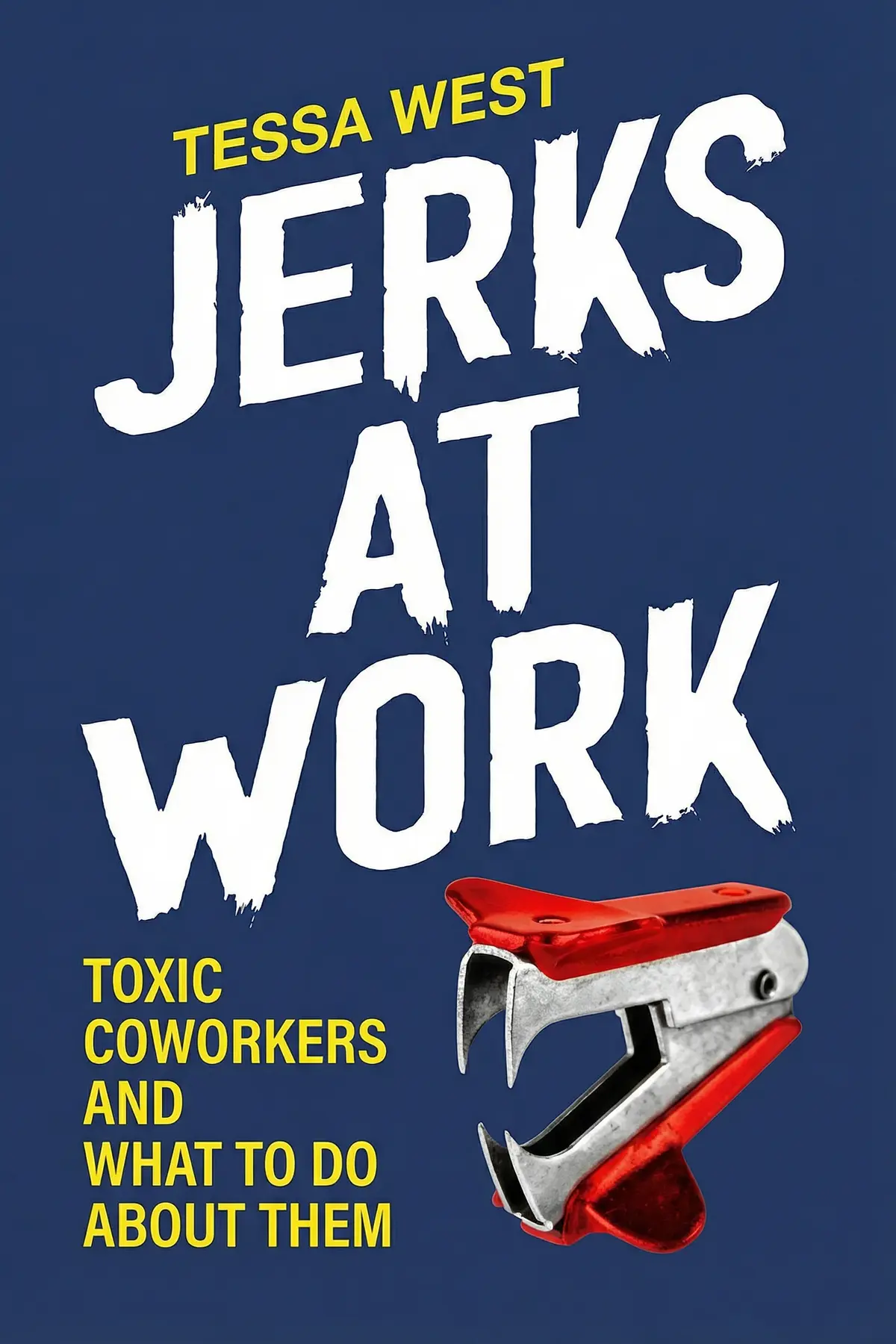
Jerks at Work provides a psychological roadmap for navigating toxic professional environments. Discover research-backed strategies to identify and manage difficult colleagues, from credit stealers to gaslighters, while protecting your career and mental health.
1 min 53 sec
Every office has one. It doesn’t matter if you are working in a high-stakes tech firm, a creative agency, or a local retail shop—difficult personalities are a universal constant of the professional world. We often spend more time with our coworkers than with our families, yet we frequently find ourselves ill-equipped to handle the friction that arises when those coworkers turn out to be, well, jerks. It’s a common frustration that can lead to burnout, stalled careers, and a general sense of dread every Sunday evening.
But what if you could do more than just complain about them? What if you had a systematic way to categorize the chaos and respond with precision? This is the core throughline of our exploration today. We aren’t just looking at how to survive toxic people; we’re looking at the psychological mechanics behind their behavior. When you understand the ‘why’ and the ‘how’ of a jerk’s tactics, they lose their power over you.
In this summary, we will break down the various archetypes you’re likely to encounter. We’ll look at the subtle manipulators who only show their best side to the boss, the colleagues who inadvertently—or intentionally—take credit for your late nights, and the bosses who either hover too closely or disappear when you need them most. We’ll even touch on the most dangerous type: the gaslighter, whose goal is to make you lose your grip on the facts.
The goal here is to move past venting and into strategy. By the end of this, you’ll have a roadmap for regaining control, building alliances, and ensuring that your work life is defined by your achievements rather than the people trying to undermine them. Let’s dive into the world of workplace dynamics and learn how to navigate the trickiest personalities on the payroll.
2 min 24 sec
Some coworkers possess a unique talent for acting like a dream to leadership while making life a nightmare for their peers.
2 min 12 sec
Discover why your hardest efforts might be going unnoticed and how to prevent others from claiming your successes as their own.
2 min 20 sec
Meetings are often dominated by those who speak loudest and first, but there are ways to reclaim the floor.
2 min 08 sec
High-performing teams can accidentally create a playground for slackers who let others do the heavy lifting.
2 min 16 sec
Micromanagement is one of the leading causes of workplace turnover, but the solution isn’t as direct as you might think.
2 min 14 sec
A boss who leaves you alone might seem like a blessing, until they suddenly reappear at the worst possible moment.
2 min 38 sec
Unlike other office jerks, the gaslighter is a dangerous manipulator who requires a completely different approach.
1 min 39 sec
Navigating the modern workplace requires more than just technical skills; it requires a high degree of social intelligence and a strategic approach to human nature. We’ve looked at the diverse gallery of ‘jerks’—from the dual-faced saboteurs and the credit stealers to the absent bosses and the dangerous gaslighters. The common thread in managing all of them is a move away from passive frustration and toward active, research-based intervention.
The first step is always identification. By naming the behavior, you strip it of its mystery and begin to see the patterns. Once you know what you’re dealing with, you can apply the right tool—whether it’s the buddy system to stop a bulldozer, a role-responsibility matrix to thwart a credit stealer, or a ‘zoom out’ meeting to calm a micromanager.
Remember, you are not a helpless observer of your own professional life. You have the agency to set boundaries, build alliances, and document the facts. While it’s true that you can’t control how other people act, you have total control over how you respond and the systems you put in place to protect your work and your well-being.
As you move forward, keep these strategies in your professional toolkit. Use them not just to survive difficult people, but to foster a culture of transparency and accountability in your own teams. By refusing to be a victim of workplace toxicity, you don’t just save your own career—you help build a better, more professional world for everyone. Don’t just vent; strategize, act, and reclaim your peace of mind.
Have you ever felt like your workplace is more of a battlefield than a collaborative environment? Jerks at Work explores the complex interpersonal dynamics that lead to professional friction. It identifies seven specific archetypes of difficult coworkers, ranging from those who suck up to leadership while sabotaging peers, to the subtle gaslighters who make you doubt your own reality. The promise of this guide is not just to help you identify these toxic individuals, but to provide a toolkit for neutralising their impact. By drawing on social psychology, the content offers actionable methods for setting boundaries, communicating effectively with management, and reclaiming your professional agency. It’s a survival guide for anyone looking to build better working relationships and ensure their contributions are fairly recognized and rewarded.
Tessa West is a prominent Associate Professor of Psychology at New York University. Her academic career is dedicated to the study of interpersonal communication and human interaction. With a prolific output of over 60 articles in peer-reviewed journals, she is a recognized expert in her field. Beyond academia, West brings her insights to a wider audience through her regular contributions to the Wall Street Journal, where she translates complex social research into practical advice for the modern professional.
Listeners find the book highly insightful, with one listener highlighting its thorough content and another noting its value for collaborating with groups. The writing also earns praise for being accessible and humorous, including one listener who noted that it made them laugh hard.
Finally finished this masterpiece and I'm still reeling from how much it accurately depicts my daily grind. Tessa West has managed to bottle the essence of office toxicity while keeping the prose light enough to avoid a total existential crisis. The breakdown of the 'Kiss-Up/Kick-Downer' was so hauntingly accurate I had to check if she was spying on my last department meeting. While some of the scenarios feel a bit heightened for dramatic effect, the underlying psychology is incredibly sound and provides a roadmap for sanity. I found the humor peppered throughout to be a necessary relief because, let's face it, dealing with professional jerks is exhausting. If you are struggling with a team that feels more like a battlefield than a workplace, this is your survival guide. It isn't just a list of complaints; it's a toolbox for actual change.
Show moreWow, I didn't expect to laugh this much at a business book, but West’s humor is surprisingly sharp and effective. She takes the soul-crushing experience of dealing with a 'Credit Stealer' and turns it into a masterclass on reclaiming your professional narrative. The book is incredibly insightful, especially when discussing how to build alliances within your team to counteract a single bad actor. I loved how readable the text was; it felt like getting advice from a very smart friend over drinks. To be fair, the book forces you to look in the mirror, which isn't always comfortable, but it’s necessary growth. The anecdotes are hilarious and poignant, reminding us that we aren't alone in these frustrating situations. It’s a must-read if you want to understand the hidden dynamics of your office. I’ll be recommending this to everyone in my department immediately.
Show moreThis book is essentially a field guide for surviving the modern jungle of office politics. I was blown away by the detailed breakdown of 'Reputation Thieves,' as I’ve seen that exact behavior play out in every company I’ve ever worked for. West manages to be both deeply insightful and incredibly funny, making it one of the few professional development books I couldn't put down. The focus on working with groups rather than just isolated individuals is what sets this apart from other titles in the genre. I found the readability to be top-notch, with short chapters that get straight to the point without unnecessary fluff. Frankly, I think this should be required reading for anyone in a leadership position. It provides a shared language for identifying toxic patterns before they become systemic failures. An absolute five-star gem.
Show moreThe chapter on gaslighting was a total eye-opener for me, providing a level of detail I haven't seen in other career books. West's background in psychology really shines when she deconstructs how these manipulators slowly erode your confidence. I especially appreciated how the book addresses working with groups, showing that a single jerk can poison an entire team's productivity if left unchecked. The readability is excellent, making complex communication science feel accessible even during a stressful commute. However, I did find that the 'What to Do' sections required a bit more homework than I was prepared for on a casual Sunday. You really need a pen and paper to get the most out of her strategies. Despite that small hurdle, the insights are well worth the effort for anyone feeling trapped in a toxic office loop. It turns a spotlight on behaviors we often ignore.
Show moreAfter hearing about West's research on communication science, I had to grab this to help manage some friction in my current project group. The way she breaks down team dynamics is incredibly detailed and offers a fresh perspective on why certain people clash so violently. I found the section on 'Bulldozers' particularly useful, as it provided tangible scripts for standing my ground without becoming a jerk myself. The readability is high, but the book doesn't sacrifice depth for the sake of being 'breezy.' One minor criticism is that the questionnaire at the start can be a bit overwhelming if you aren't in the right headspace. However, once you push through the initial data gathering, the payoff is substantial. It’s a practical guide that focuses on group health rather than just individual survival. Highly recommended for managers who care about their culture.
Show moreAs someone who has survived three different corporate restructuring rounds, I found the descriptions of the 'Negligent Boss' to be painfully relatable. This book is undeniably detailed, offering a comprehensive look at the various phenotypes of workplace toxicity that we all encounter. My main gripe is that most of the scenarios feel geared exclusively toward large, traditional corporate structures. If you work in a small startup or a non-profit, some of these strategies might feel a bit clunky or impossible to implement. To be fair, the self-reflection quizzes at the end were a sobering reality check that I might be a 'Bulldozer' in certain situations. It’s a solid read, but it lacks the universal application I was expecting from such a high-profile release. It sits right in the middle of being a great textbook and a casual self-help guide.
Show moreEver wonder if you're actually the problem in your office? This book certainly isn't afraid to ask that question, and the quizzes at the end are designed to be a bit of a gut punch. Personally, I liked the detailed content regarding the 'Negligent Boss,' which helped me understand my manager's behavior through a lens of fear rather than malice. However, the tone fluctuates between being a serious textbook and a comedy routine, which was a bit jarring at times. While the strategies are sound, they require a level of emotional labor that might be too much for someone already on the brink of burnout. It’s a useful resource, but it requires a lot of active participation from the reader. If you’re just looking for a light beach read, this isn't it. It’s a workbook masquerading as a business guide.
Show moreTo be fair, the advice here is solid, but the execution felt a bit hit-or-miss depending on which 'Jerk' type you are currently dealing with. The chapter on 'Bulldozers' was fantastic and offered a lot of new ideas, but the section on 'Gaslighters' felt a little repetitive. I appreciated the readability and the fact that it didn't take itself too seriously, which is a rarity for professors writing about communication. Still, some of the anecdotes felt a bit too 'perfect' to be entirely believable, which pulled me out of the experience. It’s a good starting point for anyone feeling frustrated at work, but it’s not the definitive solution for every toxic environment. I’d say it’s a strong three-star book that hits the mark about 70% of the time. Good for a quick refresh on soft skills, but don't expect it to fix everything overnight.
Show moreLook, I really wanted to love this, but it felt like it was treading water in some very shallow pools. The categories West provides—like the 'Bulldozer' or the 'Credit Stealer'—feel a bit like caricatures that you'd see in a mid-level sitcom rather than a nuanced psychological study. Frankly, the solutions offered were too basic for anyone who has spent more than a year in a corporate environment. 'Talk to them like adults' is good advice in a vacuum, but it doesn't account for the power dynamics that make these jerks so dangerous in the first place. I also found the anecdotes to be a bit too polished to feel authentic, which made it hard to connect with the material. It’s an easy read, but I was hoping for something that went much deeper into the systemic issues of workplace culture. It might be helpful for someone's first internship, but seasoned pros might find it lacking.
Show moreMaybe I'm just looking for something more academic, but this felt a bit too much like a collection of workplace tropes. Tessa West is clearly brilliant, yet the advice here leans heavily on cliche examples that don't always translate to the messiness of real life. The 'Jerk' types are a bit too one-dimensional, and I found myself wishing for more data-driven insights rather than just snappy stories. Not gonna lie, I was disappointed that the strategies didn't account for remote work as much as I’d hoped. Dealing with a 'Gaslighter' over Zoom is a different beast entirely, and the book felt slightly dated in that regard. It's a quick read, but it didn't provide the 'eureka' moment I was craving for my current situation. If you've read a few HR blogs, you've likely seen most of this advice before.
Show moreAUDIO SUMMARY AVAILABLE
Get the key ideas from Jerks at Work by Tessa West, plus 5,000+ more titles in English and Thai.