
22 min 44 sec
Available in:English
Knowledge: A Very Short Introduction
Knowledge: A Very Short Introduction examines the philosophy of how we know what we know. It explores skepticism, the relationship between belief and truth, and the fascinating ways we process information.
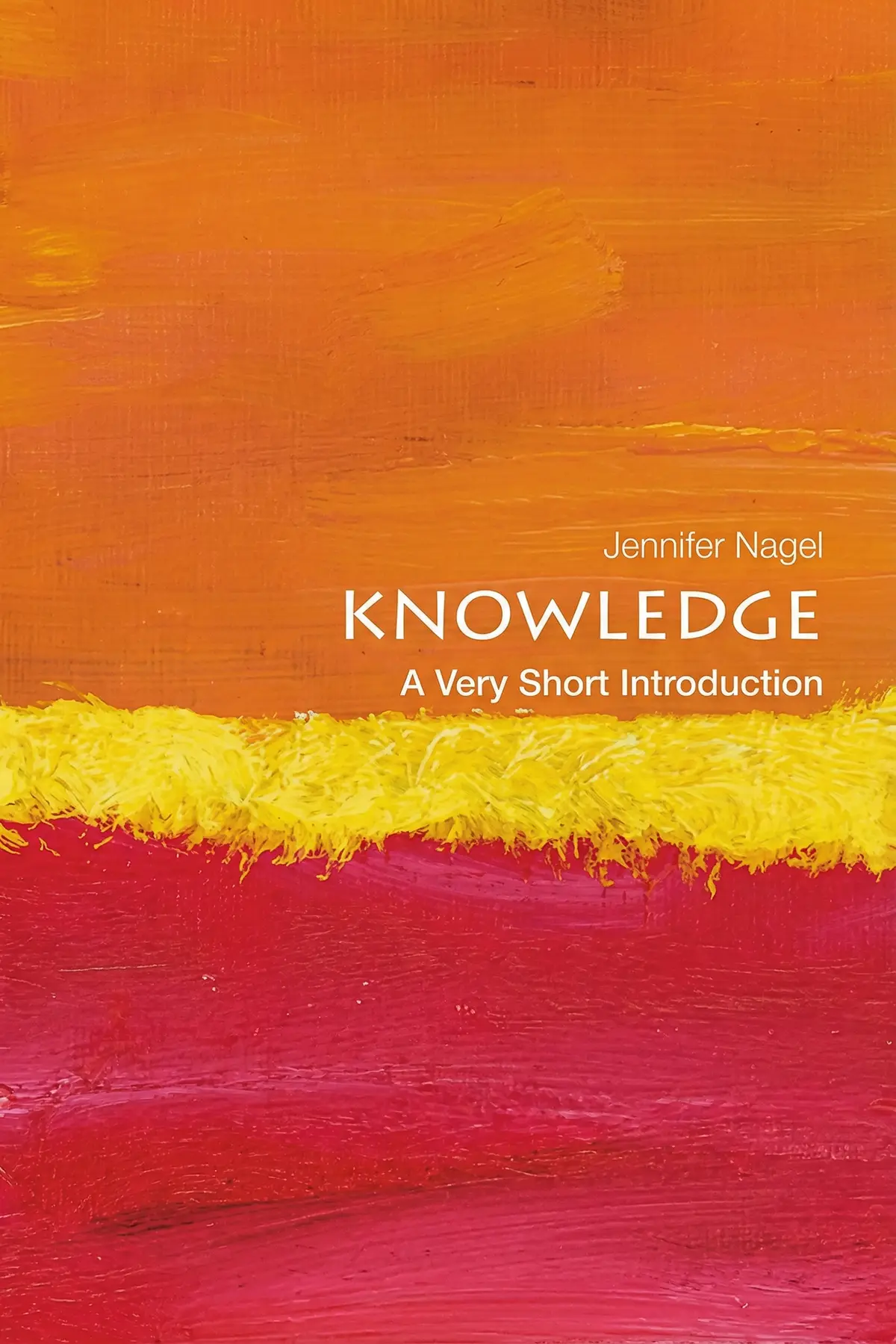
Table of Content
1. Introduction
2 min 02 sec
We often take the act of ‘knowing’ for granted. In our daily lives, we move through the world with a sense of certainty, trusting our senses to tell us that the floor is solid, the sky is blue, and the news we read is factual. But in an era where information travels at the speed of light and misinformation often travels faster, the very foundation of that certainty has become a point of intense scrutiny. We find ourselves in an age where bubbles of belief dictate our reality, and what one person calls a proven fact, another calls a mere opinion. This is why the study of epistemology—the branch of philosophy concerned with the nature and limits of knowledge—is more relevant today than ever before.
Jennifer Nagel’s exploration of this field invites us to step back and look at the scaffolding of our thoughts. It asks us to consider how knowledge is actually manufactured, how it is shared among people, and why some things we feel sure about might not actually qualify as knowledge at all. This isn’t just an academic exercise; it’s a toolkit for navigating a complex world. Over the course of this summary, we will look at the history of these ideas, from the ancient skeptics who doubted everything to the modern thinkers trying to map the subtle connection between what we believe and what is actually true.
We’ll journey through thought experiments involving broken clocks, hidden zebras, and the majestic peaks of Mount Everest to see how philosophers test the boundaries of human understanding. Along the way, we will discover that while the verb ‘to know’ is one of the most common in our language, the mechanics behind it are incredibly intricate. We will see how our brains try to ‘read’ the minds of others and why our social context changes the rules of what counts as a fact. By the end, you’ll have a new perspective on the throughline of human inquiry: the relentless pursuit of truth in a world filled with shifting impressions.
2. The Bridge from Fact to Knower
2 min 39 sec
Discover why a fact existing in the world isn’t truly knowledge until a human mind interacts with it, and explore the tension between objective and subjective truth.
3. The Skeptic’s Shadow
2 min 17 sec
Explore the radical ideas of ancient skeptics who questioned if humans can ever truly perceive reality or if we are forever trapped by our own unreliable impressions.
4. Rationalism vs. Empiricism
2 min 22 sec
Contrast the perspectives of Descartes and Locke to understand whether we are born with fundamental truths or if we must learn everything through experience.
5. The Flaws in Classical Logic
2 min 39 sec
Dive into the ‘Gettier problem’ to understand why having a true belief that is justified might still not count as genuine knowledge.
6. Internalism and Externalism
2 min 11 sec
Are we required to have proof for everything we know, or is it enough for our knowledge to come from a reliable source?
7. The Validity of Testimony
2 min 11 sec
Much of what we know comes from other people, but philosophers are divided on whether this secondhand information can ever be considered ‘true’ knowledge.
8. The Significance of Context
2 min 16 sec
Learn why the definition of ‘knowing’ might change depending on the stakes, from a casual trip to the zoo to a high-stakes scientific observation.
9. Social Intuition and Mind Reading
2 min 17 sec
Explore our subconscious ability to track what others know, a skill philosophers call ‘mind reading,’ and see how it connects—and sometimes blinds—us.
10. Conclusion
1 min 50 sec
As we have seen throughout this exploration of Jennifer Nagel’s work, the concept of knowledge is far more than a simple collection of facts. It is a dynamic relationship between our minds, our evidence, and the world around us. We’ve looked at the radical doubts of the skeptics, the foundational debates between rationalists like Descartes and empiricists like Locke, and the modern puzzles that show how luck can sometimes mimic certainty. We have also seen how our environment and our social circles change the very definition of what it means to be sure.
The throughline of all these ideas is the importance of intellectual humility and critical thinking. By understanding that our ‘knowledge’ is often built on testimony, context, and intuition, we can become more aware of our own biases and the limits of our perspective. In a world where we are constantly told what to believe, the tools of epistemology allow us to ask ‘how do I know this?’ and ‘is my justification solid?’
One powerful way to apply these lessons is to embrace the concept of communal knowledge. We often think of a ‘knower’ as a single person, but groups can hold knowledge that no single individual possesses. Think of a grand orchestra. The violinist knows their part, the flautist knows theirs, and the conductor understands the tempo. None of them, individually, can ‘know’ the entire symphony in the same way the collective group does when they play together. This is a reminder that we are at our best when we contribute our individual certainties to a larger, shared understanding. By staying curious and questioning our foundations, we don’t just collect information—we build a more authentic connection to the truth.
About this book
What is this book about?
This exploration of epistemology dives into the age-old question of what constitutes true knowledge versus mere belief. By investigating the historical debates between rationalists and empiricists, the book provides a framework for understanding how we acquire and justify our views of the world. It tackles complex puzzles like the Gettier problem and examines how context and social interaction shape our certainty. The promise of this work is a sharper, more critical mind. By learning to navigate the distinctions between subjective impressions and objective facts, listeners can better evaluate the constant stream of information in the modern age. It is a deep dive into the mechanics of human thought, offering clarity on everything from scientific evidence to the simple intuition we use to navigate social situations.
Book Information
About the Author
Jennifer Nagel
Jennifer Nagel is a professor of philosophy at the University of Toronto. A highly respected epistemologist, her work focuses on the nexus of knowledge and belief. In addition to Knowledge: A Very Short Introduction, she’s written numerous academic articles on the topic of knowledge.
Ratings & Reviews
Ratings at a glance
What people think
Listeners view this work as a superb introduction to epistemology, noting that it offers resources for continued exploration. The quality of the material is highly regarded, with one listener describing it as an outstanding synthesis of modern epistemology. While the book is considered a skillfully composed and accessible guide to the field, listeners express varying opinions regarding the clarity of the writing.
Top reviews
Kofi
Jennifer Nagel manages to condense centuries of philosophical heavy-lifting into a remarkably readable little volume. She guides the reader through the foundational debates of rationalism and empiricism, moving seamlessly from Descartes’ search for certainty to Locke’s blank slate theory. I particularly appreciated how she brought the discussion into the modern era with sections on reliabilism and contextualism. It’s rare to find a book that feels both like a rigorous academic summary and a casual conversation with a brilliant professor. The distinction between Jennifer Nagel and Thomas Nagel is worth noting, as she has a distinct, accessible voice that makes high-level epistemology feel grounded. This serves as a perfect starting point for anyone looking to build a bibliography for deeper study. To be fair, it moves fast, but that’s the nature of the 'Very Short Introduction' format. It is a dense but rewarding journey through the history of thought.
Show moreGai
As someone who usually struggles with the dry nature of philosophy texts, I found Nagel’s writing to be a refreshing change of pace. She manages to synthesize the core concepts of epistemology—belief, truth, and justification—into a narrative that actually flows. The way she explains how contextualism changes our standards of knowing depending on the stakes was particularly enlightening. It’s not just a history book; it’s a manual for understanding how we navigate information in a world full of bullshitters and noise. To be honest, the brevity of the book is its greatest strength, forcing a level of clarity that larger tomes often lack. If you are looking for a bridge between classic thinkers like Descartes and modern theories like tracking, this is it. It’s an essential primer for any home library and serves as a masterclass in concise educational writing.
Show moreUraiwan
Concise, brilliant, and surprisingly fun for a book about the nature of truth. Nagel has a knack for making even the most abstract concepts feel relevant to how we live our daily lives. Whether she’s discussing the reliability of our memories or the way we process testimony from others, the insights are consistently sharp. This isn't just a list of dead philosophers; it's a living, breathing look at how we understand our place in the universe. I loved the way she balanced the historical context of Locke and Descartes with the cutting-edge questions of today. If you want to dive into philosophy but don't know where to start, this is the perfect gateway drug. It is a highly recommended read for anyone who enjoys a bit of intellectual vertigo and wants to explore the foundations of their own beliefs.
Show moreOn
Ever wonder if you're actually sitting in your chair or just a brain in a vat being poked by some futuristic supercomputer? This book dives straight into that delightful existential dread with a clear-eyed look at skepticism and the limits of human perception. Nagel explains complex theories like invariantism without drowning the reader in unnecessary jargon or archaic terminology. Frankly, I was impressed by how well she handled the transition from pre-modern thought to the messy, complicated world of contemporary epistemology. The chapter on testimony was a standout for me, especially regarding how we trust the word of others in a digital age. My only minor gripe is that some of the more abstract logical proofs could have used a few more real-world examples to really stick. Regardless, it is an excellent summary for the curious layperson looking for a readable primer.
Show moreTak
Picked this up because I wanted to understand why people keep arguing about what it means to 'know' something. It turns out that knowledge isn't just a collection of facts but a deeply complex relationship between the observer and the truth. Nagel does an incredible job of framing the history of these ideas, especially the way she handles the clash between internalism and externalism. I found myself rethinking my own confidence in everyday beliefs after reading the sections on the criterion of truth. The book is concise, as promised, yet it doesn't feel like it’s cutting too many corners on the big questions. Look, you won't walk away with all the answers, but you'll definitely have better questions to ask. It’s a solid read that I’ll likely revisit when I need a refresher on Gettier cases or the limits of empiricism.
Show moreWanphen
If you need a quick primer on why you can’t trust your own eyes, Jennifer Nagel has you covered. This tiny book packs a massive punch, covering everything from the 'I think, therefore I am' basics to complex modern theories of testimony. The prose is sharp and moves at a clip that keeps you engaged without feeling entirely overwhelmed by the weight of the subject matter. It’s a brilliant summary for anyone who wants to stop saying 'I know' and start wondering what that even means. Gotta say, the section on how groups can know things that individuals don't was a real eye-opener for me. A few more diagrams might have helped with the logic puzzles, but overall, it’s a very strong effort that provides excellent sources for further study. It makes a complicated field feel much more approachable.
Show moreBun
After hearing a lot about the 'Gettier problem' in various podcasts, I bought this to finally understand the technical details. Nagel explains it perfectly, showing exactly why a justified true belief might still fall short of actual knowledge. The book serves as an excellent overview of epistemology, providing a map of the territory that makes further study much less intimidating for a layperson. I particularly enjoyed the chapter on how we use sensitive knowledge to navigate the physical world around us. In my experience, most introductory books either oversimplify or overcomplicate, but this one finds a happy medium that respects the reader's intelligence. A few parts on invariantism were a bit of a head-scratcher, but they didn't ruin the overall experience. It is a well-written and highly informative guide to a complex subject.
Show morePhimwan
While the summary of contemporary epistemology is solid, I found the pacing of this book to be a bit uneven at times. Nagel is clearly a master of her field, but some sections on the causal theory of knowledge felt rushed compared to the historical bits. I appreciated the inclusion of social epistemology and the brief nod to the impact of modern technology like Wikipedia. However, I wanted more depth on how these theories apply to our current 'post-truth' political landscape. The book is definitely readable, but readable sometimes means it skims over the nuances that make philosophy interesting in the first place. Not gonna lie, I finished it feeling like I had the skeleton of the subject but was missing some of the meat. It’s a useful reference for students, but maybe not the only book you’ll need on the topic if you want a deep dive.
Show morePannipa
Not what I expected from the VSI series, which usually hits a sweet spot between introductory and exhaustive. This one felt a little too light on the pre-modern history for my taste, focusing heavily on the shifts from the 16th century onward. I was hoping for more on the ancient Stoic or Pyrrhonian roots beyond the initial overview provided in the early chapters. Truth is, the book is written with a very modern, analytical bias that might frustrate those looking for a broader historical survey. That said, the explanation of internalism was one of the clearest I’ve ever read in a textbook. It’s a decent enough primer if you just want the highlights of the current academic debate. Just don't expect a deep dive into the metaphysical implications of it all, as it remains strictly within the bounds of standard epistemology.
Show moreMoon
The writing style felt incredibly dense despite the book's promise of being a 'very short' and accessible introduction to the field. I often found myself re-reading the same paragraph three times just to grasp the distinction between different types of skepticism. Perhaps I’m just not the target audience, but the jargon-heavy sections on tracking theory and reliabilism felt like they were written for other philosophers. Personally, I found the other reviews to be a bit misleading regarding how 'fun' this book actually is for a casual reader. It feels much more like a dry undergraduate lecture than an engaging exploration of the human mind. If you already have a background in logic, you might find it breeze-worthy, but for a complete novice, it’s a bit of a slog. I was hoping for more clarity and fewer abstract thought experiments that feel disconnected from reality.
Show moreReaders also enjoyed
A Guide to the Good Life: The Ancient Art of Stoic Joy
William B. Irvine
A Little History of Philosophy
Nigel Warburton
A Theory of Justice
John Rawls
Being and Nothingness: A Phenomenological Essay on Ontology
Jean-Paul Sartre
Being and Time
Martin Heidegger
AUDIO SUMMARY AVAILABLE
Listen to Knowledge in 15 minutes
Get the key ideas from Knowledge by Jennifer Nagel, plus 5,000+ more titles in English and Thai.
- 5,000+ titles
- Listen as much as you want
- 7-day free trial
- Cancel anytime







