
24 min 32 sec
Language Intelligence: Lessons on Persuasion from Jesus, Shakespeare, Lincoln, and Lady Gaga
Explore the hidden mechanics of persuasion as Joseph J. Romm reveals how short words, repetition, and metaphors have shaped history, from the King James Bible to modern pop hits and political campaigns.
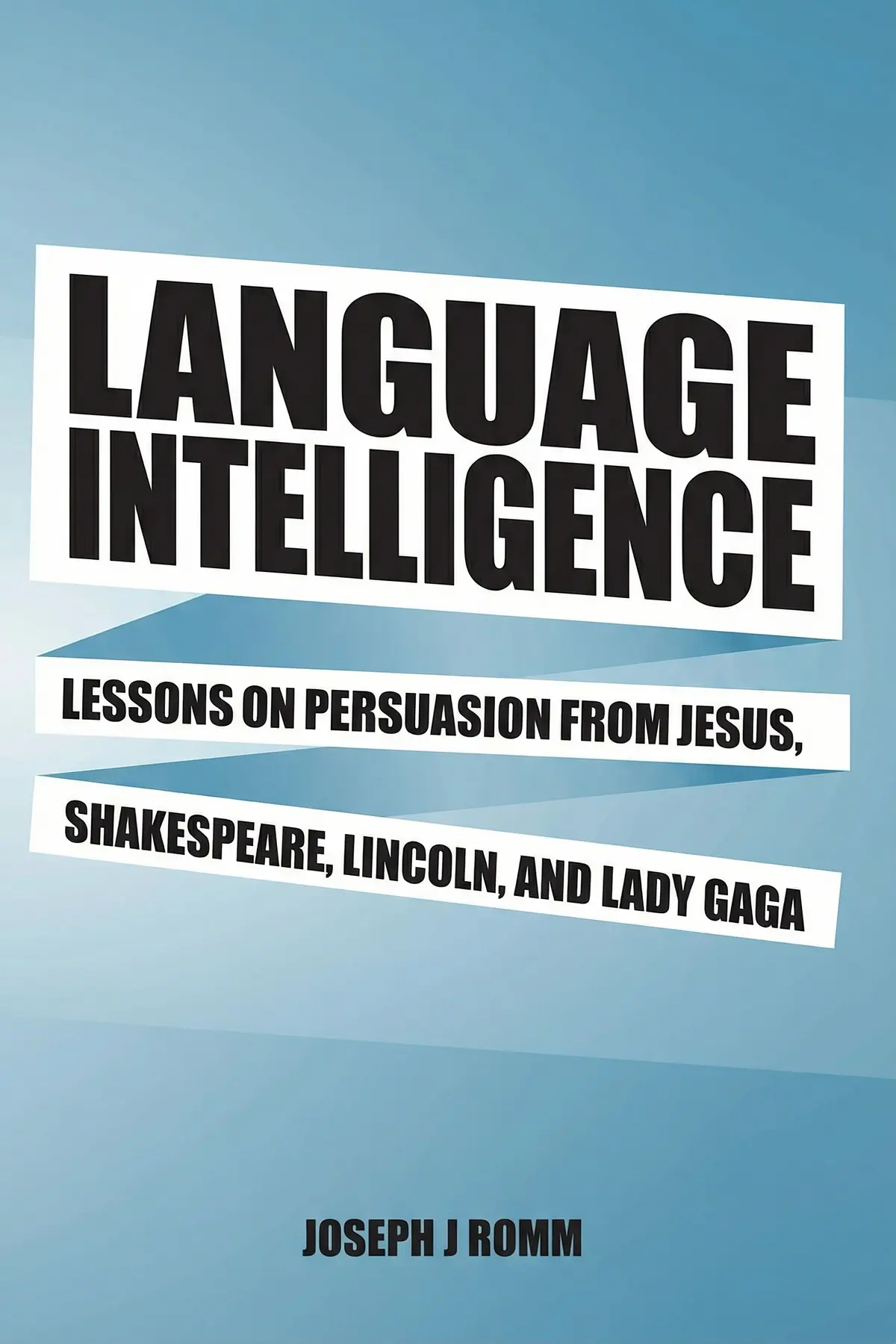
Table of Content
1. Introduction
2 min 03 sec
For thousands of years, the most important skill a person could possess wasn’t their ability to code or calculate; it was their mastery of rhetoric. In the schools of ancient Greece and Rome, the art of persuasion was the crown jewel of education. Thinkers like Aristotle and speakers like Cicero understood that facts alone rarely move people. It is the way those facts are dressed in language that truly changes hearts and minds. Yet, as we moved into the modern era, something strange happened. We began to prioritize raw information and cold logic, pushing the study of rhetoric to the fringes. Today, it’s rarely taught in schools, and many people view it as a relic of the past.
But here is the reality: rhetoric never went away. It just changed clothes. It is alive and well in the thirty-second commercials we see on television, the slogans shouted at political rallies, and the lyrics of the songs topping the charts. When we stop studying how language works, we don’t become more rational; we simply become more vulnerable. We lose our ability to see when we are being charmed, and worse, we lose the tools to communicate our own ideas effectively. This isn’t just about flowery speech or poetic flourishes. Rhetoric is the machinery of human connection. It involves everything from the metaphors that structure our thoughts to the simple, rhythmic repetitions that make an idea feel true.
In the following pages, we are going to dive deep into the mechanics of what makes language persuasive. We will look at how the masters—from the authors of the Bible to the speechwriters for presidents—have used specific techniques to capture the public imagination. By the time we’re done, you won’t just be a better listener; you’ll have a new appreciation for the hidden architecture of every sentence you hear. We’re going to explore how short words can hit harder than long ones, why your brain is hardwired for metaphors, and how even a pop star like Lady Gaga uses ancient rhetorical tricks to build a global brand. Let’s start by looking at why even a little bit of rhetorical knowledge acts as a defensive shield in the modern world.
2. The Defensive Value of Rhetorical Literacy
2 min 35 sec
In an age of constant information, understanding the tricks of the trade is your only defense against being misled by ads and political spin.
3. The Strategic Power of the Short Word
2 min 43 sec
Complexity is often mistaken for intelligence, but the most enduring and persuasive messages in history rely on the punch of simple, short words.
4. The Rhythmic Authority of Repetition
2 min 40 sec
Repetition isn’t just for children; it is a fundamental tool for making ideas feel familiar, true, and impossible to forget.
5. Irony and the Art of the Indirect Attack
2 min 28 sec
Irony allows a speaker to mock an opponent or hint at a deeper truth without ever having to state it directly, making the audience an accomplice in the message.
6. Foreshadowing: Creating the Sense of Inevitability
2 min 20 sec
By hinting at what is to come, a speaker creates a narrative tension that makes their final conclusion feel like the only possible outcome.
7. Metaphor: The Cognitive Shortcut
2 min 39 sec
Metaphors are more than just flowery language; they are the fundamental way the human brain processes and stores complex information.
8. The Strategic Use of Extended Metaphors
2 min 19 sec
When a single image isn’t enough, an extended metaphor can create an entire world of meaning that guides an audience through complex arguments.
9. The Shadow of Persuasion: Manipulation and Malice
2 min 49 sec
Rhetoric is a double-edged sword; understanding its dark side is essential for recognizing when language is being used to deceive rather than inform.
10. Conclusion
1 min 56 sec
We live in a world that is fundamentally shaped by the words we use. From the epic poems of the ancient world to the viral tweets of today, rhetoric remains the primary way that human beings influence one another. As we have seen, the most effective communication isn’t necessarily the most complex. It is the one that understands the deep-seated preferences of the human brain—our love for rhythm, our reliance on metaphor, and our visceral reaction to short, simple words. Whether it’s Shakespeare’s stage or a modern political debate, the same rules apply. If you can master these tools, you can make your ideas nearly impossible to ignore.
However, with this mastery comes a significant responsibility. Rhetoric is a form of power, and like all power, it requires an ethical compass. We’ve explored how easy it is to use these techniques to mislead, to manipulate, and to obscure the truth. The ‘dark art’ of persuasion is all around us, often hiding in plain sight within the ads we watch and the speeches we hear. But by bringing these techniques into the light, we strip them of their secret influence. We move from being passive recipients of information to active, critical thinkers who can see the ‘machinery’ of persuasion at work.
As you move forward, I encourage you to become a student of the language around you. Don’t just listen to the content of a message; listen to its structure. When a song gets stuck in your head, ask yourself how the repetition is working. When a political slogan moves you, look for the short words and the underlying metaphors. By analyzing the information you receive, you gain a clearer perspective on what is truly being said and why. Language is the most powerful tool we have ever invented. By developing your language intelligence, you aren’t just improving your vocabulary—you are sharpening your mind and taking the first step toward becoming a more persuasive, and more perceptive, human being.
About this book
What is this book about?
Have you ever wondered why certain phrases stick in your mind for years while others vanish instantly? Language Intelligence explores the sophisticated art of rhetoric, a discipline once central to classical education that has now become a hidden force in our daily lives. The book investigates how the world’s most influential communicators—ranging from biblical figures and William Shakespeare to Abraham Lincoln and Lady Gaga—use specific linguistic tools to sway emotions and command attention. By deconstructing the techniques of the masters, this summary promises to sharpen your communication skills and heighten your awareness of how you are being influenced. You will discover the psychological power of the monosyllable, the strategic use of repetition, and the brain’s natural affinity for metaphor. Whether you are looking to improve your own persuasive abilities or simply want to defend yourself against the manipulative tactics of modern advertising and political spin, these insights provide a roadmap for navigating a world built on words.
Book Information
About the Author
Joseph J Romm
Joseph J. Romm is a distinguished communication expert and an advocate for environmental awareness. He is the founder and editor of the influential blog Climate Progress, where he focuses on climate change and energy issues. Beyond his work in ecological concerns, Romm is a prolific writer and the author of several books, including Hell and High Water.
Ratings & Reviews
Ratings at a glance
What people think
Listeners describe this work as educational and excellently composed, specifically valuing how it clarifies intricate ideas through straightforward narratives. Furthermore, they view it as a brilliant study of great rhetorical feats, and one listener points out that it is packed with examples from contemporary events. The content is also accessible, stimulating, and practical, with one listener remarking that the insights are instantly applicable.
Top reviews
Wararat
Ever wonder why some political slogans feel inevitable while others fail to launch? Joseph Romm delivers an incredible survey of rhetoric that connects the dots between Shakespearean drama and the modern-day pop lyrics of Lady Gaga. To be fair, I initially scoffed at the idea of comparing the Bible to a hit like "Poker Face," but his analysis of extended metaphors is genuinely eye-opening. The book is designed to make you a more persuasive communicator by using short words and strategic repetition. It’s a fast, punchy read. These insights provide immediate tools for anyone who writes or speaks for a living. I found the sections on how Republicans often out-message Democrats particularly insightful for our current political climate. If you want to understand the secret language of power, this is a must-have resource on your shelf.
Show moreTun
Joseph Romm has written what I consider a masterwork about masterpieces. This book doesn't just explain rhetoric; it demonstrates it through vibrant examples ranging from Winston Churchill to Bob Dylan. I've been looking for a guide that bridges the gap between ancient Greek techniques and the digital age’s 24-hour news cycle, and this is it. Romm succeeds by focusing on how "language intelligence" helps us create memorable brands and headlines that actually stick. Personally, I loved the breakdown of how metaphors mirror the human brain’s own physical structures. It’s a thought-provoking look at why facts often fail when they aren't wrapped in a compelling frame. You’ll walk away feeling much harder to manipulate by the ultra-subtle seducers in advertising and politics.
Show moreBella
Finally, someone has written a rhetoric book for the modern era that isn't boring! Romm takes these ancient tools and shows how they are still being used by everyone from Bill Clinton to the people writing your favorite pop songs. I found the advice on using short words and alliteration to be immediately helpful in my own professional emails and presentations. The truth is, most of us are being manipulated by these techniques every day without even realizing it. Reading this felt like finally getting the "source code" for how public opinion is shaped. It’s easily one of the most thought-provoking books I’ve read this year. I highly recommend it to anyone who wants to improve their communication skills and stand out in a crowded media landscape.
Show moreKai
Look, if you want to understand why some messages go viral and others die in obscurity, you need to read this immediately. Romm argues that facts alone cannot fight false frames, which is a bitter pill for many of us to swallow but absolutely necessary to understand. He uses examples from the Bible and Shakespeare to show that these "tricks" of the trade are as old as time itself. I especially liked the section on how salespeople use the "no pressure" tactic to actually increase their conversion rates. While the author’s own political biases are present, they serve as useful case studies for the rhetorical tools he is teaching. It’s a brilliant little book that has already changed the way I approach my own writing.
Show moreSupaporn
Picked this up after following Romm’s climate change blog for years, and his expertise in messaging really shines through here. He argues that we are in a rhetorical arms race where simple frames usually beat complex data points every single time. While I found his constant references to Lady Gaga a bit excessive, his core argument about "fighting fire with metaphorical fire" is incredibly persuasive. The book is structured like a modern primer on the art of speech, making it easy to digest in just a couple of sittings. My only real gripe is that he occasionally repeats the same examples to the point of exhaustion. Still, his insights into why scientists often lose public debates are worth the price of admission alone. It’s a solid 4-star read.
Show moreSomboon
After hearing a podcast interview with the author, I decided to dive into this short but potent guide. Romm explores how figures like Abraham Lincoln and Jesus used specific rhetorical devices to ensure their messages survived for centuries. It’s a fascinating, if sometimes cynical, look at how to pander effectively to an audience that might be distracted or superficial. I found the chapter on Socratic irony especially interesting, even if I disagreed with his take on George W. Bush’s communication style. The writing is clear and avoids the dry, academic tone you usually find in books about linguistics. It’s not quite as deep as Lakoff’s work, but it’s much more practical for the average blogger. A very useful tool for your professional kit.
Show moreNarut
The chapter on metaphor is undeniably strong, but I struggled with the book's relentlessly quantitative perspective on success. Romm seems to believe that YouTube hits and retweets are the ultimate metrics of "intelligence" in language. While he correctly identifies how repetition helps a message stick, he says very little about building a complex, evidence-based argument. It felt more like a manual for creating catchy soundbites than a deep dive into meaningful communication. To be fair, his analysis of the "I Have a Dream" speech was excellent, but then he’d pivot back to pop stars and lose me again. If you want to be wittier on Twitter, this book will definitely help you. If you’re looking for a serious aesthetic relationship with writing, you might want to look elsewhere.
Show moreJib
Honestly, I had a bit of a mixed reaction to this one. On one hand, Romm has a keen understanding of how rhetoric works and provides plenty of current affairs examples to prove his points. On the other hand, the book feels a bit like an undergraduate English essay that’s been expanded into a self-published volume. He makes bold claims—like asserting that President Obama isn't charismatic because he lacks metaphor—that simply don't hold up under scrutiny. I also found the constant repetition of the same five or six examples to be quite tedious after a while. It’s an okay primer for someone who has never studied literature, but it lacks the scientific rigor I was hoping for. It works as a basic introduction.
Show moreRungrat
Not what I expected from a book with "Intelligence" in the title, if I’m being frank. It’s a very light read that covers basic rhetorical devices like rhyme and irony through a series of celebrity anecdotes. While it’s certainly informative for a beginner, it lacks the depth of more substantive works like Lakoff's "Metaphors We Live By." Romm seems focused on quantity over quality, prioritizing web traffic and pithy headlines over nuanced discussion. I did appreciate the historical context regarding the Sophists, but the book spends way too much time on pop culture hits. It’s an easy read that might give you a few tips for your social media presence, but don't expect a profound shift in your understanding of linguistics. It is just okay.
Show moreSavannah
This felt more like a collection of blog posts than a cohesive book, and I was disappointed by the lack of original research. Romm relies heavily on a few specific figures—like Gaga and Dylan—to illustrate every single point, which gets old fast. The book is peppered with praise for the author’s own blog, which felt a bit self-serving and unprofessional for a published work. I also take issue with his idea that we should fight "metaphorical fire with fire" by oversimplifying complex issues. Instead of encouraging better discourse, this book feels like it’s teaching us how to pander to the lowest common denominator. To be fair, there are a few rare facts sprinkled in, but not enough to justify the length. It was a quick read, but not satisfying.
Show moreReaders also enjoyed
AUDIO SUMMARY AVAILABLE
Listen to Language Intelligence in 15 minutes
Get the key ideas from Language Intelligence by Joseph J Romm, plus 5,000+ more titles in English and Thai.
- 5,000+ titles
- Listen as much as you want
- 7-day free trial
- Cancel anytime







