
19 min 39 sec
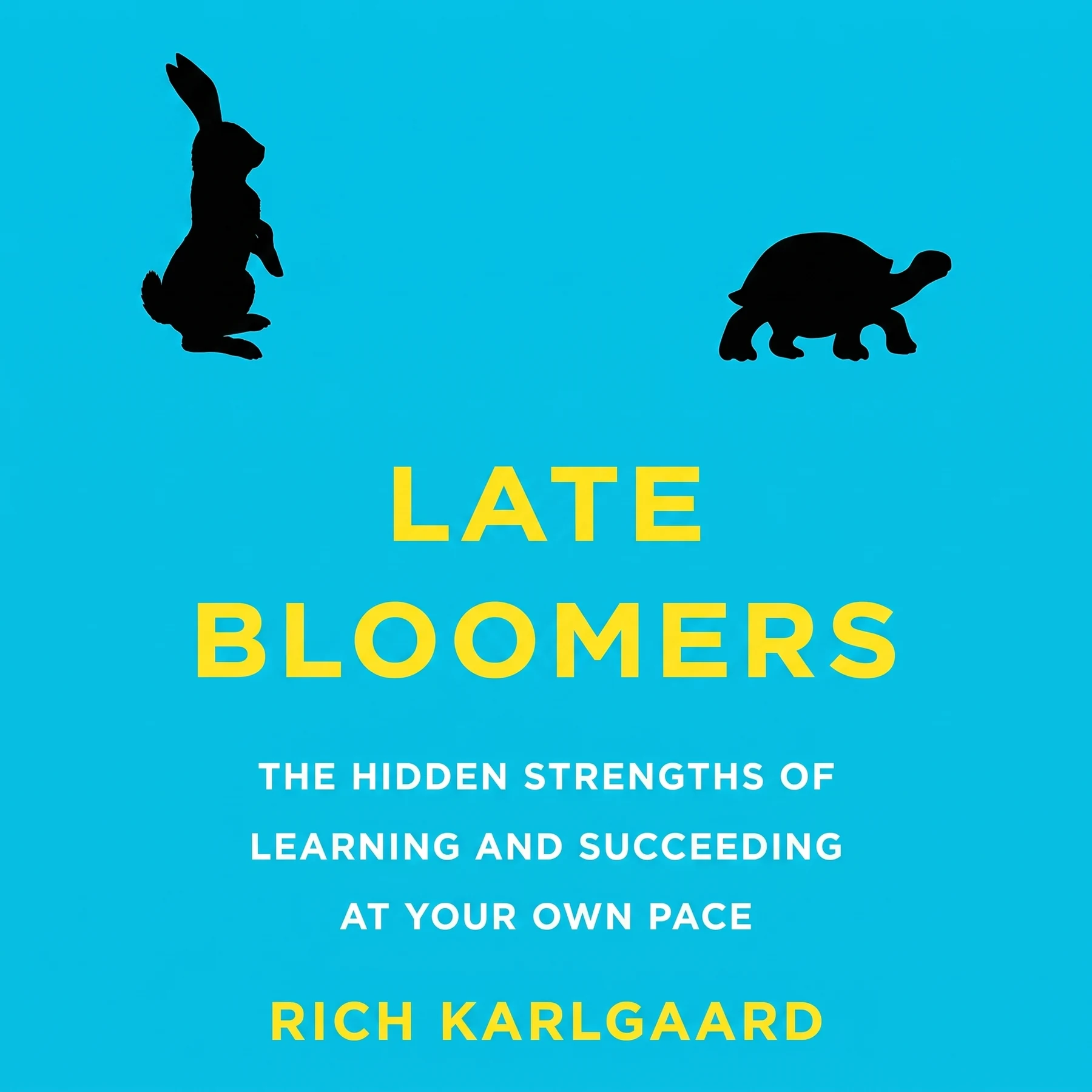
Late Bloomers: The Hidden Strengths of Learning and Succeeding at Your Own Pace
Late Bloomers challenges the cultural obsession with early success, offering a science-backed celebration of those who find their true talents and peak performance later in life.
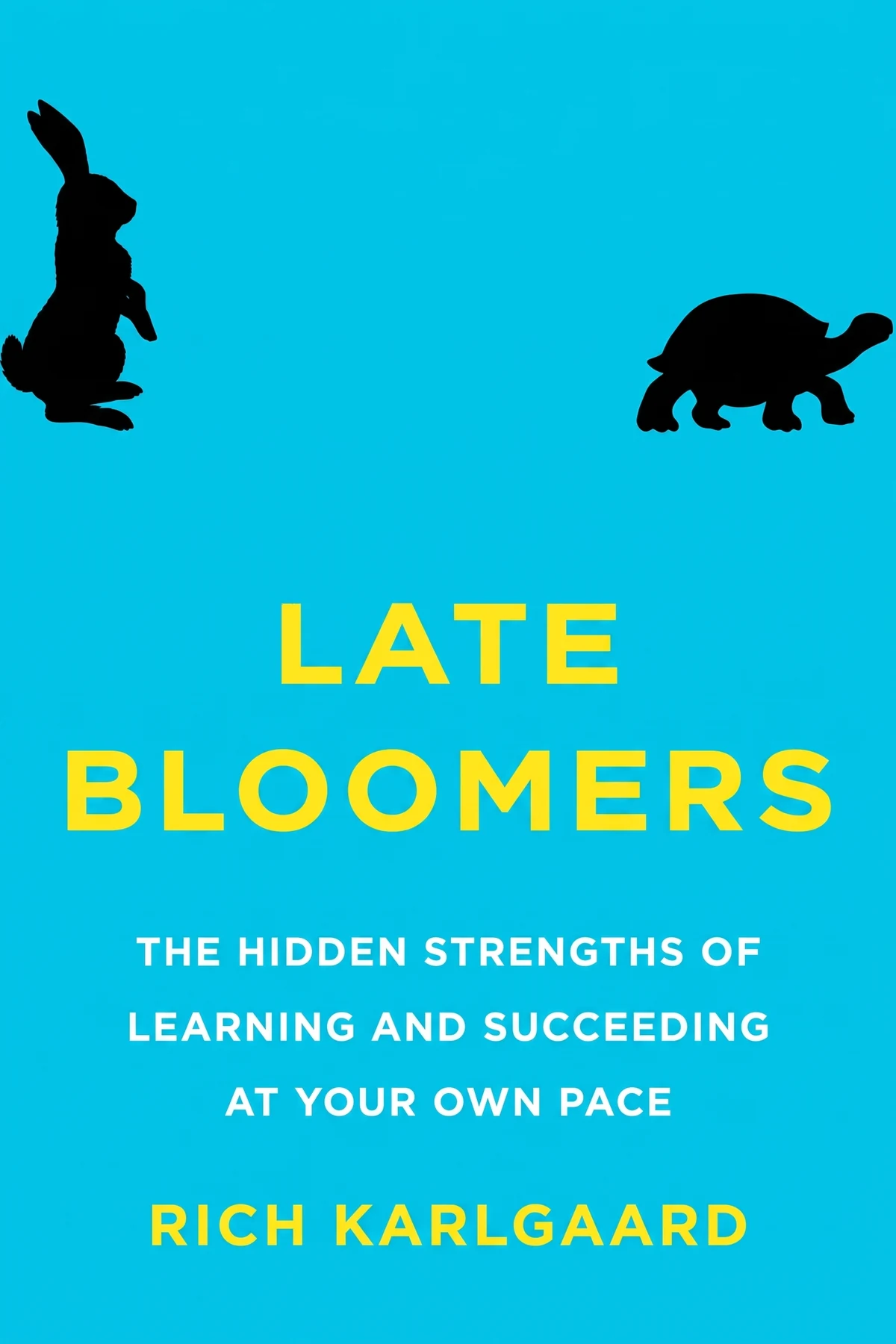
Table of Content
1. Introduction
2 min 03 sec
In our fast-paced modern world, there is a pervasive narrative that suggests if you haven’t achieved greatness by your mid-twenties, you’ve somehow missed the boat. We are surrounded by stories of teenage tech moguls, young billionaire entrepreneurs, and athletes who reach their peak before they can even legally rent a car. This cult of early achievement creates a crushing weight for the majority of us who don’t have our lives perfectly figured out by the time we graduate college. We look at the ’30 Under 30′ lists and feel a sense of inadequacy, as if our lack of an early breakthrough is a permanent failing rather than a natural stage of growth.
But what if this obsession with the ‘wunderkind’ is not only misplaced but also scientifically unsound? Author Rich Karlgaard, the publisher of Forbes, knows this feeling intimately. Despite his current success, his early life was far from illustrious. He graduated from a prestigious university with mediocre grades and spent his twenties drifting through menial jobs, even working as a night security guard. It was only much later that his professional life began to take flight. His journey is a testament to the idea that success isn’t a sprint that begins at birth; for many, it’s a marathon where the best miles are run much later in the race.
In this summary, we are going to deconstruct the myths surrounding early success. We will dive into the neurological reasons why the human brain isn’t even fully ready for ‘adult’ tasks until the mid-twenties, and why forcing achievement before that can be counterproductive. We will explore how our educational system has turned into a high-stakes arms race that prioritizes test scores over genuine human development. Most importantly, we will uncover the unique strengths that only come with age—wisdom, emotional intelligence, and a deeper sense of self. This is a journey for anyone who has ever felt ‘behind’ or wondered if their best years are truly behind them. As we will see, your time to bloom might be closer than you think, provided you have the patience to let it happen on your own terms.
2. The Rise of the Early Achiever
2 min 01 sec
Explore why society is increasingly obsessed with young ‘wunderkinds’ and how this narrow definition of success creates a culture of comparison and inadequacy for everyone else.
3. The Toll of the Academic Arms Race
2 min 10 sec
The relentless pressure on students to perform early has shifted the focus from personal growth to material status, leading to a significant crisis in adolescent mental health.
4. The Biology of the Developing Mind
2 min 05 sec
Science reveals that the human brain isn’t fully ‘wired’ for adulthood until the mid-twenties, making the expectation of early mastery biologically unrealistic for many.
5. The Gift of Emerging Adulthood
1 min 57 sec
Delaying the traditional markers of adulthood can actually lead to better long-term success by allowing for a period of exploration and brain plasticity.
6. Cognitive Peaks Across the Lifespan
1 min 54 sec
Intelligence isn’t a single peak followed by a long decline; different mental abilities, from processing speed to wisdom, reach their height at different ages.
7. Redefining the Career Arc
1 min 56 sec
The traditional linear career path often wastes human potential by forcing out experienced workers; a new model of ‘career arcs’ could benefit both individuals and organizations.
8. Breaking Free from Cultural Scripts
2 min 04 sec
Late bloomers often struggle because they are following someone else’s definition of success; finding your true path requires the courage to ignore societal and family pressures.
9. The Power of Re-potting
1 min 42 sec
When growth stalls, the problem is often the environment rather than the individual; learning to ‘re-pot’ yourself can provide the necessary space for a late bloom.
10. Conclusion
1 min 47 sec
As we have explored, the path to success and fulfillment is not a one-size-fits-all race. The cultural obsession with early achievement is a relatively recent phenomenon that often ignores the complex reality of human biology and personal growth. We have seen that the brain needs time to mature, that our cognitive abilities peak at different stages of life, and that the wisdom gained through experience is an asset that cannot be rushed or faked. Being a late bloomer isn’t a sign of weakness; it’s a testament to a journey that is deep, considered, and uniquely your own.
The throughline of our exploration is that patience is not passive. It is an active choice to wait for the right moment, the right skills, and the right environment. If you feel ‘behind,’ take heart in the fact that your greatest contributions may be yet to come. The ‘wunderkinds’ might get the headlines today, but the late bloomers often build the lasting legacies. By understanding your own biological timeline and having the courage to ‘re-pot’ yourself when necessary, you can navigate life with a sense of peace rather than panic.
Your actionable takeaway is this: embrace the power of the ‘strategic quit.’ If you find yourself in a situation—whether it’s a career, a social circle, or a set of expectations—that feels like it’s stifling your true potential, don’t be afraid to walk away. Quitting something that isn’t right for you isn’t a failure; it’s an essential step in clearing the space for your true self to emerge. Stop measuring your progress against a ’30 Under 30′ list and start listening to your own internal clock. Your best work is ahead of you, and you have all the time in the world to bloom.
About this book
What is this book about?
This summary explores the phenomenon of late blooming, a direct challenge to a society that prizes youthful achievement above all else. It examines how our cultural obsession with wunderkinds and early milestones creates unnecessary pressure on young people, often at the expense of their mental health and natural development. By looking at the biology of the brain, we see that humans are actually designed to mature over decades, with different cognitive strengths peaking at various stages of life—some not until our sixties or seventies. The promise of the book is a path to self-acceptance and a roadmap for those who feel they’ve fallen behind. It provides strategies for 're-potting' your life, breaking free from cultural constraints, and navigating a career that values experience over speed. Whether you are floundering in your twenties or seeking a second act in your fifties, this exploration reveals that your most significant contributions might still be ahead of you. It’s a call to embrace patience and recognize that excellence isn't a race, but a unique journey of self-actualization.
Book Information
About the Author
Rich Karlgaard
Rich Karlgaard is an American journalist, award-winning entrepreneur, and the publisher of Forbes magazine. He’s also the author of three books, including Life 2.0: How People Across America Are Transforming Their Lives by Finding the Where of Their Happiness, which made the Wall Street Journal best-seller list.
Ratings & Reviews
Ratings at a glance
What people think
Listeners find the book both motivating and heartening, with one listener remarking that it can be life-changing. The text also earns praise for being highly readable, as one listener highlights it as required reading for graduating seniors. However, the caliber of the writing and analysis yields a mixed reception; some find the prose well-written, but others criticize the poor analysis. Similarly, the content and characterizations provoke differing opinions, with one listener valuing the chapter about strengths of late bloomers, while another listener notes the author regurgitates well-known information. Finally, the book's post-modern approach is another element that divides opinions among listeners.
Top reviews
Ott
As someone who has always felt a step behind my peers, this book was a breath of fresh air. Rich Karlgaard provides a much-needed antidote to our society's obsession with early achievement and the 'Wunderkind' ideal. The concept of 'repotting' yourself into a more supportive environment really resonated with my own career path. It is incredibly reassuring to learn that our executive function and crystallized intelligence don't even peak until much later in life. While some sections delve deep into data, the stories of people like Frank McCourt kept me engaged. This should be required reading for anyone who feels like they missed their chance. It’s a life-changing perspective on human potential.
Show moreJoshua
Wow, I finally feel seen. This book is an emotional lifesaver for anyone struggling with self-doubt in a world that rewards 'raw synaptic speed' over everything else. Karlgaard uses his own fumbling start to show that a slow bloom is still a beautiful one. I loved the scientific breakdown of how our brains actually mature, specifically the bit about how innovation peaks in our late 40s. The advice to talk to yourself in the third person was a quirky but useful tip I’ve already started using. Not gonna lie, I cried a little reading about how we treat kids who don't fit the mold. This is an essential, sane perspective for our high-pressure times.
Show moreLayla
Ever wonder why we assume our brains are done evolving by twenty-five? This book explains why that's a total myth. Karlgaard breaks down the difference between fluid and crystallized intelligence in a way that is both accessible and inspiring. I’ve been feeling stagnant in my career lately, but reading about peak innovation ages gave me a second wind. The research is well-sourced and covers everything from neurobiology to the history of testing. It’s not just a self-help book; it’s a sociological critique of our obsession with youth. For those of us in our 40s and 50s, this is the ultimate validation that our best work is still ahead.
Show moreKaen
After hearing so much about the 'early achievement' cult, I found Karlgaard’s research on 'repotting' yourself to be life-changing. He effectively argues that our culture's obsession with 'raw synaptic speed' ignores the deep wisdom that only comes with age and experience. I loved the examples of people who didn't hit their stride until their 60s, like the author of 'The Boys in the Boat.' It gave me a burning sense of hope that my own greatest accomplishments are still on the horizon. The book is full of realistic strategies for those of us who feel like we're playing catch-up. If you've ever felt like a failure for not being a billionaire by thirty, buy this book immediately.
Show moreMethinee
Picked this up for a graduating senior but ended up devouring it myself first. The book is remarkably readable and serves as a powerful encouragement for those of us who didn't peak at twenty-two. Karlgaard’s exploration of why we shouldn't worship at the altar of standardized testing is timely, especially considering the current pressure on students. I particularly enjoyed the chapter detailing the unique strengths of late bloomers, such as increased curiosity and resilience. To be fair, the middle section can feel a bit like a collection of magazine articles stitched together. There is some 'fluff' that slows the tempo, but the overall message is too important to ignore. It’s a solid four-star read for any age.
Show moreMia
Truth is, we live in a culture obsessed with the 'Wunderkind' narrative, and Karlgaard provides a necessary, if slightly wordy, correction. The strengths he attributes to late bloomers—like compassion and resilience—are qualities we desperately need more of in leadership. I found the section on 'repotting' to be the most practical part of the text. It gave me the courage to look at my current environment and realize it wasn't my talent that was the problem, but the soil I was planted in. My only complaint is that the book is quite dense and could have been edited down. A 'Reader's Digest' version might actually be more effective for busy professionals. Still, it’s a very encouraging read.
Show moreSuthee
Finally got around to reading this during the recent college admission scandals, and it couldn't be more relevant. The pressure we put on children to be 'perfect' by age eighteen is clearly leading to a national mental health crisis. Karlgaard documents this toll with sobering statistics on teen depression and anxiety. I appreciated the stories of famous late bloomers like Winston Churchill, which reminded me that non-standard learning styles aren't defects. To be honest, I think he gives short shrift to the financial challenges of changing gears late in life. However, his psychological strategies for coping with self-doubt are genuinely helpful. It’s a very persuasive debunking of the cult of youth.
Show moreSuthida
The core message here is vital, yet the execution is frustratingly sloppy at times. Frankly, the author lost some credibility with me when he misidentified what the SAT stands for today and conflated IQ with standardized testing. These aren't just nitpicks; they suggest a superficial understanding of the academic metrics he spends so much time criticizing. Additionally, his analysis of the Elizabeth Holmes and Theranos situation felt misguided, as if he was trying too hard to fit a criminal case into a broader societal narrative about burnout. There is a good book hidden in here about the value of experience and wisdom. However, you have to wade through a lot of repetition and questionable logic to find it.
Show moreMeen
This book has an incredibly strong start that unfortunately devolves into a bit of a scattered mess. The premise—that we all bloom at different rates—is fantastic and highly relatable. However, the author gets sidetracked trying to tie every modern societal ill to the late bloomer problem. His take on the Theranos debacle felt particularly out of place and weakened his credibility for me. I also found the writing to be quite repetitive; he often takes three pages to explain a point that could be made in one paragraph. It’s an okay read if you’re looking for some motivation, but don't expect a tight, focused argument. It’s a bit of a disappointment overall.
Show moreWaree
I really wanted to love this, but the author’s definition of 'blooming' feels incredibly narrow and materialistic. Most of his examples are about people who eventually made millions or reached the top of their corporate ladder. What about the late bloomers who find peace, better relationships, or artistic fulfillment without a massive paycheck? He also glosses over the socio-economic realities that make 'starting over' impossible for many people. It’s easy to talk about resilience when you have a safety net, but much harder when you're living paycheck to paycheck. The writing is fine, but the analysis lacks the depth I was hoping for. It felt like a long-winded Forbes column rather than a rigorous study.
Show moreReaders also enjoyed
Abundance: The Inner Path to Wealth
Deepak Chopra
60 Seconds & You’re Hired!
Robin Ryan
59 Seconds: Change Your Life in Under a Minute
Richard Wiseman
AUDIO SUMMARY AVAILABLE
Listen to Late Bloomers in 15 minutes
Get the key ideas from Late Bloomers by Rich Karlgaard, plus 5,000+ more titles in English and Thai.
- 5,000+ titles
- Listen as much as you want
- 7-day free trial
- Cancel anytime







