
14 min 04 sec
The Soft Edge: Where Great Companies Find Lasting Success
Rich Karlgaard explores how great companies find lasting success by balancing technical execution with the human elements of trust, smarts, teams, taste, and story to create a competitive advantage.
Table of Content
1. Introduction
1 min 43 sec
In the high-pressure world of modern business, it is easy to become obsessed with what we can measure. We look at spreadsheets, quarterly projections, and logistics charts, believing that if we just optimize the numbers, success will follow. This is what most business schools teach, and it is what many CEOs focus on exclusively. But as Rich Karlgaard points out, there is a missing piece to this puzzle. Success isn’t just about the mechanics of a company; it is about the soul of the organization. He calls this the soft edge.
To understand this concept, imagine your business as a structure built on a foundation of strategy. Strategy is your base—it’s knowing your market and your competition. Rising from that base are two distinct sides. One is the hard edge, which handles the technical execution, speed, and efficiency of your work. The other side is the soft edge. This is the human side of the equation. It includes the relationships you build with your staff and the emotional connection you establish with your customers.
When a company only focuses on strategy and the hard edge, it might survive, but it rarely thrives over the long term. It becomes a commodity, easily replaced by a faster or cheaper competitor. However, when a company masters the soft edge, it creates something unique and enduring. Over the next few minutes, we will explore the five pillars that support this soft edge: trust, smarts, teams, taste, and story. We will see how these elements allow businesses to stay resilient during hard times and innovative during good ones. By the end, you’ll see why the human element isn’t just a ‘nice to have’—it’s the most powerful competitive advantage a company can possess.
2. The Foundation of the Soft Edge
1 min 57 sec
Success is often viewed as a balance between strategy and execution, but there is a vital third element that defines the soul of a company.
3. Building a Culture of Trust
1 min 40 sec
Trust is more than just a moral value; it is a measurable asset that affects a company’s reputation more than its products.
4. Smarts and the Quest for Improvement
1 min 50 sec
True organizational intelligence isn’t about the IQ of individuals, but a collective commitment to learning from mistakes.
5. The Efficiency of Small, Diverse Teams
1 min 44 sec
Why the best innovations happen in groups small enough to share a couple of pizzas and diverse enough to see every angle.
6. Taste as an Emotional Connection
1 min 52 sec
Great design isn’t just about how a product looks; it’s about the feeling of intelligence and connection it gives the user.
7. The Purpose Driven by Story
1 min 53 sec
Every great company is built on a narrative that explains where they came from and why their existence matters.
8. Conclusion
1 min 25 sec
As we have seen, the soft edge is what truly differentiates a great company from an average one. In a world where data is everywhere and everyone has access to the same hard-edge tools, the human elements of trust, smarts, teams, taste, and story are the only things that cannot be easily replicated.
Wall Street and many modern investors often get caught up in the hard edge—the short-term numbers and the speed of execution. But companies like Apple and Northwestern Mutual prove that when you invest in the soft edge, the financial rewards follow. You create a company that people want to work for and a brand that customers want to be associated with.
If you want to start applying these ideas today, begin with your team. Remember the two-pizza rule: look at your current projects and see if your groups have become too large and unwieldy. Try to break them down into smaller, diverse units where everyone has a voice and a stake in the outcome. This small shift in organization can be the first step in building a stronger soft edge.
By balancing your strategy and your technical hard edge with the human-centric soft edge, you won’t just build a more profitable business. You will build one that is more meaningful, more resilient, and ultimately, more successful. The soft edge is not a distraction from the ‘real’ work of business—it is the work that makes everything else possible.
About this book
What is this book about?
Many business leaders focus exclusively on strategy and execution, often referred to as the hard edge of a company. While these are necessary for survival, they are rarely enough to ensure long-term excellence or resilience. In this summary, we explore Rich Karlgaard’s argument that the true differentiator in the modern economy is the soft edge. The soft edge is composed of five human-centric pillars: trust, smarts, teamwork, taste, and storytelling. By investing in these intangible qualities, companies can build deeper connections with employees and customers alike. This summary provides a roadmap for balancing data-driven performance with human ingenuity, using examples from iconic brands like Apple, Amazon, and Northwestern Mutual to illustrate how the soft edge leads to sustainable growth.
Book Information
About the Author
Rich Karlgaard
Rich Karlgaard is the publisher of Forbes and the writer behind the Innovation Rules column. He is a recognized voice in business and technology. His 2004 book, Life 2.0, achieved bestseller status on the Wall Street Journal list, documenting how people across the United States redefine their lives through personal fulfillment.
Ratings & Reviews
Ratings at a glance
What people think
Listeners find the book to be skillfully written and easy to follow, specifically enjoying its approachable, conversational tone. They find the content insightful; one listener emphasizes the focus on culture, while another mentions how it serves to complement hard-edge leadership. Furthermore, the work is praised for upholding a "Soft Edge Excellence" approach, and listeners are engaged by the good storytelling.
Top reviews
Yaowares
The chapter on 'Story' completely changed how I look at our internal communications and corporate mission. Rich Karlgaard has a gift for taking these intangible concepts—things like trust and team chemistry—and showing exactly how they impact the bottom line. I loved the idea that demanding great performance is actually a form of high-level respect; it’s a 'soft' skill that has very 'hard' results. The book flows like a well-paced novel, which is rare for business literature coming from a Forbes publisher. It highlights how 'Soft Edge Excellence' isn't just about being nice, but about building a foundation that can withstand the pressures of a tech-driven market. This is a must-read for any leader who feels like they've mastered the numbers but are still struggling to get their team truly engaged. Simply superb work.
Show moreWatcharaporn
Picked this up during a cross-country flight and ended up finishing the whole thing before we touched down. Karlgaard is a master storyteller, and he uses that skill to demonstrate why 'Story' itself is a pillar of great leadership. I was especially moved by the section on teams and the idea that high expectations are the highest compliment you can pay a colleague. It really reframes the way you think about accountability and culture. The book isn't just another dry business manual; it’s an entertaining exploration of what makes companies human. It perfectly balances the need for precise execution with the need for core values. If you're looking for a way to stay competitive in an age where technology is a commodity, this is the blueprint you need. Definitely keeping this one on my shelf for future reference.
Show moreBond
Wow, the author really nails the intersection of culture and profit in a way that feels practical rather than just aspirational. Most CEOs are uncomfortable talking about the language of the soft edge because they can't attach an immediate ROI to it, and Karlgaard addresses that head-on. By breaking it down into Smarts, Teams, Trust, Taste, and Story, he gives us a vocabulary to discuss things that are usually dismissed as 'touchy-feely.' I loved the connection he drew between genuine internal trust and the speed of innovation. It makes so much sense when you see it laid out like that. The book is well-written, fast-paced, and filled with insights that apply to any industry. It’s a brilliant reminder that at the end of the day, business is still about people.
Show moreMia
After hearing so much about the hard edge of data and logistics, this was a refreshing deep dive into the human elements that actually sustain a company. Karlgaard argues that while strategy and execution are the base, the 'Soft Edge'—consisting of trust, smarts, teams, taste, and story—is what differentiates the greats from the merely good. I particularly enjoyed the chapter on 'Story' as a narrative with conflict; it made me realize how a vision statement can actually move people if it isn't just corporate jargon. The writing is incredibly smooth and conversational, making it easy to finish in a few sittings. While some of the case studies felt a bit like common knowledge to a seasoned manager, the way he ties them back to the 'triangle' framework is genuinely helpful. It is a solid read for anyone looking to balance out their technical skills with some much-needed cultural perspective.
Show moreDivya
Ever wonder why some companies thrive while others with better technology and more funding fail miserably? This book argues that the difference lies in the soft edge, and Karlgaard provides a compelling case for why things like trust and storytelling are non-negotiable for long-term success. The conversational style makes the complex topics of organizational health feel accessible and even fun. I found the anecdotes about currently successful companies to be the highlight, providing real-world context for the five pillars. My only minor gripe is that the book leans heavily on qualitative observations rather than hard data, but that’s almost the point of the 'soft edge' anyway. It’s a great companion piece to more traditional, strategy-heavy business books. It reminds us that without a relationship with your employees and customers, execution alone won't save you.
Show moreManop
Not what I expected from the publisher of Forbes, but in the best way possible. Instead of just talking about the 'Hard Edge' of supply chains and ROI, Karlgaard focuses on the soul of the company. The writing style is very engaging—almost like sitting down for a long coffee with a very smart mentor. I found the section on 'Smarts' particularly interesting, especially the distinction between individual IQ and the collective intelligence of a team. While some parts of the 'Taste' chapter felt a bit repetitive, the overall message is powerful. In the real world, strategy alone isn't enough; you need that soft edge to truly endure. It’s a quick, insightful read that I’ve already recommended to several colleagues in my department. Great work on highlighting what really matters for lasting success.
Show moreRungrat
Karlgaard’s writing is undeniably smooth, but I found myself wondering if he was just dressing up old management concepts in shiny new clothes. The book is what I would call high-level infotainment—it’s pleasant to read and features several intriguing anecdotes about companies like Specialized, but it lacks the empirical rigor of something like Jim Collins’ work. To be fair, the author admits to taking a more qualitative, subjective road, which makes for a better narrative but perhaps a less actionable manual. I liked the focus on 'Taste' as a competitive advantage, even if it felt a bit abstract at times. It’s a decent book for a long flight when you want something professional but not overly taxing on the brain. It didn't revolutionize my worldview, but it served as a good reminder that people and culture are the real engines of innovation.
Show moreNatchaya
As someone who usually gravitates toward data-driven strategy and supply chain management, I appreciated the attempt to quantify the unquantifiable here. The framework of the 'triangle'—Strategic Base, Hard Edge, and Soft Edge—makes a lot of sense in theory. However, some sections were a little too 'soft' for me, particularly the parts on 'Taste' and 'Style,' which remained frustratingly intangible throughout the chapter. I did enjoy the focus on how trust acts as a lubricant for innovation, which was an insight I hadn't fully considered before. The truth is, the book is a pleasant, easy read that highlights the importance of keeping people in the forefront of your business plan. It’s hit or miss depending on the chapter, but the overarching theme is important enough to warrant a look if you have the time.
Show morePongpan
Look, the central premise of the book—that culture and values are often neglected because they are hard to measure—is absolutely correct. Karlgaard does a fine job of illustrating this through various anecdotes and his five-pillar system. But I couldn't help but feel that he was occasionally just putting new labels on very common subjects within management. The chapters on 'Trust' and 'Teams' cover ground that has been explored extensively by other authors, sometimes more effectively. To be fair, his passion for the subject is infectious, and the book functions well as a high-level overview of why 'soft' skills matter. It’s a good entry-level book for a young professional or an intern, but it might not offer enough new 'meat' for a seasoned executive. It’s a solid 3-star read for me.
Show moreWatchara
Frankly, this was a bit of a disappointment given the hype and the endorsements from big names like Tom Peters. It felt very basic, and I honestly think you could gloss over the first twenty pages and get the gist of the entire philosophy without missing much. Most of the advice boils down to 'be a good leader and care about your culture,' which isn't exactly groundbreaking in the modern business world. The stories are well-told because Karlgaard is a talented writer, but they felt more like long-form magazine profiles than deep analytical dives. If you are brand new to management, you might find some value here, but for anyone who has been in the trenches for a few years, it feels a bit repetitive. I ended up power-skimming the last third of the book just to get through it.
Show moreReaders also enjoyed

7 Powers: The Foundations of Business Strategy
Hamilton Helmer
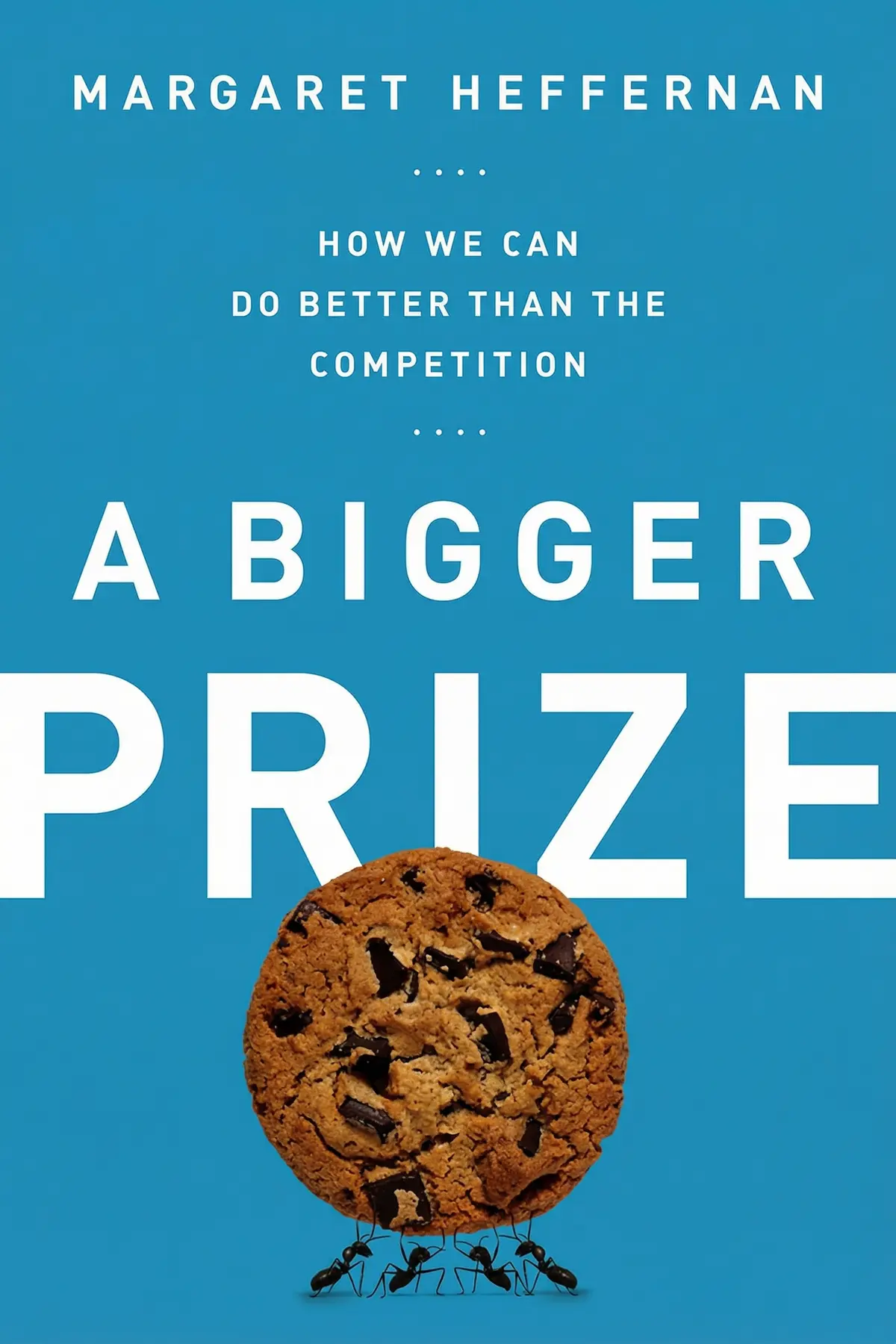
A Bigger Prize: How We Can Do Better Than the Competition
Margaret Heffernan
A Year with Peter Drucker: 52 Weeks of Coaching for Leadership Effectiveness
Joseph A. Maciariello
AUDIO SUMMARY AVAILABLE
Listen to The Soft Edge in 15 minutes
Get the key ideas from The Soft Edge by Rich Karlgaard, plus 5,000+ more titles in English and Thai.
- 5,000+ titles
- Listen as much as you want
- 7-day free trial
- Cancel anytime







