
17 min 13 sec
Laws of UX: Using Psychology to Design Better Products & Services
Laws of UX explores the intersection of psychology and design, providing essential principles for creating digital interfaces that align with human behavior, memory limitations, and ethical considerations for better user experiences.
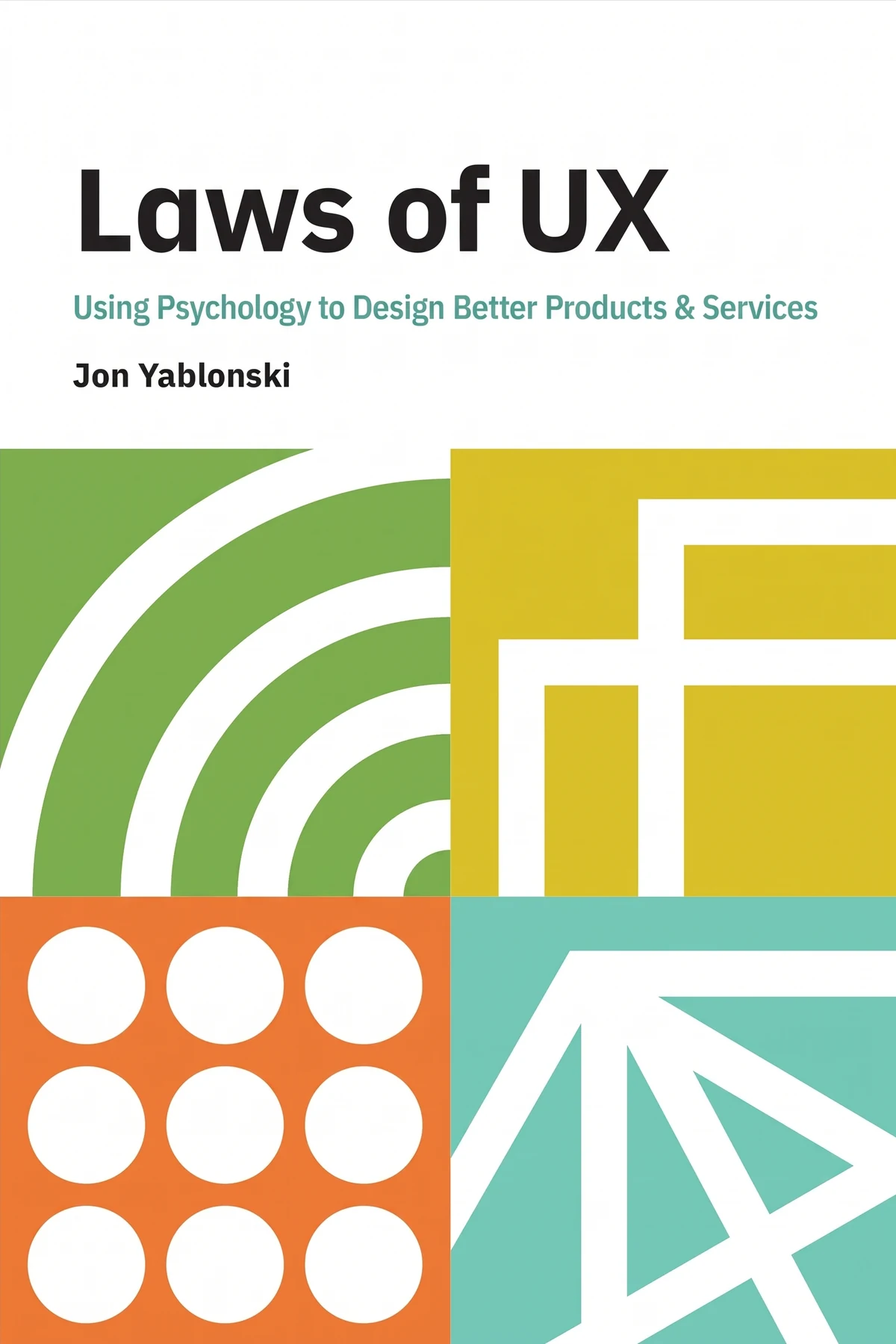
Table of Content
1. Introduction
1 min 28 sec
When we navigate the digital world, we often take for granted the invisible forces that make an app or a website feel ‘right.’ We click, we scroll, and we complete tasks with a sense of flow that seems natural. However, that seamless experience is rarely an accident. It is the result of designers carefully applying the principles of human psychology to the digital canvas. In Laws of UX, we explore the fundamental rules that dictate how we interact with technology and why certain design choices lead to success while others lead to frustration.
Good web design isn’t just about what looks visually pleasing; it’s about understanding the deep-seated behaviors and cognitive limitations of the human mind. Every time you find a search bar exactly where you expected it to be, or feel a sense of relief when a complex task is broken down into simple steps, you are experiencing these laws in action. This summary will guide you through the essential principles of user experience design, from the way we perceive space and size to the way our brains store and recall information.
As we move through these concepts, we will see how designers balance functionality with aesthetics and how they manage the inherent complexity of modern systems. We’ll also confront the ethical side of design, looking at how psychological triggers can be used to keep us hooked and why it’s more important than ever to design with empathy and integrity. By the end of this journey, you’ll have a new perspective on the digital tools you use every day and a deeper appreciation for the science of the user experience.
2. Predictability and Physical Interaction
2 min 20 sec
Explore why users prefer websites that feel familiar and how the physical size and placement of buttons can make or break a digital interface.
3. Managing Choice and Memory
2 min 24 sec
Discover how simplifying choices can speed up user decisions and why grouping information into small chunks is vital for the human brain.
4. Resilience and Emotional Impact
2 min 25 sec
Learn how to build interfaces that handle user errors gracefully and why the end of an experience defines how it is remembered.
5. Beauty, Attention, and Perception
2 min 14 sec
Uncover the secret of why attractive designs are perceived as more functional and how to use contrast to guide user focus without causing sensory overload.
6. Complexity and the Need for Speed
2 min 14 sec
Examine the balance of complexity between systems and users, and why the speed of a response is the most critical factor in productivity.
7. The Ethics of Human-Centered Design
2 min 23 sec
Address the dark side of psychological design and the responsibility designers have to protect user well-being from addictive patterns.
8. Conclusion
1 min 45 sec
The world of user experience design is far more than just a collection of pretty layouts and clever buttons. As we have explored throughout Laws of UX, it is a discipline rooted deeply in the science of how we think, feel, and act. From the predictable patterns of Jakob’s Law to the high-speed demands of the Doherty Threshold, these principles serve as a roadmap for creating digital environments that work *with* the human brain rather than against it.
We have seen that the most successful designs are those that respect our limitations. They don’t overwhelm us with too many choices, they group information into manageable chunks, and they forgive our mistakes. They use beauty to build trust and contrast to guide our eyes. Most importantly, they recognize that every digital interaction is an emotional experience, with peaks and endings that stay with us long after we’ve closed the tab.
But perhaps the most important takeaway is the reminder that design is never neutral. Every choice a designer makes has the power to either empower a user or exploit them. As technology becomes an even more integrated part of our daily lives, the call for ethical, human-centered design becomes louder. By mastering these laws and applying them with empathy and integrity, creators can build a future where technology serves the person, making the complex feel simple and the digital world feel a little more like home. The next time you find yourself navigating a perfectly intuitive app, take a moment to appreciate the invisible laws at work—and remember that behind every great experience is a deep understanding of what it means to be human.
About this book
What is this book about?
Have you ever wondered why some websites feel instantly intuitive while others leave you frustrated and confused? Laws of UX provides a comprehensive look into the psychological framework that governs successful digital design. Rather than focusing solely on visual trends, this guide explores the behavioral science behind how users interact with technology. It breaks down complex theories into actionable design rules that prioritize clarity, ease of use, and human well-being. The book promises to bridge the gap between technical development and human cognition. By understanding principles like mental models, cognitive load, and visual perception, designers and developers can create products that feel natural and effortless. Beyond mere functionality, it also addresses the growing need for ethical responsibility in design, urging creators to build tools that respect user time and mental health. Whether you are a seasoned professional or a curious beginner, this summary offers a clear path toward building more humane and effective digital experiences.
Book Information
About the Author
Jon Yablonski
Jon Yablonski is a prominent American user experience designer, writer, and frontend web developer. With a career spanning more than ten years, he has contributed his expertise to a diverse range of sectors, including the retail and aerospace industries. Yablonski is also a dedicated creator of digital resources for the design community, having developed platforms such as humanebydesign.com and webfieldmanual.com to promote better design practices.
Ratings & Reviews
Ratings at a glance
What people think
Listeners find the book an engaging read and simple to comprehend, serving as a top-tier resource for design professionals, particularly UI developers. They value the effective implementation of design principles, with one listener noting that the structure makes complex ideas easy to grasp. Listeners appreciate the educational content, with one mentioning it acts as a fast reference for psychology concepts. They find the UX laws useful in daily life, and one listener points out that the book is the perfect length.
Top reviews
Som
Visual learners will absolutely thrive with Yablonski’s approach to distilling complex cognitive science into actionable design patterns. It’s rare to find a technical book that values the reader’s time as much as this one does, providing a layout that mirrors the very principles it preaches. While you can find the core "laws" on the website, the physical book provides a much more cohesive narrative that connects the dots between human behavior and interface layout. The second edition’s addition of modern case studies makes it feel particularly relevant for today’s fast-paced product environments. I found myself dog-earing the implementation techniques because they are just so practical for day-to-day work. It’s a beautifully designed object that serves as both a high-level guide and a quick-reference desk companion for when you need to justify a design decision to stakeholders.
Show moreNang
Finally got around to reading this and I’m kicking myself for not picking it up sooner as a front-end developer. Most design resources are either too abstract or too focused on software tutorials, but this bridges the gap by explaining the cognitive load our users are under. The way the author links Miller’s Law to actual navigation structures helped me rethink several of our current project’s components. It’s not an encyclopedic tome, and that’s precisely why it’s so effective; you can finish the entire thing in an afternoon and immediately start applying the lessons. Look, if you want to build software that people actually enjoy using instead of just tolerating, you need to understand these psychological fundamentals. It has earned a permanent spot on my desk for those moments when I need a quick logic check.
Show moreJune
Some design books try to be everything to everyone, but Yablonski stays focused on providing a concise, digestible framework for better UI. The momentum of the book is fantastic, flowing from one law to the next without getting bogged down in academic jargon that usually plagues psychology-based texts. Frankly, it’s refreshing to see a book that practices what it preaches regarding cognitive load and information hierarchy. Whether you are a budding designer trying to "color inside the lines" or a veteran looking for a vocabulary refresh, there is something here for you. The illustrations are top-notch and help cement the concepts in your mind far better than a wall of text ever could. It’s effectively a masterclass in "less is more," proving that a book doesn't need to be 500 pages to be essential.
Show moreMai
As someone who has been in the product design game for over a decade, I still find myself reaching for this as a mental reset. It’s easy to get lost in the weeds of specific tools and forget the foundational principles that actually dictate user satisfaction. This book serves as a perfect refresher of the college basics that often get buried under years of corporate requirements and stakeholder demands. I particularly appreciated the focus on the ethical implications of design, which is a nuance often missing from quick-tip guides. The layout is clean, the language is accessible, and the insights are immediately applicable to any digital product. It's the kind of book you can hand to a junior and know they'll actually read it because it's not intimidating or boring.
Show moreHarper
Picked this up on a whim after seeing it recommended in several UX Slack channels, and it really lived up to the reputation. It’s the most easily digestible text on UI best practices I’ve come across, making it a perfect gift for those "front-end folks" who want to understand design better. Unlike other academic books that can feel like a chore to get through, Yablonski’s writing style is engaging and stays focused on real-life application. The focus on the psychological "why" is what sets it apart, helping you understand the human brain's limitations when interacting with screens. I loved how each chapter was self-contained, allowing me to jump around to the laws that were most relevant to my current project. It’s a beautifully curated collection that every designer should probably have in their library.
Show moreSamroeng
Ever wonder why every successful app seems to follow the same predictable patterns? This book breaks down Jakob’s Law and other essential principles with such clarity that even a non-designer could grasp the underlying logic. Yablonski manages to take dense psychological concepts and translate them into a language that product teams can actually use during a sprint. Personally, I think the most valuable part is the "techniques" section at the end of each chapter, which provides a roadmap for applying these laws in real-world scenarios. My only gripe is that it’s almost too brief, as I would have loved to see even more "bad" examples to contrast with the successes. It’s a punchy, informative read that cuts through the fluff and gets straight to the point of what makes an experience intuitive.
Show moreMan
The chapter on the Peak-End Rule alone makes this worth the purchase for any UX researcher looking to sharpen their pitch to product managers. It provides a structured way to talk about the emotional journey of a user, moving beyond just "it looks nice" to "this is how people store memories of our brand." While the book is quite slim, the quality of information is high, and the modern examples feel much more current than the stale case studies found in older design manuals. I did notice some repetition in the writing style across different chapters, which can be a bit noticeable if you read it all in one sitting. However, as a reference guide to pull off the shelf during the wireframing stage, it is incredibly effective. It's a solid, practical toolkit that honors the brevity it encourages in design.
Show moreMatteo
Truth is, I was looking for a way to better explain my design decisions to my engineering leads, and this provided the perfect vocabulary. By rooting design choices in established psychological laws, it moves the conversation away from subjective "I like this" to objective "this reduces cognitive load." The second edition features some really sharp modern examples that help bridge the gap between theory and the apps we use every single day. My only minor complaint is that the implementation techniques could be a bit more varied, as they sometimes feel a little repetitive after the fifth or sixth law. Still, it’s a high-quality resource that makes high-level concepts feel very attainable for anyone on a product team. It’s a quick, punchy guide that delivers exactly what it promises without overstaying its welcome.
Show moreAey
To be fair, if you have spent more than ten minutes browsing the Laws of UX website, you have already encountered about 80% of what this book offers. It’s an aesthetically pleasing volume, but for seasoned professionals, it lacks the deep-dive analysis that many of us crave when exploring the intersection of psychology and design. The writing is clear and the examples are solid, yet I couldn't shake the feeling that I was reading an expanded blog post rather than a comprehensive textbook. It’s certainly a great starting point for juniors or developers who want to understand the "why" behind UI choices, but don’t expect any groundbreaking revelations if you’ve been in the industry for a few years. It is a nice coffee table book, but maybe not the essential deep-dive I was hoping for.
Show morePlernpiriya
Not what I expected given the massive hype this gets on design Twitter. While it's a solid introduction, it’s essentially a printed version of a website I already use, and it feels a bit light on substance for the price point. If you are brand new to the field, you might find some value in the basic definitions, but anyone with a formal education in design will find this somewhat elementary. I was hoping for more rigorous data or perhaps some newer psychological research that hasn't been rehashed a thousand times already. The production value is high, and the book looks great on a shelf, but the actual "learning" per page felt low for my specific needs. It’s a decent primer, but just too surface-level for anyone who has already read the industry classics.
Show moreReaders also enjoyed



AUDIO SUMMARY AVAILABLE
Listen to Laws of UX in 15 minutes
Get the key ideas from Laws of UX by Jon Yablonski, plus 5,000+ more titles in English and Thai.
- 5,000+ titles
- Listen as much as you want
- 7-day free trial
- Cancel anytime







