
13 min 55 sec
Lawyers, Liars and the Art of Storytelling
Explore the intersection of legal strategy and narrative technique. This guide reveals how the ancient art of storytelling transforms dry facts into persuasive arguments that captivate judges, juries, and clients alike.
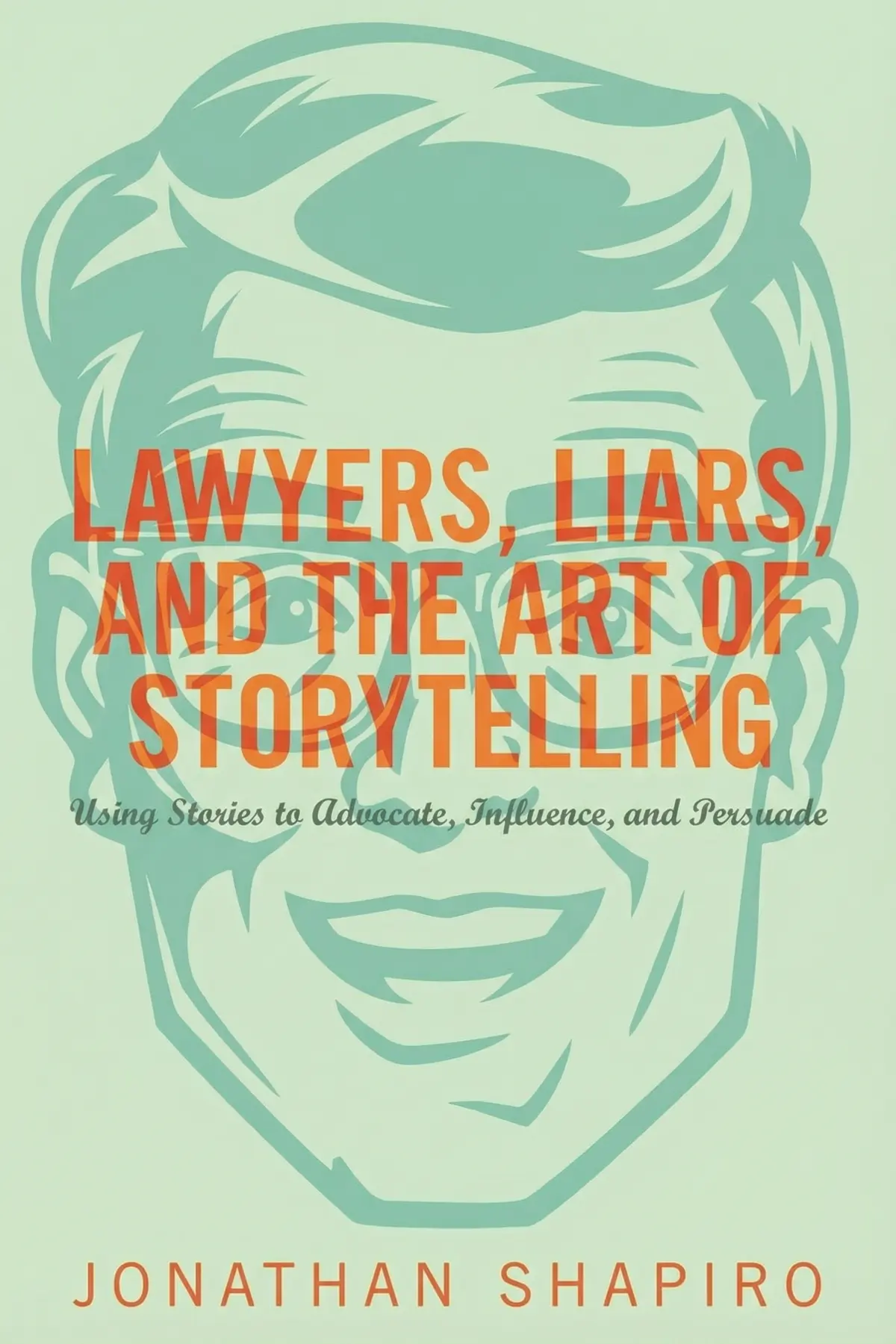
Table of Content
1. Introduction
1 min 36 sec
Picture a courtroom. Most of us imagine a scene straight out of a television drama—a lawyer pacing the floor, delivering a monologue that brings a hushed silence over the room, ending with a revelation that changes everything. We see the jury nodding, moved by the sheer weight of the narrative. But if you walk into a real courtroom or look at the curriculum of a top-tier law school, you’ll often find something much colder. You’ll find technical jargon, mountains of dry evidence, and a focus on procedural perfection that feels miles away from the human heart.
This gap between the ‘technical’ law and the ‘persuasive’ law is exactly where Jonathan Shapiro steps in. As both a seasoned attorney and a prolific Hollywood screenwriter for shows like *The Practice* and *Boston Legal*, Shapiro knows a secret that many in the legal profession have forgotten: the law is, at its core, an exercise in storytelling. Whether you are in front of a judge, a jury, or even a prospective client, your success depends on your ability to weave facts into a compelling, believable, and emotionally resonant narrative.
In this summary, we are going to explore why the skills taught in law school are often insufficient for the high-stakes world of real-world advocacy. We will dive into the ancient foundations of rhetoric that still govern human psychology today and look at how to balance logic with raw emotion. By the end of this journey, you’ll understand how to treat a legal case like a cinematic script—complete with heroes, villains, and a resolution that feels not just legally correct, but morally inevitable. Let’s look at how to turn the dry bones of evidence into a living, breathing story that wins.
2. The Education Gap in Legal Storytelling
1 min 58 sec
Discover why the traditional law school curriculum often fails to prepare attorneys for the human element of persuasion and the vital role of narrative in winning cases.
3. The Rhetorical Triangle of Persuasion
1 min 41 sec
Learn how the ancient wisdom of Aristotle provides the perfect blueprint for any legal argument through the balance of credibility, logic, and emotion.
4. Establishing Ethos Through Credibility and Appearance
1 min 38 sec
Explore why the perception of the messenger is just as important as the message itself and how small details build or break a jury’s trust.
5. The Three Steps of Logical Framing
1 min 41 sec
Discover a systematic way to build an unimpeachable argument by finding common ground and turning an opponent’s logic against them.
6. Pathos and the Art of Emotional Resonance
1 min 55 sec
Understand how to use emotion effectively without crossing into manipulation and why a delicate touch is often more powerful than a direct plea.
7. The Courtroom as a Cinematic Performance
1 min 44 sec
Learn how to treat a trial like a movie production, from scripting the narrative to mastering the subtle physical cues of a professional performer.
8. Conclusion
1 min 42 sec
In the world of law, as in the world of storytelling, the ultimate goal is to find a version of the truth that resonates. We’ve seen that the technical mastery taught in law school is only half of the equation. To truly advocate for a cause, you must be able to bridge the gap between cold facts and human experience. By using the Aristotelian triangle—ethos, logos, and pathos—you ensure that your argument is credible, logical, and emotionally compelling.
One final, powerful tool to keep in your arsenal is the concept of framing your case with a hero and a villain. It sounds simple, even a bit cliché, but human beings are hardwired to look for these roles. Even in the driest, most bureaucratic cases, there is usually a way to find a protagonist. We saw this in the story of the pesticide lobbyist who made the mandarin orange the ‘hero’ of his story. He framed the government as the ‘villain’ whose regulations would lead to the noble fruit’s extinction. By doing so, he turned a technical debate about chemicals into a dramatic battle for survival.
As you move forward in your own career or simply in your daily efforts to persuade others, remember that people rarely remember a list of facts, but they always remember a story. Look for the common ground, build your credibility through every small detail, and never be afraid to show the human side of the evidence. When you combine the precision of a lawyer with the heart of a storyteller, you don’t just win arguments—you change minds. Use these tools to craft narratives that are not just heard, but felt, and you will find that the art of storytelling is indeed the most powerful law of all.
About this book
What is this book about?
Lawyers, Liars and the Art of Storytelling bridges the gap between the rigid technicalities of the legal world and the compelling emotional resonance of Hollywood screenwriting. Written by a professional who inhabits both spheres, the book argues that winning a legal case is less about reciting statutes and more about crafting a narrative that people actually want to follow. The book promises to equip advocates with a structured approach to persuasion based on classical rhetoric. By mastering the balance of credibility, logic, and emotion, readers learn how to frame their evidence as a story with clear motivations and high stakes. It moves beyond the dry lessons of law school to provide a masterclass in influence, showing how to humanize a client, discredit an opponent through logic, and perform in the courtroom with the poise of a seasoned actor.
Book Information
About the Author
Jonathan Shapiro
Jonathan Shapiro is a multi-talented professional who has excelled as a Hollywood screenwriter, journalist, and practicing attorney. His extensive experience in the entertainment industry includes writing credits for several acclaimed television legal dramas, most notably The Blacklist, Boston Legal, and The Practice.
Ratings & Reviews
Ratings at a glance
What people think
Listeners find the book an excellent resource written with great skill, and one listener mentions how it teaches concepts without sounding condescending or overbearing. They also value its utility for legal professionals and describe it as very humorous. The narrative quality is highly regarded, with one listener specifically praising the inclusion of pertinent anecdotes from the author’s legal career.
Top reviews
Tanawan
As a first-year law student, I found this book to be a breath of fresh air in a curriculum that usually kills creativity. Shapiro argues that the heart of lawyering isn't just citations and research, but the ability to weave a compelling narrative. His writing is incredibly engaging and humorous, making it feel less like a lecture and more like a conversation over drinks. Truth is, law schools should make this required reading. The way he connects his Hollywood experience to the courtroom is brilliant. It reminded me why I wanted to join this profession in the first place—to tell stories that matter. To quote the book, creativity is often banned in law school, and Shapiro is the perfect person to bring it back.
Show moreLucas
Wow, I didn't expect a book about legal theory to be this much of a page-turner. Shapiro has a knack for blending humor with profound insights into the human condition. He treats lawyering as an art form, emphasizing that credibility and emotion are just as important as logic. I particularly enjoyed the sections on how to build ethos with an audience. The stories about his own career are not just rambling anecdotes; they are case studies in how narrative can make or break a person’s life. If you want to understand the heart and soul of the law, this is the book for you. It's an excellent read that stays with you long after you finish it.
Show moreRafael
Finally got around to reading this one after hearing Shapiro speak on a podcast. It's a breezy, enjoyable read that offers a subtle study of how narratives function in a legal setting. He avoids being pedantic or preachy, which is a rare find in legal literature. Instead, he uses his own career—both as a lawyer and a producer—to illustrate how to build a case. Some of the Hollywood stories go on a bit long, but they are relevant to his points about character and credibility. It’s funny, smart, and genuinely useful if you’re looking to add some personality to your writing. You will find yourself learning how to tell a story without even realizing it's happening.
Show moreCherry
Ever wonder why courtroom dramas feel so much more compelling than actual trials? Shapiro pulls back the curtain on that phenomenon, explaining how the art of the lie is actually the art of finding a deeper truth through storytelling. His passion for the craft is evident on every page. Personally, I loved the behind-the-scenes look at Boston Legal, though I can see why some readers might find it distracting from the legal theory. The book is very funny and manages to make complex ideas about persuasion feel accessible. It's a great pick for anyone who feels stuck in the rigid style of traditional legal writing. It proves that being a lawyer and being a creative are not mutually exclusive.
Show moreJavier
This book manages to be incredibly educational without ever feeling like a boring textbook. Jonathan Shapiro has a gift for making the legal part of lawyering feel creative and alive. I was impressed by how he explains the mechanics of storytelling through the lens of his own trials and tribulations. The tone is casual and conversational, which makes the pages fly by. My only minor gripe is the lack of a clear summary or checklist at the end of chapters; you really have to pay attention to catch the lessons. Still, it's a valuable resource for anyone who wants to improve their communication skills. It’s very funny and doesn't take itself too seriously, which I appreciated.
Show moreWachira
Whether you're a practicing attorney or just someone who enjoys a good David E. Kelley show, there's a lot to like here. Shapiro’s central argument is that lawyers are essentially storytellers, a fact often ignored in formal education. The book is filled with relevant stories that show what happens when you lose sight of the narrative. Not gonna lie, I was mostly here for the Boston Legal trivia, but I ended up taking several notes on how to structure a closing argument using logic and emotion. It’s a very funny, non-preachy look at a profession that often takes itself way too seriously. Excellent read overall for anyone interested in the heart and soul of the law.
Show moreBrooklyn
The chapter on ethos, logos, and pathos was easily the highlight of the entire experience for me. Shapiro does a solid job of refreshing these Aristotelian concepts for a modern audience, but the rest of the book feels like a collection of disjointed stories. I appreciate that he avoids a rigid how-to format, but a little more structure would have helped the flow immensely. One minute he's talking about a trial, the next he's discussing a script for a TV show. It’s a bit of a rambling journey. I did learn a few things about presentation and credibility, but I wish an editor had pushed him to stay more focused on the instructional side of the art. Great cover art, though!
Show moreCameron
Look, the premise here is genuinely fascinating, but the execution feels a bit messy. The idea of applying television writing techniques to the courtroom is a goldmine. However, Shapiro gets bogged down in very specific details about his TV career that don't always connect back to the main point. I found myself skimming through several pages of Hollywood gossip to get back to the advice on building a persuasive narrative. To be fair, there are some real gems of wisdom buried in here, particularly regarding the importance of presentation and character. It just requires some patience to find them among the anecdotes. It's an interesting look at the profession, even if it lacks a sense of flow.
Show moreAnthony
To be fair, Shapiro is clearly a gifted storyteller, but he sometimes forgets he’s supposed to be teaching us the 'how' as well. I went into this expecting a guide on the mechanics of story construction, but it felt more like a memoir about his transition from law to television. There is some useful, interesting information in Part 2, but the rest is a bit of a muddle. The cover art is fantastic, and the prose is high-quality, but the confusing structure and lack of clear guidance left me wanting more. It’s a decent book for fans of legal dramas, but perhaps less so for those seeking a strict, pedagogical manual on courtroom persuasion.
Show moreSomboon
Not what I expected. I picked this up hoping for a structured guide on improving my legal arguments, but instead, I got a memoir about writing for Boston Legal and The Practice. While some of the anecdotes were mildly entertaining, the author spends an uncomfortable amount of time praising Harvey Weinstein, which makes several chapters feel dated and cringeworthy. The structure is all over the place, and I felt like I was wading through a lot of fluff to find a single piece of actionable advice. Frankly, it could have been half the length and twice as effective. It's more about Shapiro's ego than actual pedagogy. Mostly, I think this book contributes to my skill set by showing exactly what not to do when trying to stay on point.
Show moreReaders also enjoyed
AUDIO SUMMARY AVAILABLE
Listen to Lawyers, Liars and the Art of Storytelling in 15 minutes
Get the key ideas from Lawyers, Liars and the Art of Storytelling by Jonathan Shapiro, plus 5,000+ more titles in English and Thai.
- 5,000+ titles
- Listen as much as you want
- 7-day free trial
- Cancel anytime







