The Outward Mindset: Seeing Beyond Ourselves
The Arbinger Institute
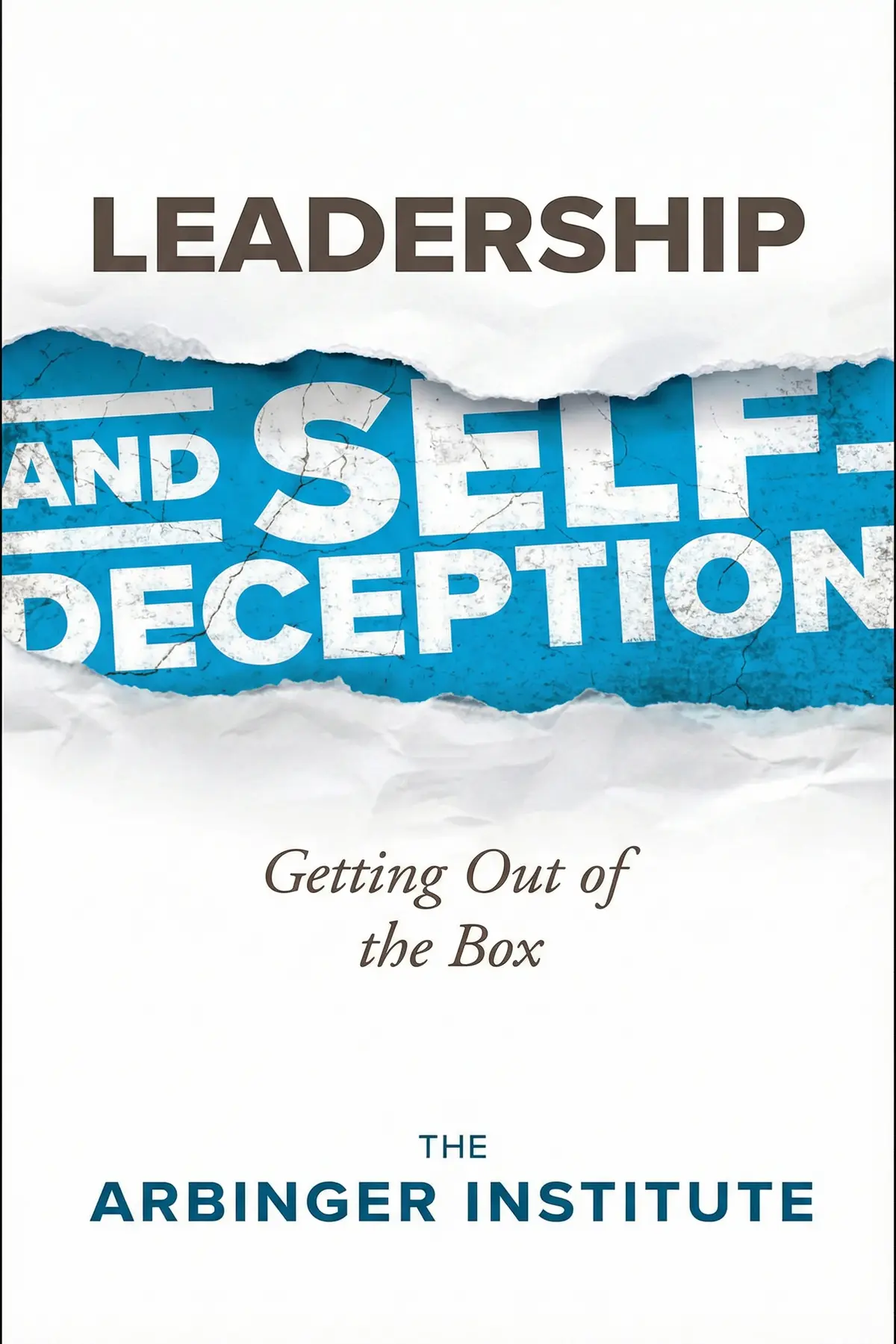
Leadership and Self-Deception reveals how our own psychological defenses create interpersonal conflicts. By understanding self-betrayal and the box of self-deception, leaders can transform organizational culture and build genuine, effective relationships.
1 min 23 sec
Have you ever felt like you were doing everything right, yet your team was still struggling? Or perhaps you’ve found yourself in a recurring argument with a loved one where, no matter how much you explain your side, the situation only gets worse. We often look for the solution in new techniques—better communication strategies, new management protocols, or conflict resolution workshops. But what if the problem isn’t what we’re doing, but who we are being while we do it?
In Leadership and Self-Deception, the core premise is that we often live in a state of self-deception, a psychological state the authors call being in the box. When we are in the box, we don’t see the world or the people around us clearly. Instead, we see a distorted reality that justifies our own behavior while casting others in a negative light. This throughline suggests that our biggest obstacles to success aren’t external challenges, but the internal walls we build to protect our own egos.
This summary will guide you through the mechanics of how we get into this box, how it sabotages our leadership, and most importantly, how we can get out. We will look at the subtle moment of self-betrayal where the cycle begins and explore how our search for self-justification creates a virus-like spread of conflict in our workplaces and homes. By the end, you’ll see that becoming a better leader isn’t about mastering a set of skills, but about shifting your fundamental perception of humanity.
1 min 43 sec
Discover how a subtle shift in perception turns our colleagues and family members into obstacles, and why this distorted view is the root of most interpersonal failures.
1 min 38 sec
Learn about the split-second decision to ignore your inner sense of what is right, and how this tiny act of betrayal launches a cycle of self-deception.
1 min 48 sec
Your mind is a master storyteller—but it’s writing fiction about everyone around you. Discover how self-justification transforms ordinary disagreements into battles where you’re always the hero and others are always wrong.
1 min 46 sec
Understand why your leadership strategies and communication skills often fail if your underlying mindset hasn’t shifted away from self-deception.
1 min 41 sec
Explore the destructive feedback loop where our defensive behavior provokes others to act poorly, giving us the perfect excuse to stay in our box.
1 min 42 sec
Learn how self-deception can spread through a company like a contagion, undermining productivity and destroying team morale.
1 min 39 sec
Discover the surprising truth about how to get out of the box, and why it’s not about what you do, but how you perceive.
1 min 38 sec
Understand the true nature of influence and how seeing others as people transforms you into a leader others actually want to follow.
1 min 37 sec
In the end, Leadership and Self-Deception brings us back to a very simple, yet profound truth: our effectiveness in every area of life—whether as a CEO, a parent, or a friend—depends on our willingness to see others as people rather than as objects. The ‘box’ is a comfortable but lonely place, built on a foundation of self-betrayal and reinforced by the bricks of self-justification. While it might protect our egos in the short term, it ultimately isolates us and sabotages our goals.
The throughline of this work is that the most important work of a leader is internal. It is the work of maintaining a ‘heart at peace.’ This requires a constant vigilance against the temptation to betray our better instincts. It means catching ourselves when we start to build a case against a colleague or a spouse. It means having the humility to admit when we are wrong and the courage to step out of the cycle of blame first.
As you move forward from this summary, the most actionable advice you can take is to change your focus. When you feel frustration or resentment building, stop looking at what the other person is doing wrong and start looking at how you are perceiving them. Ask yourself: ‘Am I seeing this person as a person or as an object?’ Then, look for a small, simple way to be helpful to them. Honor that impulse. By shifting your focus from your own justification to the needs of others, you dismantle the walls of your own box. In doing so, you don’t just become a better leader; you contribute to a more compassionate and effective world. The power to transform your relationships and your organization is already within you—it simply requires the honesty to see clearly and the kindness to act on it.
This book explores the deep-seated psychological phenomenon of self-deception, often referred to as being in the box. It argues that most problems in leadership and relationships don't stem from lack of skill, but from a fundamental shift in how we perceive others—viewing them as objects rather than people. Through the narrative of self-betrayal, the text promises a path toward greater empathy and professional effectiveness. It explains how we inadvertently provoke the very behaviors we complain about in others and offers a clear methodology for breaking these destructive cycles to achieve collective results.
The Arbinger Institute is a global consulting company comprising international and multidisciplinary scholars. It is recognized as leader in organizational culture, and its other books include The Anatomy of Peace and The Choice.
The Arbinger Institute
Listeners find this work highly absorbing and well-composed, pointing to the storytelling method as a way to make complicated psychological ideas easy to understand. The book offers deep clarity on self-perception and human connections, which helps listeners appreciate different points of view and enhance their social skills. Listeners label it a necessary read for supervisors and executives, noting its profound influence on both their private lives and professional careers.
Ever wonder why you're constantly at odds with the same three people in your life? This book explains the "victim spiral" better than anything I've encountered in years. Look, the dialogue is definitely cheesy and feels a little staged, but the psychological depth is real. The way it explains how we invite others to mistreat us just so we can feel "justified" in our resentment was a massive wake-up call for me. It’s a paradigm shift. Instead of focusing on what everyone else is doing wrong, it forces you to look at your own contribution to the conflict. It’s uncomfortable and convicting. But ultimately, it’s the only way to actually improve your relationships. Definitely a must-read for any manager struggling with team dynamics.
Show moreAfter hearing about 'the box' for years from colleagues, I finally dove in. Truth is, I expected another dry business manual, but the narrative style made it hard to put down. The concept of "self-betrayal"—not doing what you know is right and then blaming others for your guilt—is revolutionary. It explained so many stalled projects and broken communications in my department. It isn't just for work, though. The authors do a great job showing how these patterns destroy families, too. It’s a short read, maybe two sittings, but the implications linger much longer. My only gripe is the constant repetition of certain phrases, but I suppose that’s how they make the vocabulary stick. This is essential for anyone leading people.
Show moreThis book should be required reading for anyone who works in a team environment. Personally, I found the "collusion" concept to be the most insightful part of the entire text. It explains how two people can stay trapped in a cycle of mutual blame because they both need the other to be "wrong" to justify their own bad behavior. It’s a brilliant observation that clarifies so much interpersonal drama. While the writing style is simple—maybe too simple for some—the emotional weight behind it is significant. It’s helped me approach difficult conversations with a lot more humility and curiosity. If you can get past the slightly culty language, there is a wealth of wisdom here for both your professional and private life.
Show moreHonestly, the 'out of the box' party concept mentioned in the back sounds silly, but the logic throughout the book holds up. I’ve been through dozens of management workshops, and this is the first one that felt like it was actually addressing the root cause of conflict rather than just the symptoms. By focusing on how we dehumanize others to protect our own self-image, the Arbinger Institute has created a very powerful tool for culture change. It’s not just about being "nice"; it’s about being honest with yourself. The dialogue between Tom and Bud is a bit clunky at times, but it serves its purpose in making complex psychological ideas digestible. Highly recommended for anyone looking to foster a more collaborative environment.
Show morePicked this up because it was mandatory reading for my management team, and I went in with zero expectations. I usually hate these corporate fables, but the story of Tom and his boss Bud actually kept me engaged. The "box" metaphor is a bit repetitive, sure, but it perfectly illustrates how we justify our own bad behavior by demonizing others. Gotta say, seeing the specific examples of "self-betrayal" made me realize I do this at home just as much as at the office. It’s a fast read, which is a blessing. Some parts feel a bit like an HR cult initiation, but the underlying message about treating people as human beings instead of objects is something most leaders desperately need to hear. It’s not a magic pill, but it’s a great mirror for personal growth.
Show moreAs someone who has read a lot of leadership fluff, this actually hit different. The focus isn't on "tactics" or "hacks," but on your fundamental way of being. In my experience, most workplace issues stem from the exact self-deception described here. We treat coworkers like obstacles or cogs rather than people with their own valid needs and fears. The example about the guy parking in the handicap spot while faking a limp was a perfect illustration of how far we go to justify our nonsense. It’s a bit repetitive, and the format is definitely an acquired taste, but the takeaways are practical. It’s helped me stop blaming my team for things I’m actually responsible for as their leader.
Show moreWow, I didn't expect a business book to make me feel this guilty about how I treat my spouse. Not gonna lie, I bought this for the "Leadership" title, but the chapters on how we deceive ourselves at home were what really stuck. The story about the baby crying in the night and the father's internal monologue was so relatable it was painful. It perfectly captures how we turn our partners into "objects" to avoid our own responsibilities. The "box" terminology is a bit silly, but as a mental shorthand, it works for our family now. My only complaint is that the book ignores systemic issues in favor of individual psychology, but for what it is, it's incredibly effective at improving self-awareness.
Show moreThe chapter on self-betrayal really forced me to stop and reflect on my management style. I’ve always considered myself a "good" manager, but this book highlighted how often I use my own "learnedness" as a shield to avoid actually listening to my staff. Actually, that’s the most dangerous form of self-deception. The writing is very accessible, though I agree with others that it can feel a bit repetitive. The authors really want to make sure you understand the metaphor! It’s an easy, two-hour read that provides a solid framework for improving emotional intelligence. It’s definitely more about "heart" than "strategy," which is a refreshing change of pace in the business section. It should be on every manager's shelf.
Show moreTom is an exhausting character to follow. He's so emotionally stunted that it's hard to believe he reached an executive level, which makes the "fable" part of the book feel a bit unrealistic at times. Frankly, the book belabors its points until they are ground into dust. "Are you in the box? Why are you in the box? Let's talk more about the box." It’s a lot to take in over 170 pages. However, I can't deny that the core message about externalizing our problems is valid. We all blame others to protect our egos. The book is useful as a conversation starter for teams, but the "HR cult" vibe is definitely present. It’s okay, but maybe a bit too fluffy for my taste.
Show moreThe core concept here is basically just the Golden Rule wrapped in corporate jargon. To be fair, the authors try to make it accessible through a narrative about a guy named Tom, but it ends up feeling condescending and long-winded. We spend nearly 200 pages learning that we shouldn't be jerks. Do we really need a proprietary term like "the box" to understand empathy? The repetitive nature of the COO’s interrogation of Tom felt like a bad HR training video from the 90s. While I appreciate the focus on self-awareness, the "pseudo-philosophical" tone was a major turn-off. If you’ve ever read any basic philosophy or psychology, you’ll find this incredibly thin and overpriced for the actual content provided. I'd skip the fable and just read a summary.
Show more
Joseph A. Maciariello

Andrew D. Thompson




Deepak Chopra

Deborah Gruenfeld

Mike Michalowicz

AUDIO SUMMARY AVAILABLE
Get the key ideas from Leadership and Self-Deception by The Arbinger Institute, plus 5,000+ more titles in English and Thai.