

13 min 42 sec
Leadership Is an Art
By Max De Pree
A transformative look at management that replaces cold efficiency with human connection, arguing that true leadership is an art form focused on liberating the potential of every individual in an organization.
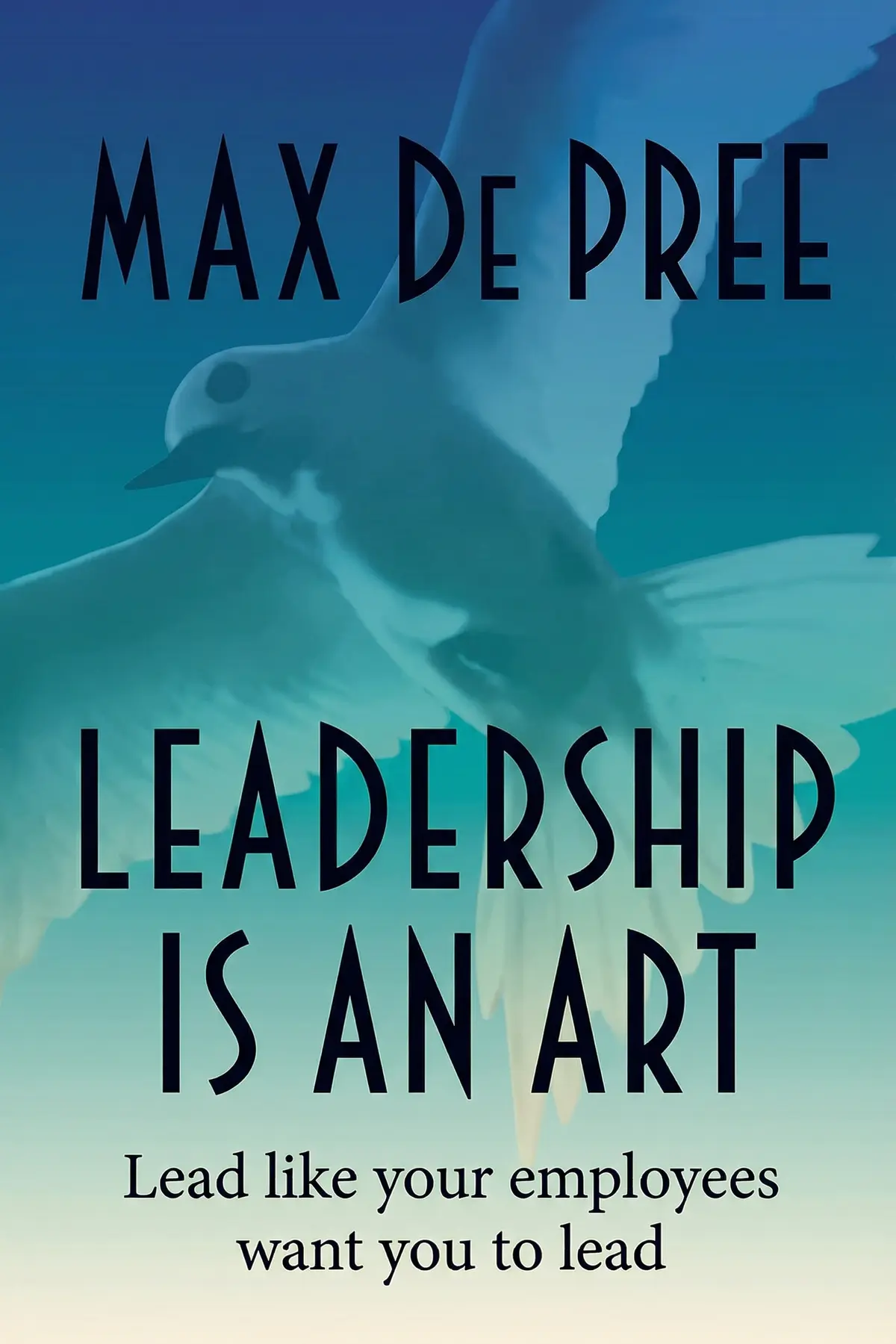
Table of Content
1. Introduction
1 min 38 sec
When we think of the great leaders throughout history, we often conjure images of high-stakes strategists or charismatic figures commanding legions. But if we pull back the curtain on the world of modern business, we frequently find a much colder reality. For decades, management has been taught as a science of metrics, a series of levers to pull to maximize output and minimize cost. This approach often treats human beings as interchangeable parts in a massive machine. However, there is a different way to look at the hierarchy of work—a way that views the relationship between a leader and their team not as a transaction, but as a masterpiece in progress.
In this exploration of Leadership Is an Art, we move away from the aggressive tactics of the past and toward a more graceful, effective philosophy. The central idea here is that leadership is a debt that one owes to their followers. It is a responsibility to create an environment where everyone can reach their full potential. It’s about more than just the bottom line; it’s about the spirit of the organization and the dignity of the individuals who make it run.
Over the next few minutes, we’ll look at how the best leaders act as stewards rather than masters. We will uncover the power of a shared vision, the importance of moving from rigid contracts to deep personal commitments, and the reason why listening is perhaps the most vital tool in a manager’s arsenal. If you’ve ever felt that there must be a more humane, meaningful way to run a team or a company, you’re about to find the roadmap. We are looking for the heart of the organization, and as you’ll see, finding that heart is the first step toward true, sustainable excellence.
2. Defining the Path Through Values and Vision
1 min 50 sec
Before a team can move forward, they must know why they are moving and where they are headed. Discover how a leader’s primary duty is to provide a clear sense of direction.
3. The Power of Ownership and Shared Success
1 min 45 sec
What happens when every employee feels like the company belongs to them? Learn why fostering a sense of ownership is the ultimate motivator for excellence.
4. Nurturing Covenantal Relationships
1 min 44 sec
Explore the difference between a cold legal contract and a deep personal commitment, and why the latter is the secret to a thriving workplace.
5. Communication as the Lifeblood of Leadership
1 min 42 sec
Effective leadership isn’t just about talking; it’s about the art of listening. Discover why open channels of information are vital for organizational health.
6. Navigating Change Through Human Potential
1 min 42 sec
Change is inevitable and often frightening. Learn how to transform organizational shifts into opportunities for creativity and growth.
7. The Elegance of Benevolent Power
1 min 56 sec
What distinguishes a boss from a truly elegant leader? Learn why restraint, thoughtfulness, and service are the hallmarks of great authority.
8. Conclusion
1 min 25 sec
As we wrap up our journey through Max De Pree’s vision of leadership, the primary takeaway is clear: leadership is not a set of skills to be mastered, but a way of being to be cultivated. It is an art form that requires constant practice, immense patience, and a deep, abiding respect for the human spirit.
We have seen that a great leader doesn’t just give orders; they provide a compass of values and a map of vision. They foster a culture where every person feels like an owner and where relationships are built on the solid ground of covenants rather than the fragile ice of mere contracts. They understand that communication is a two-way street and that the most important work of a manager happens during the act of listening.
Perhaps the most vital lesson is that leadership is about service. It is the debt you owe to the people you lead. Your job is to create the conditions for their success, to remove the hurdles in their path, and to treat them with the dignity they deserve as human beings. When you lead this way, you don’t just achieve financial success; you build an organization that is healthy, resilient, and full of life.
So, as you move back into your own professional world, ask yourself: How can I be more of an artist today? How can I serve my team more effectively? Remember that the power you hold is a responsibility. Use it to listen, to empower, and to lead with elegance. By focusing on the potential of others, you will find that your own potential as a leader is truly limitless.
About this book
What is this book about?
What does it mean to lead with soul? In this classic exploration of organizational culture, the traditional image of the powerful, order-barking executive is replaced by a more nuanced and effective figure: the leader as a servant and an artist. This summary delves into the philosophy of 'covenantal relationships,' a framework that moves beyond mere employment contracts to create deep, meaningful bonds between people and their work. Through the lens of real-world success, you will explore how defining a clear vision, embracing change, and fostering a culture of inclusivity can lead to both financial prosperity and personal fulfillment. It provides a blueprint for creating an environment where employees act as owners, ideas flow freely, and the primary role of a leader is to remove the obstacles preventing others from succeeding. It is a promise that leading with kindness and respect is not just a moral choice, but the most practical path to long-term excellence.
Book Information
About the Author
Max De Pree
Max De Pree served as the longtime CEO of Herman Miller, the pioneering furniture company founded by his father. He is widely recognized as a visionary in the field of management and is the bestselling author of other influential titles, including Leadership Jazz and Leading Without Power.
Ratings & Reviews
Ratings at a glance
What people think
Listeners describe this leadership guide as both educational and accessible, valuing the numerous insights provided regarding servant leadership. The work functions as a brief yet significant volume, and one listener points out its enduring wisdom. It is considered quite motivating, with one listener emphasizing its principle-driven, Christian-focused perspective on leading others. Although the core ideas are well-received, opinions on the quality of information are varied, as one listener characterizes the text as being packed with broad, non-specific platitudes. The material stays applicable regardless of the era, with one listener observing that the advice provided never appears out of date.
Top reviews
Kan
Rarely do I find a business book that resonates on such a deep, human level. Max De Pree doesn't just offer tips on how to manage a spreadsheet; he invites you into a philosophy of servant leadership that feels both radical and essential. The idea that a leader is a 'debtor' to their employees is a paradigm shift I wasn’t expecting from a CEO of a major furniture company like Herman Miller. While the book was written decades ago, the core principles about treating people as whole individuals with unique gifts remain incredibly relevant. It’s a short read, but you’ll find yourself pausing on every other page to reflect on your own conduct. Frankly, the emphasis on a 'covenantal relationship' between a company and its staff is something modern HR departments should study closely. It’s a beautiful, principle-centered guide that focuses on the 'why' of leadership rather than just the 'how.'
Show moreSakura
Max De Pree manages to bridge the gap between corporate efficiency and artistic expression in a way that feels utterly fresh, even decades later. This isn't your standard 'how-to' guide filled with charts and graphs. Instead, it’s a meditative look at the 'art' of liberating people to do their best work. I was particularly struck by his focus on the 'diversity of gifts' within a team. He argues that leadership is about stewardship, not power. As someone who has grown tired of the hollow jargon found in modern LinkedIn posts, reading De Pree’s authentic reflections on integrity and 'job intimacy' felt like a breath of fresh air. It’s a short read, but it demands your full attention. The wisdom here is distilled from years of actual experience at the helm of a successful company, making it far more valuable than theoretical academic texts. Every manager should keep a copy on their desk.
Show moreMingkwan
After hearing a quote about leaders bearing pain rather than inflicting it, I knew I had to find the source. This book is a masterpiece of principle-centered leadership. De Pree’s vision of the corporation as a community rather than a machine is something we desperately need to rediscover in today's gig economy. I loved the emphasis on storytelling and the 'tribal' nature of successful organizations. He speaks about the right of the employee to be needed and involved, which sounds almost radical even by today’s standards. The writing is gentle yet firm, and the Christian worldview provides a solid ethical foundation that feels inclusive rather than restrictive. I finished it in one sitting but I know I’ll be coming back to my highlighted sections for years to come. It’s a rare book that manages to be both a business classic and a deeply personal reflection on what it means to be human in the workplace.
Show moreNing
Picked this up after my mentor suggested it as a 'quick but vital' read for new managers. I was pleasantly surprised by how much wisdom is packed into such a slim volume. De Pree’s Christian-oriented approach is evident, but it never feels like it's proselytizing; instead, it provides a sturdy moral compass for making tough corporate decisions. The concept of 'roving leaders'—those people who step up in specific situations regardless of their title—is a brilliant observation of how healthy organizations actually function. To be fair, some of the Herman Miller anecdotes feel a bit dated, and the structure is somewhat loose, but the insights on communication and vulnerability are timeless. A leader’s first job is to define reality and their last is to say thank you. That alone is worth the price of the book. It's a refreshing change from the typical aggressive 'Art of War' style business books.
Show morePaiboon
To be fair, I went into this expecting a dry manual on furniture manufacturing, but I came away with a completely different mindset regarding institutional life. The truth is that most leadership books are bloated, yet De Pree keeps things concise and punchy. He focuses heavily on the idea that leaders should bear pain rather than inflict it, which is a convicting thought for anyone in a position of authority. I did find the writing style a bit disjointed in places, jumping from one philosophical thought to another without much transition. Some might call it 'poetic,' but others might find it a bit sophomoric. However, the underlying message of participative management and shared ownership is powerful. It’s a very quick read that manages to be both informative and inspirational without being overly sappy. It’s definitely a book about ideas rather than specific practices, which works if you’re looking for a mindset shift.
Show moreTaweesak
Looking at this through a late-80s lens, it’s actually quite radical to suggest that workers should be treated with such dignity and shared ownership. De Pree was clearly ahead of his time with the Scanlon Plan and his focus on 'participative ownership.' The book is essentially a series of essays that challenge the traditional hierarchical structures of the corporate world. While I'll admit that some parts felt a bit like reading a series of high school metaphors, the weight of De Pree's experience as CEO gives the words real gravity. He doesn't shy away from the 'why' of business, arguing that profit is like breathing—indispensable, but not the purpose of life. My only real gripe is that it can feel a bit repetitive, as if he’s trying to hit the same note from different angles. Still, it’s an important read for anyone who wants to lead with a conscience.
Show moreTom
Wow, what a punchy little volume. I wasn't sure if a 30-year-old book about a furniture company would hold up, but the wisdom here is truly timeless. It’s more of a philosophy book than a business book, focusing on the character of the leader rather than the tactics of the trade. I appreciated how short the chapters are, making it an easy read for a busy morning commute. De Pree's focus on 'lavish communication' and the importance of 'saying thank you' are simple habits that most managers still fail to master today. There's a bit of fluff in the middle, and a few of the stories feel a bit too abstract to be useful, but the overall sentiment is incredibly motivating. It makes you want to be a better person, not just a better boss. Definitely worth adding to your professional library.
Show moreSaengdao
The distinction between 'roving leaders' and hierarchical leaders is perhaps the most useful takeaway here for any growing organization. Max De Pree writes with a humility that is often missing in modern CEO memoirs. He doesn't claim to have all the answers, but he asks the right questions about how we treat each other in the workplace. I found the section on organizational entropy particularly insightful; he lists the warning signs of a company in decline, like the loss of a sense of humor or the rise of 'impertinent reports.' While some readers might find his style a bit too 'Confucius-like' and lacking in data, I think the focus on relationships and values is exactly what’s missing in today’s metrics-obsessed culture. It’s a quiet, thoughtful book that stays with you long after you’ve put it down. A solid four stars for its heart and its enduring relevance.
Show moreA
Does leadership really need to be this cryptic? I've heard so many people rave about this book, but I found it to be a bit of a mixed bag. On one hand, the spirit of the book is wonderful—who wouldn't want to work for a leader who values people over profits? On the other hand, the information quality is somewhat inconsistent. Many of the chapters feel like a collection of random thoughts that weren't quite edited into a cohesive argument. The author uses his own terminology like 'giants' and 'roving leadership' without always giving clear definitions, which left me feeling a bit lost. It’s definitely a product of its time, and while the servant leadership concepts are great, they are often buried under layers of metaphors that don't always land. It’s worth a read for the historical perspective on Herman Miller, but don’t expect a clear roadmap for your own career.
Show moreLena
Maybe it’s just the age of the text, but I found this collection of essays incredibly frustrating to navigate. I really wanted to like it because of the high praise it receives, but the writing is meandering and full of vague general platitudes that don't offer much in the way of actionable advice. De Pree includes bizarre chapter titles like 'Pink Ice in the Urinal' which feel more like inside jokes than professional metaphors. At times, the prose feels Confucius-like in its cryptic nature, making me re-read paragraphs just to figure out what the point was. While I appreciate the sentiment of being nice to people, I don't need 150 pages of repetition to tell me that. It felt more like a series of sermon notes from the 80s than a structured leadership manual. If you want concrete strategies, you should probably look elsewhere.
Show moreReaders also enjoyed
A Year with Peter Drucker: 52 Weeks of Coaching for Leadership Effectiveness
Joseph A. Maciariello


Acting with Power: Why We Are More Powerful Than We Believe
Deborah Gruenfeld
All In: How Great Leaders Build Unstoppable Teams
Mike Michalowicz
AUDIO SUMMARY AVAILABLE
Listen to Leadership Is an Art in 15 minutes
Get the key ideas from Leadership Is an Art by Max De Pree, plus 5,000+ more titles in English and Thai.
- 5,000+ titles
- Listen as much as you want
- 7-day free trial
- Cancel anytime







