
21 min 08 sec
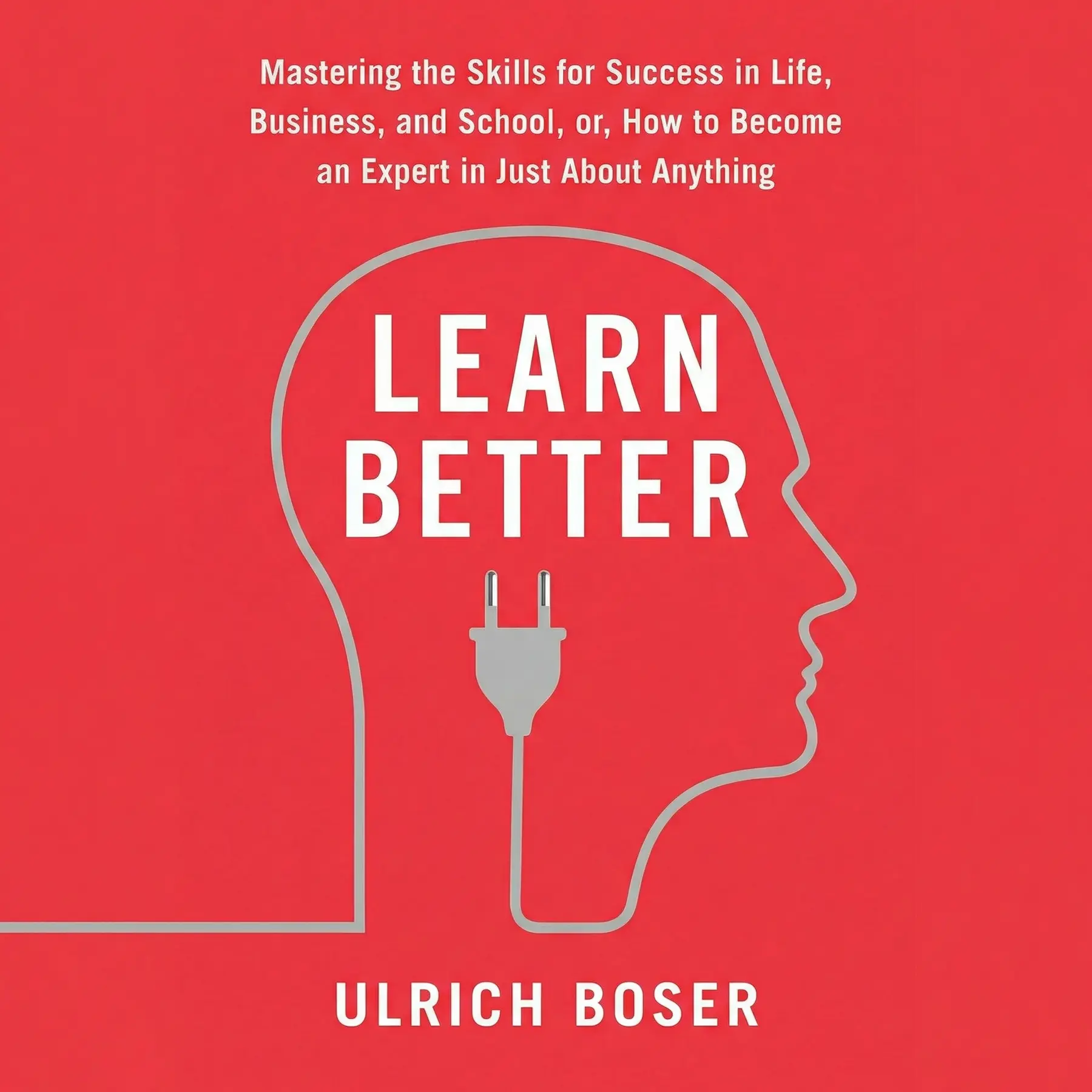
Learn Better: Mastering the Skills for Success in Life, Business, and School, or, How to Become an Expert in Just About Anything
By Ulrich Boser
Learn Better explores the science of effective learning, revealing that mastery is a skill anyone can acquire through a structured six-step process, moving beyond the myth of innate talent to achieve true expertise.
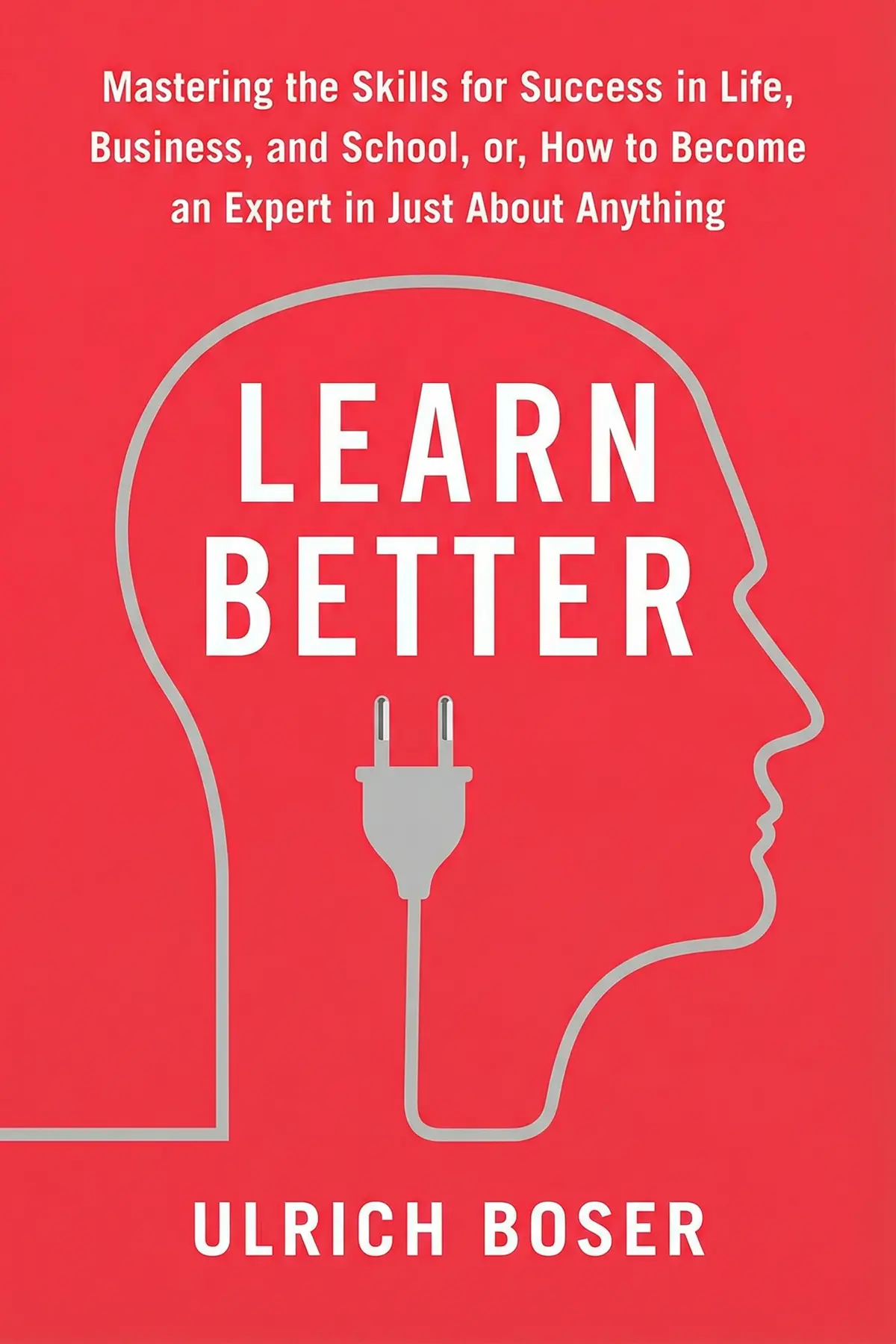
Table of Content
1. Introduction
1 min 39 sec
We often look at experts—whether they are world-class musicians, brilliant scientists, or master craftsmen—and assume they possess some invisible spark of genius that the rest of us simply lack. We tell ourselves that they have photographic memories or an innate brilliance that makes learning effortless. But what if that assumption is not only wrong but is actually the very thing holding you back from your own greatness?
Learning is not a fixed capacity determined at birth. It is a process, a series of techniques, and most importantly, a skill that can be developed. Think of it like a set of tools in a toolbox. If you try to build a house using only a hammer, you are going to struggle. But if you learn how to use the saw, the level, and the drill, the task becomes entirely different. This is the core promise of the insights we are about to explore. You do not need to be the next Newton to master a complex subject; you just need to understand the mechanics of how information moves from the page into your long-term understanding.
In the following sections, we will walk through a systematic six-step approach to mastering any subject. We will move beyond the old-fashioned idea of just hitting the books and instead look at how to make learning more efficient, more engaging, and significantly more effective. From the way you motivate yourself to the way you handle mistakes, these strategies provide a roadmap for anyone looking to become an expert in their chosen field. Whether you want to conquer a new language, understand high-level statistics, or improve your physical skills, the throughline is clear: it is not about how smart you are, but about how you engage with the process of becoming smarter.
2. The Strategy of Learning
2 min 43 sec
Discover why strategy often trumps natural talent and how simple changes in your study habits can boost your memory by fifty percent.
3. Finding Internal Value
2 min 21 sec
Uncover the secret to staying motivated even with dry subjects by connecting new information to your personal passions and goals.
4. The Power of Targeted Goals
2 min 23 sec
Learn why big ambitions need small targets and how a solid grasp of the basics is the essential first step to any complex skill.
5. The Feedback Loop
2 min 33 sec
Explore why an outside perspective is vital for improvement and how tracking your own errors can lead to near-perfection.
6. Extending Knowledge Through Visualization
2 min 44 sec
See how true experts push past the basics by embracing complexity and using vivid mental imagery to lock in difficult facts.
7. Relating Concepts and Varying Practice
2 min 25 sec
Unlock a deeper level of understanding by learning how different ideas interact and why changing your routine is better than repetition.
8. The Humility of Rethinking
2 min 27 sec
Avoid the trap of the ‘victory disease’ by learning to constantly question your own knowledge and recognize your blind spots.
9. Conclusion
1 min 53 sec
Mastering the art of learning is one of the most transformative skills you can ever acquire. It is the ‘meta-skill’ that makes every other ambition possible. Throughout this exploration, we have seen that the path to expertise is not reserved for a lucky few with high IQs or specialized genes. Instead, it is a structured journey that anyone can embark upon if they have the right map.
To recap the journey: start by finding the personal ‘Value’ in what you are doing so that your motivation remains high. Set specific ‘Targets’ to make the process manageable and ensure your basics are solid. Seek out ‘Development’ through constant feedback and the tracking of your mistakes. ‘Extend’ your reach by looking for complex patterns and using visualization to lock in what you’ve learned. ‘Relate’ different concepts to one another and use varied practice to keep your brain active. And finally, always have the courage to ‘Rethink’ and review your knowledge to avoid the trap of overconfidence.
As a final piece of actionable advice, remember the power of spacing. Don’t try to cram all your learning into one marathon session. Your brain needs time to process and consolidate new information. By breaking your study into smaller goals and spreading them out over days or weeks, you give your memory the breathing room it needs to truly solidify. This isn’t just about working harder; it’s about working in harmony with how your brain actually functions. So, whatever it is you’ve been wanting to master—a new hobby, a professional certification, or a complex academic subject—know that the tools are now in your hands. Take the first step, find your value, and start learning better.
About this book
What is this book about?
Have you ever felt like you simply weren't born with the right brain for a certain subject? Learn Better dismantles the idea that intelligence is a fixed trait we are born with. Instead, it presents learning as a deliberate practice, a methodology that can be refined and mastered. By shifting our focus from what we learn to how we learn, we can unlock potential we never knew we had. The book introduces a comprehensive six-step framework designed to transform anyone into an expert. This journey moves through finding personal value in a topic, setting precise targets, seeking active feedback, extending knowledge through complex patterns, relating different concepts, and maintaining the humility to rethink what we think we know. Through a blend of scientific research and real-world anecdotes—ranging from dart-throwing students to brain surgeons—this summary provides the tools to excel in any field, whether you are in a classroom, a boardroom, or a backyard court.
Book Information
About the Author
Ulrich Boser
Ulrich Boser is a multifaceted professional who has served as an editor, writer, reporter, and researcher focused on education. His insights have been featured in prestigious publications such as the New York Times, the Wall Street Journal, Slate, Wired, and Newsweek. Interestingly, his passion for the science of learning stems from his own childhood experiences; having been labeled a slow learner by his teachers, he became fascinated by how the mind actually acquires and retains skills. His bibliography includes works such as The Gardner Heist and The Leap, alongside Learn Better.
Ratings & Reviews
Ratings at a glance
What people think
Listeners view this book as essential for teachers and parents, delivering effective practical techniques to boost learning along with a beneficial system for evaluation. The depth of information is praised, with one listener highlighting the thoroughly researched nature of the content. On the other hand, the writing style gets varied feedback; while some deem it well-crafted, others take issue with sentence structure errors. Listeners value the narrative technique, with one specifically mentioning the author’s personal learning journey, and they feel the book is a worthwhile investment.
Top reviews
Yindee
This book provides a much-needed mental model for anyone looking to master a new skill in our fast-paced world. Boser breaks down the learning process into six clear stages: Value, Target, Develop, Extend, Relate, and Rethink. I found the 'Extend' phase particularly enlightening, as it pushes you to train right at the edge of your current abilities rather than just coasting. To be fair, while much of the research on metacognition isn't brand new, the way it’s organized here makes it incredibly actionable for laypeople. I’ve already started using the self-quizzing techniques for my professional certification prep, and the results are noticeable. It’s well-researched and provides a great framework for evaluation that many other pop-science books lack. This is a must-read for anyone who feels like they’ve hit a plateau in their personal or professional development.
Show moreWacharapol
After hearing about this on a podcast, I was curious about how 'metacognition' actually works in practice, and this book delivered. Boser manages to take dense academic research and turn it into something that feels personal and achievable. I loved the emphasis on 'Rethinking'—taking the time for silence and reflection to let your background brain process information. The back of the book is a goldmine of strategies and summaries that make it easy to implement the ideas immediately. I’ve started using his 'Value' and 'Target' steps for my German language studies, and it has completely changed my approach. Instead of mindless repetition, I’m now focusing on specific, measurable outcomes. This book is a must-read for anyone who wants to stop wasting time on ineffective study methods. Truly well-researched and worth the investment.
Show moreNang
Finally got around to this after seeing it recommended for parents, and I think it’s a brilliant guide. The concept that we need to see 'Value' in what we are learning before our brains will truly engage is something I see play out with my own kids every day. Boser’s writing is engaging, and he does a great job of illustrating the benefits of his methods through real-world examples. The way he describes 'metacognition'—taking a step back to think about your own thinking—is a game changer for anyone trying to master a complex subject. Although there are a few minor editing misses, the framework he provides is robust and easy to follow. It’s well-researched content that feels both authoritative and approachable. If you want to improve your ability to learn in general, this is a fantastic place to start.
Show moreJune
Ever wonder why certain students struggle while others thrive? Boser suggests it isn't just about raw intelligence but rather how we manage our own learning processes. As a parent, I found the practical ways to improve learning through 'targeting' and 'feedback' to be highly relevant for helping my kids with their homework. The storytelling approach kept me engaged, especially the author’s personal journey of learning new tasks. Some of the sentence structure errors were a bit distracting, and a few sections felt like they could have used a tighter edit, but the core message remains powerful. The information quality is high, and the strategies for 'thinking about thinking' are tools that every educator should have in their kit. It’s definitely worth its price for the bibliography and summaries alone.
Show moreGun
As an educator, I found Boser’s framework—Value, Target, Develop, Extend, Relate, Rethink—to be a useful rubric for curriculum design. The book emphasizes that learning is a skill that can be developed, which is a vital message for students who feel 'stuck.' I particularly appreciated the section on 'Relate,' which discusses using analogies and finding patterns to cement knowledge. While some critics argue that the categories are arbitrary or should be parallel rather than successive, they provide a great starting point for those new to the science of learning. The writing is generally accessible, though I did notice some of the sentence structure issues mentioned by others. Despite its minor flaws, the book offers plenty of practical ways to improve one's study habits. It’s a solid addition to any teacher’s bookshelf.
Show moreMoo
Ulrich Boser has crafted an accessible entry point into the world of pedagogical science with 'Learn Better.' The book is well-paced and organized, focusing on the big picture of how we structure our approach to new information. I found the sections on self-quizzing and the importance of rapid feedback particularly useful for my own professional training sessions. While it is occasionally a bit heavy on the anecdotes, much like a Malcolm Gladwell book, the core information quality is excellent. Some of the criticisms regarding writing style and typos are valid, but they don't overshadow the practical value of the six-step framework. It’s a great resource for parents who want to understand the modern science behind effective education. Overall, it's a very informative read that encourages you to monitor your own learning process more closely.
Show moreSamart
Picked this up hoping for a rigorous look at neurobiology, but it’s definitely more of a 'popular science' title driven by anecdotes. Frankly, it felt like it could have been summarized in one well-written blog post rather than filling a whole book. While the advice on spaced repetition and self-quizzing is solid, Boser has a habit of giving new names to established concepts. For example, he spends a lot of time on the 'forgetting curve' without properly crediting Ebbinghaus or explaining the deeper history of the Leitner box system. The repetition within the chapters is also quite heavy; I felt like I was being told the same thing about feedback over and over again. It’s a decent introductory text for a complete novice, but if you’ve read any cognitive psychology before, you might find yourself skimming most of the stories to get to the actual data.
Show moreSatit
The chapter on analogies felt a bit off-base to me, as it seemed to be more about pattern matching than true analogical reasoning. Look, the book isn't bad, but it follows that very formulaic non-fiction style: 'This person is a professor at X University, and one day they wondered Y.' It gets tiresome after the fifth or sixth anecdote. The truth is, Boser provides a narrative format for research that is probably better served by a more structured text like 'The ABCs of Learning.' I also found the author’s claim that he was too young at six to draw a mustache on a painting to be a bit silly—kids do that stuff all the time! It's a quick, skimmable read, and the individual points regarding techniques like Anki are accurate, but the 'discoveries' aren't nearly as revolutionary as the tone suggests.
Show moreLincoln
Gotta say, if you’ve taken the 'Learning How to Learn' course on Coursera, this book might feel redundant. It covers many of the same takeaways, like the power of recall and spaced repetition, but with more fluff. The author’s attempt to brand these methods as a unique system called 'Learn Better' feels a bit like marketing over substance. I also struggled with some of the jumps in logic, such as his take on how people approach PowerPoint presentations. However, if you prefer learning through stories and contemporary examples rather than dry academic text, you might enjoy this more than I did. The research is technically accurate, and the methods definitely work if you apply them. I just wish it had been about 100 pages shorter and focused more on the 'why' rather than the 'who' of the research.
Show moreSook
Not what I expected, to be fair. I found the writing quality to be quite poor in places, with frequent typos and odd non-sequiturs that hampered the meaning of the research. One moment he’s talking about how people don’t notice a fight on the street, and the next he’s justifying buying a new grill through confirmation bias—it just didn’t click. He also avoids using standard terminology like Vygotsky’s Zone of Proximal Development, opting instead to reference some researcher he had coffee with, which feels a bit lazy for a book claiming expertise. The claim that everyone is overconfident about how a toilet works felt like a weird, broad generalization that didn’t add much to the argument. There is good content buried here, but the lack of a strong editor and the repackaging of old ideas as 'new' discoveries made it a frustrating read.
Show moreFeatured in
Readers also enjoyed
AUDIO SUMMARY AVAILABLE
Listen to Learn Better in 15 minutes
Get the key ideas from Learn Better by Ulrich Boser, plus 5,000+ more titles in English and Thai.
- 5,000+ titles
- Listen as much as you want
- 7-day free trial
- Cancel anytime







