
11 min 11 sec
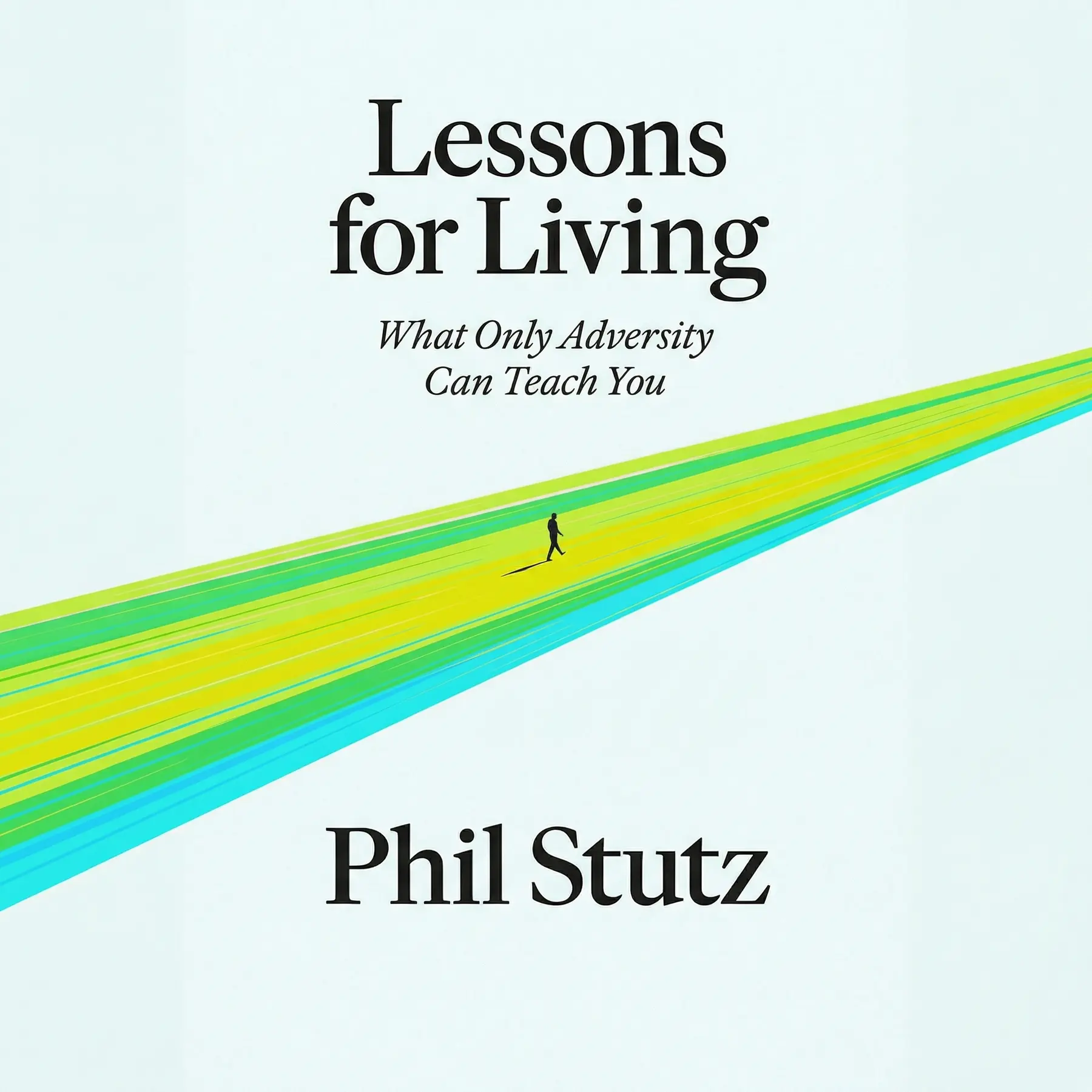
Lessons for Living: What Only Adversity Can Teach You
By Phil Stutz
Phil Stutz offers a practical roadmap for transforming life's inevitable hardships into sources of strength. By utilizing "The Tools," listeners learn to harness higher forces to overcome depression, dissatisfaction, and a lack of discipline.
Table of Content
1. Introduction
2 min 02 sec
In the world of psychology, there is often a sharp divide between those who want to talk about the past and those who want to fix the present. Phil Stutz belongs firmly in the latter camp. You might recognize him from the acclaimed Netflix documentary bearing his name, where his vulnerable and direct approach to therapy captured the public’s imagination. While he is often labeled as the therapist to the elite in Hollywood and Silicon Valley, his roots are much more grounded. His career began in the challenging environment of the prison system, a place where theoretical talk rarely leads to practical survival. It was there, and in his subsequent decades of private practice, that Stutz realized something critical: traditional psychotherapy often moves too slowly. It leaves patients waiting for a breakthrough while their lives continue to unravel in real-time.
Stutz’s core philosophy, developed alongside his partner Barry Michels, centers on what they call “The Tools.” These are not just ideas; they are active interventions designed to be used in the heat of the moment. This approach is built on the belief that we are not meant to navigate life’s hardships alone. Instead, we must learn to tap into forces larger than ourselves—higher powers that offer energy and direction when our own reserves run dry.
We often view adversity as a mistake or a sign that we’ve taken a wrong turn. But Stutz suggests the opposite. He argues that ease and comfort actually prevent us from growing. It is only when we are pushed to the brink—by loss, failure, or deep unhappiness—that we are forced to reach out for these higher energies. In this summary, we’re going to look at three of the most pervasive struggles in modern life: the lack of discipline, the weight of chronic dissatisfaction, and the fog of depression. We’ll explore how these are not just problems to be solved, but gateways to a more profound and rhythmic way of living. By the end, you’ll see how shifting your focus from the external world to your internal state—and the higher forces that support it—can transform your relationship with the world.
2. Discipline and the Power of Time
2 min 19 sec
Discover how our modern obsession with technology and convenience has severed our connection to the natural rhythms of life, and learn how ritual can restore your sense of purpose.
3. Overcoming the Trap of Dissatisfaction
2 min 31 sec
Learn why the digital age has expanded our circle of comparison and how a simple visualization of universal love can break the cycle of envy.
4. Depression and the Necessity of Forward Motion
2 min 44 sec
Understand depression not as a dead end, but as a signal that it’s time to stop looking for external solutions and start generating internal momentum.
5. Conclusion
1 min 35 sec
In concluding our journey through the insights of Phil Stutz, we are left with a powerful realization: the very things we spend our lives trying to avoid—pain, adversity, and struggle—are the essential ingredients for a life of depth and meaning. Any approach to self-improvement that promises a life free of hardship is ultimately selling an illusion. True growth doesn’t happen when things are easy; it happens when we are forced to develop the tools to handle the difficult times.
We’ve seen how discipline is not a chore but a rhythmic connection to time. We’ve explored how dissatisfaction can be cured not by getting what others have, but by tapping into the universal force of love. And we’ve learned that depression is a call to reclaim our internal power through forward motion.
The throughline of all these lessons is the recognition that we are not isolated individuals struggling against a cold universe. There are higher forces—rhythm, love, and momentum—that are always available to us, provided we are willing to do the work. The next time you face a moment of crisis or a period of prolonged unhappiness, try to see it not as a disaster, but as a portal. Use “The Tools.” Create your nightly ritual, send love to those you envy, and take that one small, productive step forward. By doing so, you don’t just survive the adversity; you use it to build a life that is truly worth living. The path to fulfillment isn’t around the struggle—it’s right through the middle of it.
About this book
What is this book about?
Modern life often feels like an endless cycle of stress, comparison, and emotional exhaustion. In this summary of Lessons for Living, we explore the unconventional wisdom of psychiatrist Phil Stutz, who argues that our greatest struggles are actually invitations to connect with higher powers and internal resilience. Rather than dwelling on childhood traumas or past mistakes, Stutz’s approach—famously known as "The Tools"—focuses on immediate action and the spiritual forces that govern human existence. The promise of this work is a shift in perspective: seeing adversity not as an obstacle to happiness, but as the very fuel required for a meaningful life. We will delve into three primary challenges that many of us face today: the struggle to maintain discipline, the creeping sense of dissatisfaction fueled by social media, and the heavy weight of depression. By reframing these experiences and applying specific visualization techniques, you can move from a state of paralysis to one of rhythmic, purposeful motion. This is a guide for anyone looking to reclaim their agency and find fulfillment in a world that often feels designed to drain our energy.
Book Information
About the Author
Phil Stutz
Phil Stutz is a prominent American psychiatrist and author who gained widespread recognition through the Netflix documentary Stutz. Throughout his forty-year career, which included working in the prison system and private practice, he developed a unique therapeutic model. Alongside his colleague Barry Michels, Stutz has written the best-selling books The Tools and Coming Alive, focusing on practical methods for navigating life's difficulties.
Ratings & Reviews
Ratings at a glance
What people think
Listeners find the text very readable and value the life lessons provided, with one listener noting how it makes complex psychological concepts understandable. Furthermore, the work offers exceptional wisdom, and listeners cherish its emotional and spiritual depth. They also praise its overall accessibility and Stutz's writing style.
Top reviews
Takeshi
After seeing the Netflix documentary, I knew I needed more of Stutz’s blunt wisdom in my life. This book doesn't disappoint. It’s a series of short, punchy essays that feel like a direct session with a therapist who actually tells you what to do instead of just asking how you feel. I loved the focus on "the work" and the reality that life is always going to include pain and uncertainty. It’s not about finding a magic cure; it’s about building the discipline to move forward regardless. Some might find his tone a bit authoritative, but to be fair, that’s exactly what I needed. It makes complex psychological hurdles feel manageable. This is the kind of book you keep on your nightstand and read a few pages of whenever you feel stuck in your own head. It’s grounded, practical, and deeply moving.
Show moreNutnicha
Wow, Phil Stutz has done it again. After reading The Tools, I didn’t think he could top it, but Lessons for Living feels like a much more intimate look into his philosophy. It’s like having a private conversation with a wise mentor who has seen it all. He doesn’t offer easy answers or empty platitudes. Instead, he reminds us that adversity is actually our greatest teacher if we stop running away from it. The way he breaks down the necessity of "the three disciplines" changed how I view my daily routine entirely. It’s not just a book; it’s a manual for emotional resilience. I found myself nodding along to almost every page, even when he was calling me out on my own laziness. Highly recommended for anyone who feels stuck in a cycle of procrastination or self-doubt.
Show moreSukit
Life is messy, and Stutz doesn't try to sugarcoat that reality. That is precisely why this book is so valuable. We live in a world that constantly tells us we should be happy all the time, and Stutz is here to tell us that's a lie. He teaches you how to find meaning in the struggle, which is a much more sustainable way to live. I found the essays on "the small deaths" of making choices particularly powerful. Every time we choose one path, we kill off another, and learning to accept that loss is vital for growth. His writing is sharp, clear, and devoid of the fluff that plagues the self-help genre. This book helped me reframe my anxiety as a signal for action rather than a reason to hide. It’s truly profound.
Show moreMai
Picked this up on a whim but it's now my go-to gift for friends who are going through a rough patch. There is something incredibly comforting about Stutz’s brand of tough love. He makes you feel like you have the agency to change your life, but he also reminds you that the universe doesn’t owe you anything. The essays on parenting were particularly eye-opening for me, emphasizing the importance of setting boundaries and being a person of character rather than just a friend to your kids. The book is very readable and broken down into segments that don't feel intimidating. If you want a book that will challenge your worldview and give you practical ways to improve your mental health, this is it. It’s a masterpiece of straightforward wisdom.
Show moreOoi
The chapter on gratitude really hit home for me because it wasn't the usual "toxic positivity" you find in most self-help books. Stutz treats gratitude as a tool to fight off negative thinking, not as a way to pretend life is perfect. The writing style is incredibly accessible, with short chapters that make it easy to digest even if you only have ten minutes to spare. I did find some of the spiritual references a little heavy-handed at times, and a few sections felt like they belonged in a different decade. But even with those minor gripes, the core message is solid. He focuses on action over analysis, which is refreshing. If you’re tired of overthinking your problems and just want to start living more intentionally, this is a fantastic resource. It’s a reality check that actually feels encouraging.
Show moreChloe
Truth is, I wasn’t sure if a collection of old essays would hold up in 2024, but Phil Stutz’s advice is surprisingly timeless. He tackles everything from parenting to the fear of death with a gritty, no-nonsense perspective. I particularly enjoyed the sections on "Part X" and how we sabotage our own progress through a need for immediate gratification. The book feels very "American"—it’s bold, direct, and highly focused on individual success and willpower. While I don’t agree with every single point he makes regarding traditional relationship dynamics, I can’t deny that his "Tools" work. The book isn’t a magic wand, but it provides a very clear roadmap for anyone willing to do the hard work of self-discipline. It’s a solid 4-star read that I’ll likely revisit when I’m feeling unmotivated.
Show moreMoo
Finally got around to reading this after finishing The Tools last year. It’s a much lighter read in terms of structure since it’s just essays, but the content is just as heavy. Stutz is great at taking these massive, scary concepts like failure or aging and turning them into something you can actually work with. I loved the focus on the "higher bond" in relationships; it’s a much more realistic way to look at long-term commitment than the typical romantic fluff we see in movies. My only complaint is that some chapters feel a bit repetitive, and he repeats certain analogies several times throughout the book. Still, the practical exercises are worth the price of admission alone. It’s a great entry point into his work if you haven't seen the documentary yet.
Show moreJai
Ever wonder why you keep making the same mistakes in relationships? Stutz’s take on the "invisible magnet" that draws us to the wrong people is fascinating. I picked this up because I wanted something deeper than the average blog post, and it delivered. It's a collection that forces you to look inward and take responsibility for your own energy. While some of the language is a bit flowery and spiritual for my taste, the underlying psychology is rock solid. I especially appreciated the reality check regarding success—that getting what you want won't actually make you happy if you aren't already doing the inner work. It’s a quick read but one that stays with you long after you close the cover. A very helpful guide for anyone feeling slightly adrift in middle age.
Show moreOrm
As someone who works in the clinical field, I found myself conflicted while reading these essays. On one hand, Stutz is an incredibly wise figure with a clear, authoritative voice that commands respect. His insights on the "dream world" versus reality are profound and will likely resonate with many readers. However, the lack of any reference to evidence-based research is a glaring omission for a modern psychology book. He presents his methods as absolute truths, which can feel a bit "old school" and anecdotal. Many of the case studies focus on high-functioning creative types rather than patients struggling with severe pathology. It’s a great read if you want philosophical food for thought, but don’t expect a scientific manual. I’d recommend it to fans of Irvin Yalom who enjoy a more narrative, soul-searching approach to therapy.
Show moreTun
Frankly, this felt a bit dated in parts. I appreciate Stutz’s experience and his clear passion for helping people, but some of the essays show their age. His views on gender and family structures feel like they belong in a different era, and his tone can occasionally cross the line from authoritative to patronizing. To be fair, there are still some incredible nuggets of wisdom hidden in here—especially the parts about embracing the chaos of life instead of seeking a "perfect" version of it. But I found myself skimming through the more dogmatic sections toward the end. It’s a very specific vibe, and your enjoyment will depend entirely on whether you like the "cranky but wise old therapist" persona. Not a bad book by any means, just not something that completely resonated with me.
Show moreReaders also enjoyed
A High-Performing Mind: Strengthen Your Mind and Live Your Best Life
Andrew D. Thompson
Alcoholics Anonymous
Alcoholics Anonymous World Services
Abundance: The Inner Path to Wealth
Deepak Chopra
A Liberated Mind: How to Pivot Toward What Matters
Steven C. Hayes
AUDIO SUMMARY AVAILABLE
Listen to Lessons for Living in 15 minutes
Get the key ideas from Lessons for Living by Phil Stutz, plus 5,000+ more titles in English and Thai.
- 5,000+ titles
- Listen as much as you want
- 7-day free trial
- Cancel anytime







