
16 min 15 sec
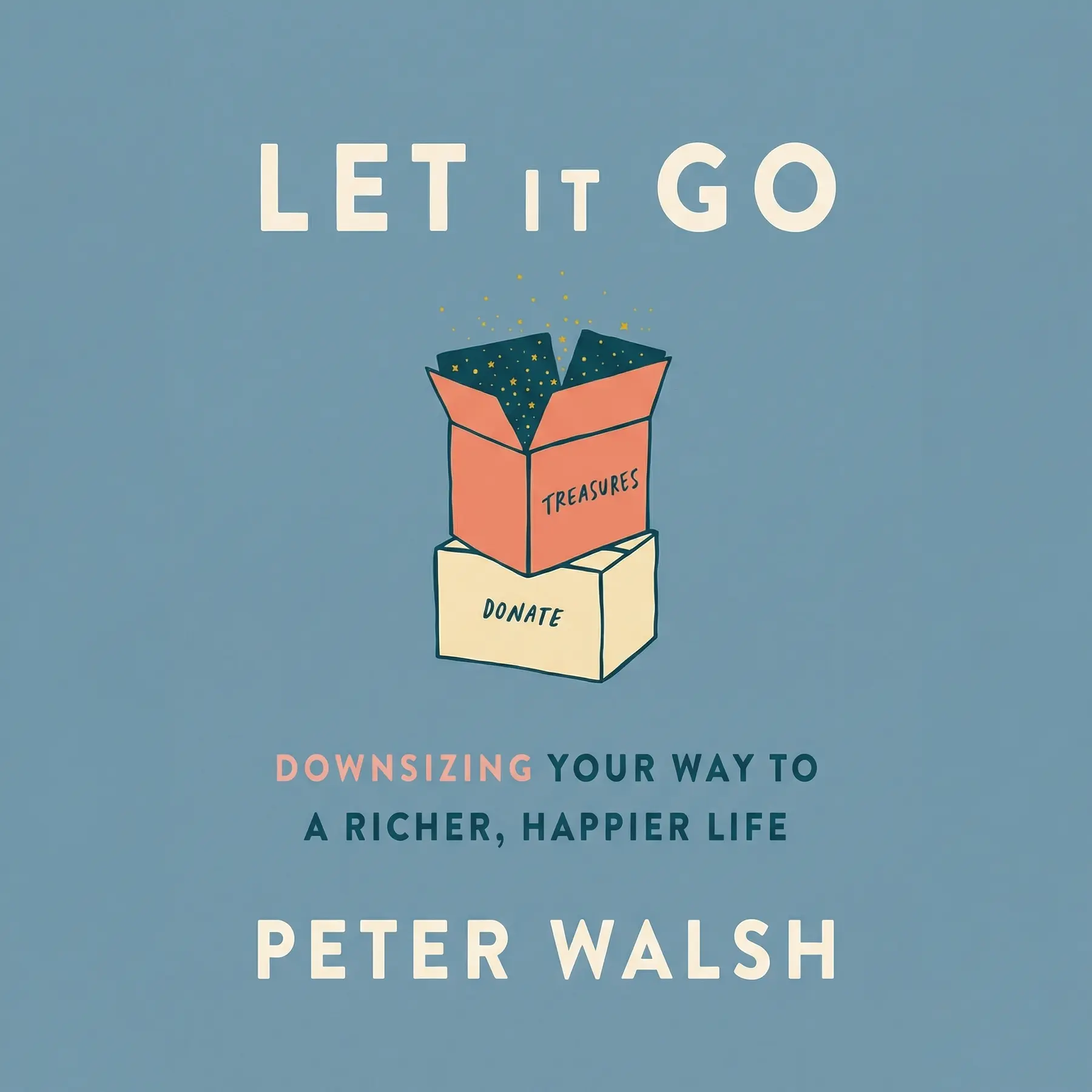
Let It Go: Downsizing Your Way to a Richer, Happier Life
By Peter Walsh
Organization specialist Peter Walsh offers a compassionate and practical guide to downsizing. He explores the emotional ties we have to our belongings and provides strategies for reclaiming your space and your future.
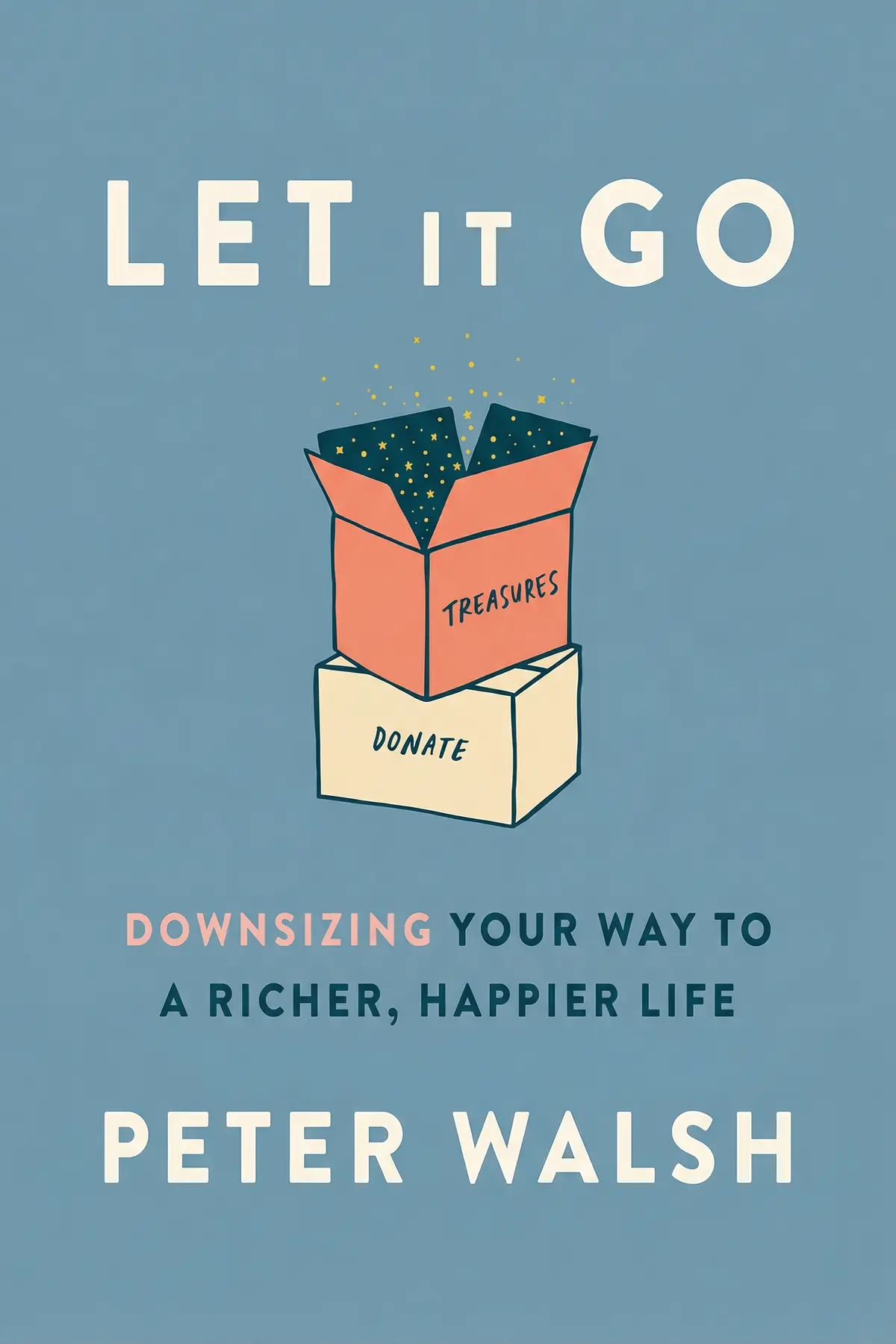
Table of Content
1. Introduction
1 min 49 sec
Imagine your life as a grand expedition. When you first started out, your pack was light, containing only the essentials for the journey ahead. But as the decades have rolled by, you’ve picked up more and more baggage. Some of it was necessary, some of it was beautiful, but much of it has simply become a weight that slows you down. We often find ourselves at a crossroads where the sheer volume of our possessions begins to dictate the terms of our existence. Whether you are preparing for a move, clearing out a relative’s estate, or simply trying to find breathing room in your current home, the prospect of downsizing can feel like an insurmountable mountain.
This isn’t just about cleaning out a closet or tossing old magazines. It’s about a profound shift in how we relate to the world around us. Downsizing often arrives during life’s most intense moments—the birth of a new relationship, the relocation for a dream job, or the somber task of saying goodbye to a parent. These transitions are already emotionally charged; adding the physical labor of sorting through a lifetime of stuff can push anyone to the brink. However, there is a different way to look at this process. Instead of seeing it as a series of painful losses, we can view it as a deliberate act of curation. It is an opportunity to decide what truly matters and to clear away the noise so that your true self can finally be heard.
In this exploration, we will look at how our belongings form a material convoy that can eventually become a cage. We will examine the psychological triggers that make us feel guilty for letting go and discover how our homes can act as mirrors for our internal state. By the end, you’ll see that letting go isn’t about having less; it’s about making room for more of what actually counts. We’ll follow a path that treats your history with respect while firmly prioritizing your future, ensuring that the next stage of your life is defined by freedom rather than fragments of the past.
2. The Weight of the Material Convoy
2 min 08 sec
As we age, we accumulate a massive collection of items that follow us through life, often becoming a financial and emotional burden that limits our future opportunities.
3. Confronting the Emotional Triggers of Stuff
2 min 04 sec
The difficulty of decluttering often stems from the deep-seated memories and existential questions that our possessions force us to face, rather than the objects themselves.
4. Aligning Possessions with Your Current Identity
1 min 57 sec
Your belongings should reflect who you are today and who you want to become, rather than anchoring you to past versions of yourself that no longer fit.
5. Creating Harmony and Purpose in Your Living Space
2 min 03 sec
Maintaining a peaceful home requires clear boundaries between different activities and ensuring that every item contributes positively to the room’s intended atmosphere.
6. Honoring the Dead Without Living in the Past
2 min 02 sec
Inherited possessions can easily turn a home into a shrine; true legacy is found in shared values and stories, not in hoarding every item a loved one once owned.
7. Navigating the Social Dynamics of Downsizing
2 min 04 sec
Downsizing is often a group effort that requires clear communication and compromise to prevent conflict and foster deeper connections between family members.
8. Conclusion
2 min 08 sec
As we reach the end of this journey, it’s clear that downsizing is much more than a home organization project. It is a fundamental act of self-care and a declaration of independence from the weight of the past. We have explored how our material possessions can grow into a convoy that slows our progress, and how the emotional triggers attached to these objects can keep us stuck in old identities. We’ve seen that our homes are the stages upon which our lives unfold, and that for the play to be successful, the set must be clear of unnecessary distractions.
If there is one throughline to remember, it is that you are not your stuff. Your value, your history, and your potential are all contained within you, not in the boxes in your garage. By choosing to let go of the things that no longer serve your current identity or your future goals, you aren’t losing your history; you are distilling it. You are choosing to keep the essence while discarding the excess. This process allows you to live with more intention, more peace, and more room for the new experiences that await you.
A practical first step in this process is to embrace the power of the digital age. If you have an object that you only keep because of the memory it triggers, take a high-resolution photograph of it. Write down the story of why that item matters. You’ll find that the photo and the story often carry the same emotional weight as the physical object, but without taking up any space in your hallway. You can even compile these images into a digital book that is far easier to share with future generations than a dusty trunk full of items they may not understand.
Ultimately, downsizing is an invitation to live a richer life with less. It is about shifting your focus from the accumulation of things to the accumulation of moments. When you clear the clutter, you find that you have more time for relationships, more energy for your passions, and a greater sense of freedom to pursue whatever comes next. So, take a deep breath, pick up the first box, and begin the process of letting go. Your future self will thank you for the space you are about to create.
About this book
What is this book about?
Many people find themselves buried under a lifetime of accumulated possessions, often at times of major life transitions like moving, merging households, or losing a loved one. This book explores why we cling to items that no longer serve us and how this material weight can prevent us from moving forward. It provides a roadmap for navigating the physical and emotional challenges of letting go. Through a combination of practical advice and psychological insight, the text promises to help you transform downsizing from a stressful chore into a liberating celebration of a new chapter. You will learn to distinguish between meaningful memories and mere clutter, ensuring that your home reflects who you are today rather than who you were decades ago.
Book Information
About the Author
Peter Walsh
Peter Walsh is a renowned organization specialist who has shared his expertise on television programs like Extreme Clutter and Clean Sweep. A frequent guest on the Rachael Ray Show, Walsh developed his unique perspective on downsizing after managing the personal estate of his late parents. He is the author of several bestselling titles focused on minimalism and order, including It’s All Too Much and Enough Already.
Ratings & Reviews
Ratings at a glance
What people think
Listeners consider this downsizing manual useful and skillfully written, while one listener points out that it delivers distinct steps to follow. This work provides deep insights into sentimental bonds with belongings, and one listener notes it helps with the mental/emotional/psychological aspects of parting with possessions. Listeners value the author's professional knowledge, and one listener emphasizes the straightforward directions for accomplishing tasks. The title earns praise for its organizational tips, with one listener characterizing it as a genius method for tackling clutter.
Top reviews
Som
The psychological shift this book triggered was exactly what I needed to tackle my guest room turned storage unit. Peter Walsh moves beyond just telling you to throw things away; he forces you to examine if your possessions actually align with the image you want to project to the world. I’d never considered that my clutter was a reflection of past versions of myself that I’m no longer living. Not gonna lie, I got a bit misty-eyed reading about 'malignant items'—those things we keep out of guilt even though they bring up bad memories. Letting go of a 'treasure' that was actually tied to a traumatic time was incredibly cathartic for me. This isn't just about cleaning; it’s about the mental and emotional freedom that comes from living with intention. It's easily the most compassionate organizing book I’ve read.
Show moreCarlos
Wow, I never realized how much my 'junk' was actually holding me back from the life I want to live right now. This book provides such a genius approach to clutter busting by focusing on the stories we tell ourselves about our objects. I loved the suggestion to write down the history of an item so that heirs understand its value—it turns a piece of wood into a family heirloom. The instructions are simple and the tone is incredibly encouraging without being condescending. I've already started my two-hour-a-day sessions, and the progress is visible. For the first time, I don't feel guilty about getting rid of expensive items I never use. Walsh is truly an expert in the psychological barriers we build around our stuff. This is an essential read for anyone feeling buried by their own home.
Show moreBua
After hearing Peter Walsh on HGTV years ago, I knew his approach would be no-nonsense, and he definitely delivers on that front. This book saved my sanity during a cross-country move where I had to cut my belongings by half in just three weeks. The distinction between treasures and worthy items helped me make split-second decisions without the usual agonizing. To be fair, I think his best advice is about the legacy we leave; it really changed how I view my 'stuff.' The writing style is engaging and the real-life stories peppered throughout are actually relatable rather than just being filler. It feels like having a professional organizer sitting right there with you, coaching you through the hard choices. If you are struggling to start, just read the first two chapters and you'll be inspired to grab a trash bag immediately.
Show moreLaor
Picked this up because my parents are finally moving out of my childhood home after forty years, and the sheer volume of stuff is paralyzing. Walsh provides a very practical framework for distinguishing between 'treasures' that actually mean something and 'worthy' items that just serve a function, like a toaster or extra towels. Truth is, the emotional weight of downsizing is often harder than the physical labor, and he handles that psychological aspect with real grace. I especially appreciated the two-hour daily limit suggestion because it makes the process feel manageable rather than like a death march. While the book can feel a bit repetitive in the middle, the 'treasure map' concept is a genius way to visualize what actually matters. It’s a solid guide for anyone facing a major life transition or just trying to clear out the basement.
Show morePla
Managing a parent's estate is an absolute nightmare, but the chapter on sibling dynamics in this book was a total lifesaver during a stressful month. Walsh suggests using dice or drawing straws to decide who picks first when divvying up items, which sounds simple but prevented so many arguments in my family. Gotta say, the advice to view items as having no monetary value during the family distribution phase was a game-changer for us. We were able to focus on the stories behind the objects instead of arguing over the price of an old entertainment center. The book is well-written and offers clear paths to take when you feel stuck. My only gripe is that it feels a bit like a commercial for his TV persona at times. Still, the practical wisdom regarding estate management is worth the price alone.
Show moreSin
Ever wonder why you're keeping a broken entertainment center just because it was a wedding gift twenty years ago? Walsh tackles that specific kind of guilt with no-nonsense advice that really hits home. I found the section on 'malignant items' especially powerful, as it gave me permission to toss things that only brought up bad memories. The book is very well-organized, moving from the emotional preparation to the physical execution. In my experience, most organizing books fail because they don't address the 'why' behind the hoarding, but Walsh nails it. I do wish the layout was a bit cleaner, as the anecdotes sometimes interrupt the flow of the actual tips. Overall, though, it’s a very practical guide that offers clear paths for anyone overwhelmed by a lifetime of accumulation. It's helpful and grounded.
Show moreJune
As someone who already follows Marie Kondo, I found Walsh’s perspective on 'worthy' items a bit more grounded for my everyday life. He doesn't expect every single spoon to spark joy, which is a relief when you're just trying to run a functional household. I liked the focus on the legacy we leave behind, specifically the idea that leaving a house full of junk is a burden rather than a gift to our heirs. Personally, I think the book is a bit too focused on the 60+ demographic downsizing their forever homes. I was hoping for more advice on merging households for marriage, which was only briefly mentioned in the intro. It’s a decent read with some good exercises, but it definitely targets a very specific stage of life. The writing is conversational, though it drags in the first few chapters.
Show moreIsabella
Look, the advice here is solid, but the formatting of the physical book is kind of a mess and makes it harder to digest. I found myself flipping back and forth trying to find where a list ended because of the intrusive text boxes. That being said, the 'treasure map' exercise is actually quite helpful for identifying what you truly value. Frankly, I didn't learn much that felt revolutionary, as I've read Walsh's previous work, but the focus on 'Swedish Death Cleaning' vibes is timely. It’s a quick read if you skip the repetitive anecdotes in the beginning. It’s a fine resource if you’re currently in the middle of a purge, but it’s not something I’d keep on my shelf for years. Ironic, right? I'll probably donate this copy to the library now that I'm done with it.
Show morePichaya
Does the world really need another decluttering book that starts with fifty pages of fluff just to hype up the author's own method? To be fair, there are a few decent nuggets of wisdom buried in here, like the advice on choosing one representative item from a collection. However, the layout is an absolute nightmare to navigate. You’ll be in the middle of a helpful bulleted list, and suddenly there's a two-page anecdote box that completely breaks the flow of the instructions. Also, the constant references to the song from Frozen felt incredibly dated and a bit lazy for a professional organizer. If you are specifically moving a parent into assisted living, you might find some value in the sibling dynamics chapter. For anyone else, this feels like a missed opportunity that needed a much more rigorous editor to trim the filler.
Show moreSam
Frankly, I felt like I was being sold a method for the first third of the book rather than actually learning how to do it. The author spends so much time talking about how great the results will be that he forgets to get to the point. When he finally does reach the practical steps, it’s mostly common sense stuff you could find in a blog post for free. I was particularly annoyed by the 'Let It Go' puns and the quotes from movies like Shawshank Redemption. Come on, we want original insights! The book is marketed as a general resource, but it’s really only useful for seniors or people cleaning out a deceased relative's home. If you’re a thirty-something just trying to declutter a small apartment, this isn't the guide for you. It’s too much fluff and not enough substance.
Show moreReaders also enjoyed
Abundance: The Inner Path to Wealth
Deepak Chopra
59 Seconds: Change Your Life in Under a Minute
Richard Wiseman
A Guide to the Good Life: The Ancient Art of Stoic Joy
William B. Irvine
AUDIO SUMMARY AVAILABLE
Listen to Let It Go in 15 minutes
Get the key ideas from Let It Go by Peter Walsh, plus 5,000+ more titles in English and Thai.
- 5,000+ titles
- Listen as much as you want
- 7-day free trial
- Cancel anytime







