
21 min 39 sec
Leviathan: or the Matter, Forme and Power of a Commonwealth Ecclesiasticall and Civil
Thomas Hobbes explores the necessity of a strong central authority to prevent the chaos of human nature. This foundational work introduces the social contract and the concept of the sovereign Leviathan.
Table of Content
1. Introduction
1 min 51 sec
The modern world is built on the assumption of safety. We walk down the street, trade goods, and participate in community life with a general expectation that we won’t be attacked or robbed at every turn. But this sense of security is a relatively recent development in human history. For much of our past, life was defined by a constant state of vigilance. If you were a farmer, you had to be your own soldier. If you were poor, taking what you needed by force wasn’t just a crime—it was a survival strategy.
In the seventeenth century, the English philosopher Thomas Hobbes looked at the world around him and saw a landscape defined by suffering and instability. He realized that the chaos of his era wasn’t just a streak of bad luck; it was the natural result of human beings living without a strong, central power to keep them in check. To solve this, he proposed the creation of a ‘Leviathan’—a model for a centralized authority that, backed by the support of the people, could establish a society where peace could actually take root and flourish.
Hobbes’s ideas did more than just settle debates in his own time; they completely revolutionized how we think about the state, the individual, and the law. His work remains the bedrock of Western political philosophy because it addresses the fundamental question: what kind of government can truly guide a nation away from the brink of war? In the pages that follow, we will explore the logic of the social contract, the psychological roots of our desire for power, and why Hobbes believed that giving up certain rights is actually the only way to become truly free. We’ll see how he grounded his political theory in the physical reality of our senses and why he believed that a divided house is a house destined to fall.
2. The Sensory Roots of Reason
2 min 25 sec
Discover how every complex thought begins with a physical interaction and why shared language is the only thing standing between order and chaos.
3. The Relentless Pursuit of Power
2 min 16 sec
Explore the psychological forces that drive human ambition and why our natural equality leads to an inevitable state of competition.
4. The Logic of the Social Contract
2 min 15 sec
Learn why true security requires a collective surrender of rights and how mutual sacrifice forms the foundation of justice.
5. The Architecture of the Sovereign
2 min 00 sec
Examine the metaphor of the Leviathan as an artificial person and why centralized authority must be indivisible.
6. The Superiority of the Monarchy
1 min 57 sec
Understand why a single ruler provides more consistency and security than democratic or aristocratic systems.
7. The Necessity of the Sword
1 min 49 sec
Discover why ‘covenants without the sword’ are ineffective and how the fear of punishment is the true guardian of peace.
8. The True Meaning of Liberty
1 min 49 sec
Challenge your assumptions about freedom as we explore how the rule of law actually increases personal agency.
9. One Head, One Rule
1 min 42 sec
Examine the dangers of dual authority and why the sovereign must have total control over both state and religious doctrine.
10. A Legal System Based on Reality
1 min 54 sec
Learn why laws should be built on physical facts and human reason rather than ancient superstitions or beliefs.
11. Conclusion
1 min 41 sec
The journey through Thomas Hobbes’s Leviathan brings us to a stark but powerful conclusion about the nature of society. At its heart, the book is a warning and a promise. The warning is clear: without a strong, unified authority, we are only ever a few steps away from a state of nature where fear is the only constant. When we allow our language to become confused, our power-seeking to become unchecked, or our loyalties to become divided, we invite the return of a world that is ‘lonely, miserable, and short.’
The promise, however, is that through the exercise of reason and the courage to enter into a social contract, we can build a structure that protects us from ourselves. The Leviathan is not a monster of oppression, but a guardian of peace. It is the ‘artificial man’ that we create to ensure that the rule of law triumphs over the rule of violence. By recognizing that our individual safety depends on our collective surrender of certain rights, we gain the true liberty to prosper, to learn, and to live without the shadow of constant threat.
As you think about the world today, notice how much of our modern infrastructure—from the way we regulate trade to the way we manage public safety—is still built on these Hobbesian foundations. The next time you walk through a peaceful city or participate in a stable market, remember that this order is the result of a profound agreement. The throughline of Hobbes’s work is that civilization is a choice we make every day by choosing the sovereign over the state of war. It is a reminder that peace is not the default state of humanity, but a magnificent and fragile achievement of reason.
About this book
What is this book about?
Leviathan is a deep dive into the mechanics of human society and the psychological foundations of governance. Writing during a time of immense political upheaval, Thomas Hobbes argues that without a powerful, unified government, human life would inevitably descend into a state of perpetual conflict and fear. He examines the nature of human perception, the drive for power, and the logical necessity of surrendering individual rights to a sovereign power to ensure collective safety. The book promises a comprehensive framework for understanding why we live in organized states and what we owe to the authorities that keep the peace. By moving from the biological functions of the human mind to the complex structure of the 'Commonwealth,' Hobbes provides a blueprint for a stable society. He challenges readers to reconsider their definitions of freedom, justice, and the role of religion in public life, ultimately advocating for a 'Leviathan'—a sovereign that embodies the collective strength of its people.
Book Information
About the Author
Thomas Hobbes
English philosopher Thomas Hobbes (1588-1679) was best known for his contributions to political thought. His writings, including Leviathan and De Cive (On the Citizen), are considered the cornerstones of Western political philosophy.
Ratings & Reviews
Ratings at a glance
What people think
Listeners find the work intellectually stimulating, with one listener characterizing it as a foundational text in political philosophy and many viewing it as a classic that is well worth the time. The ease of reading draws varied reactions, however, as some find the prose unexpectedly accessible while others find it rather difficult. Furthermore, the production quality is criticized for containing errors, and the material provided is incomplete, only including Chapters 1 to 17. The physical durability also receives poor marks, with one listener noting that the back cover was torn nearly in half.
Top reviews
Komsan
Wow, it really makes you rethink the entire concept of the social contract. Everyone knows the famous quote about life being 'nasty, brutish, and short,' but seeing the full, rigorous argument is a completely different animal. Hobbes writes from a place of deep-seated fear—specifically the fear of civil war—and his desire for absolute order is palpable on every single page. Personally, I found his exploration of human impulses and the 'war of every man against every man' to be disturbingly relevant to today's polarized political climate. It is a behemoth of a book, but the intellectual payoff for finishing it is massive. This is seminal philosophy that actually challenges your comfort zone and forces you to justify your own democratic beliefs.
Show moreSiriphen
Ever wonder why we still have leaders who act like absolute monarchs despite our 'advanced' democracies? Hobbes explains it all through the lens of human rationality and the desperate need for security. Writing during the English Civil War, he witnessed a power vacuum first-hand, which explains his dark take on humanity. Not gonna lie, his vision of the sovereign as a 'Leviathan' is chilling, yet his internal logic is incredibly hard to poke holes in once you accept his premises. This is a monster of a book that demands your full attention and rewards you with a deeper understanding of why societies function. It is probably the most important text I have read this year for understanding the mechanics of political power.
Show moreArt
Not what I expected at all, but in a good way. I thought it would be an impossible, archaic slog, but the core of the social contract argument is actually quite rational and modern. Hobbes shows how our basic desire for safety and 'commodious living' drives us to give up certain freedoms to a central authority. It is fascinating to see how he uses pure reason to justify the state’s existence. Even if you disagree with his preference for absolute monarchy, you cannot deny the sheer power of his prose. The life of man might be solitary and poor in the state of nature, but this book is rich with intellectual insight. It remains a true masterpiece of political philosophy that everyone should read once.
Show morePop
This foundational text is surprisingly clear for something written in the mid-17th century. Hobbes lays out a logical, almost mathematical progression of thought regarding why we need a central authority. While I don't necessarily agree with his pessimistic view of human nature, his argument for the social contract is incredibly compelling. To be fair, some sections on religion and his ideas on 'decaying sense' are a bit of a slog to get through. However, if you want to understand the roots of modern political science, you simply cannot skip this. It is much more accessible than many people give it credit for, even if the phrasing feels a bit dated at times. It is a thought-provoking classic that is definitely worth the time for any serious reader of philosophy.
Show morePenelope
After hearing about 'Leviathan' for years in history class, I finally dove in. It is a fascinating exercise to compare his 'pessimistic philosophy' to the more tactical, power-hungry approaches of Machiavelli. Hobbes isn't just telling you how to rule; he is trying to justify why we allow ourselves to be ruled by a central power at all. The language is remarkably precise for the era, though you definitely need some patience to get through the protracted reasoning. I found the section on imagination being nothing but memory to be particularly weird and intriguing. It is a thick, heavy read, but it is foundational for a reason. Even with the occasionally tedious phrasing, it is a seminal work that deserves its place on your shelf.
Show moreLeah
Picked this up to better understand the roots of Western political thought. Hobbes argues that without a common power to keep us in awe, we are doomed to a state of perpetual war. It is a dark, gritty look at human nature that still feels uncomfortably accurate when you look at the global news today. The writing is surprisingly easy to follow once you get used to the older sentence structures. However, I was disappointed by the physical durability of this paperback. The back cover was nearly torn in half when it arrived in the mail. Great content from a seminal thinker, but the quality of the physical book left much to be desired. I'd recommend seeking out a more durable hardcover edition.
Show moreMikael
Gotta say, the ideas here are top-tier, but this specific edition is a total mess. I was enjoying the deep dive into the state of nature until I realized the text is riddled with typos and formatting errors. Even worse, the book is incomplete and only includes Chapters 1 through 17! You end up missing the entire theological exposition and the later arguments about the Common-Wealth Ecclesiasticall. It is a real shame because Hobbes' logic is fascinating, even when his conclusions are frightening. Look, you should definitely read the material, but buy a different version if you want the full experience. Three stars for the brilliance of Hobbes, but one star for this specific physical copy which felt cheap and poorly edited.
Show moreLucia
Is it a classic? Yes. Is it a joy to read? Not exactly. Hobbes is a master of labored phrasing and his arguments can feel incredibly tedious when he gets into the weeds of scripture. While I appreciate the historical importance of his 'state of nature' theory, the middle sections felt like a total chore to finish. In my experience, you can get the gist of his social contract theory without laboring through every single paragraph of his theological justifications. It is a bit of a mental circus intended to support a constitutional monarchy. I respect the influence this book has had on Western thought, but I wouldn't call myself a fan of his misanthropic conclusions. It’s a bit too elitist for my taste.
Show moreManee
Frankly, I expected more from a work that supposedly laid the foundation for modern political science. While the opening chapters are brilliant and punchy, the later sections become a massive theological exposition that feels largely irrelevant to the main point. To be fair, his views on the Christian king are historically significant, but they make for a very dry reading experience. I also noticed quite a few errors in the text of this edition, which was distracting during the more complex arguments. It is a thought-provoking read, but the pacing is uneven and some of the conclusions are hard to swallow for anyone who values republicanism over monarchy. It’s an important book, but definitely a flawed one.
Show moreAva
I can't believe how much I hated this reading experience. Hobbes presents a misanthropic, elitist vision that assumes humans are basically corrupt and stupid creatures. He uses a series of mental circus tricks to justify the dominance of an absolute sovereign. Truth is, his assumptions are rooted so deeply in a specific Christian perspective that they feel utterly worthless to a modern secular reader. It is frightening to think his theories provided the groundwork for dictators throughout history. This is hands down my least favorite work of Western thought. If I could give it zero stars for the elitist attitude alone, I would do it in a heartbeat. Avoid this unless you enjoy being told you're too evil to govern yourself.
Show moreReaders also enjoyed
A Warning
Miles Taylor
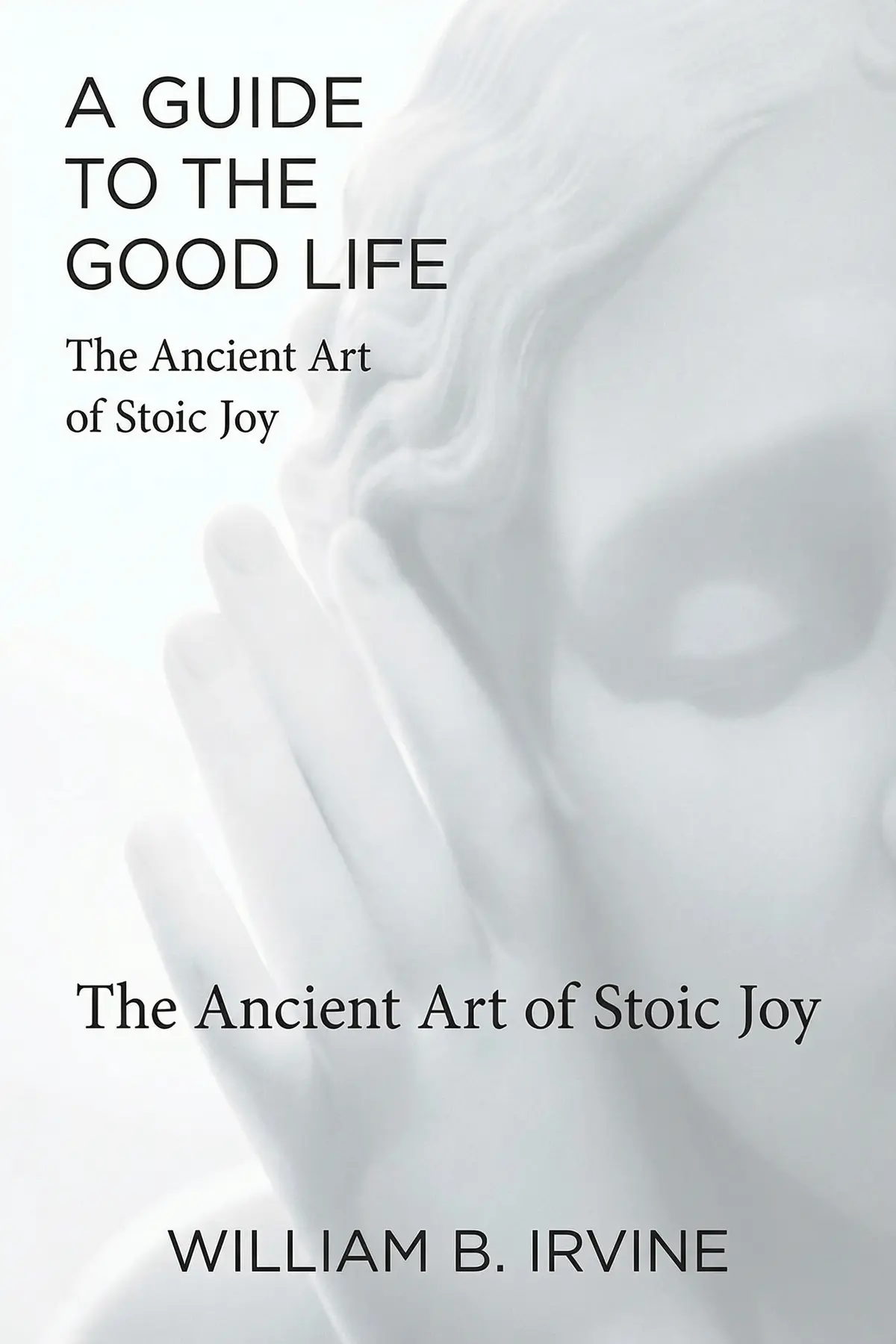
A Guide to the Good Life: The Ancient Art of Stoic Joy
William B. Irvine
Abolish Rent: How Tenants Can End the Housing Crisis
Tracy Rosenthal
A Little History of Philosophy
Nigel Warburton
Abortion: Our Bodies, Their Lies, and the Truths We Use to
Jessica Valenti
AUDIO SUMMARY AVAILABLE
Listen to Leviathan in 15 minutes
Get the key ideas from Leviathan by Thomas Hobbes, plus 5,000+ more titles in English and Thai.
- 5,000+ titles
- Listen as much as you want
- 7-day free trial
- Cancel anytime







