
25 min 33 sec
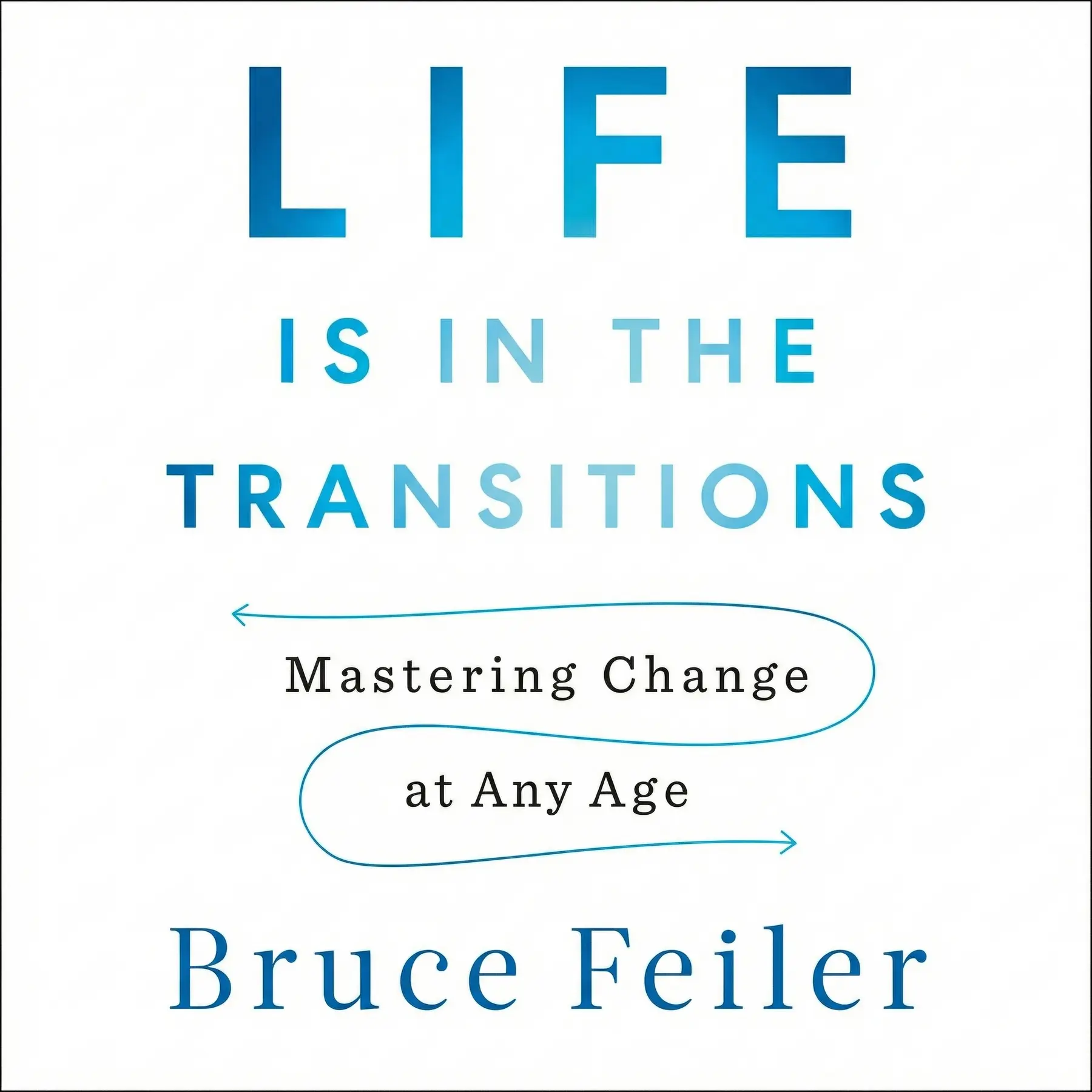
Life Is in the Transitions: Mastering Change at Any Age
By Bruce Feiler
Bruce Feiler explores how to navigate life's inevitable disruptions by abandoning the myth of linear progression and using the power of personal storytelling to find meaning in times of transition.
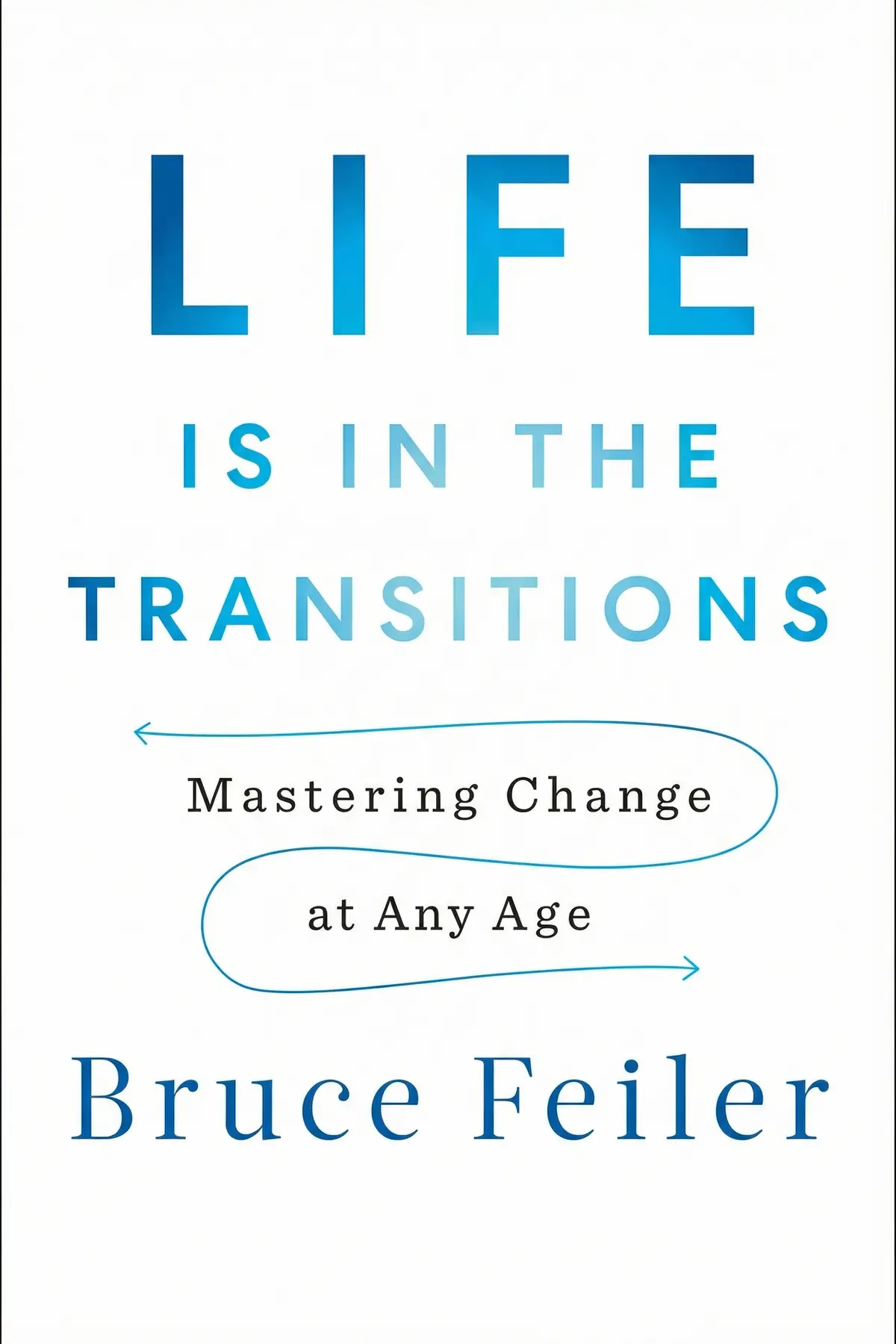
Table of Content
1. Introduction
1 min 51 sec
For generations, we have been told a specific story about how life is supposed to work. We are born, we go to school, we find a career, we get married, we retire, and we fade into the sunset. It is a straight line—a predictable ladder where every step follows the one before it. But if you look at your own life, or the lives of those around you, does that story actually hold up? For most of us, the answer is a resounding no. Our lives are not straight lines; they are messy, looping, and full of sudden detours.
Bruce Feiler found himself at the center of this realization when his own life was hit by a series of massive shocks. He faced a life-threatening illness, the threat of financial ruin, and a family crisis all at once. These events forced him to ask a fundamental question: How do we handle it when the story we had planned for ourselves suddenly falls apart? To find the answer, he embarked on a massive journey, interviewing hundreds of people across the country to understand how they navigated their own periods of transition.
What he discovered is that we are living in a new era—the era of the nonlinear life. In this summary, we are going to explore why the old rules of life stages no longer apply and how you can become a master of change. We will look at the tools you need to navigate what Feiler calls ‘lifequakes’—those massive shifts that shake the foundations of our existence. You will learn why the way you tell your own story is the most powerful tool you have for healing, and why being ‘lost’ in the middle of a transition is actually a necessary part of finding your next chapter. Transitions are not just something we go through; they are the heart of the human experience. By the end of this journey, you will see that while change is inevitable, the way you respond to it is entirely within your control. Let’s dive into how you can turn life’s most difficult disruptions into your most meaningful transformations.
2. Moving Beyond the Myth of the Linear Life
2 min 24 sec
Discover why the traditional ‘cradle-to-grave’ timeline is an outdated invention and how embracing a circular, nonlinear perspective can reduce the pressure of staying on track.
3. Storytelling as a Vital Tool for Survival
2 min 09 sec
Learn how the simple act of framing your life as a narrative can help you regain a sense of agency when external circumstances spin out of control.
4. Categorizing the 52 Types of Life Disruptors
2 min 15 sec
Explore the five main categories of change and understand why the sheer volume of transitions we face makes mastering change an essential modern skill.
5. Navigating the Impact of a Lifequake
2 min 11 sec
Understand the difference between a minor disruption and a ‘lifequake,’ and why the timing and accumulation of events matter more than the events themselves.
6. The ABCs of Human Meaning
2 min 10 sec
Identify which of the three core drivers—Autonomy, Belonging, or Cause—motivates your life decisions and how transitions shift these priorities.
7. Choosing Your Response through Acceptance
2 min 12 sec
Learn how the shift from asking ‘Why did this happen?’ to ‘Where do I go from here?’ marks the beginning of a successful life transition.
8. The Power of Rituals in Marking Change
2 min 07 sec
See how creating your own ceremonies—whether private or public—can help bridge the gap between your past and your future identity.
9. Embracing the Messy Middle and the Art of Shedding
2 min 14 sec
Find out why feeling lost during a transition is not a sign of failure, but a necessary period of ‘shedding’ old habits to make room for growth.
10. Using Creativity as a Catalyst for Reconstruction
2 min 01 sec
Uncover how artistic expression—from cooking to writing—can help process trauma and build the foundation for a new life chapter.
11. Rewriting and Sharing Your New Narrative
2 min 07 sec
Discover the difference between ‘redemption’ and ‘contamination’ stories, and why sharing your journey with others is the final step in mastering a transition.
12. Conclusion
1 min 52 sec
As we wrap up our journey through Bruce Feiler’s ‘Life Is in the Transitions,’ the most important takeaway is a shift in perspective. We have to stop viewing life as a linear race where any detour is a disaster. Instead, we must accept that life is a series of transitions—a continuous process of ending, shedding, and beginning again. These ‘lifequakes’ are not interruptions to our lives; they are the moments when our lives are actually happening. They are the times when we are forced to ask who we really are and what we truly value.
To master change, we need to lean into the tools we’ve discussed: accepting the reality of our situation, using rituals to mark our progress, embracing the vulnerability of the messy middle, and using creativity to rebuild our sense of self. Most importantly, we must remember the power of the stories we tell. You are the author of your own life. Even when a chapter is written for you by circumstances beyond your control, you are the one who decides what that chapter means and how it will lead to the next.
One actionable piece of advice to take with you today is to focus on ‘small wins.’ When you are in the middle of a massive lifequake, the big questions like ‘What is my purpose?’ can feel overwhelming. Instead of trying to solve everything at once, look for the tiny indicators of progress. Maybe you managed to organize a drawer, reach out to a friend, or maintain a new five-minute morning routine. These small victories keep you grounded in the present while the larger story of your transition unfolds. Change is inevitable, but by embracing the nonlinear nature of life, you can navigate any transition with grace, resilience, and a renewed sense of possibility. Your next chapter is waiting to be written.
About this book
What is this book about?
Life Is in the Transitions challenges the outdated idea that our lives follow a predictable, straight-line path. Instead, author Bruce Feiler introduces the concept of a nonlinear life, where massive disruptions—or lifequakes—are frequent and inevitable. Drawing from hundreds of interviews in his Life Story Project, Feiler outlines how we can master these periods of change rather than simply enduring them. The book provides a framework for understanding the 52 types of disruptors we face, from career shifts to personal health crises. It offers practical tools for moving through the messy middle of change, using rituals to mark new beginnings, and leaning on creativity to rebuild our identities. Ultimately, the promise of the book is that by learning to rewrite our internal narratives, we can transform periods of chaos into opportunities for deep personal growth and newfound purpose.
Book Information
About the Author
Bruce Feiler
Bruce Feiler is the author of six New York Times best sellers, including The Secrets of Happy Families and The Council of Dads. He also writes and presents two primetime series on PBS, and his two Ted Talks have been viewed more than two million times.
Ratings & Reviews
Ratings at a glance
What people think
Listeners find this book to be a wonderful read, especially suited for individuals facing loss or significant life changes. The content is intellectually stimulating and features emotional storytelling, with listeners praising the usable suggestions and thorough research. Additionally, it provides a quality summary of life’s shifts, as one listener points out its ability to help people handle change in a constructive way. However, responses to the author's style are varied, with some enjoying the prose while others consider it to be repetitive.
Top reviews
Ern
Wow. This book arrived at the perfect moment while I was navigating a personal 'lifequake' that left me feeling completely unmoored. Feiler’s concept of the 'messy middle' resonated deeply because it validated the chaos I was experiencing instead of telling me to just get over it. While the sheer volume of stories can feel overwhelming at times, each one serves as a mirror for different types of loss and renewal. The idea that we experience these massive shifts every five years or so is both terrifying and oddly comforting. It reframes our struggles not as failures of character, but as inevitable parts of a non-linear life journey. I found the practical tools for ritualizing change particularly helpful for finding closure during a period of grief. If you are currently feeling lost, this provides a roadmap that is both compassionate and grounded in real-world examples.
Show moreCharlotte
The chapter on 'narrative identity' completely changed how I view my own history and the stories I tell myself about my failures. I love how Feiler suggests that the proper response to a setback is a story, rather than just a list of grievances or a period of wallowing. By identifying the 'co-narrators' in my life—the nudgers and the slappers—I’ve been able to see who is actually helping me grow and who is just holding me back. It’s a beautifully written exploration of the human spirit’s ability to adapt to even the most jarring disruptions. The book doesn't just offer platitudes; it provides a framework for the 'long goodbye' and the 'new beginning' that feels actionable. Some might find the anecdotal style a bit much, but for me, these stories were the connective tissue that made the theory feel real. This is essential reading for anyone trying to navigate the complexities of the twenty-first century.
Show morePawinee
Ever wonder why some people seem to bounce back from tragedy while others stay stuck in the past for decades? Feiler explores this through the lens of 'meaning-making,' showing how we can transform our 'poop salads' into something resembling a coherent and purposeful future. I particularly connected with the idea of the 'long goodbye' because it allowed me to grieve my former identity without feeling guilty about it. The book is deeply researched in its own way, focusing on qualitative human experience rather than just cold, hard statistics. It’s an emotional rollercoaster that manages to stay grounded in practical steps you can take to move forward. I’ve already bought copies for two friends who are going through divorces because the message of renewal is so powerful. This book doesn't just observe transitions; it gives you permission to live through them authentically.
Show moreSamira
Finally got around to reading this, and I’m kicking myself for not picking it up sooner when I was first struggling with my relocation. The way Feiler breaks down the 'seven tools' of transition made a daunting process feel manageable and, dare I say, almost creative. I loved the emphasis on 'sharing it' and 'launching it,' as those are the steps I usually try to skip because of my own social anxiety. The book is packed with moving stories that remind you that you are never as alone as you feel during a major life change. It’s a deeply human book that prioritizes the 'how' of navigating change over the 'why,' which is exactly what I needed. Even though it's quite long, the pacing kept me engaged throughout the various narrative threads. This is a must-read for anyone who feels like their life has gone off the rails.
Show moreJune
After hearing so much buzz about this title, I finally decided to dive into Feiler’s take on modern adulthood. The truth is, the book offers a much-needed update to the outdated idea that life follows a predictable, linear path from point A to point B. I appreciated the distinction between agency, belonging, and cause, as it helped me categorize why certain parts of my life felt stagnant. However, to be fair, the writing style leans heavily on anecdotes which can become a bit repetitive after the first hundred pages. A more rigorous, data-driven approach might have appealed to my analytical side, but the emotional core of the stories is hard to deny. It’s a solid resource for anyone looking to make sense of their own 'poop salads' without feeling like they are losing their mind. I would definitely recommend it to friends going through career changes or mid-life transitions.
Show moreGai
Picked this up on a whim during a difficult career shift and found myself pleasantly surprised by the depth of Feiler's 'lifequake' framework. As someone who usually avoids the self-help aisle, I appreciated that he didn't promise an easy fix or a 'one-size-fits-all' solution to grief and change. Instead, he emphasizes that there is no wrong way to do a transition, which provides an immense sense of relief when you’re in the 'messy middle.' The distinction between different types of life-disruptors helped me realize that my current situation wasn't a personal failing, but a common structural shift. My only gripe is that the author occasionally includes stories of people he didn't actually interview, which felt a bit like padding for an already thick book. Still, the practical advice on shedding old mindsets is worth the price of admission alone. It's a thought-provoking read that encourages a healthy adaptation to the inevitable chaos of living.
Show moreMo
As someone who has always felt pressured to follow a traditional life path, this book felt like a massive weight being lifted off my shoulders. Feiler’s argument that we spend about half of our lives in some state of transition is both eye-opening and deeply validating for my own 'messy' history. I enjoyed the section on 'meaning-making' through storytelling, though I’ll admit that some of the specific categories of lifequakes felt a bit forced. The writing is accessible and engaging, making complex psychological concepts feel like a conversation with a wise friend over coffee. While it could have been trimmed by about fifty pages without losing the core message, the overall impact is still very positive. It’s a great resource for anyone needing a bit of encouragement to start their 'new beginning.' Not perfect, but definitely worth your time if you're at a crossroads.
Show moreTeng
In my experience, books like this often suffer from 'TED Talk syndrome' where a great 20-minute concept is stretched into several hundred pages. Don't get me wrong, the core premise that linearity is dead is fascinating and highly relevant in our current gig economy and era of social upheaval. However, the endless stream of stories started to feel like a slog around the midpoint, making it difficult to maintain focus on the actual advice. To be fair, the seven tools for navigating transitions are useful, particularly the emphasis on ritualizing change to mark the end of one chapter. But did we really need 200+ interviews to prove that life is unpredictable and difficult? It’s a helpful enough guide for a casual reader, but professionals in psychology or social work might find the insights a bit superficial. It’s a decent 'light' read if you’re in a transition, but don't expect a rigorous scientific treatise.
Show moreRod
Is it just me, or does this feel like a significantly longer version of a magazine article that ignores decades of existing psychological literature? Frankly, I was disappointed that Feiler, being a journalist, didn't provide a more thorough review of foundational works like Gail Sheehy’s Passages or the research of George Bonanno. The book tries to reinvent the wheel by giving fancy names to concepts that have been studied by anthropologists and sociologists for years. While the personal anecdotes are occasionally moving, they eventually blend together into a repetitive blur that lacks the quantitative teeth I was looking for. The categorization of life changes felt arbitrary, and the 'seven tools' sounded more like trite self-help slogans than actual psychological interventions. If you want a deep dive into the science of resilience, you might be better off looking elsewhere for a more academic perspective.
Show moreNannapat
Look, I really wanted to like this, but the author’s lack of familiarity with the last fifty years of transition literature is staggering. He presents the 'death of linearity' as a brand new discovery, yet Gail Sheehy was writing about these exact same patterns back in the 1970s. The writing is incredibly repetitive, hitting the same three or four points over and over again through a dizzying array of anecdotal evidence. It feels like a journalist trying to play sociologist without doing the actual legwork required for a truly scientific study of human behavior. The 'statistics' provided are based on a non-random sample that doesn't really hold up to scrutiny if you’ve ever taken a basic research methods class. It’s trite, overly long, and offers very little that hasn't been said more concisely elsewhere. Save your time and read George Bonanno’s work on resilience instead of this fluffy collection of stories.
Show moreFeatured in
Readers also enjoyed
A High-Performing Mind: Strengthen Your Mind and Live Your Best Life
Andrew D. Thompson
Abundance: The Inner Path to Wealth
Deepak Chopra
59 Seconds: Change Your Life in Under a Minute
Richard Wiseman
A Guide to the Good Life: The Ancient Art of Stoic Joy
William B. Irvine
AUDIO SUMMARY AVAILABLE
Listen to Life Is in the Transitions in 15 minutes
Get the key ideas from Life Is in the Transitions by Bruce Feiler, plus 5,000+ more titles in English and Thai.
- 5,000+ titles
- Listen as much as you want
- 7-day free trial
- Cancel anytime







