
59 Seconds: Change Your Life in Under a Minute
Richard Wiseman
Discover how to dismantle the myths of innate talent and fixed intelligence. Jo Boaler reveals how neuroplasticity and a growth-oriented mindset can unlock your brain’s true potential for learning.
1 min 54 sec
Have you ever told yourself that you’re just not a “math person”? Or perhaps you’ve looked at a talented colleague or artist and assumed they were simply born with a gift that you lack. For generations, our society has operated under the shadow of a pervasive myth: the idea that human intelligence is fixed, and that our potential is determined by the brain we were born with. This belief creates invisible walls around our lives, stopping us from pursuing new careers, picking up difficult hobbies, or even helping our children with their homework.
But what if those walls didn’t actually exist? What if the brain is not a static organ, but a dynamic, ever-changing landscape that responds to every challenge we face? In the following exploration, we’re going to dive into a transformative way of thinking. This isn’t just about positive thinking or working harder; it’s about aligning your lifestyle and your learning strategies with the way your biology actually works.
We will examine the core pillars of a limitless approach to life. You’ll discover why the very moments when you feel most frustrated and stuck are actually the moments your brain is growing the most. You’ll learn why the obsession with speed in our schools and workplaces might actually be hindering our ability to think deeply. And most importantly, you’ll see how a shift in perspective can dismantle the barriers of gender, race, and age that have unfairly sidelined so many people in fields like science and technology.
This is a journey toward intellectual freedom. By the end of this summary, you will have a new framework for understanding your own capacity—one that replaces the “I can’t” with a resounding “I haven’t learned it yet.” Let’s begin by uncovering the first secret to a mind without boundaries: the incredible, malleable nature of the human brain.
2 min 51 sec
Think your intelligence is set in stone? Discover how every new experience physically reshapes your neural architecture, proving that the concept of a ‘fixed brain’ is nothing more than a myth.
2 min 25 sec
Frustration isn’t a sign of failure—it’s the sound of your brain expanding. Learn why making mistakes is actually the fastest way to master complex new skills.
2 min 34 sec
Are you stuck in a one-track mind? Explore how engaging different senses and perspectives can supercharge your cognitive flexibility and problem-solving abilities.
2 min 45 sec
In a world obsessed with fast results, learn why slowing down might be the secret to high achievement. Discover why deep, conceptual understanding beats rapid recall every time.
1 min 41 sec
As we wrap up our journey through these transformative ideas, take a moment to reflect on the invisible barriers you’ve built for yourself. Perhaps you’ve avoided certain challenges because you thought you weren’t “naturally gifted” enough, or maybe you’ve felt discouraged by a slow pace or a string of mistakes. What the research of Jo Boaler shows us is that these obstacles are actually your greatest allies.
We have explored four powerful keys to a limitless life: understanding the dynamic, plastic nature of the brain; embracing the essential role of struggle; adopting a multidimensional approach to knowledge; and valuing deep, flexible thinking over the empty pursuit of speed. Together, these principles form more than just a learning strategy—they form a new way of being in the world. When you stop viewing your potential as a fixed quantity, the fear of failure begins to evaporate, replaced by a sense of endless possibility.
This shift in mindset is a lifelong practice. It requires you to be patient with yourself when things are difficult and to be curious when you encounter something you don’t understand. It asks you to reject the labels that others—or you yourself—have placed on your intelligence.
The evidence is clear: your brain is ready to grow, to adapt, and to reach heights you previously thought were impossible. The only thing standing in your way is the belief that you have limits. Now that you know the truth, you have the tools to dismantle those barriers and live a life of continuous, boundless growth. The journey to a limitless mind starts today.
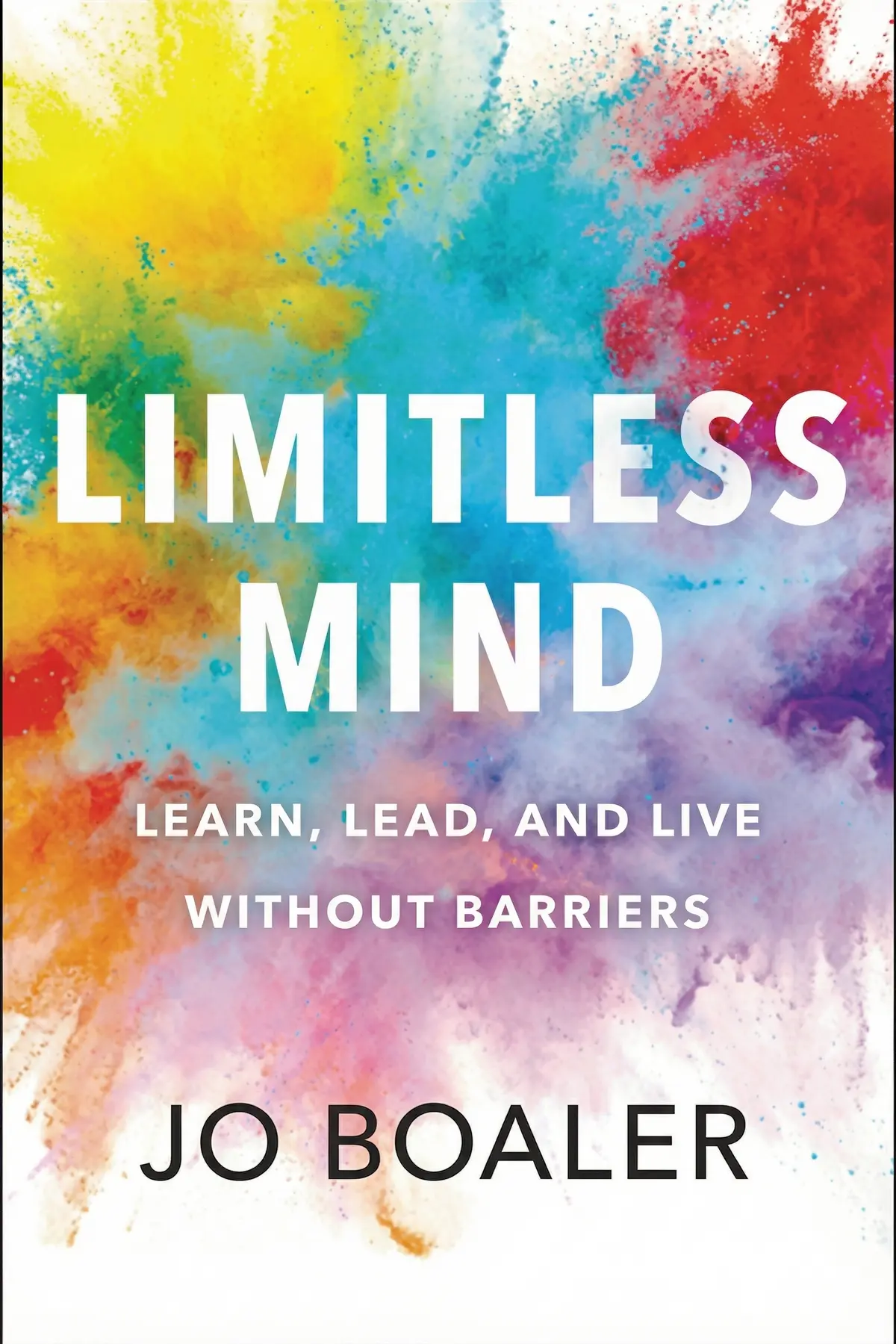
Many people go through life believing they are simply not good at certain subjects, whether it is math, art, or public speaking. This book challenges the damaging idea that our cognitive abilities are set at birth. Instead, it presents a liberating reality: our brains are constantly evolving, and the very things we often fear—like mistakes and struggle—are the essential building blocks of intellectual growth. Limitless Mind provides a blueprint for shifting from a restrictive, fixed mindset to one that embraces curiosity and persistence. By exploring the science of neuroplasticity, the value of diverse thinking styles, and the importance of depth over speed, the book promises to help readers of all ages break down the barriers that hold them back. It is a guide to becoming a lifelong learner who views every challenge as an opportunity to forge new neural pathways.
Jo Boaler is a British professor of mathematics education at Stanford University. She is highly regarded for her research on math learning, educational equity, and the promotion of growth mindsets. As the faculty director of the online educational resource youcubed, she advocates for innovative teaching. She has also written several bestsellers, including Math-ish and Mathematical Mindsets.
Listeners consider this book a simple yet profound experience, emphasizing that it is essential reading for teachers. Furthermore, the approach to instruction earns high praise, with listeners valuing how it shifts their outlook on the learning process. The text is also grounded in significant research, and one listener points out that it explores 6 theories/concepts about teaching/learning.
As a middle school teacher, I found this to be an essential guide for the modern classroom. Boaler challenges the toxic idea that some kids just aren't "math people." The research on neuroplasticity proves that our brains are constantly evolving based on how we engage with challenges. I loved the emphasis on making mistakes; it’s a relief to tell my students that their struggle is actually their brain growing! While some might find the anecdotes a bit repetitive, the core message is too important to ignore. We need to stop labeling children based on fixed abilities. This book provides a roadmap for a more inclusive, multidimensional way of teaching. It's not just about math; it's about human potential.
Show moreI wish I had this book twenty years ago when I was crying over my algebra homework. Boaler explains that the fear we feel when we don't understand something actually shuts down our problem-solving centers. That hit home for me. This isn't just a dry academic text; it's a call to action for parents and educators to change how they praise children. Instead of saying "you’re so smart," we should be praising the effort and the process. The author’s own story about facing academic bullying was a poignant addition that made her feel more human. It’s an easy read that manages to be both deeply researched and incredibly moving for anyone with school-age kids.
Show moreEver wonder why struggling feels so frustrating? Boaler argues that this exact moment of tension is where the most growth happens. This book is a mandatory read for anyone who has ever felt "bad at math" or incapable of learning a new language. The research she presents on how the brain forms new pathways when we push through difficulty is incredibly empowering. I loved the breakdown of the six theories, especially the one about the importance of a multidimensional approach. It’s written in a way that’s easy to digest but still feels meaty. You'll walk away feeling like you've been given a second chance at your own education. It completely changes your perspective.
Show moreWow. This completely shifted my perspective on my own intelligence. I grew up believing I had a "humanities brain" and that numbers were just a foreign language I’d never speak. Jo Boaler proves that we are all capable of so much more than we give ourselves credit for. The book is filled with inspiring stories and grounded in neuroscience that makes the "limitless" concept feel attainable. I particularly loved the section on how our brains grow even when we just think about doing something. It’s a bit repetitive, yes, but some messages are worth hearing twice. This is an uplifting, essential book for anyone who wants to stop being their own worst enemy.
Show moreJo Boaler has a way of making complex neuroscience feel accessible to the average reader. The truth is, many of us carry deep-seated trauma from being told we weren't "gifted" enough in certain subjects. This book dismantles those myths with solid research and six clear pillars of learning. I particularly appreciated the section on how speed does not equal intelligence. In our fast-paced society, we value quick answers over deep, creative thinking, which is a massive mistake. Personally, I found the writing style a bit dry in the middle sections, but the takeaway is life-changing. If you want to unlock a better version of your learning self, start here. It is a very impactful read.
Show moreWhile much of the book centers on mathematics, the six core principles are universal for any type of skill acquisition. Boaler provides a compelling look at how multidimensional learning—using visuals, movement, and words—is far more effective than rote memorization. Look, I’ve read a lot of self-help and education books, and this one stands out because it’s backed by Stanford-level research. Some of the anecdotes felt a bit like "gee-whiz" filler, but the underlying science of brain pathways is sound. It’s a powerful perspective shift. We aren’t born with a fixed destiny; our brains are plastic and ready to be reshaped at any age. Highly recommended for lifelong learners who feel stuck.
Show moreIt was surprising to read about Boaler’s personal battles with academic bullying in the later chapters. It gave the book a gritty, real-world edge that I didn't expect from an educational text. Frankly, it made me respect her work even more knowing she had to fight for these ideas. The book does an excellent job of explaining how our beliefs about ourselves physically manifest in our brain’s ability to learn. I’ve started applying the "mistakes are good" philosophy to my own work, and it’s reduced my anxiety significantly. It’s not a perfect book—some generalizations are a bit broad—but the impact on my perspective was undeniable. Must-read for anyone in a leadership position.
Show moreFinally got around to finishing this, and I'm mostly impressed by the practical applications for teaching. The book isn't just theory; it offers concrete ways to foster a more collaborative and creative learning environment. In my experience, the most successful people aren't the ones who were the fastest in school, but the ones who could think flexibly. Boaler nails this point. I do agree with other reviewers that the title is hyperbolic, but the content inside is genuinely useful for anyone trying to help others learn. The focus on math is heavy, but the principles of neuroplasticity apply to everything from sports to art. A very solid 4-star experience for any educator.
Show moreThe title is definitely clickbait, which is my biggest gripe with this otherwise decent book. Calling the human mind "limitless" feels more like a marketing gimmick than a scientific reality. We obviously have physical and cognitive constraints that practice can't just wish away. However, if you look past the snake-oil branding, there is genuine value in Boaler's approach to education. She highlights how a growth mindset can transform a student's trajectory. I liked the discussion on collaboration and how sharing ideas strengthens neural pathways. It's a solid 3-star read: great message, but buried under some heavy sensationalism and too many repetitive testimonials. It is a good conversation starter but lacks some scientific rigor.
Show moreNot gonna lie, I found this incredibly repetitive and scientifically thin in several places. The author keeps repeating the phrase "limitless mind" as if it’s a magic spell that makes the claim true. To be fair, her points about neuroplasticity are well-documented elsewhere, so she isn't making things up entirely. But the jump from "the brain can change" to "you are limitless" is a massive leap that feels irresponsible. My vocal chords won't turn me into an opera singer just because I believe they will! It’s basically a rehash of Carol Dweck’s work but with a heavy focus on math and more self-promotion. If you’ve read any other growth mindset books, you can probably skip this one.
Show moreRichard Wiseman

William B. Irvine
Andrew D. Thompson
AUDIO SUMMARY AVAILABLE
Get the key ideas from Limitless Mind by Jo Boaler, plus 5,000+ more titles in English and Thai.







