
20 min 51 sec
Lincoln vs. Davis: The War of the Presidents
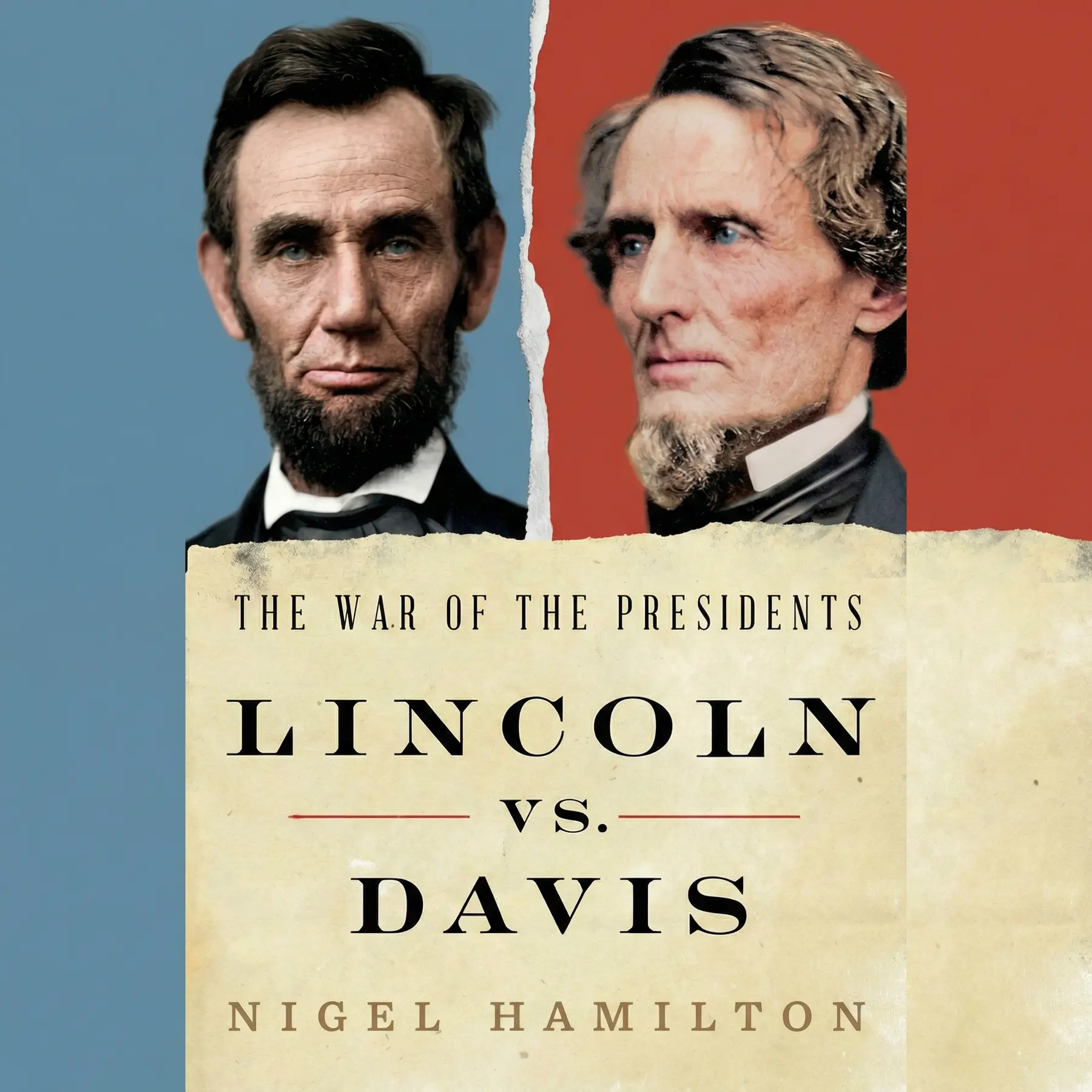
Explore the parallel presidencies of Abraham Lincoln and Jefferson Davis. This summary examines their clashing leadership styles, strategic gambles, and how their personal convictions ultimately decided the fate of a fractured United States.
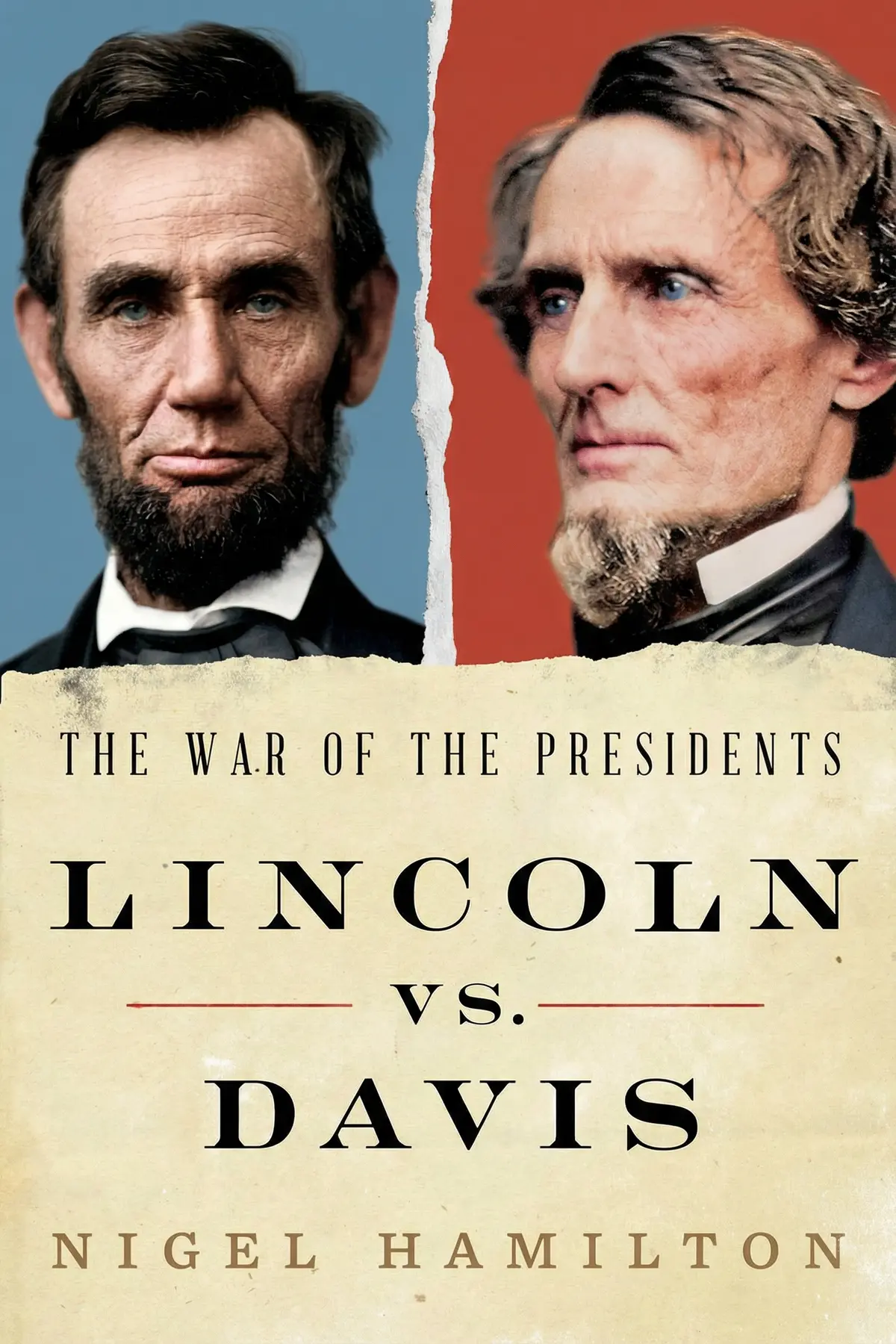
Table of Content
1. Introduction
1 min 21 sec
The history of the American Civil War is often told through the movements of massive armies and the tactical brilliance of generals. But at the very center of this storm stood two men who held the weight of a divided nation on their shoulders. Abraham Lincoln and Jefferson Davis assumed their presidencies almost simultaneously in February 1861, yet they brought vastly different backgrounds and temperaments to the struggle. One was a self-made lawyer who had never seen combat; the other was a West Point graduate and experienced soldier who believed his military pedigree would be the South’s greatest asset.
This isn’t just a story about a war between North and South; it is a story about a war between two visions of leadership. As we walk through this history, we’ll see how Lincoln’s willingness to adapt and his eventually radical shift on the issue of slavery changed the course of human history. We will also see how Davis, despite his early advantages, found himself trapped by his own rigid principles and a failure to grasp the shifting political tides of the nineteenth century. By the end of this journey, you’ll understand how the personal strengths and weaknesses of these two leaders dictated the outcome of the war and the future of the United States. Through their decisions, we see a nation being redefined in the heat of conflict, moving from a struggle for preservation to a battle for the very soul of democracy.
2. A Shared Origin and Divergent Paths
2 min 13 sec
Two leaders born in the same state took command of opposing nations on the very same day, setting a collision course for history.
3. The Standoff at Fort Sumter
2 min 18 sec
The first real test of presidential nerve occurred in the middle of a harbor, where a single fort became the focal point of a crumbling nation.
4. The Struggle for Strategy and Legitimacy
2 min 12 sec
While Davis focused on building a professional army, Lincoln struggled to find his footing in a world of military planning where he had no experience.
5. The First Great Shock at Bull Run
2 min 00 sec
A peaceful afternoon turned into a chaotic retreat, forcing both presidents to realize the brutal reality of the conflict they had started.
6. The Crisis of Authority and the Slavery Question
2 min 20 sec
As the war dragged on, both leaders faced internal revolts that threatened to undermine their agendas from within.
7. The Rise of George McClellan and the Peninsula Trap
2 min 12 sec
A general who looked like a hero but acted with hesitation became the greatest source of frustration for the Union president.
8. The Fateful Decision at Antietam
2 min 23 sec
A shift in Confederate strategy led to the bloodiest day in American history, giving Lincoln the opening he needed to change the world.
9. A Tale of Two Legacies
2 min 16 sec
The war’s final years highlighted the difference between a leader who grew with his challenges and one who remained trapped by them.
10. Conclusion
1 min 36 sec
The struggle between Abraham Lincoln and Jefferson Davis was much more than a political rivalry; it was a clash of two fundamentally different ways of seeing the world. Through the lens of Nigel Hamilton’s work, we see that the outcome of the American Civil War was heavily influenced by the psychological and strategic differences between these two presidents. Davis, the career soldier, was often hindered by his own professional rigidity and an inability to adapt to the political complexities of a total war. Lincoln, the amateur military strategist, succeeded because he was a master of political timing and possessed the humility to learn from his many mistakes.
The throughline of this story is the power of a clear moral objective. Lincoln’s decision to move from a war of preservation to a war of emancipation was the decisive factor that secured the North’s victory, both at home and abroad. It turned the tide of international opinion and gave the Union a purpose that transcended tactical gains. In contrast, Davis’s refusal to abandon the institution of slavery, even for the sake of survival, ultimately isolated the South and sealed its fate.
As you reflect on this summary, consider the value of adaptability and moral clarity in your own leadership. Are you, like Davis, holding onto old structures that no longer serve your goals? Or can you, like Lincoln, find the courage to pivot when the stakes are highest? The story of Lincoln vs. Davis reminds us that in times of great crisis, it is not always the most experienced person who wins, but the one who is most willing to be transformed by the challenge.
About this book
What is this book about?
This summary provides a deep dive into the dual leadership of the American Civil War, focusing on the simultaneous journeys of Abraham Lincoln and Jefferson Davis. Starting with their inaugurations in early 1861, the narrative tracks how a self-taught lawyer and a seasoned military man navigated the most existential crisis in American history. You will learn about the intense political maneuvering behind the scenes, from the initial standoff at Fort Sumter to the strategic failures and successes on the battlefield. The book promises to reveal how Lincoln’s slow but steady evolution on the issue of slavery became the Union’s greatest weapon, while Davis’s military background and political rigidity inadvertently limited the Confederacy’s options. By contrasting their responses to internal dissent and international diplomacy, the summary highlights the high-stakes decisions that transformed a war for territory into a moral crusade for freedom.
Book Information
About the Author
Nigel Hamilton
Nigel Hamilton is a British historian and author, known for his insightful works on American history and leadership. Hamilton's expertise in political and military history has made him a respected figure in the field of biography and historical analysis. His other works include The Mantle of Command.
Ratings & Reviews
Ratings at a glance
What people think
Listeners find the material exceptionally informative and rank it among the finest Civil War histories currently available. Nevertheless, there are conflicting opinions regarding its readability, with some considering it an excellent experience while others feel it is a drudgery to read. Additionally, several listeners highlight that the work is endlessly repetitive.
Top reviews
Lena
Finally finished this massive volume, and I have to say it’s one of the most compelling leadership studies I’ve encountered recently. Hamilton provides a granular look at the psychological warfare between Lincoln and Davis during those first critical years of the conflict. I was especially gripped by the chapters on George McClellan’s infuriating arrogance and the utter disaster of his Peninsula Campaign. While the prose can be a bit dense at times, the level of research justifies the effort required to get through it. It’s refreshing to see a historian tackle Lincoln’s early vacillations without the usual fawning lens we often see in American textbooks. If you can handle the length, it is a masterclass in political history that shouldn't be missed.
Show moreSomsri
The dual-narrative structure provides a fascinating look into the private lives and public pressures of the two First Families in 1861. I was surprised by how much I learned about the Davis marriage and Varina’s influence, which is often overshadowed in other popular histories. Hamilton doesn't shy away from the darker aspects of Lincoln's views on colonization, which adds a layer of much-needed complexity to his character. The tension builds beautifully toward the issuance of the Emancipation Proclamation, even if the book stops abruptly after that event. While some might find the length intimidating, the depth of characterization makes every page feel significant and well-earned. This is top-tier historical writing that challenges your basic assumptions about the era.
Show moreWittaya
Wow, what a monumental undertaking this must have been for Hamilton to piece together such a vivid and detailed timeline. I’ve read a lot about the Civil War, but seeing the events unfold simultaneously through the eyes of both Washington and Richmond was a revelation. The author’s sharp, sometimes cheeky prose kept me engaged even during the more technical discussions of the Peninsula Campaign. He manages to make historical figures like Salmon P. Chase and Montgomery Blair feel like characters in a modern political drama. Some readers might find the vocabulary a bit fusty, but I thought it added a certain gravitas to the heavy subject matter. It is a brilliant, exhaustive study of power and morality.
Show morePenelope
Ever wonder how a decorated Mexican War hero like Jefferson Davis managed to lose the political game to a self-taught country lawyer? Hamilton’s dual biography explores this dynamic with impressive detail, highlighting the stark differences in their temperament and decision-making processes. I particularly enjoyed the focus on the cabinet rivalries, especially the way Seward and Stanton are portrayed as such dominant, difficult figures. The author does have a habit of using overly flowery language and some truly obscure vocabulary that slows the pace. However, the insight into the Confederate side of the equation made it worth the occasional drudgery of the middle chapters. It is a solid, four-star addition to any Civil War buff's library.
Show moreOtt
Not what I expected at first, given the author’s background in World War II history, but this is a very strong effort. Frankly, the comparison between Davis’s military rigidness and Lincoln’s political flexibility is the best part of the entire book. You really get a sense of how Lincoln was learning on the job while dealing with a cabinet that essentially thought he was a fool. There is some annoying repetition, particularly with certain quotes and descriptions of military incompetence, which could have been easily streamlined. Still, the portrayal of the "Great Panic" in Washington and the drama surrounding Fort Sumter was as gripping as any thriller. I would recommend it for the fresh take on the Seward-Lincoln relationship alone.
Show moreJackson
After hearing mixed things about the "cheeky" tone, I went in skeptical but came away quite impressed by the level of detail. Look, it’s true that Hamilton can be a bit harsh on Lincoln’s early indecisiveness, but history shouldn't always be about simple hero worship. His analysis of how the Emancipation Proclamation was a strategic move to outmaneuver Davis was particularly insightful and well-argued. I did notice the frequent use of Latin phrases and some very long-winded paragraphs that could have been much shorter. Despite the dense writing, the book provides an excellent window into the minds of two men who were essentially making it up as they went along. It is a very informative, if somewhat challenging, read.
Show moreLucas
This book is a bit of a contradiction because it is both incredibly informative and occasionally very frustrating to read. On one hand, the research regarding the social circles of Mary Todd Lincoln and Varina Davis is absolutely stellar and adds great flavor. On the other hand, Hamilton has a habit of asking endless rhetorical questions that don't always lead to a clear answer. I also found it odd that he stopped the story in 1863, leaving the most famous parts of the war completely untouched. However, the way he deconstructs the failures of the Union’s early military leadership makes it a worthy purchase for serious history fans. It is a deep dive that requires a great deal of patience.
Show moreChatchai
Hamilton brings a massive amount of research to the table, but the pacing of this book is genuinely exhausting for the reader. Personally, I found the constant focus on the first few months of 1861 to be a bit much, especially since we don't even get to the end of the war. He spends so much time on the "what ifs" and the perceived failures of Lincoln’s early policy that it starts to feel like a lecture. The writing style is also quite peculiar, with frequent sentence fragments and a strange obsession with Varina Davis’s social grace. It is definitely informative, but you have to be prepared for a lot of repetition regarding the three and a half million slaves. It is a good book, just not a great one.
Show moreEli
Why does Nigel Hamilton feel the need to repeat the same three points every ten pages throughout this book? The truth is, this narrative is a slog that desperately needed a more aggressive editor to trim the unnecessary fat. He constantly chides Lincoln for not being an abolitionist from day one, which feels like a very modern judgment on a complex 19th-century politician. I found his haughty, almost sneering tone toward the American "amateurs" quite off-putting and repetitive throughout the entire 700 pages. Furthermore, ending the narrative right at the Emancipation Proclamation makes the whole thing feel unfinished and strangely lopsided. There are much better, more readable biographies of both men available for the average reader today.
Show moreWissanu
Picked this up hoping for a balanced look at the two presidents, but I was met with a judgmental tone that felt entirely misplaced. Hamilton seems to view the American Civil War through a very specific, somewhat cynical English lens that misses the nuance of the era’s legal constraints. He calls McClellan a "lunatic" and Seward a "pro-slaver," which are such wild exaggerations that they undermine his credibility as a serious historian. The prose is often florid and bloated, making it feel like a chore to reach the end of a single chapter. To be fair, his research is deep, but his interpretations are often so biased against Lincoln’s intelligence that I found myself rolling my eyes. It was a major disappointment for me.
Show moreReaders also enjoyed
Age of Anger: A History of the Present
Pankaj Mishra
A Promised Land
Barack Obama
A River in Darkness: One Man’s Escape from North Korea
Masaji Ishikawa
1491: New Revelations of the Americas Before Columbus
Charles C. Mann
A Spy Among Friends: Philby and the Great Betrayal
Ben Macintyre
1929: Inside the Greatest Crash in Wall Street History--and How It
Andrew Ross Sorkin

A Biography of Loneliness: The History of an Emotion
Fay Bound Alberti
AUDIO SUMMARY AVAILABLE
Listen to Lincoln vs. Davis in 15 minutes
Get the key ideas from Lincoln vs. Davis by Nigel Hamilton, plus 5,000+ more titles in English and Thai.
- 5,000+ titles
- Listen as much as you want
- 7-day free trial
- Cancel anytime







