
59 Seconds: Change Your Life in Under a Minute
Richard Wiseman
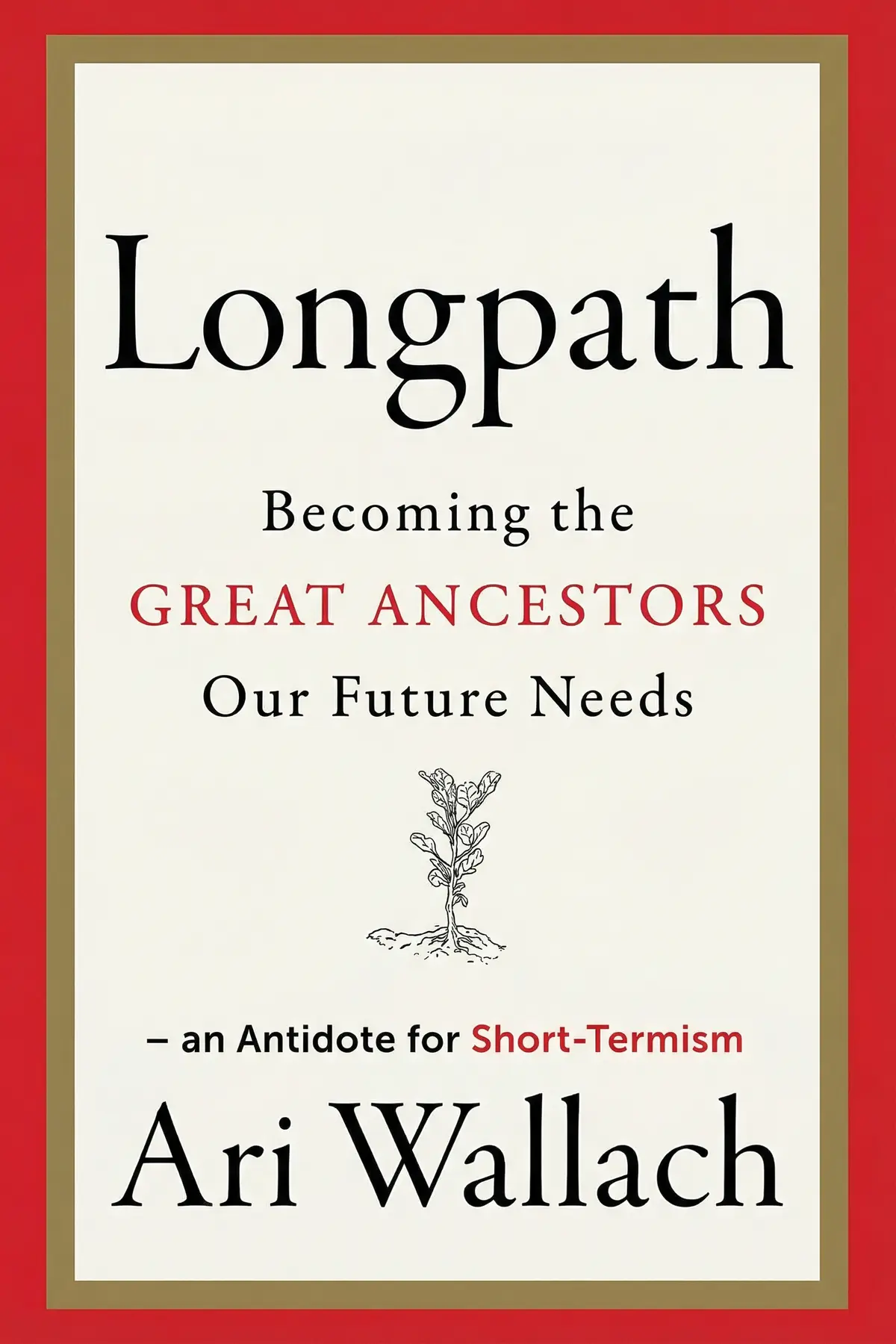
Discover how to transcend short-term thinking and embrace a multi-generational perspective. This guide explores the Longpath mindset, offering tools to navigate modern chaos and build a sustainable, empathetic legacy for the future.
1 min 53 sec
When we think about the future, we often picture sleek gadgets, high-tech cities, or perhaps a looming environmental crisis. We tend to view the coming years through the lens of what might happen to us, or perhaps our children. But there is a much older, deeper way of looking at time—one that stretches back centuries and looks forward just as far. Long before modern futurists occupied boardrooms, the Iroquois Confederacy practiced a form of wisdom that required every major decision to be weighed against its impact on the seventh generation to come. They understood that they were not just individuals living in a vacuum, but links in a long chain of human existence.
Today, we find ourselves at a crossroads. We are increasingly trapped in the ‘now,’ driven by instant notifications and the frantic pace of modern life. Ari Wallach suggests that we need to reclaim that ancient perspective and update it for the twenty-first century. He calls this the Longpath mentality. It is a shift in consciousness that asks us to move away from the short-term ‘reaction mode’ that defines our current era and toward a proactive, visionary way of being.
By lengthening our perspective, we don’t just help the people of the future; we actually find more peace and purpose in our present lives. We start to see our choices—from how we raise our children to how we treat the environment—as ripples that will continue to move long after we are gone. This journey is about discovering how to navigate a world that feels increasingly chaotic and unstable by anchoring ourselves in a much larger story. Over the following sections, we will explore why our current moment is so unique, how we can break the habits of short-term thinking, and what it looks like to build a world that our great-grandchildren will be proud to inherit.
2 min 31 sec
Explore the unique moment of global transition we are living through and learn why this period of chaos is actually a rare opportunity to rewrite the rules of civilization.
3 min 03 sec
Understand the biological and technological forces that trap us in the present and discover a three-step method to reclaim your focus for the long term.
2 min 37 sec
Learn why connecting with both your ancestors and your unborn descendants is essential for making better decisions in the present.
2 min 36 sec
Discover how to move past the ‘standard’ predictions of tomorrow and start creating a ‘desired future’ that prioritizes human dignity and inclusion.
2 min 48 sec
Shift from individual change to collective action by using four key strategies to influence your community and create lasting ripples of positive change.
1 min 37 sec
In the end, the Longpath mentality is about more than just planning for the future; it is about how we choose to live right now. It is an invitation to step out of the frantic, short-term ‘reaction mode’ that defines so much of modern life and into a more spacious, purposeful way of being. By recognizing that we are living in an Intertidal era—a rare moment of profound transition—we can see the current chaos not as an end, but as a beginning. We have the opportunity to move past the official, often grim narratives of tomorrow and instead build the desired futures we truly want to see.
This journey requires us to stretch our hearts as much as our minds. Through transgenerational empathy, we connect with the struggles of our ancestors and the potential of our descendants. This connection reminds us that our lives have a meaning that extends far beyond our own lifespans. Our choices today are the legacy we leave behind, and when we work together—through vision, conversation, and small acts of daily kindness—we can ensure that legacy is one of flourishing rather than decline.
As you move back into your daily life, take a moment to consider that ’empty chair’ for the future. Whether you are making a career change, voting in an election, or simply talking to a child, ask yourself how your actions will echo through the generations. We are the ancestors of the future. Let’s strive to be ancestors that the people of tomorrow will look back on with gratitude and pride.
We live in an age of immediate gratification, where quarterly results and instant social media feedback dominate our attention. However, this short-termism leaves us ill-equipped to handle massive global shifts like climate change and technological disruption. This summary introduces a transformative framework for thinking that extends far beyond our own lifespans. It suggests that we are currently in a transitional era—an 'Intertidal'—where the old rules no longer apply, and the new ones have yet to be written. By adopting a long-term mentality, we can begin to see ourselves as part of a continuous human story that connects our ancestors to our descendants. The promise of this approach is not just a better world for those born a century from now, but a more meaningful and grounded life for ourselves today. You will learn how to cultivate transgenerational empathy, challenge the 'official' versions of the future sold to us by corporations, and take collective action to ensure human flourishing for centuries to come.
Ari Wallach is a renowned futurist and a faculty member at Columbia University’s School of International and Public Affairs. As the founder of Longpath Labs, he focuses on helping people and organizations develop mindsets aimed at long-term success. He also serves as the CEO of Synthesis Corp., a consultancy specializing in strategic innovation. His widely acclaimed TED talk regarding these concepts has reached an audience of more than 2.5 million viewers.
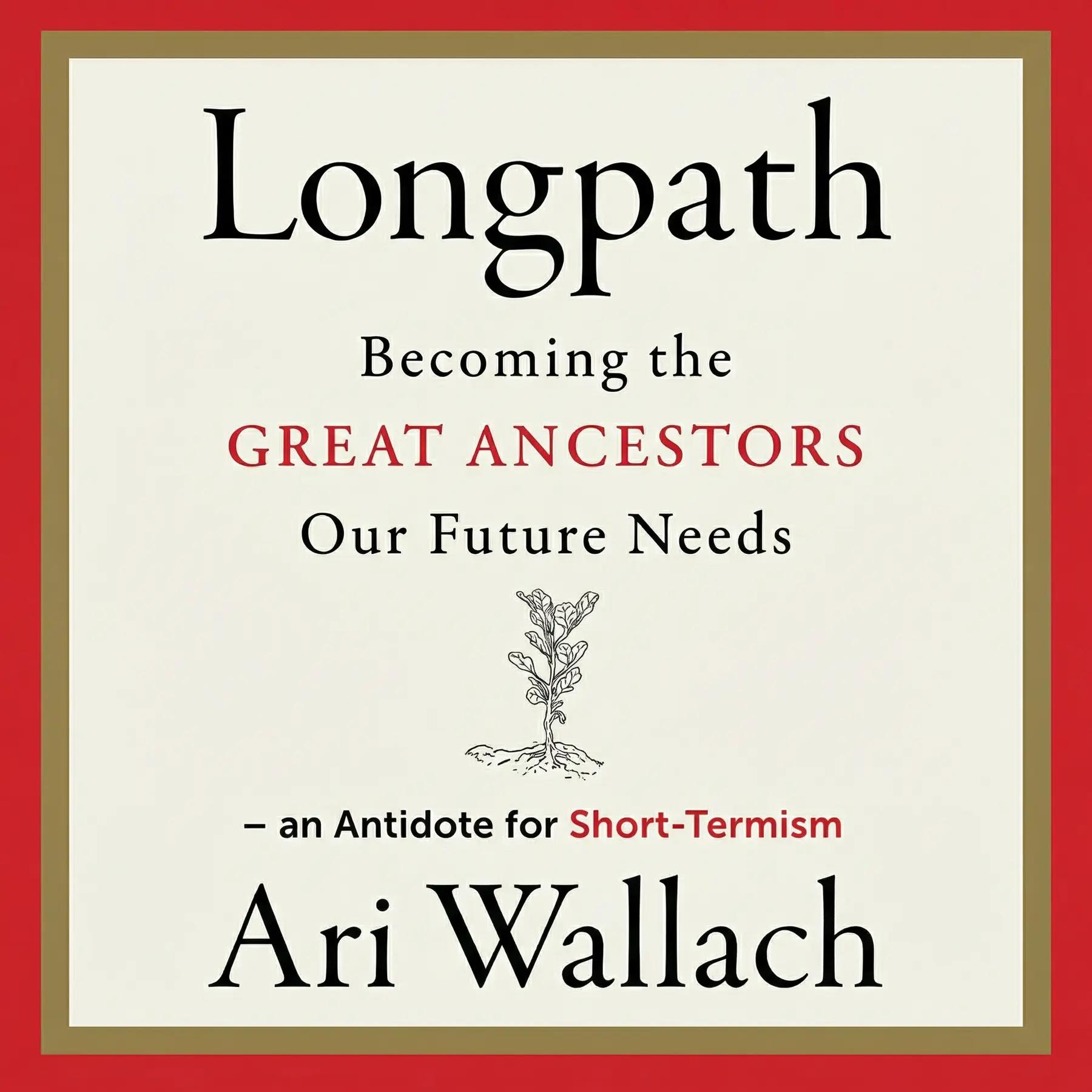
Listeners find the work thought-provoking, and one listener notes the way it combines lessons from personal and societal history. They view it as a must-read that is direct and simple to follow, containing relatable content and powerful anecdotes from the author. They appreciate the book's depth; one listener observes how it tackles complicated topics, while another emphasizes its accessible, workbook-style exercises.
Finally got around to reading this, and it’s exactly the antidote for the frantic energy of our modern world. Wallach captures the current historical moment perfectly, describing our chaotic 'Intertidal' state with both clarity and a strange sense of hope. The truth is, we have lost the ability to imagine a future that isn't a dystopian nightmare, and this book gives us permission to dream again. I particularly loved the concept of 'transgenerational empathy'—the idea that we owe a debt to the past while holding a responsibility for the future. It’s written in a way that is straightforward and deeply moving, especially when he discusses the Iroquois Confederacy’s long-term wisdom. This isn't just another business book; it’s a philosophical shift that every leader needs to undergo right now.
Show morePicked this up during a particularly anxious week, and it truly helped recalibrate my perspective on what matters. Longpath isn't just about saving the planet; it’s about finding meaning in our own lives by seeing ourselves as part of a much longer human story. The way Wallach breaks down 'transgenerational empathy' makes the act of caring for the future feel like a personal spiritual practice rather than a chore. In my experience, most books about the future are either too technical or too depressing, but this one strikes a beautiful balance. The stories about his father add a raw, emotional depth that makes the academic theories feel lived-in and real. It’s a must-read for anyone who feels like they’re just treading water in the present moment.
Show moreWow. Wallach has written a manifesto that feels both revolutionary and deeply intuitive. We are currently living through a seismic 'Intertidal' shift, and without a roadmap like Longpath, it's easy to get lost in the chaos of the present. I found the sections on the Iroquois Confederacy and the concept of 'examined, desired futures' to be incredibly enlightening. Not gonna lie, I was skeptical of the futurist label at first, but his approach is grounded in empathy and history rather than just tech predictions. The book is remarkably easy to read for such a complex subject, weaving personal narratives with broad historical trends. It’s a call to action that feels both urgent and patient, reminding us that we are the ancestors of tomorrow.
Show moreAfter hearing Ari Wallach speak, I was eager to see how his theories on the 'Intertidal' period would translate to a full-length book. He does a fantastic job of weaving together personal history with a broader societal lens, making complex foresight concepts feel surprisingly accessible to the average reader. To be fair, some sections feel a bit derivative of other mindfulness or futurism texts, yet the specific focus on transgenerational empathy is a refreshing addition. The 'workbook' style exercises tucked into the chapters actually help ground the high-level philosophy into daily actions. It’s not just a manifesto; it’s a practical guide for anyone feeling overwhelmed by the rapid pace of technological and social change. I finished it feeling significantly more intentional about the legacy I’m leaving for my grandchildren.
Show moreAs someone who works in government planning, I see the damage of 'short-termism' every single day in our reactionary policies and sound-byte solutions. Wallach’s 'Longpath' offers a much-needed structural rethink, encouraging us to look beyond the immediate election cycle or fiscal year. I appreciated the workbook-style prompts that force you to consider the 'ripples in the pond' created by your current decisions. My only gripe is that the book occasionally meanders into personal anecdotes that feel a bit self-indulgent for a futurist manifesto. Despite that, the core message about becoming the great ancestors our future needs is powerful and timely. It’s a thought-provoking read that bridges the gap between individual mindfulness and global sustainability efforts quite effectively.
Show moreThe chapter on Hogewey—the village for Alzheimer’s patients—was a standout moment that perfectly illustrated what 'intentional and inclusive thinking' looks like. This book succeeds because it doesn't just lecture you; it gives you the tools to actually start thinking differently about your own legacy. While the author does spend a lot of time on his own accomplishments, the practical value of the 'workbook' sections outweighs the occasional self-importance. I’ve been looking for a way to connect my daily habits to my larger values, and the Longpath mentality provides that bridge. It’s a straightforward read that manages to make 'becoming a great ancestor' feel like an achievable goal rather than a lofty dream. If you’re tired of the reactionary nature of the news cycle, this is definitely worth your time.
Show moreEver wonder why we’re so obsessed with the next quarter’s profits instead of the next century’s survival? This book attempts to answer that, though it often feels like a longer version of the 10-10-10 framework popularized by Suzy Welch. While Wallach’s writing is engaging, I was disappointed that he didn't dive deeper into actual scenario planning or the 'unintended consequences' of virtuous decisions. The narrative is at its best when he shares stories about his father, adding a layer of emotional resonance that the more academic parts lack. Still, the mentions of his consulting work for huge corporations felt like unnecessary padding for his ego. It’s a decent introductory text for long-term thinking, but it lacks the intellectual rigor I expected from a Columbia professor. A quick read, but maybe not a life-changing one.
Show moreThis book is a bit of a mixed bag, to be honest. On one hand, the central thesis about replacing 'toxic short-termism' with a long-term mentality is absolutely crucial for our survival. On the other hand, the delivery feels a bit 'precious' and ivory-tower at times, lacking the grit needed for real-world application. Wallach mentions an inclusive study in a Caribbean country but then barely touches on it, which was a missed opportunity for actual data. I liked the focus on virtues and personal responsibility, but I worry it ignores the systemic barriers that keep most people trapped in short-term survival mode. It’s a pleasant read with some nice workbook activities, but it might be too idealistic for the very people who need it most.
Show moreLook, I really wanted to like this after seeing the TED talk, but Wallach's constant name-dropping felt incredibly out of touch. He spends pages detailing a 'marathon' trip to Trader Joe’s that involves two full carts, which is a bizarre anecdote when discussing global food insecurity. Frankly, the air of privilege throughout the book makes it hard to digest the noble message about becoming a 'good ancestor.' It’s a shame because the core concept of shifting away from short-termism is vital for our current era. However, the author’s tendency to center his own beachfront vacations and high-profile clients during a global pandemic left a sour taste. If you can ignore the elitism, there are some decent frameworks here, but I found myself rolling my eyes more than I was learning. It feels less like a guide for humanity and more like a memoir for the Silicon Valley elite.
Show moreNot what I expected based on the glowing blurbs on the back cover. I found the writing to be quite repetitive and, in several chapters, downright bland compared to his more energetic TED presentation. The core ideas are definitely important, but they feel stretched thin across these pages to make a full book out of a 15-minute talk. Personally, I found the constant name-dropping of 'elite' clients and his beachfront summer 2020 retreat to be incredibly alienating. It’s hard to take a lecture on food insecurity seriously when it’s followed by a two-page story about an argument over a Trader Joe’s grocery haul. There are better books out there on deep time and future-thinking that don’t come with this much baggage. It felt more like a branding exercise than a groundbreaking philosophy.
Show moreRichard Wiseman
William B. Irvine

Andrew D. Thompson
Deepak Chopra
AUDIO SUMMARY AVAILABLE
Get the key ideas from Longpath by Ari Wallach, plus 5,000+ more titles in English and Thai.







