
23 min 03 sec
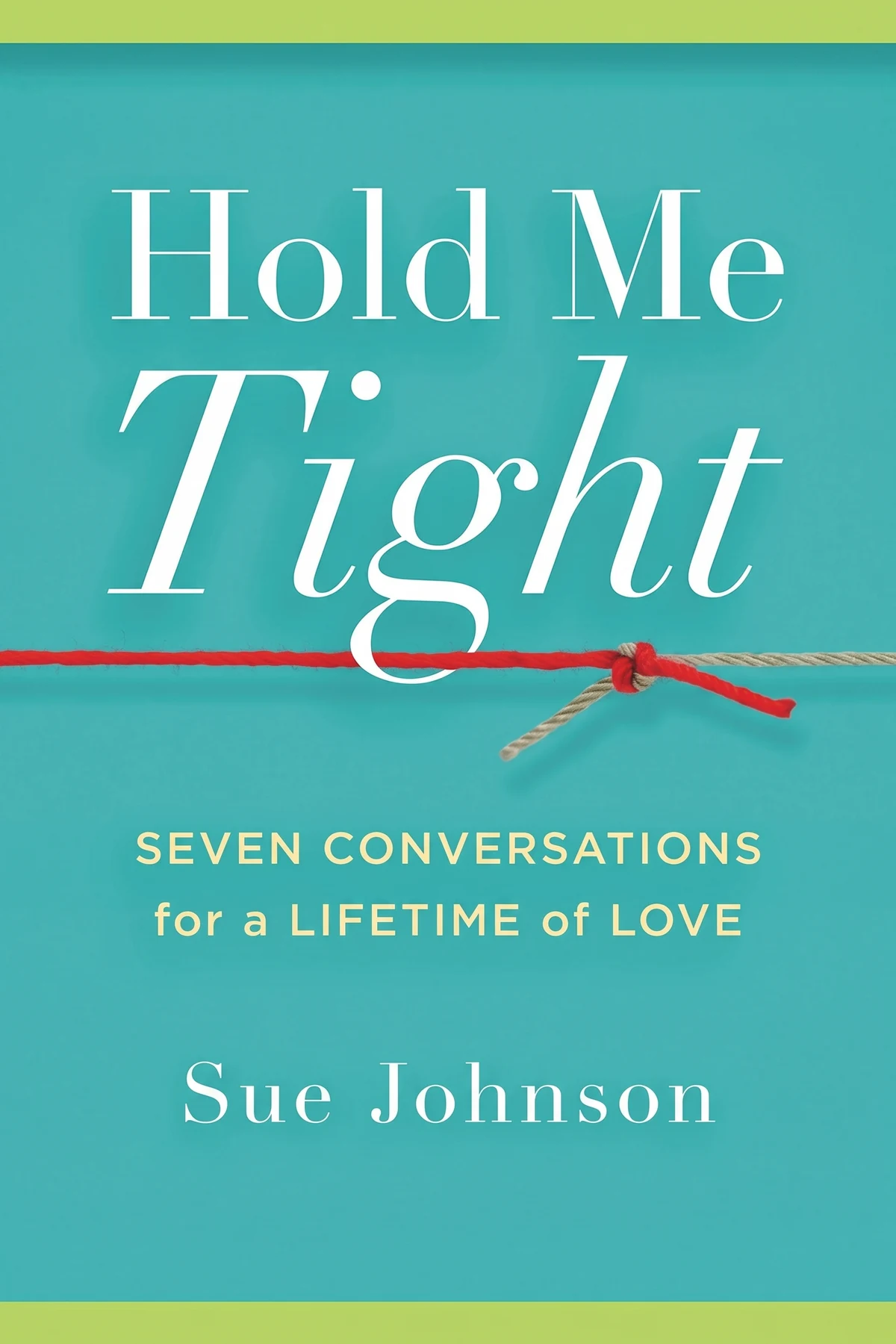
Love Sense: The Revolutionary New Science of Romantic Relationships
By Sue Johnson
Love Sense explores the groundbreaking science behind romantic bonds, revealing how attachment theory and biology shape our relationships and providing a roadmap for creating secure, lasting emotional connections in the modern world.
Table of Content
1. Introduction
2 min 02 sec
We often think of love as a mysterious force that strikes like lightning—unpredictable, irrational, and perhaps even a bit dangerous. We grow up on a steady diet of fairy tales and cinematic romances that suggest love is a spell we fall under, a magical occurrence that somehow overrides our logic and sense of self. But when the initial spark fades and the realities of daily life set in, many people find themselves feeling disillusioned. They wonder if lasting love is even possible, or if we are all just chasing a ghost of an idea that doesn’t hold up in the real world.
Here is the shift we need to make: Love is not a mystery beyond our grasp. It is a biological imperative, a survival mechanism, and most importantly, a logic-driven emotional bond that we can actually understand and manage. This is what we call developing our ‘love sense.’ It is the ability to perceive the underlying signals of connection and disconnection that dictate the health of our relationships.
In this exploration, we are going to look at the revolutionary new science that explains why we bond the way we do. We will see that our need for a partner is not a sign of immaturity or weakness, but a fundamental human requirement that makes us stronger, healthier, and more resilient. We’ll move away from the idea that love is just about sex or reproduction and instead look at it as an ’emotional enterprise’—the primary way we find safety in an increasingly isolated world.
Through the lens of attachment theory and neurobiology, we’ll uncover why we fight over the small things, how fear masquerades as anger, and how we can rebuild a ‘safe haven’ with our partners even after years of friction. By the time we finish, you’ll see that love isn’t something that just happens to you; it is a bond you can actively cultivate and protect by understanding the hidden rhythms of the human heart. Let’s begin by looking at how our understanding of love has evolved from a matter of survival to a matter of the soul.
2. The Evolution of Love as an Emotional Enterprise
2 min 21 sec
Discover how marriage transitioned from a practical survival contract to a search for deep emotional fulfillment, and why this shift makes understanding connection more vital than ever.
3. Navigating Love in an Age of Social Isolation
2 min 36 sec
Learn why modern life has turned our romantic partners into our entire world, and the immense pressure this puts on the fragile bonds of intimacy.
4. The Biological Blueprint for Monogamy
2 min 27 sec
Explore the fascinating neurochemistry that suggests humans are naturally wired for long-term exclusivity, despite popular myths to the contrary.
5. Effective Dependency: Why Needing Others Makes Us Strong
2 min 17 sec
Challenge the myth of the ‘self-made’ individual and learn how relying on a partner actually provides the psychological fuel for independence and exploration.
6. The Search for a Safe Haven and Attachment Theory
2 min 19 sec
See your relationship through a new lens by understanding how our childhood needs for protection and care are mirrored in our adult romantic lives.
7. Decoding the Language of Fear and Conflict
2 min 22 sec
Uncover the hidden ‘separation distress’ that drives most relationship fights, and learn how to see the fear behind your partner’s anger.
8. Breaking the 'Protest Polka' Through Emotional Attunement
2 min 26 sec
Identify the destructive dance patterns that pull couples apart and learn the steps to re-establishing a secure, empathetic union.
9. Renewing the Bond Through Life’s Transitions
2 min 23 sec
Discover why love isn’t a static state but a series of stages, and how to successfully navigate the shifts from infatuation to parenthood and beyond.
10. Conclusion
1 min 50 sec
As we reach the end of this journey into the ‘love sense,’ the most important takeaway is that love is not a mystery to be solved, but a bond to be nurtured. We have seen that our need for connection is a primal, biological drive that remains with us from the cradle to the grave. Science has shown us that being in a secure, loving relationship doesn’t just make us happier; it makes us physically healthier, more resilient in the face of tragedy, and more capable of achieving our goals in the outside world.
We’ve learned that the conflicts that often tear couples apart—the yelling, the withdrawing, the endless arguments over trivialities—are usually just ‘protests’ against a perceived loss of connection. When we understand that our partner’s anger is often just a mask for fear, we can stop reacting with our own defenses and start responding with empathy. We can break the ‘Protest Polka’ and turn our relationships back into the safe havens they were meant to be.
Remember that love is a skill. It requires attention, attunement, and the courage to be vulnerable. It’s about being ‘Accessible, Responsive, and Engaged.’ Even if you feel disconnected right now, it is never too late to start rebuilding. Take a moment to remember those small instances where you felt truly seen and wanted by your partner. Use those memories as a compass to guide you back to each other. Relationships are not static; they require constant renewal through every stage of life. If you are willing to do the work, to listen with your heart as much as your ears, and to prioritize the emotional bond above all else, you can create a love that doesn’t just last, but grows stronger with every passing year. It truly does take two to tango, but once you learn the steps, the dance of connection is the most rewarding experience a human being can have.
About this book
What is this book about?
Have you ever wondered why love can feel like a confusing mystery, or why even the most passionate relationships eventually face conflict? Love Sense breaks down the traditional view of love as an irrational spark and replaces it with a scientific understanding of emotional bonding. Drawing on decades of clinical experience and research, the book explains that humans are biologically wired for long-term connection. It explores how our adult relationships are actually a continuation of the attachment needs we had as children. The book promises to transform how you view intimacy, dependency, and conflict. Instead of seeing dependency as a weakness, you will learn why it is actually the key to personal strength and resilience. By understanding the 'love sense'—our innate ability to navigate emotional territory—you can move past destructive patterns like the 'Protest Polka' and build a relationship that serves as a permanent safe haven. Whether you are seeking a new bond or trying to repair an old one, this guide provides the tools to foster deep, enduring affection.
Book Information
About the Author
Sue Johnson
Dr. Sue Johnson is a renowned clinical psychologist and couples therapist. She is the primary developer of Emotionally Focused Couples and Family Therapy (EFT), a highly effective approach to relationship healing. In addition to her clinical work, she serves as a research professor at Alliant International University in San Diego and is a professor emeritus at the University of Ottawa.
Ratings & Reviews
Ratings at a glance
What people think
Listeners consider this book a vital resource for both couples and therapists, providing well-grounded scientific details and useful, research-driven recommendations. They value its deep exploration of attachment and emotional necessities, while one listener specifically mentions the way it combines theory with clinical case studies. Listeners often call the work eye-opening and transformative, with one review noting that it offers a logical structure for making sense of relationships. The author’s writing receives favorable mentions, and one listener recounts how the material helped them and their spouse find their way back to one another.
Top reviews
Wipawan
This book is a definitive guide for anyone struggling to navigate the messy landscape of modern romance. Sue Johnson manages to bridge the gap between hard neuroscience and the deeply emotional experience of loving another human being. As a therapist myself, I find her Emotionally Focused Therapy (EFT) framework to be incredibly grounding and practically applicable. She explains how our mammalian brains are wired for connection, turning what often feels like "crazy" behavior into a logical survival code. While some parts of the scientific explanations feel a bit repetitive, the overall message is life-changing. It’s not just fluff; it’s a coherent map for building a secure bond that actually lasts through the years. If you’re tired of surface-level advice about communication "skills," this is the deep dive you need.
Show moreArjun
As someone who has spent years in and out of couples counseling, finding this book felt like finally receiving the secret decoder ring for my relationship. Dr. Johnson moves past the usual "listen and repeat" exercises and digs straight into the heart of our attachment needs. The concept of the "safe home-base" resonated with my husband and me on a level that previous books never quite reached. We’ve started to view our arguments not as failures, but as protests against losing that vital emotional connection. The case studies are relatable without being overly long or dramatic, making the theory feel very grounded in real-world struggles. Not gonna lie, it is refreshing to see a psychologist take such a firm stand on the importance of long-term commitment and monogamy. Our bond feels significantly more secure now.
Show moreCharlotte
After hearing so much about Sue Johnson's work in the therapy world, I was excited to see her bring these concepts to a mainstream audience. This book is a beautiful synthesis of decades of research and clinical experience. She creates a coherent framework that turns the chaotic experience of "falling in love" into something that finally makes sense. I loved the "house" metaphor for attachment styles—the foundation of needs, the second floor of coping, and the top floor of behavior. It’s a vivid way to visualize how we show up in our relationships. Her descriptions of how secure partners can be more sexually adventurous because they feel safe were particularly enlightening. This is a must-read if you want to move past surface-level communication and build something truly durable.
Show moreSombat
The chapter on neuroscience was a total game-changer for me because it validated so much of what I felt but couldn't name. Understanding that relational pain registers in the same part of the brain as physical pain changed how I view my partner's "overreactions." We aren't just being dramatic; we are literally in a state of survival threat. I especially appreciated the distinction between "sealed-off sex" and secure, connected intimacy. It's a bold book that challenges the Western obsession with total self-sufficiency. If you want a relationship that feels like a safe harbor instead of a battlefield, you need to read this. It’s a deep, emotional, and ultimately hopeful look at why we need each other. Truly an essential addition to any bookshelf on human behavior and psychology.
Show moreSoontorn
Finally got around to reading this after seeing it cited in dozens of articles, and I have to say the writing is exceptionally graceful. Sue Johnson has a way of demystifying the "magic" of love by showing how it’s actually an exquisite logic designed for our survival. I particularly appreciated the sections on how oxytocin and the amygdala influence our reactions to conflict. However, the truth is that the "sciency" talk got a little dicey when she started generalizing animal studies to human behavior quite so conclusively. Sometimes it felt like she was overreaching with the vole metaphors to prove her points. That said, the breakdown of the three major stages of a relationship—Formal Bonding, Parenthood, and Mature Love—was incredibly insightful. It’s a solid read for anyone wanting a research-backed perspective.
Show moreJoshua
Ever wonder why you and your partner keep having the exact same fight over and over again? This book provides the answer by looking at our innate attachment strategies, specifically the dance between anxious and avoidant partners. I’ve explored this topic before, but Johnson explains the "logic" of love in a way that feels both revolutionary and common sense. She makes a compelling case that emotional dependency isn't a sign of weakness, but rather our greatest human strength. The way she describes the "panic" of separation distress helped me understand my own reactions during conflict much better. My only gripe is that the tone can be a bit overly optimistic at times, ignoring some of the darker realities of why people fail to connect. Still, it's essential reading for lovers.
Show moreValentina
Picked this up on a whim during a rough patch, and I was surprised by how much I enjoyed the counter-cultural perspectives tucked inside. It’s rare to find a modern psychologist who openly defends aging with dignity or discusses the negative impact of certain media on emotional bonds. Johnson argues that we are designed for monogamy, which is a refreshing change from the trendy "everyone is polyamorous now" stance in modern pop-psychology. The writing style is very accessible to a general audience, even when she’s diving into functional magnetic resonance imaging. While I thought the section on Parenthood was a bit bleak, it’s probably a necessary reality check for many. The truth is, love requires constant maintenance, and this book gives you the tools to start that work.
Show morePatcharaporn
Not what I expected given the high praise, as it felt much fluffier than her academic texts for clinicians. While the basic premise of attachment theory is undeniably useful, the exercises provided felt a bit too simplistic for couples dealing with "heavy" issues. Johnson largely ignores the impact of substance abuse, personality disorders, or deep-seated trauma on these attachment styles. If your relationship is healthy but just needs a tune-up, this is great, but it might feel shallow for those in genuine crisis. The prose is clear, but I found myself skimming through some of the more repetitive case stories that didn't seem to offer new insights. It reads a bit like a very long magazine article stretched out into a full-length book. I wanted more grit and less "idealized" romance.
Show moreHemp
To be fair, the core message about secure attachment being vital for a healthy life is absolutely solid and worth hearing. But I struggled with the pacing of the book, as it felt like the same few points were being hammered home in every single chapter. Once you understand the basic idea of the "anxious-avoidant trap," the rest of the book feels like filler. I also found the "sciency" conclusions a bit too conclusive for my taste; human behavior rarely follows such neat, predictable patterns. That being said, the "Love Sense" concept is a great way to reframe how we view our needs for others. It’s a decent introductory text, but if you’ve already read other books on attachment, you might find a lot of this to be redundant.
Show moreArt
Look, I really wanted to like this because the concept of attachment theory is fascinating, but the execution was "ugh and blerg" for me. The sex chapter in particular felt judgmental and focused on a very specific, narrow view of what "healthy" intimacy should look like. I found the constant scientific citations about voles and oxytocin to be a bit dubious and overblown to fit the author's narrative. It felt like she was trying too hard to make love sound like a hard science when it’s clearly more complex than a few chemicals in the brain. Frankly, I found her take on things like Botox and pornography to be weirdly out of place in a book that’s supposed to be about neuroscience. It just didn't click for me at all.
Show more
Readers also enjoyed
59 Seconds: Change Your Life in Under a Minute
Richard Wiseman
A Liberated Mind: How to Pivot Toward What Matters
Steven C. Hayes
Acting with Power: Why We Are More Powerful Than We Believe
Deborah Gruenfeld
All About Love: New Visions
bell hooks
AUDIO SUMMARY AVAILABLE
Listen to Love Sense in 15 minutes
Get the key ideas from Love Sense by Sue Johnson, plus 5,000+ more titles in English and Thai.
- 5,000+ titles
- Listen as much as you want
- 7-day free trial
- Cancel anytime







