
13 min 59 sec
Lying
By Sam Harris
Lying examines the profound moral and practical consequences of dishonesty. Sam Harris argues that even well-intentioned white lies damage our relationships, mental well-being, and the very foundation of a trusting society.
Table of Content
1. Introduction
1 min 34 sec
Imagine your morning routine. You might tell a small untruth to a coworker about why you were five minutes late, or perhaps you give a disingenuous compliment to a friend about their new haircut. These moments feel trivial. In the grand scheme of things, we often tell ourselves that these minor deceptions are the grease that keeps the wheels of society turning smoothly. We lie to be polite, to avoid conflict, or to protect the people we care about. But what if this common assumption is fundamentally flawed? What if these seemingly innocent ‘white lies’ are actually doing more harm than we realize?
In this exploration of the book Lying, we dive into the provocative argument that honesty should be our absolute default, without exception. The central throughline here is that deception, regardless of its scale, creates a distorted reality that eventually collapses. Whether it is a government misleading its citizens about the reasons for a war or a husband hiding his true feelings from his wife, the mechanism of the lie functions the same way: it severs the connection between people and the truth. Throughout this discussion, we will look at how lying complicates our mental lives, ruins our most precious relationships, and creates a culture of systemic distrust. We will see why the short-term comfort provided by a lie is almost always a poor trade-off for the long-term damage it inflicts. By the end, you may find yourself questioning the very fabric of your daily conversations and considering a life of radical, transformative honesty.
2. The False Distinction Between Big and Small Lies
2 min 43 sec
We often categorize lies by their perceived impact, but even the smallest deceptions contribute to a culture of distrust and set dangerous precedents for our behavior.
3. How Deception Poisons Personal Relationships
2 min 43 sec
Honesty is the foundation of intimacy, and even a single lie can create a permanent barrier of suspicion between you and the people you love most.
4. The Hidden Mental Tax of Maintaining Untruths
2 min 39 sec
Lying is an energy thief that requires constant vigilance and memory, whereas the truth is self-sustaining and liberating.
5. The Societal Impact of Normalizing Deception
2 min 46 sec
Personal lies scale up to create a world where misinformation thrives, but a collective commitment to truth could transform our political and social landscape.
6. Conclusion
1 min 34 sec
In the end, the choice between lying and telling the truth isn’t just a matter of social etiquette; it’s a fundamental decision about the kind of person you want to be and the kind of world you want to live in. We have seen how deception, even in its smallest forms, acts as a corrosive force. It creates a mental prison of our own making, requiring constant maintenance and generating needless anxiety. It builds walls between us and our loved ones, replacing true intimacy with a fragile performance. And on a larger scale, it erodes the public trust that is essential for a functioning civilization.
The throughline of this entire discussion is that the truth is always preferable to a lie, even when the truth is uncomfortable. By committing to absolute honesty, you simplify your life. You free up the mental energy that was once wasted on tracking fabrications. You build deeper, more authentic relationships because the people in your life know they are dealing with the real you. And you contribute to a broader culture of integrity. The next time you feel the urge to tell a ‘white lie’ to avoid a moment of awkwardness, remember the hidden costs. Take a breath, embrace the discomfort, and speak the truth. It may be difficult at first, but it is the only way to live a life that is truly aligned with reality. That, in all honesty, is the most powerful change you can make for yourself and for the world around you.
About this book
What is this book about?
Have you ever told a small lie to avoid hurting someone's feelings? Most people view these minor deceptions as harmless, or even necessary for social harmony. However, this exploration of honesty challenges that fundamental assumption, suggesting that there is no such thing as a truly benign lie. The core promise of this work is a radical shift in how we communicate. By examining the cognitive burden of maintaining falsehoods and the way deception erodes trust, the text provides a compelling case for absolute candor. It moves from personal interactions, like receiving an unwanted gift, to global crises fueled by institutional dishonesty. Ultimately, it offers a roadmap for living a more authentic life, where the truth serves as the primary tool for building genuine connections and a more stable world.
Book Information
About the Author
Sam Harris
Sam Harris is a highly influential author whose work has reached a global audience, with translations in over twenty languages. He has authored several books, including The End of Faith and Free Will, five of which have earned spots on the New York Times best-seller list. Beyond his writing, he is known as the host of the podcast Making Sense, where he explores various topics related to the human mind and spirituality.
Ratings & Reviews
Ratings at a glance
What people think
Listeners find this title to be a brief but engaging experience that provokes deep thought, noting the superb prose and useful guidance throughout. They value how the text offers a logical foundation for the importance of being truthful and explains how integrity is essential to civilized society. However, reactions to the book's duration are varied, with some describing it as concise and others labeling it as ridiculously short.
Top reviews
Elise
Finally got around to reading Harris’s essay on the ethics of honesty, and it’s remarkably sharp. He manages to articulate why those tiny, seemingly harmless white lies are actually corrosive to our relationships and our own integrity. The idea that false encouragement is a form of theft—stealing someone’s time and energy—really hit home for me. It’s a very quick read, essentially a long essay, but the weight of the ideas lingers long after you finish the last page. Frankly, I think we’d all be much better off if we took his advice to heart. It’s rare to find a book that offers such a clear, uncompromising basis for a moral life without resorting to religious dogma.
Show moreSupranee
Truth-telling is the bedrock of civilized society, and Harris defends this position with surgical precision. Unlike Brad Blanton’s "Radical Honesty," Harris offers a more nuanced approach that respects privacy while demanding total veracity. He effectively dismantles the idea that "white lies" are a kindness, showing instead how they rob our friends and family of the ability to interact with reality. The chapter on the damage lies do to the liar's own mind was particularly fascinating to me as a reader. I found the practical advice throughout to be immediately applicable to my own life. It’s a thin volume that packs a serious punch, and I've already recommended it to several friends.
Show moreLandon
As someone who has always struggled with "people-pleasing," this book was exactly the wake-up call I needed. I used to think I was being kind by telling white lies, but Harris convinced me that I was actually being selfish. By lying to avoid conflict, I was denying the people I care about the chance to know my true thoughts and feelings. The book is short, but it’s packed with insights that are immediately useful in the real world. It provides a moral compass that is easy to understand and even easier to respect. If you want to improve your relationships and clear your conscience, this is essential reading. Highly recommended.
Show moreAmara
The premise is deceptively simple: stop lying entirely. While it sounds impossible, Sam Harris provides a compelling framework for why honesty should be our default setting in almost every scenario imaginable. He doesn't shy away from difficult questions, like the classic axe-murderer-at-the-door dilemma, though his solution there felt a bit more theoretical than practical to me. To be fair, the book is incredibly brief—you can finish it in about forty minutes—which might frustrate some looking for a dense philosophical tome. However, the clarity of his prose and the punchiness of his arguments make it a worthwhile investment of time. It really forces you to examine those "fuzzy edges" of your own character.
Show moreKamol
Ever wonder why you feel slightly greasy after telling a tiny social lie just to avoid an awkward conversation? Harris explains that feeling by breaking down how dishonesty creates a mental tax we constantly have to pay. I loved his take on the "fat friend" scenario; instead of a fake compliment, he suggests a path of helpful, albeit difficult, truth. It’s a short, entertaining read that makes you think twice before defaulting to "I'm five minutes away" when you haven't even left the house yet. My only gripe is that it feels more like a blog post than a full book. I wish he had expanded more on the neuroscience of why we find it so hard to be direct.
Show moreTaw
After hearing about Sam Harris's take on Kant and the problem of lying, I had to see if his arguments held up. He takes a very consequentialist approach, arguing that the long-term damage of dishonesty almost always outweighs the short-term discomfort of the truth. I enjoyed his critique of how we use lies to "protect" people, which often just means protecting ourselves from having a difficult conversation. However, some of his logical leaps regarding the "axe-murderer" scenario felt a bit like lazy argumentation. He dismisses potential negative outcomes too quickly to suit his own narrative. Still, the core message is incredibly powerful and well worth the hour it takes to read.
Show moreDarawan
A quick, punchy read that left me reconsidering my social interactions for days. Harris writes with a certain directness that mirrors the honesty he advocates for in his personal philosophy. He makes you realize that most of the lies we tell are just shortcuts to avoid a momentary lapse in comfort. The book is definitely on the shorter side, almost to a fault, but every sentence feels intentional and weighted. In my experience, most people think they are honest until they actually track their speech for a day. This book provides a clear basis for valuing truth-telling over the easy way out. It's a great little guide for anyone looking to simplify their life.
Show moreAdam
This is less of a book and more of a pamphlet, which makes the price point a bit hard to swallow if you're buying a physical copy. That being said, the writing style is excellent—Harris is always clear and avoids the unnecessary jargon that usually plagues philosophy. He makes a solid case for how honesty underpins all civilized thought, but the arguments sometimes feel a bit repetitive. Look, I agree that lying is generally bad, but his refusal to acknowledge the utility of tact in certain social settings felt a bit rigid. It’s an interesting conversation starter, but it leaves many questions about interpersonal nuances completely unanswered.
Show moreBig
Not what I expected from a neuroscientist, as there is very little actual science or data in these pages. Instead, we get a series of philosophical thought experiments and personal anecdotes that feel a bit disjointed. Sam Harris fails to provide a strong enough argument for why his specific brand of honesty is objectively better in high-stakes situations. He treats morality as a black-and-white issue, ignoring the gray areas where most of human life actually happens. The flow of the writing is great, and the style is engaging, but the content feels a bit thin. It’s a decent essay for a Sunday afternoon, but it lacks the depth of his other works.
Show moreRosa
While I appreciate the effort to build a secular ethics, this essay feels like it was written from a position of extreme privilege. Harris argues that we should never lie, yet he ignores the reality that for many people, honesty can be a luxury they simply can't afford. Whether it's a low-wage worker lying to a boss to keep their job or someone in a marginalized group hiding their identity for safety, his "moral landscape" feels very narrow and Western-centric. The examples provided, like the friend asking if they look fat, seem trivial compared to the complex social dynamics many face daily. Frankly, it felt more like a moralistic lecture than a rigorous scientific or philosophical exploration of human behavior.
Show moreReaders also enjoyed
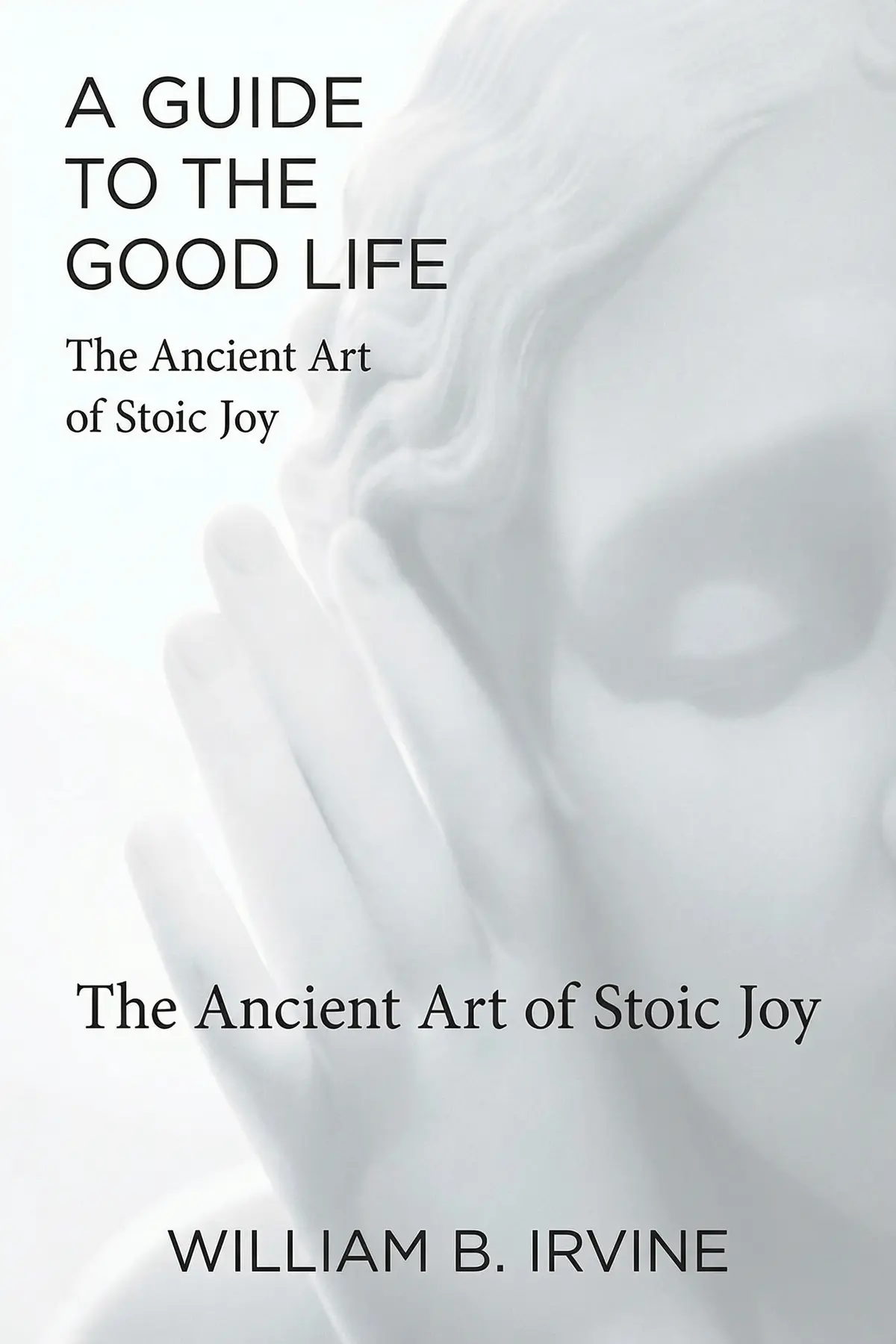
A Guide to the Good Life: The Ancient Art of Stoic Joy
William B. Irvine
A Little History of Philosophy
Nigel Warburton
A Theory of Justice
John Rawls
Anarchism: A Very Short Introduction
Colin Ward
AUDIO SUMMARY AVAILABLE
Listen to Lying in 15 minutes
Get the key ideas from Lying by Sam Harris, plus 5,000+ more titles in English and Thai.
- 5,000+ titles
- Listen as much as you want
- 7-day free trial
- Cancel anytime







