
Lying
Sam Harris
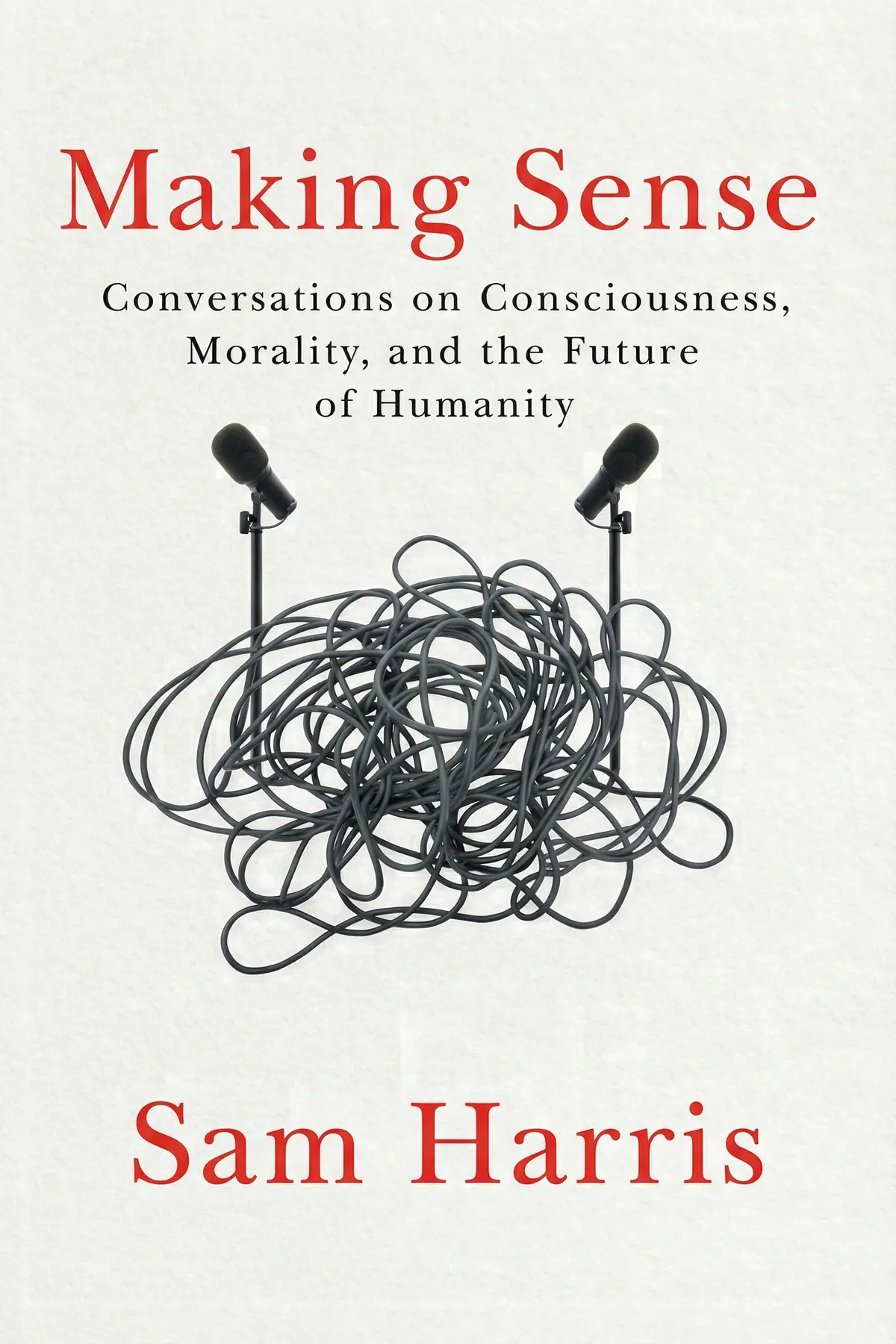
Making Sense explores the profound intersections of science, philosophy, and social order through a series of deep inquiries into consciousness, the illusion of free will, and the future of human civilization.
2 min 09 sec
If you were to take a walk through a modern university campus, you would notice something peculiar about how we organize human knowledge. Each department is walled off in its own specific building. The biologists are in one corner, the philosophers in another, and the political scientists and physicists are often miles apart. This physical separation reflects a mental one: we tend to treat the different fields of human inquiry as if they are entirely distinct silos. However, the moment you step off that campus and back into the complexities of real life, that partitioning disappears. Reality does not care about our academic categories. The problems we face—from the ethical implications of technology to the way we govern our societies—require us to pull from every discipline simultaneously.
To truly make sense of our existence, we have to bridge these gaps. We need a perspective that is fundamentally interdisciplinary. This is the core mission we are embarking on today: a journey through the fundamental ideas that shape our world, our minds, and our future. We will be looking at how deep scientific understanding can inform our morality, and how philosophical clarity can help us navigate the dangers of the twenty-first century. It is our responsibility to look closely at the ideas we have inherited—both the ones that serve us and the ones that threaten us—and to replace the bad ones with better, more rational alternatives.
Throughout this exploration, we will dive into the deepest mysteries of the mind and the universe. We will ask what it actually means to be aware, and why evolution might have granted us a subjective inner life. We will confront the possibility that our cherished sense of ‘self’ is not what it seems and that our choices might be more influenced by our biology than we would like to admit. From the potential for superintelligent machines to the mathematical structure of the cosmos, we are going to see how different threads of knowledge weave together to create the tapestry of human experience. This is about more than just gathering facts; it is about developing a coherent worldview that allows us to thrive in an increasingly complex and dangerous world.
2 min 31 sec
Explore why the internal movie of our lives exists at all and why scientists still struggle to find its evolutionary origin.
2 min 14 sec
Could the spark of experience exist in creatures far different from us, or even in the very fabric of matter itself?
2 min 10 sec
Discover the ethical and existential risks we face as we develop machines that may mimic or even surpass human awareness.
2 min 18 sec
Learn why the ‘I’ you think you are is actually a fractured collection of mental models and wandering thoughts.
2 min 21 sec
What if free will is a myth? Examine how our biology and environment dictate our actions long before we realize it.
2 min 14 sec
Move beyond simple labels to understand how unconscious bias and social structures shape racial disparities today.
2 min 10 sec
Analyze how small compromises and the erosion of truth can pave the way for authoritarian rule in any society.
2 min 04 sec
Will our next great discovery be a ‘black ball’ that brings about the end of human civilization?
2 min 12 sec
Look beneath the surface of reality to find that everything you see is built on a foundation of pure math.
2 min 16 sec
Can we overcome our biological limits? Learn how universal computation and the pursuit of knowledge make the future limitless.
1 min 52 sec
As we reach the end of this journey, we can see a clear throughline that connects every topic we’ve explored. To truly make sense of our world, we must have the courage to apply reason and scientific thinking to every part of our lives, even the parts that feel most personal or mysterious. We have seen that consciousness is a deep enigma that we are only beginning to decode, and that our sense of being a unified, self-directed ‘I’ is likely a trick of our biology. We have confronted the fact that our choices are the result of complex causes and that our societies are vulnerable to the same patterns of tyranny and bias that have plagued us for centuries.
Yet, despite these daunting realizations, there is a profound sense of hope to be found in the pursuit of knowledge. By understanding the ‘Urn of Invention’ and the mathematical nature of the universe, we gain the tools to protect ourselves and to expand our capabilities. We are the only creatures we know of who can consciously analyze their own minds and the structure of reality itself. This is a massive responsibility, but also an incredible opportunity. We are the creators of the knowledge that will determine whether our future is one of destruction or one of infinite progress.
One of the most practical ways you can start applying these ideas in your own life is by being more intentional with your own language. We often fall into the trap of repeating scripts and sound bites that we’ve heard from others, but we aren’t truly thinking for ourselves unless we use our own words. When you discuss the big issues of the day—whether it’s politics, ethics, or science—try to frame them in a way that is authentically yours. This not only forces you to think more clearly, but it also helps you connect more deeply with others. By choosing to live and speak with clarity and reason, you are doing your part to help all of us make sense of the world together.
This exploration is based on wide-ranging dialogues that seek to reconcile our internal experiences with the hard truths of the physical world. It begins by investigating the enigmatic nature of consciousness, asking why we have subjective experiences at all and whether such awareness might extend to animals or even inanimate objects. From there, it moves into the unsettling territory of the human self, arguing that our sense of being a unified 'I' is an illusion, as is our belief in free will. The promise of this work is a more rational, clear-headed way of looking at the most pressing challenges of our time. It addresses the ethical minefields of artificial intelligence, the subtle mechanisms of social bias, and the historical patterns that lead to authoritarianism. By examining the 'Urn of Invention' and the mathematical foundations of the universe, it offers a framework for understanding how knowledge can either lead to our destruction or empower us to transcend our current biological limits.
Sam Harris is a neuroscientist and philosopher who has become a leading voice in modern intellectual discourse. He is the host of the widely acclaimed Making Sense podcast and the creator of the Waking Up app, which offers a scientific and secular approach to meditation. Harris is the author of several influential books, including The End of Faith, The Moral Landscape, and Waking Up.
Sam Harris
Listeners find the material both insightful and intellectually provocative, with one listener characterizing it as a game-changer that shifts one's perspective. Furthermore, the discussions are captivating, and one listener mentions the text’s significance in creating a more functional society. Conversely, opinions on the overall value are split, as some consider the experience worthwhile while others feel disappointed by the investment.
Finally sat down with this collection after years of hearing about the podcast. Frankly, it's a game-changer for anyone interested in the intersection of neuroscience and ethics. The conversation with Anil Seth on consciousness alone is worth the price of admission. Harris has this way of distilling complex AI threats and philosophical quandaries into something that feels urgent and vital for building a better society. My only minor gripe is that some intros could have been meatier, but the core dialogues are incredibly insightful. It’s rare to find a book that challenges your core assumptions about reality while remaining this readable. Highly recommended for the curious mind.
Show moreWow, this is easily one of the most provocative things I have read all year. If you want a cranium-shattering exploration of what it means to be human, then look no further. The chapter featuring Robert Sapolsky on the biology of good and evil shifted my entire perspective on human agency. I've been searching for something that bridges the gap between hard science and moral philosophy, and Harris delivers that in spades. Each dialogue feels like a masterclass in civil discourse, even when the topics get heavy or controversial. It’s not just a book; it’s a toolkit for thinking more clearly about the future of our species. It really is a mind-shifting experience that everyone should experience at least once.
Show moreThis book acts as a powerful antidote to the hysterical tribalism currently infecting our modern culture. By focusing on fundamental truths and scientific realism, Harris invites the reader into a space of calm, deliberate thought. I particularly enjoyed the segments on Effective Altruism and the shifting nature of belief. It’s intellectually demanding in the best way possible, forcing you to reconsider your own biases. David Deutsch’s contributions on the reach of explanation were a highlight for me, pushing the boundaries of how I perceive human progress. While it leans heavily toward a specific 'rationalist' vibe, the depth of insight here is unparalleled. It’s truly a foundational text for modern thinkers.
Show moreWhat a mind-bending journey through the human condition this turned out to be. After hearing about Harris’s work for years, I finally took the plunge with this hefty volume. The discussion with Max Tegmark about the possibility of us living in a simulation was both terrifying and exhilarating. I love how the book doesn't shy away from the 'big' questions that most people avoid in polite conversation. It’s insightful, provocative, and deeply necessary for anyone who wants to make sense of the rapid technological shifts we're facing. This is one of those rare books that actually makes you feel smarter for having finished it. It really is a game-changer.
Show moreAs a longtime fan of the podcast, I wasn't sure if reading transcripts would offer anything new. To be fair, seeing the words on the page actually helped me digest the more abstract concepts better than the audio ever did. The discussion with Timothy Snyder about the road to tyranny felt especially relevant in today's political climate. However, I have to echo what others have said regarding the lack of female voices in this curation. There are so many brilliant women in these fields that it felt like a missed opportunity for a more balanced perspective. Still, the intellectual stimulation provided here is undeniable for any deep thinker.
Show moreLook, if you're looking for a traditional narrative with a beginning, middle, and end, you might be disappointed by the format. This is essentially a 'best of' compilation of podcast transcripts, which makes for a somewhat disjointed experience if you read it straight through. That said, the information density is staggering and often quite overwhelming. The section with Nick Bostrom on the risks of AI actually kept me up at night. I caught myself highlighting passages every few pages because the insights were so sharp. It’s a great desk reference for big ideas, though I wish there was more original material written specifically for the book format.
Show moreTruth is, I prefer reading over listening because I tend to zone out during long podcast episodes. Having these conversations in print allowed me to move at my own pace and really sit with the difficult questions Harris poses. The dialogue regarding the Fermi Paradox and our place in the multiverse was particularly haunting and beautiful. It's refreshing to see a public intellectual prioritize honest inquiry over tribal signaling or cheap political points. Some parts were definitely a struggle to get through—the complexity can be taxing—but the payoff is a much deeper understanding of the world. It’s an essential read for anyone who values scientific rationality.
Show moreI found the concepts here fascinating, but the barrier to entry is definitely higher than advertised. Personally, I felt like a student who skipped the prerequisite courses and jumped straight into a senior seminar. Harris and his guests, like David Chalmers, dive deep into the 'hard problem' of consciousness without much hand-holding for the layperson. While I appreciate the lack of intellectual coddling, it occasionally feels like a closed-circuit conversation between elites. It’s an interesting artifact of the 'New Atheism' era, yet I left feeling like I missed half the nuance. A bit more background context in the chapter intros would have gone a long way for me.
Show moreThe value for money here is a bit of a toss-up for me, to be honest. Thanks to the publisher for the ARC, but I struggled with the fact that much of this is available for free online in audio form. If you're a completionist who needs a physical copy for your shelf, you should go for it. Otherwise, you’re mostly paying for a curated list of things you might have already heard. The formatting is clean, and the edit is professional, but it lacks the 'extra' content I was hoping for. The conversations are top-tier—especially Glenn Loury on racism—but the book itself feels a little like a missed opportunity to expand on the podcast's themes.
Show moreI really wanted to like this more because the topics are right up my alley. Unfortunately, the tone often felt exclusionary and, frankly, a bit too elitist for my taste. As a reader without a PhD in philosophy, I found myself constantly googling terms that should have been better explained in the text. There’s a certain 'smartest guys in the room' energy that becomes exhausting after a few chapters. Plus, the total absence of women among the eleven guests is a glaring oversight that’s hard to ignore in this day and age. It felt more like a transcript of a private club meeting than an accessible book for the curious public.
Show more
Lisa Kaltenegger
William B. Irvine
J. Craig Venter
AUDIO SUMMARY AVAILABLE
Get the key ideas from Making Sense by Sam Harris, plus 5,000+ more titles in English and Thai.







