
Discipline & Punish: The Birth of the Prison
Michel Foucault
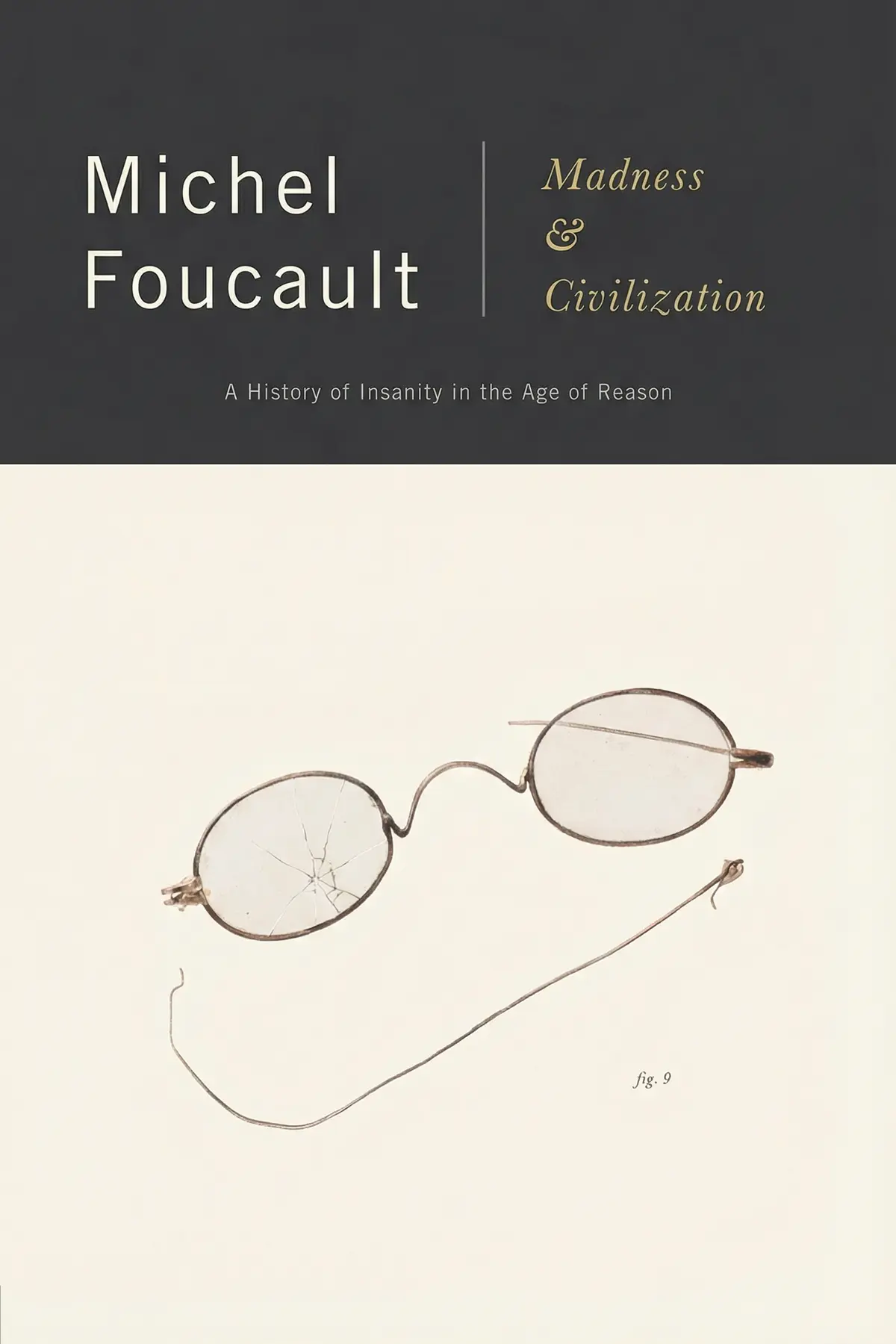
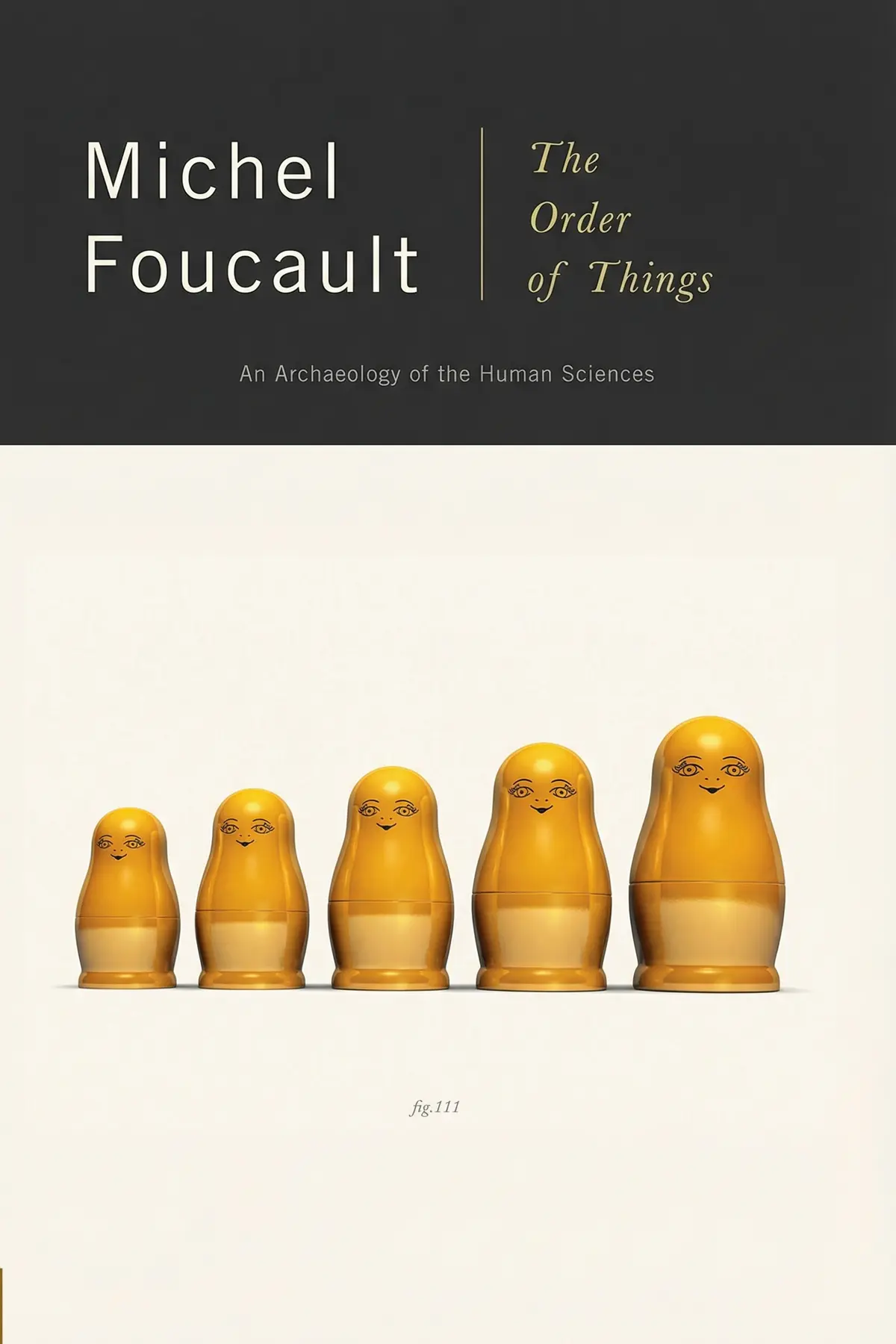
Explore the historical transformation of mental illness from a wandering social existence to a confined medical category, revealing how society’s perception of reason has shaped the treatment of those deemed insane.
1 min 42 sec
Have you ever wondered why we treat mental health as a strictly medical issue today? For many of us, the image of a clean, quiet clinic or a therapist’s office is what comes to mind when we think about psychological care. But this wasn’t always the case. In fact, our current understanding is the result of a long, often dark, and deeply complex history. This brings us to the work of Michel Foucault, a thinker who spent his life examining the invisible structures of power that govern our lives. His exploration of madness isn’t just a medical history; it’s a mirror held up to society, showing us how we define who belongs and who is an outcast.
In this journey, we’ll see how the concept of the “madman” shifted from being a figure of mysterious wisdom to a social nuisance, and eventually to a medical patient. We will explore a time when society decided that those who didn’t conform to the rules of “reason” needed to be removed from the public eye. This wasn’t a sudden change but a gradual evolution that coincided with the rise of the modern world. As we look through this historical lens, we’ll discover that the way we treat the most vulnerable among us says more about our own fears and values than it does about the nature of the mind itself.
By following this throughline, we can better understand the structures of the modern psychiatric institution. We’ll look at the era of the “great confinement,” the strange and cruel practices of putting people on display like zoo animals, and the eventual “liberation” of the insane that paradoxically created new forms of psychological control. This story challenges us to rethink what it means to be sane in a world that prizes reason above all else.
2 min 08 sec
Before madness was a medical diagnosis, it was a visible part of the social landscape where the irrational were sent on symbolic voyages.
2 min 02 sec
As one ancient plague receded, the structures built to contain it were filled with a new category of social outcasts.
2 min 11 sec
The rise of general hospitals wasn’t about medicine, but a massive effort to force the unproductive into a life of labor.
1 min 58 sec
In an era of deep contradictions, the insane were hidden from society yet put on display like exotic beasts for public amusement.
1 min 54 sec
As the Industrial Revolution approached, the realization that criminals could be profitable led to a new isolation for the mentally ill.
2 min 01 sec
The medical world’s understanding of insanity evolved from balancing bodily fluids to attempting to ‘re-educate’ the deluded mind.
2 min 14 sec
The move toward ‘humane’ treatment in the nineteenth century replaced physical chains with the weight of moral surveillance.
1 min 55 sec
By turning madness into a science, society successfully isolated the irrational, creating a permanent divide between reason and its ‘other.’
1 min 42 sec
As we reach the end of this historical journey through the evolution of madness, we are left with a powerful new perspective on the world we live in today. We have seen how the image of the “madman” transitioned from a symbolic traveler on a Ship of Fools to an outcast in a leper colony, and finally to a patient in a medical institution. Each of these shifts was driven not just by an increase in medical knowledge, but by the changing needs of society—the demand for labor, the rise of the bourgeois middle class, and the desire to enforce a strict definition of reason.
The throughline of this history is the persistent effort to categorize and control what we do not understand. While we can be grateful that the era of iron cages and public spectacles is behind us, we must also recognize the new forms of control that replaced them. The modern psychiatric system, with its focus on observation, diagnosis, and moral guidance, still carries the echoes of the “great confinement.” It reminds us that our definitions of “normal” and “pathological” are often shaped by the values of the era we live in.
The actionable takeaway from this exploration is to look more critically at the institutions and labels we take for granted. When we categorize someone’s behavior as “irrational” or “ill,” we are participating in a long tradition of social boundary-setting. By understanding the history of how these boundaries were built, we can approach mental health with more empathy and a deeper awareness of the power dynamics involved. Ultimately, the story of madness is the story of ourselves, and how we choose to define the limits of the human mind.
This summary dives into the complex history of how Western civilization has categorized, isolated, and attempted to cure what it defines as madness. It begins by looking back at the Middle Ages, when individuals with mental disturbances were often allowed to roam or were symbolically sent away on ships. The narrative then moves into the seventeenth century, a pivotal era known as the great confinement, where the idle and the irrational were locked away in repurposed leper colonies and general hospitals to maintain social order. Listeners will learn about the dark period when the mentally ill were treated as public spectacles and animals, followed by the economic and moral shifts that eventually led to the birth of the modern asylum. The book explores how the rise of psychiatry and the medicalization of the mind were as much about social control and the enforcement of bourgeois morality as they were about healing. It offers a profound look at the evolving boundary between the rational world and the perceived chaos of insanity.
Michel Foucault was a French philosopher, political activist and academic, who lived from 1926 to 1984. A towering figure in the intellectual life of France and continental Europe, he taught in several European universities and was a professor at the Collège de France in Paris from 1970 until his death.
Michel Foucault
Michel Foucault
Listeners value the historical substance of the work and regard it as a foundational postmodern philosophical text. The pacing draws varied responses, as some enjoy it for a few laughs, while others find the experience rather exasperating.
Michel Foucault's exploration of the 'Great Confinement' is nothing short of a paradigm shift for anyone interested in how we categorize humanity. The book masterfully traces the transition from the medieval exclusion of lepers to the Enlightenment-era incarceration of the 'mad.' Foucault argues that as leprosy vanished, the social structures used to isolate it were simply repurposed for those who didn't fit the emerging capitalist order. His writing is often sheer poetry, especially when discussing the 'Ship of Fools' or the tragic Renaissance vision of madness. While the text is notoriously difficult and requires significant historical context, the depth of his intuition is staggering. You can't look at a modern psychiatric ward the same way after reading this. It’s a foundational postmodern text that exposes the dark underbelly of what we call progress. Some might find the historical methodology questionable, but the philosophical impact is undeniable.
Show moreWow, I wasn't prepared for how much this book would make me rethink our modern mental health 'advancements.' Foucault paints a haunting picture of the transition from the madman as a bearer of secret wisdom to the madman as an animal needing to be tamed. His analysis of how the 'Age of Reason' created 'Unreason' as its necessary shadow is brilliant. It’s terrifying to realize that our 'humane' treatments might just be more subtle forms of discipline and punishment. The chapters on the transition from humours to mechanical medicine are dense but incredibly rewarding. Look, this isn't an easy beach read; you have to struggle with every page. But the struggle is worth it because it forces you to question the very foundations of your own rationality. It is a masterpiece that demands your full attention and rewards you with a completely new perspective on civilization.
Show moreMasterpiece is a strong word, but Foucault definitely earns it here with his radical re-evaluation of the 'birth' of the mental hospital. He shows us that what we consider objective scientific progress was often just a new way of silencing those who challenge our social norms. The imagery of the 'medical gaze' is something that has stuck with me long after finishing the final page. Foucault's ability to pull from Bosch’s paintings and legal decrees in the same breath is remarkable. In my experience, you have to read this book slowly, almost like a piece of music, to catch all the nuances. It’s not just about madness; it’s about how we define what it means to be human. His conclusion on the relationship between art and madness is particularly poignant, even if a bit vague. This is essential reading for anyone wanting to engage with 20th-century thought.
Show moreThis text acts as a haunting mirror for modern civilization, showing how our 'medical gaze' often masks a deeper desire for social control. Foucault’s ability to link the rise of the bourgeois work ethic to the literal incarceration of those who couldn't work is genius. He doesn't just write history; he performs an autopsy on the concept of Reason itself. The way he discusses the shift from the 'tragic' madness of the 16th century to the 'silenced' madness of the 19th is heartbreaking. While some critics point out historical inaccuracies, I think they miss the point of his 'archaeology.' He’s trying to uncover the hidden rules that govern how we think, not just list dates and names. The book is sheer poetry in places, particularly when he discusses the relationship between the madman and the artist. A profound, challenging, and absolutely essential postmodern classic.
Show morePicked this up for a philosophy seminar, and I have to say it was both illuminating and deeply frustrating in equal measure. Foucault’s style is maddeningly eccentric, weaving together art, religion, and medical history into a narrative that feels more like an archaeology of the soul than a dry history book. The way he describes the 17th-century shift toward 'Unreason'—where being poor or idle became a moral sin—is genuinely fascinating. However, the prose can be so dense that I found myself needing secondary literature just to stay afloat. Frankly, some of his claims about animal spirits and mechanical models of the body feel like a bit of a stretch. Still, his central thesis about the 'medical gaze' and social control is powerful. It’s a key read for understanding how our current concepts of mental health are actually quite recent inventions.
Show moreThe central thesis regarding how society needs outcasts to define itself is incredibly compelling, especially the transition from leper colonies to asylums. Foucault’s 'archaeology' of the medical establishment reveals that the hospital was originally less about healing and more about social order. I particularly enjoyed the sections on how the Enlightenment viewed madness as a manifestation of 'nothingness' or 'blinded reason.' To be honest, the pacing is a bit uneven, and some chapters on 18th-century solids and fluids dragged on longer than necessary. There were moments where I felt like the author was intentionally trying to confuse the reader with his recursive logic. Despite these minor gripes, the book is essential for anyone interested in the relationship between power and knowledge. It’s a challenging, occasionally beautiful, and frequently unsettling look at the walls we build—both literal and metaphorical—to keep the 'unreasonable' away from us.
Show moreAfter hearing about Foucault for years, I finally tackled his first major work and found a fascinating, if occasionally exasperating, look at the Renaissance fool. The transition from the 'Ship of Fools' to the 'Great Confinement' of 1656 is handled with incredible detail. It’s eye-opening to see how the 'General Hospital' was originally a place for the poor, the idle, and the criminal as much as the insane. Foucault’s point that we created 'madmen' because we ran out of lepers is a gut-punch of an observation. Gotta say, the writing style is very 'French intellectual'—lots of long, winding sentences that sometimes lead nowhere. However, the core idea that madness is a social construction is argued with enough passion to make it stick. It’s a book that haunts you, making you question the morality of our modern psychiatric institutions. Definitely worth the effort for the historical context alone.
Show moreFrankly, the way Foucault connects the rise of capitalism to the incarceration of the 'idle' changed how I view the history of labor. It’s not just a book about crazy people; it’s a book about how we enforce social conformity through the guise of medicine. The description of 18th-century madhouses as places of public spectacle—where people paid to see the 'animals'—is genuinely disturbing. Foucault’s prose is dense and can be a bit of a barrier, but the insights into the 'unconscious a priori' linguistic structures are worth the headache. To be fair, he does jump around a lot, and his selective use of sources can be annoying. But the overarching narrative of how 'Reason' conquered 'Unreason' is too powerful to ignore. It’s a difficult read that demands you rethink everything you know about the history of psychology. Not for the faint of heart, but highly recommended for the curious.
Show moreEver wonder why we're so obsessed with 'rationality'? This book tries to answer that, though it often gets lost in its own eccentric prose and strange metaphysical positions. I found the first half about the Middle Ages and the Renaissance to be quite engaging, but the later sections on the medicalization of madness were a real slog. Foucault is clearly brilliant, but he often prioritizes a clever metaphor over historical evidence. Personally, I found it hard to stay focused when he dove into the minutiae of animal spirits and animal nature. It’s good for a few laughs if you enjoy over-the-top philosophical gymnastics, but it’s also deeply frustrating. I appreciate the influence it has had on the academy, but I'm not sure I fully buy into his claim that all knowledge is just a manifestation of power. A mixed bag that requires a lot of patience.
Show moreTo be fair, the historical accuracy here is shaky at best, even if you buy into the whole postmodern framework Foucault is trying to build. I found his method of jumping between unconnected anecdotes and selective historical sources to be borderline fraudulent. He treats specific artworks and metaphors as if they represent the universal consciousness of an entire century. The book is full of out-and-out absurdities regarding his historical method, making it difficult to take his grand theories seriously. While he is clearly a genius of sorts, the writing is so entrenched in contemporary political ideology that the actual history gets lost. I honestly found the experience of reading it to be exasperating. It functions better as a long, difficult poem than as a work of scholarship. If you're looking for a factual history of psychiatry, you should probably look elsewhere, as this is more about Foucault's own philosophical preoccupations.
Show more


Ron Chernow
Philip Freeman


Michael Axworthy
Tom Standage

Ishmael Beah
AUDIO SUMMARY AVAILABLE
Get the key ideas from Madness and Civilization by Michel Foucault, plus 5,000+ more titles in English and Thai.







