
20 min 19 sec
Discipline & Punish: The Birth of the Prison
Explore the profound evolution of the modern penal system. This summary examines how society shifted from public physical punishment to a sophisticated network of surveillance and psychological control designed to create disciplined citizens.
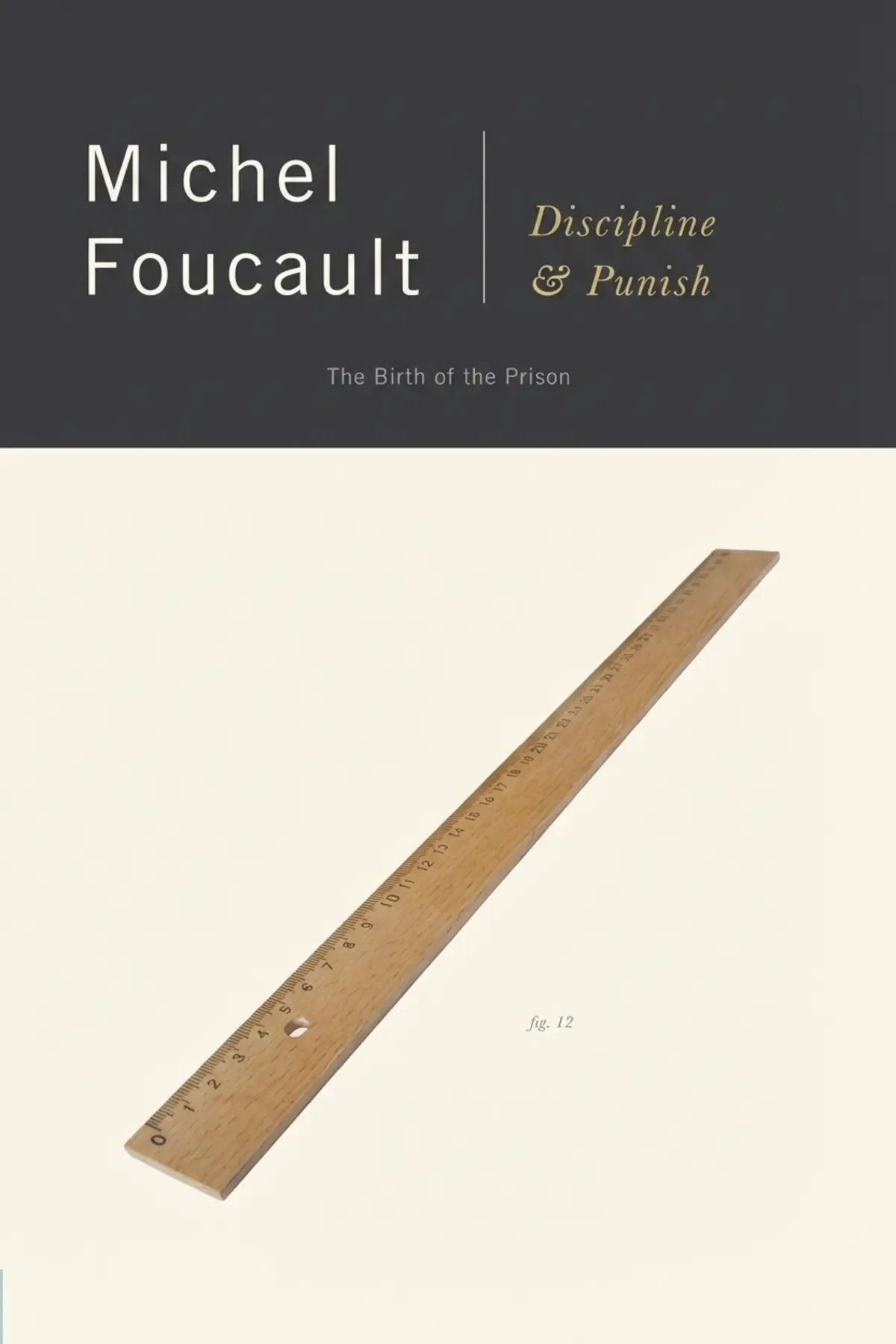
Table of Content
1. Introduction
1 min 47 sec
When we think of a prison today, we often see it as a dull, almost invisible part of the landscape of justice. It feels like an inevitable, perhaps even unremarkable, feature of how we deal with those who break the law. But if we were to step back just a few centuries, the scene would look entirely different. There was a time when the punishment for a crime wasn’t a locked door and a silent cell; it was a loud, bloody, and public display of violence.
In this exploration of Michel Foucault’s landmark work, we are going to look at why that change happened. We’ll trace the journey from the era of public torture to the birth of the modern penitentiary. But more importantly, we’re going to look at the ‘why’ behind this shift. Was it really just a movement toward being more ‘humane,’ or was something deeper and more calculated happening beneath the surface?
Foucault suggests that by looking at how we treat criminals, we can actually see a blueprint for how our entire modern society functions. We will discover how the tools used to control prisoners—things like constant observation, strict schedules, and standardized testing—didn’t just stay inside prison walls. They leaked out into our schools, our workplaces, and our hospitals.
As we go through these segments, we’ll see how society moved away from breaking bodies and toward a more subtle goal: the disciplining of the human soul. This is a story about power, how it is exercised, and how the ‘docile bodies’ required for the industrial age were first forged. Let’s begin by looking at the moment when the old world of public spectacle began to fade away, replaced by the quiet clicking of a clock.
2. The Shift from Body to Soul
2 min 38 sec
Witness the dramatic transition from the gruesome public execution of the eighteenth century to the meticulously scheduled and private nature of modern incarceration.
3. The Ritual of Investigation and Power
2 min 15 sec
Discover how the historical use of torture served as a scientific method for uncovering truth and reinforcing the absolute authority of the sovereign.
4. Punishment for the Public Good
2 min 18 sec
Explore the transition from sovereign vengeance to a scientific approach where crime is viewed as a social wound requiring psychological intervention.
5. Creating the Docile Body
2 min 32 sec
Analyze the four key methods used in the classical age to transform individuals into efficient, productive ‘cogs’ for the industrial machine.
6. The Three Pillars of Disciplinary Power
2 min 30 sec
Unpack the mechanisms of hierarchical observation, normalizing judgment, and examination that allow power to operate silently and effectively.
7. The Lesson of the Panopticon
2 min 18 sec
Learn how a historic plague response and a unique architectural design revealed the ultimate secret of modern control: the power of the invisible gaze.
8. The Prison and the Industrial Machine
2 min 15 sec
Examine the real purpose of incarceration, from the deprivation of liberty to the molding of convicts into disciplined cogs for the factory floor.
9. Conclusion
1 min 46 sec
As we look back at the journey from the public execution of Damiens to the silent, automated surveillance of the Panopticon, we see a transformation that is as chilling as it is profound. We have moved from a world where power was a heavy, visible hammer used by a king, to a world where power is like the air we breathe—invisible, everywhere, and constantly shaping us.
Foucault’s analysis of the prison is ultimately a mirror held up to our entire society. He shows us that the ‘humanity’ of modern punishment often masks a more efficient and invasive form of control. We no longer just punish the act; we monitor the person. We use the tools of observation, normalization, and examination to ensure that everyone fits into the ‘norm’ required by our industrial and technological systems.
The lesson here is to look closely at the institutions we take for granted. Schools, hospitals, and workplaces often use the same disciplinary structures that were first perfected in prisons. We are all, in some sense, living in a wider version of the Panopticon, where the feeling of being watched and the pressure to be ‘normal’ drive our daily choices.
By understanding these hidden mechanisms of power, we can start to see how our own identities and behaviors have been shaped by the needs of the system. The next time you follow a rigid schedule, take a standardized test, or feel the pressure to conform to a social norm, remember the birth of the prison. It wasn’t just a way to deal with criminals; it was the birth of the modern way of life. The challenge Foucault leaves us with is to recognize these ‘invisible’ chains and to question the structures that demand our docility.
About this book
What is this book about?
Discipline & Punish investigates the historical shift in how modern society exercises power over individuals. It traces the transition from the gruesome public executions of the eighteenth century to the silent, structured walls of the modern prison. The book challenges the idea that these changes were purely humanitarian, suggesting instead that they represent a more efficient and invasive way to control the human soul. Through an analysis of historical documents and architectural designs, the narrative reveals how concepts like surveillance, timetables, and examinations moved from the prison cell into schools, hospitals, and factories. The promise of this summary is to reveal the hidden structures of the industrial age and help listeners understand how modern systems of discipline shape our daily behavior and social order.
Book Information
About the Author
Michel Foucault
Michel Foucault was a preeminent French philosopher and academic of the twentieth century. He held prestigious positions including director of the Institute Français in Hamburg and a chair at the Collège de France. Foucault's influential work includes numerous essays and groundbreaking books such as The History of Sexuality, alongside his academic tenure at the University of Clermont-Ferrand.
The Order of Things: An Archaeology of Human Sciences
Michel Foucault
Ratings & Reviews
Ratings at a glance
What people think
Listeners regard this work as a masterpiece featuring a superb narrative structure and brilliant insights, with one listener highlighting how significantly it influenced their dissertation research. Furthermore, they view it as a crucial literary contribution that remains deeply pertinent and mentally stimulating. That said, the prose style draws varied opinions, as some value its direct and concise approach while others find it horrible.
Top reviews
Luckana
This book starts with a visceral, gut-wrenching description of a public execution. I couldn't stop thinking about it for days. It serves as a necessary shock to the system, forcing us to realize that our modern 'humane' justice system is only a few generations removed from literal butchery. Foucault’s genius lies in showing how we didn't actually stop being cruel; we just moved the cruelty from the body to the soul. We are still being punished in subtle ways. The way he links the architecture of the Panopticon to our modern obsession with surveillance and social media is terrifyingly prophetic. It’s a dense read, but the narrative structure is so well-crafted that you find yourself unable to look away from the grim reality of our 'disciplined' society.
Show moreSiraporn
Finally got around to this classic and it is safe to say that my perspective on 'progress' has been completely dismantled. We are not nearly as enlightened as we pretend. We think we are better because we no longer disembowel people in public, but Foucault argues our schools and workplaces are just 'gentler' versions of the same restrictive structures. The idea that knowledge and power are two sides of the same coin is a mind-expanding concept. It is a total masterpiece of narrative history. It feels more relevant in our era of mass surveillance than it did in the 1970s. This is truly a must-read for any thinking person who wants to understand the invisible chains of the present.
Show moreChanikarn
The chapter on 'the birth of the prison' is where everything finally clicked for me regarding how modern society actually operates. It isn't just about crime; it’s about how we are all categorized, tested, and normalized from the moment we enter the school system. Foucault manages to turn a historical study of penal systems into a terrifying mirror held up to our daily lives. The narrative structure is brilliant, moving from the visceral horror of the scaffold to the sterile, calculated silence of the modern cell. Personally, I think this book should be mandatory reading for anyone who values their privacy in the digital age. It is a haunting, brilliant, and deeply uncomfortable masterpiece that changed how I view every institution I interact with.
Show moreHannah
After hearing countless references to this book in academic circles, I was surprised by how much it reads like a gripping, albeit dark, historical narrative. The shift from the 'spectacle' of the scaffold to the 'carceral' system is handled with such precision and intelligence. I particularly enjoyed how Foucault challenges our smug assumptions about being more 'civilized' than our ancestors. In reality, we have just swapped physical scars for psychological chains and constant, invisible surveillance. The writing can be dense, but the core ideas about power-knowledge are presented with such clarity that they stay with you long after you finish. It is a masterpiece of social theory that feels more like a modern warning than a simple history book for the library.
Show morePrasarn
Wow, this was one of the most intellectually exhausting books I have ever attempted to finish in my life. The core concepts like the Panopticon are fascinating and clearly relevant to our current age of digital data tracking, but the delivery is incredibly dense. I found myself re-reading the same three sentences over and over again just to find the subject and the verb. Foucault provides wonderful insights, but he buries them under a mountain of specialized terminology and circular logic. This makes it very hard to recommend to a casual reader. If you have the patience for a deep academic dive, it is a masterpiece, but be prepared for a very slow and occasionally frustrating journey. It is a mind-expanding experience for the persistent.
Show morePing
As someone who spent months wading through theory for my final thesis, I found Foucault’s exploration of the Panopticon to be the most chillingly relevant part of the entire syllabus. He masterfully deconstructs the idea that history is a linear march toward better treatment of criminals. Humanity has not actually improved as much as we think. Instead, he argues that the move from public torture to private imprisonment was simply a more efficient way to manage populations. The prose can be a bit of a labyrinth at times, requiring multiple readings to really grasp the nuance of his arguments. However, once you see the 'carceral archipelago' in everything from schools to factories, you can never un-see it. It is an essential, mind-expanding piece of literature for anyone interested in how authority actually functions.
Show moreSupranee
To be fair, the reputation this book has for being 'difficult' is earned, but the effort is rewarded with some of the most profound insights I have ever encountered. I was particularly struck by the transition from punishing the body to 'correcting' the soul through constant observation and training. Foucault’s writing style is a strange mix; at times he is incredibly direct and concise, while other sections feel like a poetic fever dream. It isn't always a pleasant read, especially when he gets bogged down in the minutiae of 18th-century prison regulations. However, the overarching argument about how we have all become 'docile bodies' in a giant social machine is impossible to ignore. A truly important piece of literature that still haunts my thoughts.
Show moreKae
Michel Foucault has a way of making you feel like the walls are closing in, even when you are just sitting in a quiet library. His analysis of Bentham’s Panopticon serves as a perfect metaphor for the way we internalize authority and begin to police our own behavior. Truth is, I found some of the middle chapters on 'the means of correct training' a bit dry and repetitive compared to the explosive opening. Still, the way he links the development of the human sciences to the needs of the state for control is a wonderful insight. It is an incredibly relevant book that helps you understand why we are so obsessed with data and performance reviews today. This study is worth the struggle for the clarity it provides.
Show moreYanin
Ever wonder why the layout of your office or your old high school feels strangely similar to a hospital ward or a prison? Foucault attempts to answer this by tracing the history of 'discipline' as a tool for creating useful, obedient citizens. While I found the conceptual framework of the Panopticon to be brilliant, I gotta say that the prose is often frustratingly opaque. There are moments of wonderful insight buried under pages of dense, dry historical data that made my head spin. It is undoubtedly an important piece of literature, but the writing style is far from accessible for the average reader. I’m glad I read it for the perspective shift, but I likely won't be revisiting it anytime soon without a guide.
Show moreFang
Look, I understand the historical importance of this text, but the actual experience of reading it was absolutely miserable. Foucault’s writing style is frequently described as 'direct' by fans, yet to me, it felt like a deliberate attempt to hide simple ideas behind academic jargon. While the opening scene of torture is haunting and the concept of the Panopticon is obviously brilliant, the mid-section is an endless, repetitive crawl through 18th-century prison records. I felt like I was being punished just for trying to educate myself. It’s an influential masterpiece, sure, but I can’t pretend I enjoyed a single page of the actual prose. I would recommend reading a summary instead of suffering through the full text unless you are a sociology major.
Show moreReaders also enjoyed

Afropean: Notes From Black Europe
Johny Pitts
All About Love: New Visions
bell hooks
A Guide to the Good Life: The Ancient Art of Stoic Joy
William B. Irvine


A Biography of Loneliness: The History of an Emotion
Fay Bound Alberti
A Little History of Philosophy
Nigel Warburton
A Force for Good: The Dalai Lama's Vision for Our World
Daniel Goleman
AUDIO SUMMARY AVAILABLE
Listen to Discipline & Punish in 15 minutes
Get the key ideas from Discipline & Punish by Michel Foucault, plus 5,000+ more titles in English and Thai.
- 5,000+ titles
- Listen as much as you want
- 7-day free trial
- Cancel anytime







