
1929: Inside the Greatest Crash in Wall Street History--and How It
Andrew Ross Sorkin
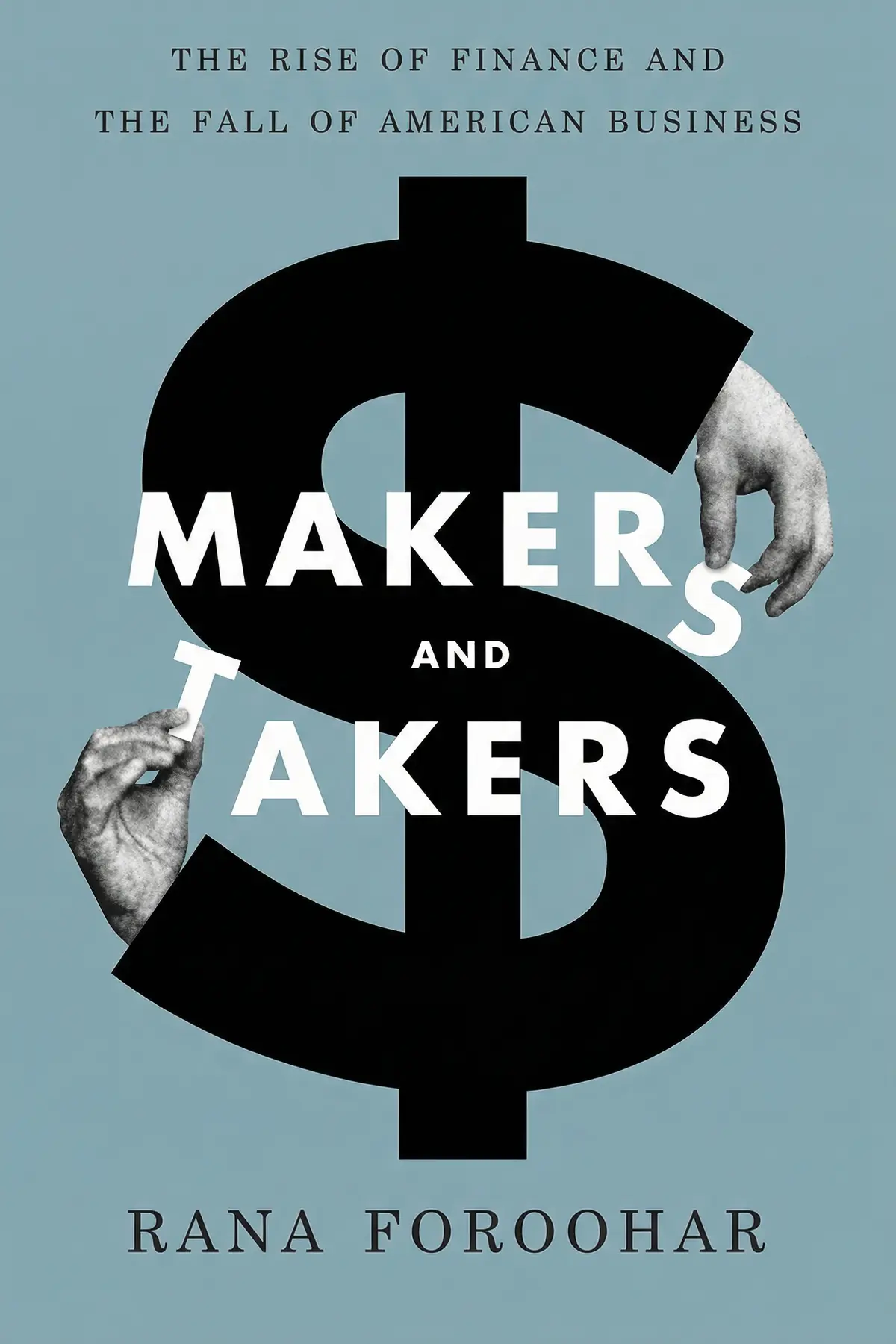
Makers and Takers explores how the financial sector has shifted from supporting real-world businesses to dominating them, prioritizing short-term stock gains over long-term innovation and the economic well-being of the American public.
1 min 54 sec
In the autumn of 1929, the global economy didn’t just stumble; it collapsed. The Great Depression that followed was so scarring that an entire generation of lawmakers vowed to build a system that would never allow such a catastrophe to repeat. They passed strict laws, separated different types of banking, and kept the world of high-stakes gambling far away from the savings of ordinary families. Yet, less than a century later, in 2008, the unthinkable happened again. The global financial architecture buckled, and once more, millions of people lost their homes, their jobs, and their sense of security.
What went wrong? How did a system designed for stability become so fragile? In Makers and Takers, Rana Foroohar argues that we are living through a period of ‘financialization.’ This is a process where the financial industry has moved from being a tool that supports business to being the master of business itself. Instead of providing the capital necessary for companies to build new things and hire more people, the financial sector has become a ‘taker,’ extracting wealth from the rest of the economy for the benefit of a tiny elite.
Over the course of this summary, we will explore the historical shifts that allowed this to happen. We will look at how the rules were slowly dismantled, how corporations started acting like hedge funds, and why the people tasked with regulating the system often have the most to gain from its complexity. This isn’t just a story about numbers on a screen; it’s a story about the real-world consequences of a system that prioritizes short-term stock prices over the health of the community and the longevity of American industry. By understanding the roots of this shift, we can begin to see what a more balanced and productive economic future might look like.
2 min 05 sec
Explore the startling parallels between the 1920s and the lead-up to the 2008 crash, revealing how debt and deregulation repeatedly set the stage for economic disaster.
2 min 12 sec
Follow the journey from the protective laws of the 1930s to the deregulation of the 1980s, explaining how new financial products blurred the lines of safety.
2 min 17 sec
Discover how the focus on shareholder value transformed corporate culture, leading companies to prioritize quick profits over safety and quality.
2 min 08 sec
Uncover the surprising truth about who actually funds the technology we use every day and how shareholder payouts extract that value.
2 min 07 sec
Examine the blurring lines between industry and finance, from car companies running mortgage desks to banks controlling the price of physical commodities.
2 min 00 sec
See how the financial sector’s focus on short-term gains has impacted the housing market and the security of retirement funds for everyday families.
1 min 52 sec
Understand the power of the financial lobby and the ‘revolving door’ that makes meaningful reform of the banking system so difficult to achieve.
2 min 06 sec
Explore practical solutions for rebalancing the economy, including simplifying regulations and requiring banks to hold more of their own capital.
1 min 42 sec
The story of Makers and Takers is a sobering look at how the American economy has been reshaped over the last century. We have moved from a system where finance existed to support the production of real goods and services to one where the movement of money is the primary goal. This shift toward ‘financialization’ has hollowed out the middle class, stifled true innovation, and created a recurring cycle of boom and bust that leaves the average citizen to pick up the bill.
As we have seen, the problem isn’t just one or two bad actors; it’s a systemic issue. It involves the way we manage our largest corporations, the way we fund our research, and the way our political system interacts with the world’s most powerful banks. The current path, where ‘takers’ extract value from ‘makers,’ is not sustainable in the long run. It leads to increased fragility and a widening gap between those who work for a living and those who profit from the movement of capital.
However, by understanding these mechanics, we gain the power to demand something different. We can push for simpler, more transparent regulations that prioritize stability over complexity. We can advocate for corporate governance that looks beyond the next quarterly earnings report to the next decade of growth. And we can work to close the revolving door between the regulators and the regulated. The American economy has reinvented itself before, and it can do so again. By refocusing our efforts on building, creating, and investing in the real world, we can move toward a future where prosperity is shared and the system is once again built to last.
This book provides a comprehensive look at the 'financialization' of the American economy. It examines the historical trajectory that led from the stability of the post-Depression era to the volatile, debt-driven markets of today. Rana Foroohar argues that the current system rewards 'takers'—those who move money around for profit—over 'makers'—the businesses and workers who actually produce goods and services. The narrative promises to reveal the hidden mechanics behind major corporate failures and the persistent wealth gap. By looking at how the lines between commercial banking, investment, and industry have blurred, the book offers a sobering explanation for why the lessons of 1929 were forgotten. Ultimately, it serves as a call to action for structural reform, aiming to redirect the power of finance back toward the productive economy and the common good.
Rana Foroohar is a global economic analyst at CNN and a business columnist for Time magazine. She is also a frequent commentator for the BBC, NPR and CBS.
Listeners find the work well-documented and educational regarding the financial system, with one listener mentioning how specific data and figures illuminate complicated subjects. Furthermore, the writing style is considered lucid and approachable, and listeners view the content as eye-opening. However, views on the pacing are split, with some finding it very absorbing while others suggest a lack of objectivity. Similarly, the storytelling and bias receive varied feedback, as some listeners applaud the impactful narrative while others find fault with the weak arguments, and one listener highlights the author's political slant.
Foroohar's deep dive into the 'financialization' of America is both a terrifying and necessary read for anyone trying to understand why our economy feels so stagnant. She argues convincingly that we’ve shifted from a country that builds things to one that simply moves money around in a circle. The way she dissects Apple’s transition from a tech pioneer to a practitioner of financial engineering—prioritizing massive share buybacks over actual R&D—is frankly a gut-punch. While some of the terminology gets a bit dense with stats and footnotes, the core message remains accessible. I appreciated the hard figures she used to back up her claims about 'takers' in the finance sector. To be fair, her political leanings are evident, and she clearly has a soft spot for Elizabeth Warren’s brand of regulation. However, that doesn’t invalidate the well-documented reality that Wall Street is cannibalizing Main Street. It’s an eye-opener.
Show morePicked this up after seeing it referenced in a few articles, and I’ve got to say, it completely changed my perspective on the stock market. We’ve been taught that a rising stock price is a sign of a healthy company, but Foroohar shows it’s often just a result of financial smoke and mirrors. The section on Jack Welch and the transformation of GE from a manufacturer to a bank-like entity was fascinating and tragic. It explains so much about the decline of American innovation over the last few decades. Sometimes the author’s tone gets a bit repetitive as she hammers home the same point, but the evidence she presents is hard to ignore. If you want to understand the roots of income inequality, look no further. This isn't just about greed; it’s about a systemic flaw in how we define corporate success. Truly a must-read.
Show moreWow, this was an intense read that definitely left me feeling a bit incensed about the state of our financial system. The way Foroohar describes the 'revolving door' between government and big banks is chilling, though not entirely surprising. She uses a lot of evocative language to describe what essentially amounts to legal corporate looting. While I enjoyed the narrative style, I wish she had spent more time on the 'pros' of liquidity and capital markets to provide a more balanced view. It feels a bit one-sided at times. However, the stats she provides about the finance sector taking 25% of corporate profits while creating only 4% of jobs are hard to argue with. It’s a well-documented cry for help for the American economy. If you’re looking for a book that will make you want to call your representative, this is it.
Show moreEver wonder why the rich keep getting richer while the average worker’s wages remain stuck in the 1970s? This book offers a compelling, data-backed explanation that centers on the rise of a rentier economy. Foroohar illustrates how finance has become a parasite on real business rather than its servant. The writing is incredibly clear and avoids the usual jargon that makes economics books feel like a chore. Frankly, I was shocked to learn how much of our GDP is swallowed by financial services that don't actually create any tangible value. My only real gripe is that the solutions offered feel a bit thin compared to the massive scale of the problem. It’s easy to get enraged at the 'takers,' but harder to see a clear path back to being 'makers.' Still, it’s a powerful narrative that everyone should read.
Show moreThe chapter on Jack Welch and GE really hit home for me as someone who grew up in an industrial town. Foroohar does a great job showing how the focus shifted from long-term innovation to short-term 'goosing' of share prices. It’s a depressing look at how we’ve hollowed out our middle class to feed the beast of Wall Street. The writing is punchy and moves fast, even when she’s digging into the weeds of commodities speculation. My favorite part was her critique of how business schools have become factories for this mindset, teaching MBAs to maximize 'capital efficiency' instead of building great products. I did feel the book dragged a bit in the middle chapters regarding private equity, but the overall message is vital. We need more 'makers' and fewer people just skimming the cream off the top. Definitely an informative read.
Show moreAs a casual reader with no background in finance, I found this book surprisingly accessible and engaging. Foroohar avoids the dry, academic tone you usually find in macroeconomics. Instead, she tells the story of the fall of American business through the eyes of the people and companies affected by it. I particularly appreciated the focus on how small businesses are squeezed by the same systems that empower the 'takers.' The narrative quality is high, though it does get a bit 'preachy' towards the end. She clearly has a specific political agenda, which might alienate some readers who are looking for a more neutral take. Not gonna lie, I finished this book feeling pretty pessimistic about the future of the 'real economy.' Still, the clarity she brings to complex topics like share buybacks is worth the price of admission.
Show moreNot exactly what I expected, but I’m glad I stuck with it despite the slow pacing in the early chapters. This isn't just a critique of Wall Street; it's a critique of the entire culture of modern capitalism. The author argues that we’ve lost our way by prioritizing financial instruments over human ingenuity and R&D. Some of her examples, like the decline of Kodak, felt a bit oversimplified, as if financialization was the only factor in their downfall. But the broader points about the tax advantages that encourage companies to hoard cash abroad or borrow for dividends are spot on. It’s a well-documented look at the incentives that drive bad corporate behavior. I would have liked to see more concrete, non-partisan solutions, but the diagnosis of the problem is excellent. It’s a powerful narrative for sure.
Show moreLook, the central premise of this book is undeniable: the tail is now wagging the dog. Finance was meant to facilitate the real economy, but now the real economy exists to serve finance. Foroohar’s reporting on how firms like Goldman Sachs have moved into the commodities market—literally affecting the price of aluminum and food—is eye-opening. The book is rich in footnotes and backs up its claims with solid data, even if the author’s passion occasionally leads to hyperbole. I found the section on the 'end of retirement' particularly moving, as it shows the human cost of these abstract financial shifts. It’s a powerful, necessary critique of a system that has become detached from the people it’s supposed to benefit. We need a return to 'maker' values, and this book provides a solid blueprint for why that change is so urgent. Great for understanding our current stagnation.
Show moreTo be fair, I went into this expecting a more objective analysis of the financial system, but it reads more like a manifesto. While Foroohar is a talented storyteller and her reporting on corporate maneuvers is top-notch, her bias is front and center on every page. She treats 'financialization' as a catch-all villain for every economic woe, sometimes ignoring the complexities of global trade or technological shifts. I found her constant idolization of Elizabeth Warren a bit distracting from the actual economic arguments she was trying to build. Also, as some other reviewers noted, her understanding of certain accounting principles seems a bit shaky at times. She calls labor costs 'liabilities' on the balance sheet, which is just fundamentally incorrect. Despite these flaws, the book serves as a good entry point for laypeople. Just take some of her more evocative adjectives with a grain of salt.
Show moreFinally finished this, and I have to say, the logic is frequently buried under a mountain of evocative adjectives. Foroohar is clearly a journalist at heart, which means she knows how to tell a story and get the reader’s blood boiling. But when you look past the 'demonizing' language, the actual economic analysis feels a bit thin. She tends to use 'financialization' as a synonym for 'anything I don't like about big business.' For instance, she spends a lot of time attacking share buybacks without really acknowledging why a company might choose them over R&D in a saturated market. It's a very superficial look at a deeply complex topic. That said, it’s a good 'bridge' book for people who don't know anything about the 2008 crisis. Just don't expect a deep academic study. Short on new insights and long on rage.
Show moreAndrew Ross Sorkin
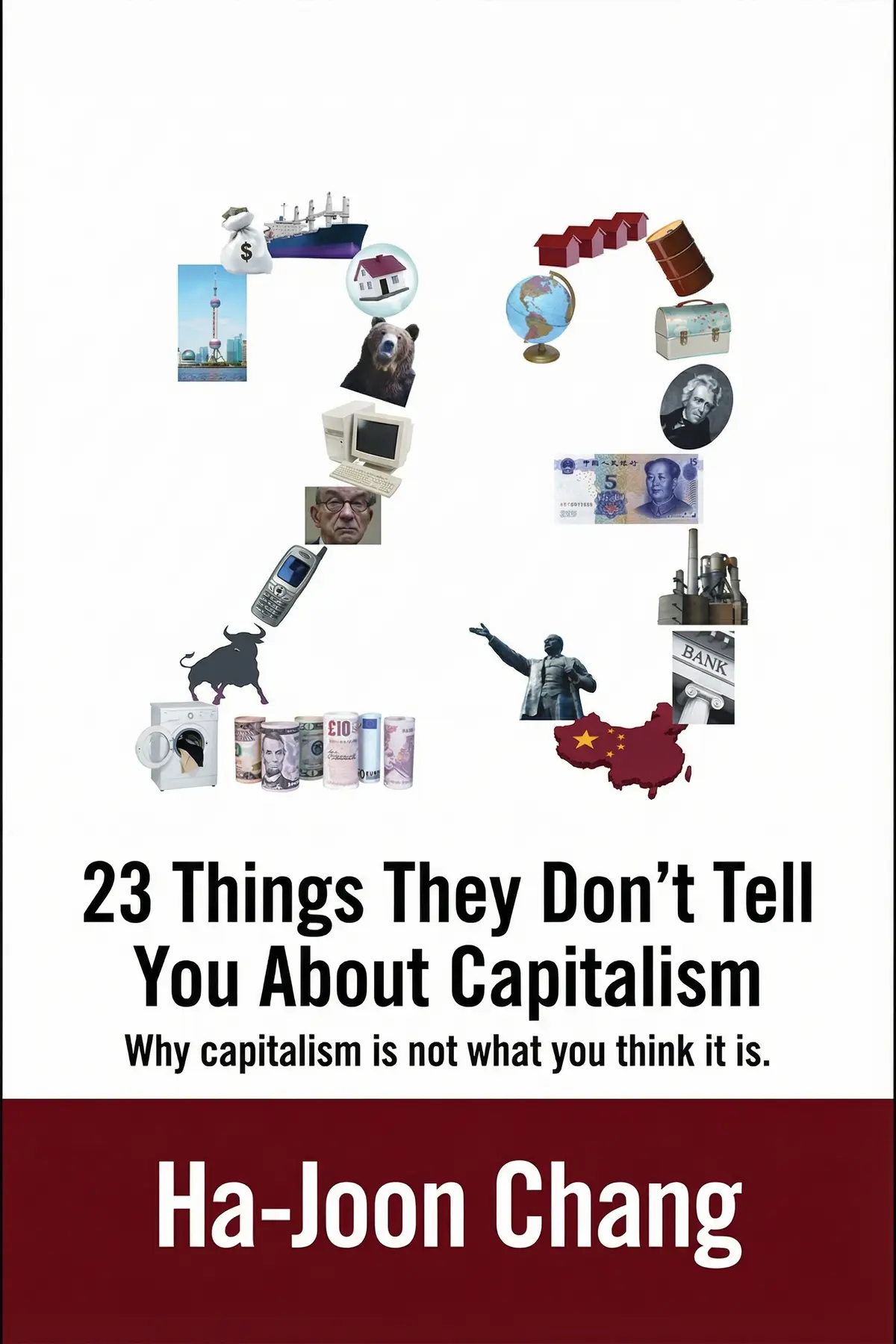
Ha-Joon Chang

Niall Kishtainy
William J. Bernstein

Yanis Varoufakis
AUDIO SUMMARY AVAILABLE
Get the key ideas from Makers and Takers by Rana Foroohar, plus 5,000+ more titles in English and Thai.







