Infectious Generosity: The Ultimate Idea Worth Spreading
Chris Anderson
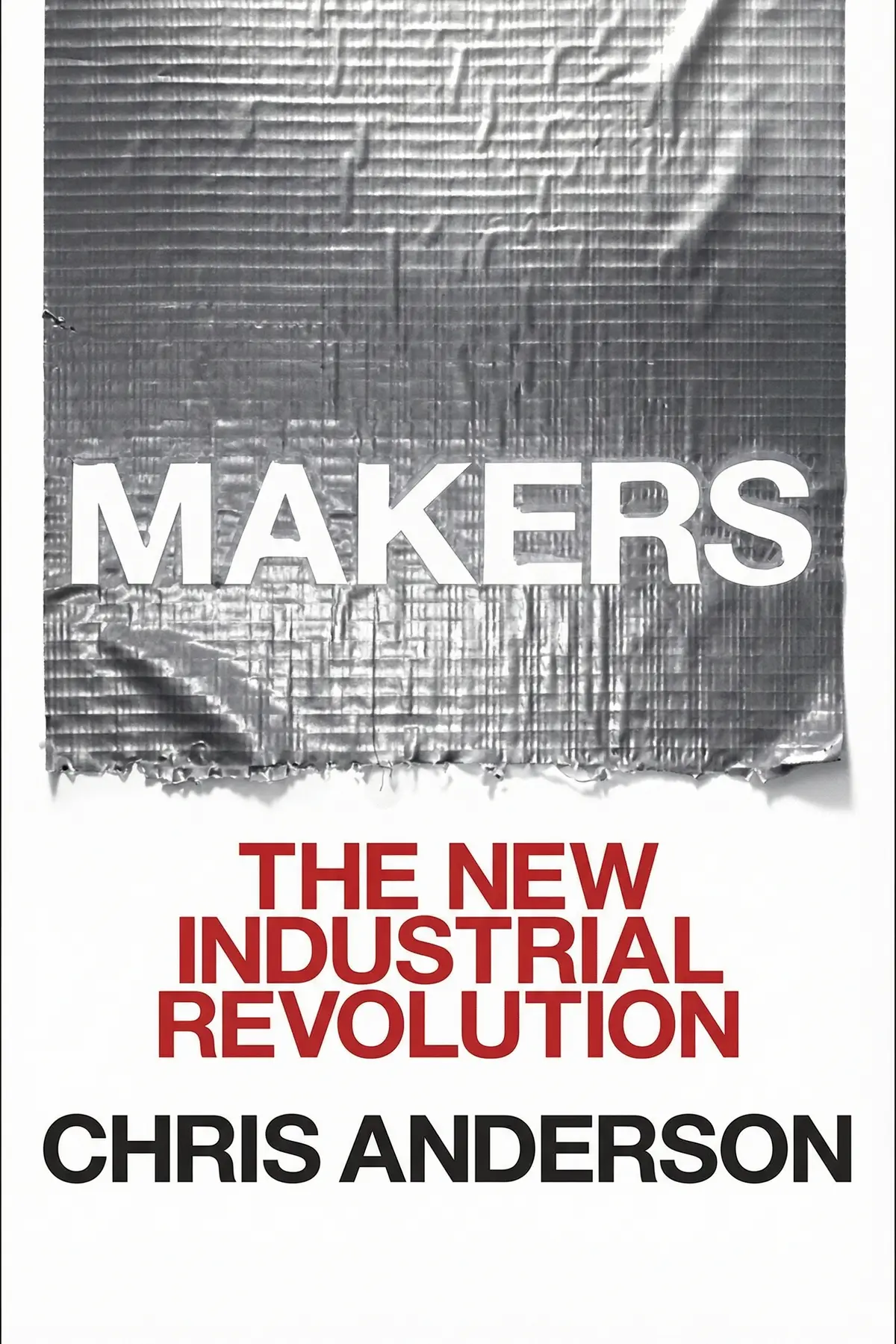
Makers explores how the marriage of digital design and desktop manufacturing is sparking a new industrial revolution, allowing individuals to design, fund, and create physical products with unprecedented ease.
1 min 47 sec
Think back to the first time you sat in front of a personal computer or saw a document emerge from a desktop printer. There was a specific kind of magic in that moment—a realization that a tool once reserved for giant institutions was now sitting on your desk, waiting for your instructions. It was the feeling of a barrier being smashed, of power shifting from the central authority to the individual. We’ve lived through that revolution in the digital world, where we became our own publishers, our own broadcasters, and our own software developers. But for a long time, there was a disconnect. While our digital lives became infinitely flexible, our physical lives remained stuck in the old model. If you wanted a specific product, you had to hope a massive corporation decided it was profitable enough to mass-produce it. If it wasn’t on the shelf, it didn’t exist.
That disconnect is finally disappearing. We are entering a new era where the same freedom we enjoy with digital data is being applied to physical objects—the world of atoms. This is what we call the Maker Movement, and it represents nothing less than a new industrial revolution. In this journey, we’re going to explore how the tools of production are becoming democratized. We’ll look at how the ability to design on a screen and ‘print’ in three dimensions is turning living rooms into factories. We will see how the way we fund ideas, the way we share designs, and the very geography of global manufacturing are all being rewritten. The central throughline here is the democratization of creation: the transition from being mere consumers of things to being the architects of our own material world. Get ready to see how the spirit of the web is taking physical form, and what that means for the future of business, innovation, and your own creative potential.
2 min 22 sec
Discover how the DIY spirit of the internet is moving into the physical world, allowing hobbyists to collaborate on designs and manufacture custom goods at home.
2 min 19 sec
Just as the desktop printer revolutionized publishing, 3D printing is following a predictable path toward becoming an essential and affordable household tool.
2 min 07 sec
Learn how platforms like Kickstarter are replacing traditional venture capital, allowing entrepreneurs to validate their ideas and raise funds directly from customers.
2 min 12 sec
Discover why the era of outsourcing is ending as automation and rising global costs bring production back to developed nations.
2 min 12 sec
Explore how small-batch production and niche markets are challenging the monopoly of giant corporations in the physical world.
1 min 36 sec
As we look toward the horizon of this new industrial revolution, the message is clear: the wall between the digital and the physical has finally crumbled. What we’ve learned through the Maker Movement is that the tools of creation are no longer locked away in the ivory towers of massive corporations. They are in our hands. We have moved from a time when we were passive consumers, waiting for the market to provide for us, to a time when we are active participants in the design and production of our world.
This shift isn’t just about 3D printers or crowdfunding; it’s about a fundamental change in the global economy. It’s about the return of local manufacturing, the rise of niche markets, and the power of open-source collaboration to solve problems in real-time. The ‘Makers’ are proving that when you give people the means to create, they will build things that a traditional factory would never even dream of.
So, what is the actionable takeaway for you? It’s to stop seeing the objects around you as static, finished products and start seeing them as the result of a design process that you can now join. Whether you are an entrepreneur looking to launch a product, a hobbyist wanting to solve a local problem, or simply someone curious about the future, the invitation is the same: start making. Explore the digital tools, join a community, and realize that in this new era, if you can imagine it and design it on a screen, you can hold it in your hand. The revolution has moved from the screen to the street, and the possibilities are as solid as the atoms we’re now learning to master.
Makers examines the seismic shift occurring as the tools of the digital age—like 3D printing and open-source collaboration—move into the physical world. For decades, the power to manufacture products was reserved for massive corporations with immense capital. Today, that barrier is crumbling. Chris Anderson explains how anyone with a computer can now become an inventor and an entrepreneur, bypassing traditional factories to create customized goods at home. The book promises a look at the future of the global economy, where 'bits' and 'atoms' converge. It covers how crowdfunding is replacing venture capital, why manufacturing is returning to developed nations through automation, and how the 'long tail' of physical goods is opening up endless niche markets. It is a guide for the modern creator looking to understand how the DIY spirit of the internet is transforming the way we build the world around us.
Chris Anderson is a journalist, entrepreneur and author of the internationally acclaimed books The Long Tail and Free. He is also the former editor-in-chief of technology magazine Wired and CEO of the drone manufacturer 3D Robotics.
Listeners find this work essential reading, praising the high-quality writing and fascinating stories based on real examples. Furthermore, the book provides incredible insight into what's coming, with one listener noting it offers a clear and concise vision of paradigm changes. They also appreciate the caliber of the information, with one review highlighting its comprehensive coverage of manufacturing topics, and find it encouraging, with one mentioning how it motivates readers for further research.
Finally got around to reading Chris Anderson's vision for the next industrial revolution, and it’s genuinely inspiring. The way he bridges the gap between digital "bits" and physical "atoms" feels like a natural evolution of his previous work on the long tail. While some critics say it reads like an extended magazine feature, I found the real-world success stories—from TechShop to Etsy—to be incredibly motivating for any aspiring entrepreneur. The book provides a clear and concise vision of how manufacturing is shifting from massive factories back into the hands of individual tinkerers and small-batch creators. I particularly loved the section on how 3D printing and CAD software are lowering barriers to entry that once felt insurmountable. It’s a must-read for anyone who wants to understand why the "Internet of Things" is more than just a buzzword. Even if you aren't planning to build a robot in your garage, the paradigm changes described here are essential for understanding the future of global commerce.
Show moreWow, what an absolute page-turner for anyone obsessed with where the global economy is heading. Makers is an amazing insight into a future where the distance between a brilliant idea and a physical product is shorter than ever. Anderson’s enthusiasm is infectious, and he backs up his theories with diverse, real-world examples that make the tech feel tangible. The book is incredibly well-written, managing to make complex topics like supply chain agility and open-source hardware feel accessible to a general audience. I particularly enjoyed the chapter on the "we are all designers" concept, which really highlights the empowerment of the modern hobbyist. It’s the kind of book that makes you want to immediately download some software and start building something in your basement. If you're looking for inspiration and a clear vision of how technology is reshaping our physical world, this is it.
Show moreThis book feels like the spiritual successor to The Long Tail, taking those digital theories and applying them to the world of physical objects. Anderson captures the excitement of the maker movement perfectly, showing how the tools of production have finally caught up with our imaginations. The stories about how small startups are using Alibaba to source parts and Kickstarter to fund production are genuinely fascinating. I appreciated the comprehensive coverage of manufacturing topics, ranging from simple 3D printing to complex global supply chains. It’s an inspiring call to action for anyone who has ever felt like an "amateur" in a world dominated by professionals. The writing is clear, the examples are concrete, and the vision is nothing short of revolutionary. If you want to know what the next ten years of industry will look like, start here.
Show moreAs someone who’s spent years in the manufacturing sector, I found Anderson’s insights into the "new industrial revolution" to be remarkably prescient. The shift toward personal fabrication represents a massive paradigm change that most traditional CEOs are still struggling to wrap their heads around. He does a fantastic job explaining how crowdfunding sites like Kickstarter have replaced the need for venture capital in the early prototyping stages. Personally, I found the detailed breakdown of CNC machines and laser cutters to be the most practical part of the text. However, the author’s tendency to use his own companies as case studies felt a bit self-serving at times, which occasionally dampened his credibility. Despite that, the information quality is top-notch and provides a roadmap for how we might bring manufacturing back to the West. It’s a compelling argument for the power of open-source communities to out-innovate corporate giants.
Show moreThe chapter on DIY biology alone makes this worth the price of admission. While many focus on the 3D printing aspect, Anderson’s exploration of how open-source mentalities are bleeding into the life sciences was truly eye-opening. Not gonna lie, some of the business-heavy sections in the second half of the book were a bit of a slog compared to the early chapters. However, the overall message about the "Internet of Things" and the shift from "bits to atoms" is fundamentally sound. The author provides a wealth of technical resources in the appendix that are genuinely useful for someone looking to get their hands dirty. I do wish there was more discussion on the global labor impacts, as the focus remains very US-centric throughout. Still, it’s a thought-provoking read that will leave you with more questions than answers in the best way possible.
Show morePicked this up on a whim after seeing it referenced on a tech blog, and I'm glad I did. It’s a solid deep dive into what happens when the "open source" model of software is applied to physical hardware. I was particularly impressed by the information quality regarding the transition from prototyping to small-batch manufacturing. Though some parts feel a bit like an upper-middle-class hobbyist’s dream, the underlying economic logic about niche markets is very strong. My only real gripe is that it feels a little too much like a collection of magazine articles stitched together, leading to some redundancy. But for a general audience, it provides an excellent entry point into a world that usually feels locked behind factory doors. It’s definitely a must-read for anyone in the tech or manufacturing space who wants to stay ahead of the curve.
Show moreTo be fair, Anderson isn't just selling hype here; he's outlining a legitimate shift in how we interact with the world of objects. The book provides a fascinating look at how the barriers between design and manufacturing are dissolving, allowing for a more personalized consumer culture. I found the sections on "rentership" of production tools particularly insightful, even if I don't agree with every single economic conclusion he reaches. The tone is mostly analytical, but you can feel his personal passion for the subject in every anecdote about his own tinkering. While I share some concerns about the environmental impact of printing more "stuff," the potential for localized manufacturing is a paradigm change we can't ignore. It’s an engaging, well-written piece of futurism that motivates you to look at your surroundings in a completely different way.
Show moreEver wonder if a fascinating 5,000-word essay could be bloated into an entire book? Makers starts with a brilliant premise about the democratization of production, but it quickly descends into repetitive hype and a somewhat narrow Silicon Valley perspective. Truth is, Anderson spends far too much time repeating that "production has gone digital" without addressing the steep learning curve of professional CAD software. I appreciated the historical context of the maker movement in the first half, yet the second half felt like a dry business manual for startups. It’s certainly well-written and offers some fascinating stories about Alibaba and open-source hardware, but the relentless optimism feels a bit dated now. The lack of critical engagement with the environmental impact of 3D printing "junk" was a missed opportunity for a more nuanced discussion. It's a decent primer, but don't expect a deep economic dive.
Show moreIn my experience, tech visionaries often suffer from a severe case of over-optimism. While I enjoyed the historical overview of the geek-punk origins of the maker movement, I couldn't help but feel that Anderson’s "everyone is a producer" mantra is a bit naive. The truth is that mass production still holds a massive cost advantage that 3D printing won't bridge for a long, long time. I also found the constant mentions of the "Long Tail" to be a bit repetitive, as if he's trying to force his old success into this new context. To be fair, the book is quite well-organized and offers some great insights into how communities can drive innovation faster than traditional R&D. But the "success stories" he highlights often feel like outliers rather than a new standard for the average worker. It's a fun read for a weekend, but take the utopian predictions with a massive grain of salt.
Show moreLook, the initial premise about 3D printing and the democratization of tools is compelling, but the execution falls flat for me. The book feels like mock-populist pandering to a specific demographic of tech-savvy hobbyists who already own a MakerBot. Frankly, Anderson seems to confuse the "means of design" with the actual "means of production," especially when most of his examples still involve shipping files to massive Chinese factories. The writing style is breezy and accessible, but it lacks the intellectual rigor needed to back up its sweeping economic claims. I was particularly frustrated by the dismissive attitude toward the literacy gap; learning CAD isn't something everyone can do in an afternoon. By the time I hit the third chapter about the "long tail" of things, I realized I was reading the same three points on a loop. It’s mostly hype with a thin veneer of substance that doesn't quite hold up under scrutiny.
Show moreAUDIO SUMMARY AVAILABLE
Get the key ideas from Makers by Chris Anderson, plus 5,000+ more titles in English and Thai.