Infectious Generosity: The Ultimate Idea Worth Spreading
Chris Anderson
Explore how the internet has shifted the economy from a few massive hits to millions of niche products, transforming how we produce, distribute, and consume everything from music to manufacturing.
1 min 58 sec
For most of the twentieth century, our culture was defined by the hit. Whether it was a chart-topping song, a summer blockbuster movie, or a best-selling novel, the goal of every business was to reach the largest possible audience with a single product. This was a necessity born of physical limitations. Because shelf space in a bookstore is limited, and airtime on a radio station is finite, only the most popular items were deemed worthy of distribution. We lived in a world of scarcity, where the ‘head’ of the demand curve—those few products at the top—monopolized our attention and our wallets.
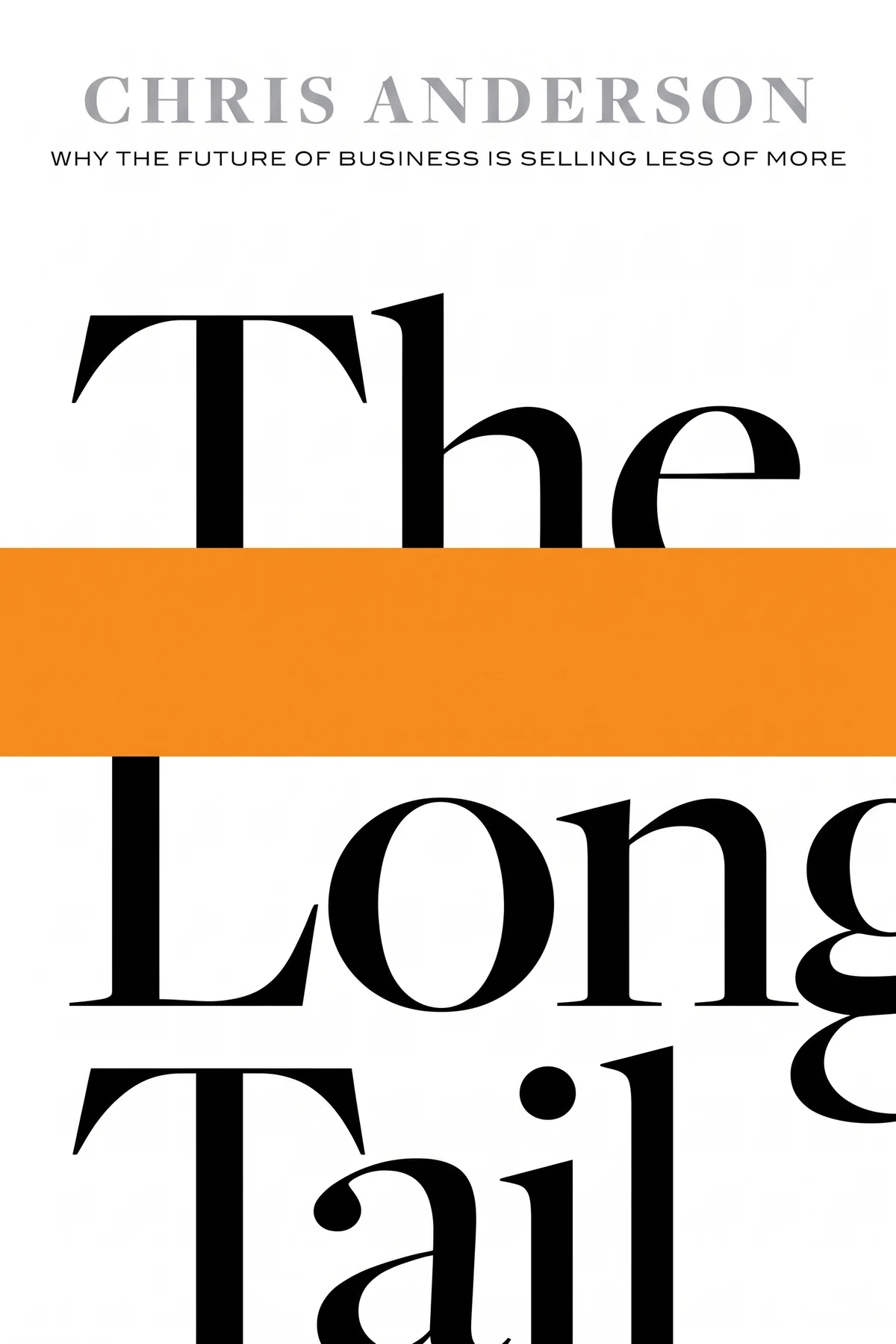
But a quiet revolution has taken place. The rise of the internet and the digital economy has fundamentally altered the geography of the marketplace. We have moved from a world of scarcity to a world of abundance. In this new landscape, the ‘long tail’—the vast, nearly infinite collection of niche products that sell only a few copies each—is beginning to rival the power of the traditional hits. From author Chris Anderson, a former editor of Wired magazine, comes a deep dive into this new paradigm. Anderson argues that the future of business isn’t about finding the next big hit; it’s about satisfying the diverse, specific needs of millions of small niche markets.
In this exploration, we will look at how the decline of the hit has opened up opportunities for a new kind of commerce. We will see how inexpensive technology has turned consumers into producers, how digital aggregators like Amazon and Netflix have unlocked the value of obscure content, and how filters like reviews and recommendations help us navigate this sea of choice. The monopoly of the mass market is over, and in its place, a more democratic and diverse economy is emerging. Welcome to the world of the long tail, where the future of business is selling less of more.
2 min 09 sec
Traditional retail is built on the pursuit of hits, but a new economic reality is emerging where the vast collection of niche products can match the revenue of top sellers.
2 min 01 sec
Technology has put the tools of creation into the hands of the masses, leading to an explosion of content that extends the tail further than ever before.
1 min 57 sec
In a world overflowing with content, new types of companies have emerged to organize the chaos and connect niche products with their ideal audiences.
1 min 53 sec
With infinite options comes the risk of being overwhelmed, making sophisticated filtering systems the essential bridge between supply and demand.
1 min 59 sec
Traditional retail is limited by the physics of space and the economics of overhead, forcing a focus on high-volume products at the expense of variety.
1 min 55 sec
Online platforms eliminate the financial risk of carrying unpopular items, allowing them to cater to the unique needs of every individual consumer.
2 min 04 sec
While it began with media, the long tail concept is now reshaping industries as diverse as toy manufacturing and global advertising.
1 min 44 sec
To thrive in this new landscape, businesses must rethink their inventory and distribution models to ensure they can meet demand whenever and wherever it arises.
2 min 01 sec
Traditional broadcasting is being replaced by niche engagement, where brand identity is built through dialogue and transparency rather than one-way messaging.
1 min 58 sec
Modern corporations are finding that opening their doors to the public and showing the human side of their operations builds deeper trust and loyalty.
1 min 47 sec
As the barriers to entry continue to fall, the aggregate power of the small and specific will eventually reshape every corner of our culture and economy.
1 min 43 sec
The transition from a world of scarcity to a world of abundance is one of the most significant shifts in human history. For decades, our choices were dictated by the physical limitations of the shelf and the broadcast tower. We were a ‘hit’ culture because we had to be. But as Chris Anderson has shown in The Long Tail, those days are behind us. The internet has unlocked the hidden value of the niche, revealing that our collective demand for the specific and the obscure is just as powerful as our demand for the popular.
To succeed in this new environment, you must embrace the three pillars of the long tail: democratize production, democratize distribution, and use filters to connect the two. Whether you are a creator, an entrepreneur, or a leader in a large corporation, the strategy remains the same: stop trying to find the one thing that everyone likes and start offering the many things that individuals love.
As a practical takeaway, look for ways to make your products more accessible and your business more transparent. Use the tools of the digital age to lower your overhead and expand your reach. Remember that in a world of infinite choice, the most valuable thing you can do is help a customer find exactly what they are looking for. The future of business is no longer about the blockbuster; it’s about the millions of small connections that make up the long tail of human interest. By focusing on the tail, you aren’t just selling products—you are participating in a more diverse, democratic, and vibrant economy.
The Long Tail investigates a fundamental shift in the global economy. For decades, businesses were defined by scarcity, focusing only on the most popular products that could fit on physical shelves. However, the digital revolution has removed these constraints, allowing niche markets to flourish and collectively rival the profits of traditional blockbusters. This summary explains how the democratization of production and distribution has created a world of infinite choice. It reveals why the era of the 'one-size-fits-all' hit is ending and how businesses can thrive by embracing the 'long tail'—the millions of specialized products that cater to individual tastes. Through examples like Amazon, Netflix, and Google, you will see how the future of commerce lies in selling less of more.
Chris Anderson is a prominent author and entrepreneur known for his insights into the intersection of technology and business. He previously served as the Business Editor at The Economist and as the Editor-in-Chief of Wired magazine. Beyond his work on the long tail phenomenon, he has authored other influential books including Free: The Future of a Radical Price and Makers: The New Industrial Revolution.
Chris Anderson
Chris Anderson
Chris Anderson
Listeners find the book to be a fascinating and accessible read featuring well-documented insights that provide practical value for businesses. The writing is high quality, and listeners consider it a worthwhile experience; one listener specifically notes it makes more money by serving multiple niche audiences. Conversely, the work receives varied feedback concerning its duration, as several listeners find it long. Additionally, some listeners think the content feels repetitive and dull at times.
This book completely shifted my perspective on how digital inventory functions in the modern economy. While some of the examples like Netflix’s DVD-by-mail service feel like ancient history now, the core logic regarding the 'long tail' remains incredibly potent. Anderson explains how the shift from hits to niches allows small creators to find their tribe without needing a massive marketing budget. It works. Truth is, most business books are fluff, but this one provides a structural framework that actually explains why companies like Amazon dominate. It’s an easy-to-understand deep dive that avoids being overly academic while still delivering high-value insights. If you are trying to sell anything online, you need to grasp these mechanics immediately or risk being left behind in the short head.
Show moreFinally got around to reading this classic and it’s amazing how much of our current digital landscape was predicted accurately by Anderson. The way he breaks down the three forces—democratizing production, distribution, and connecting supply—is a masterclass in strategic thinking. Not gonna lie, I was worried it would be too technical, but it’s actually quite an easy read that flows well from one case study to the next. I especially loved the bits about how reputation becomes a currency in the tail, which is exactly what we see today with social media. Even with the outdated references to defunct companies, the principles of e-commerce selling are spot on. It’s a brilliant primer for first-time sellers who want to understand the 'inventory for non-physical businesses' model. A true must-read for any modern professional.
Show moreWow. This is one of those rare business books that actually changes the way you look at the world every time you open an app. The Long Tail explains the 'why' behind everything from Amazon's dominance to the explosion of niche subcultures on the internet. While I agree with other reviewers that it can be a bit repetitive, the sheer volume of research makes the argument feel bulletproof. I was fascinated by the statistic that only a tiny fraction of books are actually profitable in a traditional bookstore. This book gives hope to the 'small' creators by proving there is a path to success outside the mainstream. It’s an optimistic and well-researched vision of a future where we aren't all forced to consume the same ten blockbusters. Essential reading for anyone in the creative industries.
Show moreI'll admit I was skeptical about a business book from 2006, but the core message regarding the economics of abundance is still incredibly sharp. Chris Anderson provides a vision into e-commerce that felt like clairvoyance at the time and now just feels like the world we live in. The book is well-researched and offers a wealth of practical applications for anyone looking to capitalize on niche audiences. Personally, I found the writing quality to be high, even if you do have to navigate through some sections that feel like they belong in a museum. Does it really take 300 pages to explain that the internet makes stocking obscure stuff cheaper? Probably not, but the case studies are interesting enough to keep you turning the pages. It’s a solid 5-star read that clarifies why the 'hits' aren't the only way to make money anymore.
Show morePicked this up after hearing it mentioned in a marketing seminar, and I must say the optimism of the early web 2.0 era is quite refreshing. Anderson does a stellar job describing how the democratization of distribution has lowered the barriers for entry in almost every creative field. I particularly enjoyed the sections on how filters and recommendation engines help connect supply with specific niche demands. To be fair, mentioning MySpace as a major player dates the text significantly, but the underlying economics of abundance are still very much in play today. It’s a well-researched piece that offers practical applications for anyone looking to build a business that doesn't rely on blockbuster hits. A solid read for entrepreneurs, even if it is a bit verbose in the middle chapters.
Show moreAfter hearing so much buzz about the 'nichification' of culture, I finally decided to dive into the source material. What I found was a surprisingly accessible breakdown of how digital markets have killed the old shelf-space limitations. Look, the book is definitely a product of its time—seeing Napster and Blockbuster treated as current examples is a bit of a trip—but the logic holds water. The idea that 25% of sales can come from the 'tail' is a game-changer for anyone in e-commerce. I appreciated the specific data points regarding inventory costs, even if the prose gets a little dry toward the end. It’s a seminal work that helped me understand why we’ve moved away from a monoculture. Definitely worth a spot on your shelf, though maybe a used copy will do.
Show moreAs someone who works in digital media, I found the core concepts here to be essential, yet the execution was a bit of a mixed bag. The theory itself is brilliant—explaining how the internet aggregates the small bits of the market into a significant revenue stream. However, the writing style leans heavily into that 'airport business book' vibe where every point is hammered home five times more than necessary. It’s like Anderson is trying to hit a word count rather than respecting the reader's time. In my experience, you can learn more from the charts and the intro than the actual bulk of the text. I gave it four stars because the information is foundational, but the actual reading experience was a bit of a slog. It’s a 'must-know' idea trapped inside a 'could-be-shorter' book.
Show moreNot what I expected, as I thought this would be a dry economics textbook, but it turned out to be much more narrative-driven. The author has a real talent for making complex market shifts feel intuitive and even exciting for the average person. I found the discussion about 'filters'—the algorithms that help us find niche content—to be the most relevant part of the entire book. On the downside, the pacing is incredibly uneven and some chapters feel like they are just retreading the same ground over and over. Gotta say, it makes you realize how much the 'paradox of choice' still plagues us despite having access to everything. It’s a good book with some great tidbits, but it definitely suffers from being a bit too long for its own good.
Show moreEver wonder why a 20-page magazine article gets stretched into a 300-page hardcover? This book is the poster child for that specific brand of publishing bloat. The central premise is undeniably fascinating, but Anderson repeats himself so often that I started to feel like I was stuck in a feedback loop. Frankly, you can get the gist of the theory by reading the original Wired article or watching a fifteen-minute talk online. By the time I hit the halfway mark, I was skimming past the redundant case studies just to find something new. It’s not that the information is bad, it’s just that the signal-to-noise ratio is incredibly frustrating for any busy reader. Skip the fluff and just read the summary.
Show moreThe most frustrating thing about this book is the author’s insistence that he discovered a brand-new phenomenon when it’s really just basic economics. If you look back at the history of Sears-Roebuck, you see the exact same 'long tail' strategy being used over a century ago with mail-order catalogs. Anderson tries to build this elaborate mythology around bits and bytes, but Adam Smith would have recognized these market forces in a heartbeat. Furthermore, the relentless cheerleading for tech giants who exploit creators left a sour taste in my mouth. It’s a boring, repetitive, and ultimately derivative work that celebrates the centralization of power under the guise of 'democratization.' Save your time and your money; there is absolutely nothing original happening in these pages.
Show moreAUDIO SUMMARY AVAILABLE
Get the key ideas from The Long Tail by Chris Anderson, plus 5,000+ more titles in English and Thai.