
21 min 58 sec
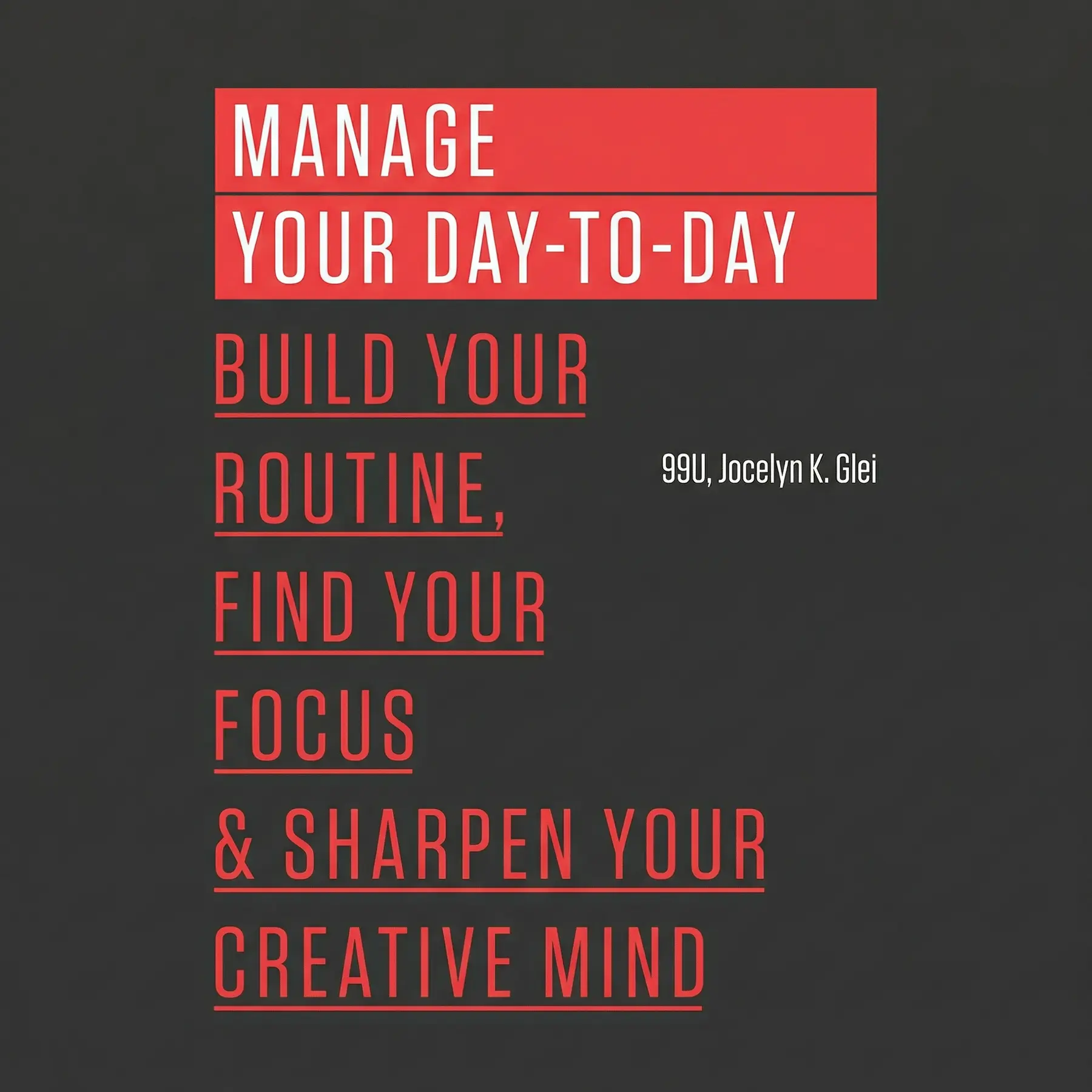
Manage Your Day-To-Day: Build Your Routine, Find Your Focus and Sharpen Your Creative Mind
By 99U, Jocelyn K. Glei
This guide explores how twenty creative experts manage their time and energy. It offers practical strategies for building routines, improving focus, and reclaiming your attention from digital distractions to boost daily productivity.
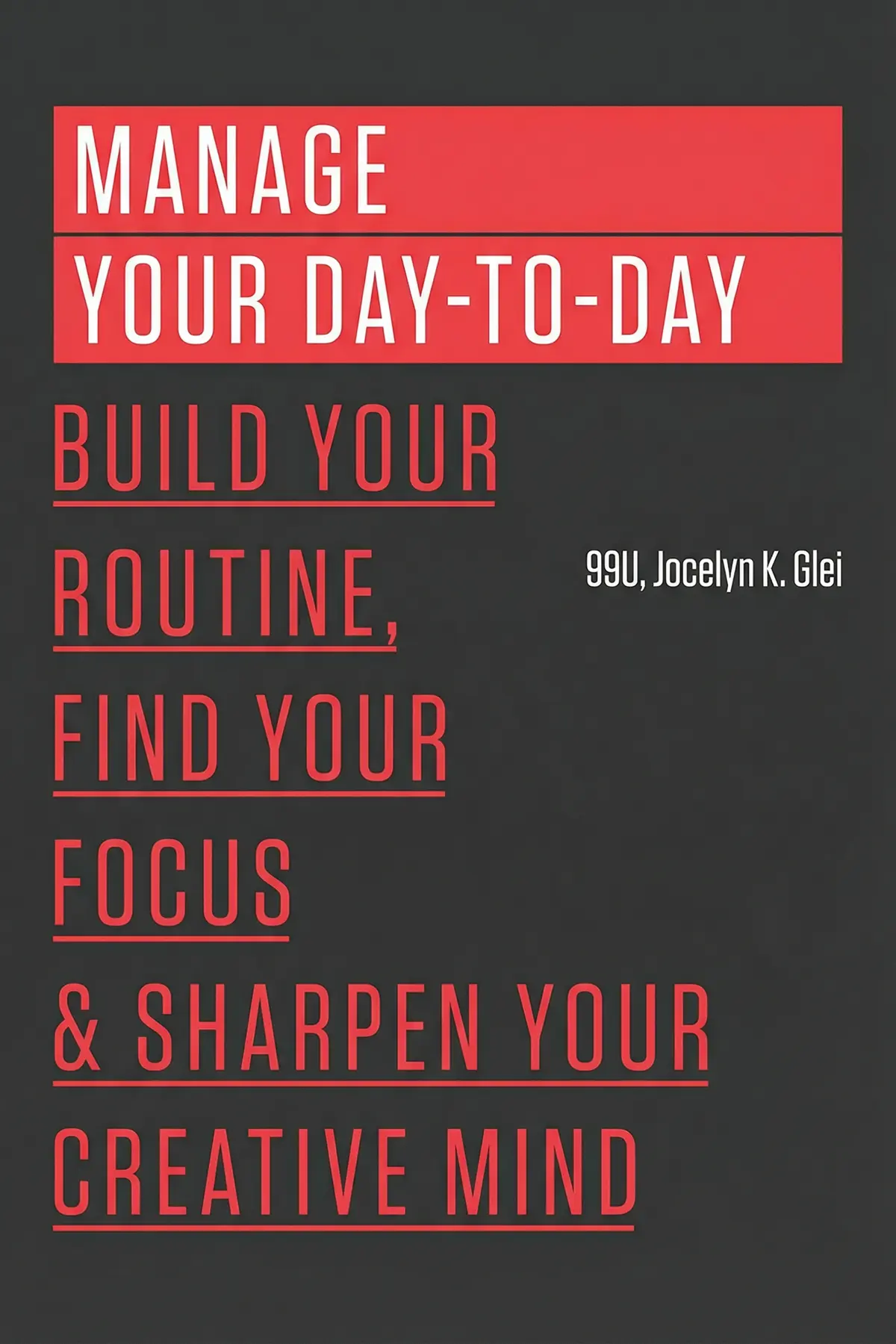
Table of Content
1. Introduction
1 min 51 sec
In an era of relentless notifications and endless to-do lists, many of us feel like we are constantly playing catch-up. We start our days with the best of intentions, only to find ourselves buried under a mountain of emails and minor tasks by noon. It feels as though our creative energy is being nibbled away by a thousand tiny distractions. But what if there was a way to reclaim that focus? What if you could build a daily structure that actually nurtured your best ideas instead of exhausting them?
Manage Your Day-To-Day is a curated collection of wisdom from twenty of the most successful creative minds of our time. These aren’t just theoretical tips; they are the battle-tested routines and psychological shifts used by people who actually get things done at the highest levels. This journey is about more than just productivity—it is about intentionality. It asks you to stop being a passive recipient of your day and start being its architect.
Over the course of this summary, we will explore how to align your work with your body’s natural energy cycles, why consistent daily action is more powerful than waiting for a muse, and how to build a fortress of focus in a world designed to distract you. We’ll look at the surprising ways small habits, like dental hygiene or simple gardening, can actually rewire your brain for better professional performance. The throughline here is simple: by taking small, deliberate steps to manage your environment and your mindset, you can transform your creative output and find a sense of calm in the chaos. Let’s dive into how you can start taking back control of your time, one hour at a time.
2. Harnessing Biological Rhythms
2 min 44 sec
Your body has its own internal schedule for energy and creativity that doesn’t care about your office hours.
3. The Power of Frequency and Routine
2 min 34 sec
Waiting for inspiration is a luxury you can’t afford if you want to achieve lasting success.
4. Building the Willpower for Deep Focus
2 min 35 sec
Focus is a muscle that can be strengthened through surprising daily practices and mental discipline.
5. The Myth of Effective Multitasking
2 min 31 sec
Trying to do everything at once is actually a guaranteed way to do everything poorly.
6. Cultivating Digital Mindfulness
2 min 41 sec
Technology is a powerful tool, but only if you are the one holding the handle.
7. Embracing Stillness and the 'Doing Nothing' Strategy
2 min 42 sec
Your brain needs white space to connect the dots and move past the trap of perfectionism.
8. Nurturing the Holistic Creative Mind
2 min 38 sec
Success in your work depends heavily on the things you do when you aren’t working.
9. Conclusion
1 min 42 sec
As we wrap up this exploration of professional and creative management, the core message remains clear: you have more power over your day than you think. The feelings of being overwhelmed and distracted aren’t inevitable consequences of modern life; they are challenges that can be met with intentional strategy. By aligning your most difficult work with your body’s natural energy peaks, you ensure that you are never fighting against your own biology. By choosing consistency over the flighty whim of inspiration, you build a body of work that stands the test of time.
We’ve seen that focus is not a gift you are born with, but a skill you develop through daily discipline and the protection of your mental space. Whether it’s through the simple act of flossing or the deliberate scheduling of focus meetings, you can train your brain to go deep when it matters most. Likewise, by taking a mindful approach to technology and giving yourself permission to do nothing, you reclaim the ‘white space’ where true innovation happens.
Ultimately, managing your day-to-day is about respecting your own potential. It is an act of self-care to set boundaries with your inbox, to prioritize sleep, and to allow yourself the freedom of a hobby. When you implement these changes, you’ll find that you aren’t just more productive—you are more present. You’ll find that you have the energy not only to do your work but to enjoy it. Start small. Pick one rhythm to honor or one distraction to eliminate today. The path to a more meaningful professional life begins with the very next hour. What will you do with it?
About this book
What is this book about?
Manage Your Day-To-Day acts as a toolkit for anyone feeling overwhelmed by the relentless pace of the digital age. By gathering insights from twenty leading creative minds, researchers, and productivity experts, the book addresses the core challenges of modern work: constant interruptions, the lure of social media, and the struggle to maintain a consistent creative output. It promises to help you build a solid routine that respects your biological rhythms rather than fighting against them. The book isn't just about doing more work; it’s about doing more of the work that actually matters. It covers everything from the psychology of focus and the importance of sleep to the way we physically interact with our devices. By implementing these practical strategies, readers can learn to guard their most productive hours, eliminate the drain of multitasking, and find inspiration even when they aren't feeling particularly "creative." Ultimately, the promise is a more intentional, focused, and fulfilling professional life where you are the master of your schedule rather than a slave to your inbox.
Book Information
About the Author
99U
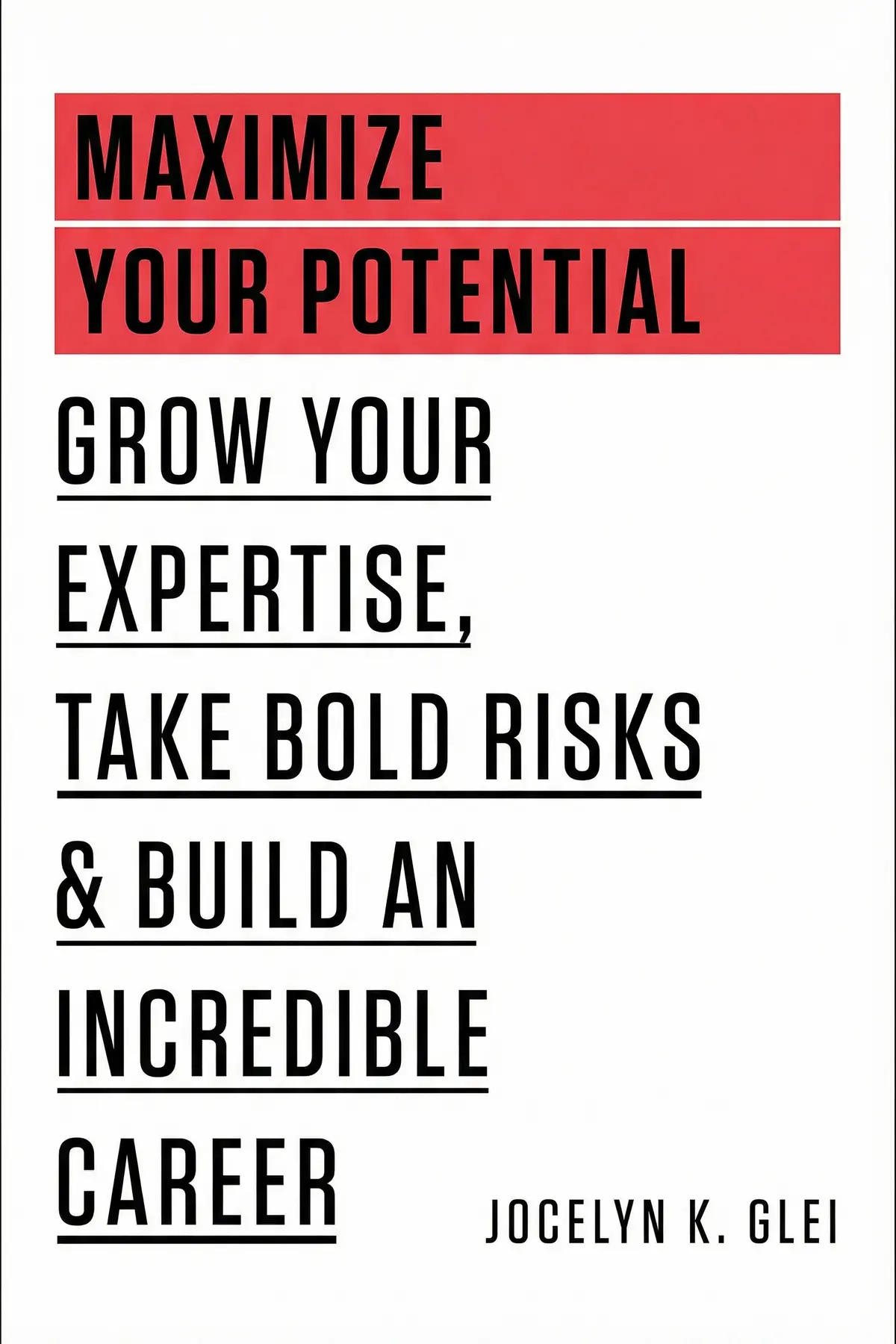
Jocelyn K. Glei serves as the editor-in-chief and director of 99U, which is a prominent online magazine specifically designed to offer creative professionals innovative strategies for bringing their ideas to fruition. Beyond her leadership at 99U, she also curated and edited the subsequent volume in this series, titled Maximize Your Potential. Her work consistently focuses on the intersection of productivity, creative workflow, and professional development.
Ratings & Reviews
Ratings at a glance
What people think
Listeners find this book highly accessible and packed with useful suggestions, offering clever bits of wisdom throughout each section. Furthermore, it provides strategies for sparking inspiration and sustaining a lively creative spirit, while assembling a superb array of essays and concepts. In addition, listeners value the way it assists in organizing their schedules and remaining concentrated on key priorities, with one listener describing it as a guide for efficiency within a distracting environment.
Top reviews
Tod
Ever wonder why you feel exhausted at 5 PM despite having achieved nothing on your actual to-do list? Manage Your Day-to-Day identifies the culprit as our addiction to the 'inbox' and provides a toolkit to reclaim our focus. Not gonna lie, I was skeptical about another productivity book, but the guest essays from people like Gretchen Rubin and Seth Godin offer diverse perspectives that kept me engaged. The section on 'Taming Your Tools' was particularly convicting; I’ve since disabled almost all my mobile push notifications. It’s a beautifully designed book that prioritizes quality of work over quantity of tasks. If you are a freelancer or a creative professional struggling with the chaos of a distracted world, this is mandatory reading. It’s less about a rigid system and more about a collection of best practices you can tailor to your own life.
Show moreNora
Wow, the section on 'Sharpening Your Creative Mind' was exactly the wake-up call I needed this year. As someone who works in a high-pressure design environment, I’ve fallen into the trap of constant connectivity, feeling like I have to respond to every Slack message instantly. This book taught me the power of saying 'no' to the unimportant so I can say 'yes' to the work that actually matters. The advice from Todd Henry about creating for yourself alone was a highlight for me. It’s a roadmap for productivity that doesn't feel clinical or boring; instead, it feels like a conversation with a group of mentors. I’ve started blocking off my first three hours for deep work, and the results have been transformative. This is easily one of the most practical books on my shelf.
Show moreKoi
Finally got around to reading this tiny dynamo, and I wish I'd found it years ago. I am a classic procrastinator who thrives on the 'busy-ness' of email, and this book hit me like a ton of bricks. The advice isn't just about being a better worker; it's about being a more fulfilled human being who isn't a slave to their devices. I appreciated that the authors didn't sugarcoat the difficulty of the creative process—they treat it like a profession that requires discipline, not a lifestyle fueled by magic. The specific tips on creating windows of non-stimulation have completely changed how I plan my afternoons. If you feel like you're spinning your wheels every day, buy this book immediately. It provides the structure and focus needed to actually make your ideas happen.
Show moreMoon
This book acts as a compact roadmap for anyone drowning in a sea of digital noise and constant notifications. To be fair, most of the advice isn't exactly groundbreaking—we all know we should check our email less—but the way Jocelyn K. Glei curates these specific experts makes the message stick. I loved the emphasis on 'proactive' work versus 'reactive' work, which is a distinction I hadn’t clearly made before. The chapters are bite-sized, making it easy to digest one nugget of advice during a coffee break. While some of the overdesigned quote pages felt like filler, the core message about building a rock-solid routine is vital. I’ve started implementing the 90-minute ultradian rhythm blocks into my morning, and the boost in my creative output is already noticeable. It’s a solid, vibrant guide for the modern professional.
Show moreAnong
Picked this up during a particularly nasty bout of creative block and found it surprisingly refreshing. The structure is brilliant, divided into four key areas: routine, focus, tools, and the creative mind. Each section ends with 'Key Takeaways' that summarize the actionable items, which is great for someone like me who tends to skim. I particularly enjoyed the essay by Mark McGuinness on laying the groundwork for a routine; it helped me realize that waiting for inspiration is a loser's game. My only gripe is that it feels a bit like a collection of advertisements for the contributors' own books at times. Still, the vibrant energy of the writing and the practical tips on avoiding 'screen apnea' make it worth the price. It’s a great little primer to keep on your desk for those days when you feel your focus slipping away.
Show moreNitaya
After hearing so much hype about the 99U series, I finally dove into this collection of essays and was pleasantly surprised. It’s not a Pulitzer-winning masterpiece, but it is a highly effective manual for the modern worker. The book acknowledges that our world is fundamentally different now due to our gadgets and offers realistic ways to cope. I loved the tip about keeping a Post-it sized to-do list to limit daily goals; it’s such a simple, actionable change. Some chapters were definitely stronger than others—the 'Taming Your Tools' section felt a little dated already—but the overall sentiment is spot on. It functions as a great starting place for anyone looking to shape a more intentional work-life balance without getting bogged down in a complex 500-page system. It’s concise, punchy, and visually stimulating.
Show moreAudrey
The chapter on reconsidering constant connectivity by Tiffany Shlain was worth the price of the book alone for me. Lately, my mornings have felt like a constant battle against my inbox, but shifting to the 'creative work first' model has been a game-changer. The book offers a wonderful collection of articles that feel like mini-mentoring sessions from the best in the business. It’s true that some parts feel a bit repetitive—you can only be told to stop multitasking so many times—but perhaps that's because we're so bad at actually doing it. To be fair, it’s a quick read, maybe two hours total, which fits the theme of not wasting time. It’s a vibrant, insightful guide that serves as a necessary reminder that our time is our most precious resource. Highly recommended for any distracted professional.
Show moreFah
Not what I expected, though I can't say it's without value for the right audience. The book is essentially a compilation of very short essays, which means it often lacks the depth I was looking for in a professional development text. Personally, I found the chapters a bit repetitive, as nearly every author echoes the same sentiment: stop checking your phone and do the hard work first. The 'overdesigned' aesthetic, full of giant inspirational quotes, felt like it was trying to compensate for the thinness of the actual content. However, for a total beginner who has never thought about 'choice architecture' or the psychology of creative blocks, this would be a fantastic starting point. It's a quick read that provides a nice kick in the pants, but don't expect a deep dive into the mechanics of productivity.
Show moreNannapat
In my experience, books that feature twenty different authors tend to feel disjointed, and this one is no exception. While there are some absolute gems of wisdom hidden in here—like the discussion on how Haruki Murakami structures his day—they are often buried between repetitive advice about closing your browser tabs. It reads very much like a highlight reel of a conference. You get a lot of 'what' to do, but very little 'how' to actually sustain it over the long term. Frankly, I think you could get the same value by reading the summary of the book online and save yourself twenty dollars. That said, the physical book is lovely to hold and the 'Key Takeaways' sections are legitimately helpful for a quick refresher. It's a decent 3-star read: helpful, but slightly shallow.
Show moreRome
Truth be told, I felt like I was reading a 200-page version of a 'Top 10 Productivity Tips' blog post. The book is undeniably pretty, but it’s essentially all fluff and very little substance. You are told you're a unique snowflake who needs to stop checking email, followed by pages of pseudo-science about breathing and 'ultradian rhythms' that aren't fully backed up. It feels very much like a product of the 'cult of design'—style over substance. If you've ever read a single article on Lifehacker, you’ve already seen these ideas. Each essay is so brief that by the time an author starts to get into something interesting, the chapter ends. It might be a nice gift for a college graduate, but for a seasoned professional, it’s just a collection of platitudes and over-sized fonts.
Show more
Readers also enjoyed

AUDIO SUMMARY AVAILABLE
Listen to Manage Your Day-To-Day in 15 minutes
Get the key ideas from Manage Your Day-To-Day by 99U, plus 5,000+ more titles in English and Thai.
- 5,000+ titles
- Listen as much as you want
- 7-day free trial
- Cancel anytime







