
13 min 34 sec
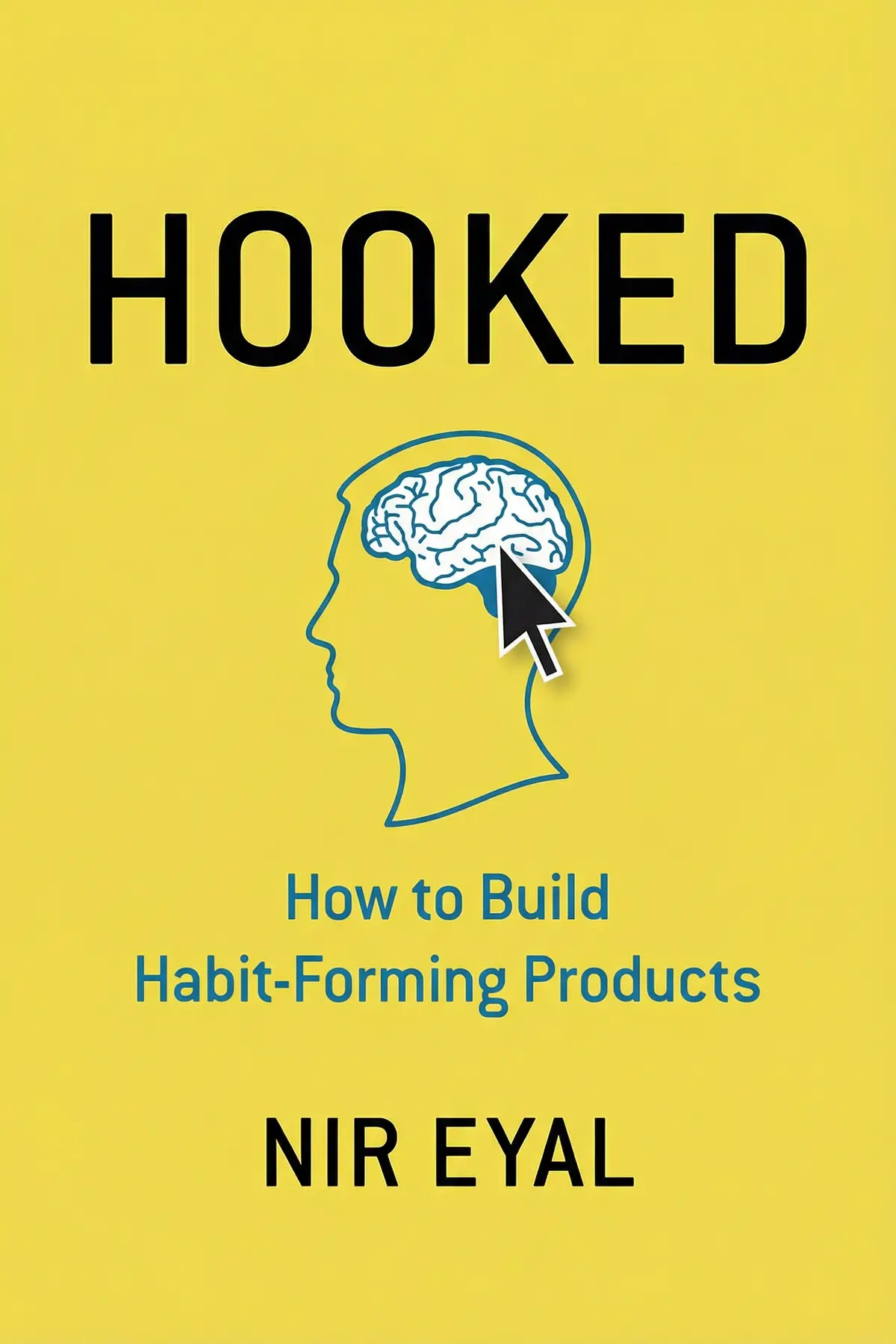
Marketing Artificial Intelligence: AI, Marketing, and the Future of Business
Discover how artificial intelligence is transforming marketing from a manual craft into a predictive powerhouse. Learn to leverage AI for personalized customer experiences, optimized advertising spend, and viral content strategies.
Table of Content
1. Introduction
1 min 47 sec
Think about the last time you felt truly in control of your marketing strategy. In an era where data is generated at a breakneck pace and consumer preferences shift with every swipe, maintaining that control can feel like trying to catch lightning in a bottle. For decades, marketing has been a manual craft—a discipline of gut feelings, trial-and-error campaigns, and labor-intensive spreadsheets. But the landscape is shifting beneath our feet. We have reached a point where human intuition alone is no longer enough to process the sheer volume of information available to us. This is where artificial intelligence steps in, not as a replacement for the marketer, but as a transformative partner.
In this summary, we are going to explore the core pillars of the AI revolution in marketing. We aren’t just talking about abstract algorithms or science fiction concepts; we are looking at the practical reality of how machines are helping brands speak more clearly to their customers. You will see how the transition from traditional methods to AI-driven strategies is changing the career paths of millions of professionals worldwide.
We will walk through the journey of bridging the readiness gap—the space between knowing AI is important and actually knowing how to use it. Along the way, we’ll look at fascinating case studies, from entrepreneurs who automated their entire advertising spend to media giants who have decoded the secret to viral content. By the end of this exploration, you’ll understand the throughline that connects all these innovations: the shift toward making marketing ‘smarter’ rather than just ‘faster.’ The goal is to move beyond the noise and find the signal, turning your marketing efforts into a predictive, personalized, and high-performing machine.
2. Closing the Readiness Gap in a Changing Profession
2 min 39 sec
Millions of marketing professionals are currently facing a massive skills gap as AI redefines their roles and the tools they use every day.
3. From Hype to Utility Through Pilot Projects
2 min 25 sec
Navigating the overwhelming buzz surrounding AI requires a practical framework that focuses on specific use cases rather than all-in-one solutions.
4. Revolutionizing Advertising with Autonomous Optimization
2 min 20 sec
AI is capable of finding hidden customer segments and optimizing ad spend at a frequency that no human team could ever match.
5. The Content Flywheel and the Science of Virality
2 min 38 sec
Digital media giants are proving that viral success isn’t just luck; it’s the result of an AI-first approach to content creation.
6. Conclusion
1 min 45 sec
As we wrap up our journey through the world of marketing artificial intelligence, the throughline is clear: the future belongs to those who embrace the collaboration between man and machine. We have seen how the industry is moving through a period of immense change, moving past the manual constraints of the past and into a future defined by smarter, predictive systems. Whether it is through bridging the readiness gap with better education, starting small with high-impact pilot projects, or using autonomous tools to revolutionize advertising and content, the message is the same: AI is the most powerful tool ever created for the modern marketer.
The stories of entrepreneurs like Naomi Simson and companies like BuzzFeed show us that this isn’t a distant future—it is happening right now. The technology to optimize every dollar spent and every piece of content created is within reach. But the most important element remains the human at the helm. AI can process the data and predict the trends, but only a human can provide the empathy, the ethical oversight, and the creative spark that gives a brand its soul.
Your next step is to look at your own marketing efforts and ask: where can I make this smarter? You don’t need to change everything at once. Start with a single use case, a single pilot project, or a single tool that helps you understand your audience better. By taking that first step, you are doing more than just adopting a new technology; you are ensuring your place in the next evolution of your profession. The digital landscape will continue to shift, but with AI as your partner, you won’t just be keeping pace—you’ll be leading the way.
About this book
What is this book about?
Marketing Artificial Intelligence serves as a comprehensive guide for modern professionals looking to navigate the intersection of human creativity and machine efficiency. The book addresses a critical problem in the industry: while technology has advanced exponentially, the majority of marketing remains a manual, labor-intensive process that struggles to keep up with consumer demands. The authors explore how AI can bridge this gap by automating complex tasks, predicting consumer behavior, and personalizing interactions at a scale previously thought impossible. The promise of this work is to demystify artificial intelligence, moving beyond the hype to provide actionable frameworks. By examining real-world success stories—ranging from small-scale pilot projects to global media strategies—the book illustrates how any brand can begin its AI journey. Listeners will learn about the tools and mindsets necessary to transition from traditional marketing to an AI-first approach, ensuring they remain competitive in a digital landscape that is increasingly defined by algorithmic precision and data-driven insights.
Book Information
About the Author
Paul Roetzer
Paul Roetzer is the founder and CEO of the Marketing AI Institute and PR 20/20. He has written influential works such as The Marketing Performance Blueprint and The Marketing Agency Blueprint, consistently focusing on the integration of emerging tech into marketing. He also founded the Marketing Artificial Intelligence Conference, known as MAICON, to promote practical AI applications. Mike Kaput serves as the chief content officer at the Marketing AI Institute, where he focuses on using AI to drive growth and efficiency. He is also the co-author of Marketing Artificial Intelligence with Roetzer, showcasing his ability to translate complex technical concepts into accessible insights for professionals.
Ratings & Reviews
Ratings at a glance
What people think
Listeners find this book to be a compelling and approachable introduction that demystifies the role of technology within modern business strategy. Although some listeners believe the material is short on actionable depth and omits recent progress in generative AI, many value the deep-dive case studies and the thorough list of vendor resources. Furthermore, they prize how the authors break down complicated ideas simply, with one listener highlighting it as a "robust starting point" for those new to the field. Listeners also point out that the practical examples and included tools demonstrate the transformative potential of data-driven marketing.
Top reviews
Penelope
Wow. This is the foundational text I needed to wrap my head around machine learning without having a computer science degree. Roetzer and Kaput have managed to take incredibly complex concepts and turn them into an accessible primer that demystifies how technology impacts modern business strategy. As a marketer, I often feel the "readiness gap" closing in, but this book gave me the confidence to bridge it. The authors don't just talk about code; they talk about the transformative potential of data-driven decision-making in a way that feels actionable and exciting. If you are new to the field, start here. It isn't a coding manual, but it’s the best high-level overview I’ve found yet. It frames AI as a strategic asset that enhances productivity rather than a threat to jobs.
Show moreSam
Ever wonder how companies like BuzzFeed actually use data to go viral? Roetzer and Kaput break it down through fascinating narratives that illustrate the shift toward smarter, data-driven marketing. The story of Naomi Simson’s advertising success was a particular highlight for me because it showed how AI-driven campaigns can discover segments humans might miss. This book serves as an indispensable guide for anyone poised to harness the power of machine learning to drive efficiency and performance. Personally, I found the tone engaging and the insights into consumer behavior very well-researched. It’s a visionary look at how we can leverage technology to push the boundaries of traditional creative work.
Show moreCholada
As someone who struggles with data analysis, the authors' explanation of how AI can become a marketer’s "ace in the hole" was eye-opening. Not gonna lie, I was intimidated by the subject matter initially, but the way Paul and Mike simplify the complex is masterful. I listened to the audio version first, but I ended up buying a physical copy because the lists of resources and vendors are too valuable not to have on my desk for reference. It’s more than just a book; it’s a roadmap for staying relevant in an evolving digital landscape. The emphasis on being an "AI-first" marketer is a message that every professional needs to hear right now.
Show moreAmara
This book is an essential starting point for any CMO who feels like they’re falling behind the technological curve. It offers a comprehensive guide to making marketing smarter by leveraging deep learning and predictive analytics to understand consumer preferences. The authors highlight how even a tiny infusion of AI can result in significant gains for your team's efficiency and overall performance. While the lack of Generative AI content is a minor drawback, the fundamental strategies for data-driven engagement are solid. It’s a robust framework for navigating the industry's future. I walked away with a clear list of potential use cases that I plan to implement with my team immediately.
Show morePia
The chapter on vendor tools is a goldmine for anyone looking to shop for software right now, though it can get a bit dense. Paul and Mike provide a robust starting point for companies that are tired of traditional marketing and want to see significant gains through automation. While the middle section feels a bit like a directory, the case studies are genuinely insightful and help ground the abstract concepts. I particularly liked the section on how AI can optimize ad spend. Some might find it a bit "overview-ish," but for a leadership team, this is exactly the kind of high-level strategic thinking required to stay competitive. It makes the world of algorithms feel much less daunting for the average professional.
Show moreSamira
Finally got around to reading this and I appreciate how it frames AI as a strategic asset rather than just a shiny new toy. The authors explain the "readiness gap" perfectly, highlighting why so many of us feel overwhelmed by the current pace of technological change. While I agree with other reviewers that it lacks focus on recent generative tools, the core principles of using data to improve productivity are timeless. The writing is clear, making even the most intricate concepts accessible to readers who aren't tech-native. I found the real-world examples to be the most valuable part, as they moved the conversation from theory to actual business outcomes. It’s a compelling case for transformation.
Show moreViroj
To be fair, the book does a decent job of demystifying the terminology for those of us who are terrified of algorithms. It works well as an introduction to how machine learning can be applied to various marketing silos, but don't expect it to teach you how to actually execute the strategies. It provides a list of what you should do—like personalizing engagement or optimizing content—but the "how" remains frustratingly vague. You’ll leave the book knowing what’s out there, yet you might still feel stuck when it comes to implementation. It’s a solid primer for the uninitiated, but if you’re already tech-savvy, you might find the content a bit shallow.
Show moreSaengdao
Gotta say, the first half is excellent for strategic thinking, but then it devolves into a directory of software that feels a bit like reading the Yellow Pages. While it's comprehensive, the transition from a narrative about the future of business to a catalogue of tools was a bit jarring. It’s an earnest attempt to equip marketers with knowledge, but the utility as a hands-on guide is somewhat lost in the sheer volume of software listings. If you are looking for a high-level overview of the history and potential use cases, you'll find it here. However, for those eager to dive deep into strategic applications, you might find yourself skimming through the latter half.
Show morePlernpiriya
After hearing so much hype, I found this remarkably outdated because it completely misses the Generative AI explosion that has changed everything. If you are coming here looking for tips on ChatGPT, Midjourney, or LLMs, you are going to be disappointed. The book treats AI mostly as applied machine learning for predictive analytics, which is fine, but it feels like it was written a lifetime ago in tech years. Frankly, the advice is too general. It tells you that you need to "learn to analyze data" without actually explaining how or providing the resources to do so. It was likely useful three years ago, but today it feels more like a history lesson than a guide for the modern digital landscape.
Show moreOn
Look, this felt more like a 300-page lead magnet for the authors' consulting services than an actual instructional guide. I was expecting a hands-on manual with "how-to" steps, but instead, I got a lot of high-level talk about how "AI is the future" without the substance to back it up. Truth is, if you’ve spent more than five minutes on a marketing blog recently, you already know everything in this book. It’s simplistic and lacks any mention of the newer tools that are actually being used in the industry today. To me, it felt like a revenue stream for their business rather than a genuine attempt to educate the community on technical implementation.
Show moreReaders also enjoyed
AUDIO SUMMARY AVAILABLE
Listen to Marketing Artificial Intelligence in 15 minutes
Get the key ideas from Marketing Artificial Intelligence by Paul Roetzer, plus 5,000+ more titles in English and Thai.
- 5,000+ titles
- Listen as much as you want
- 7-day free trial
- Cancel anytime







