
17 min 22 sec
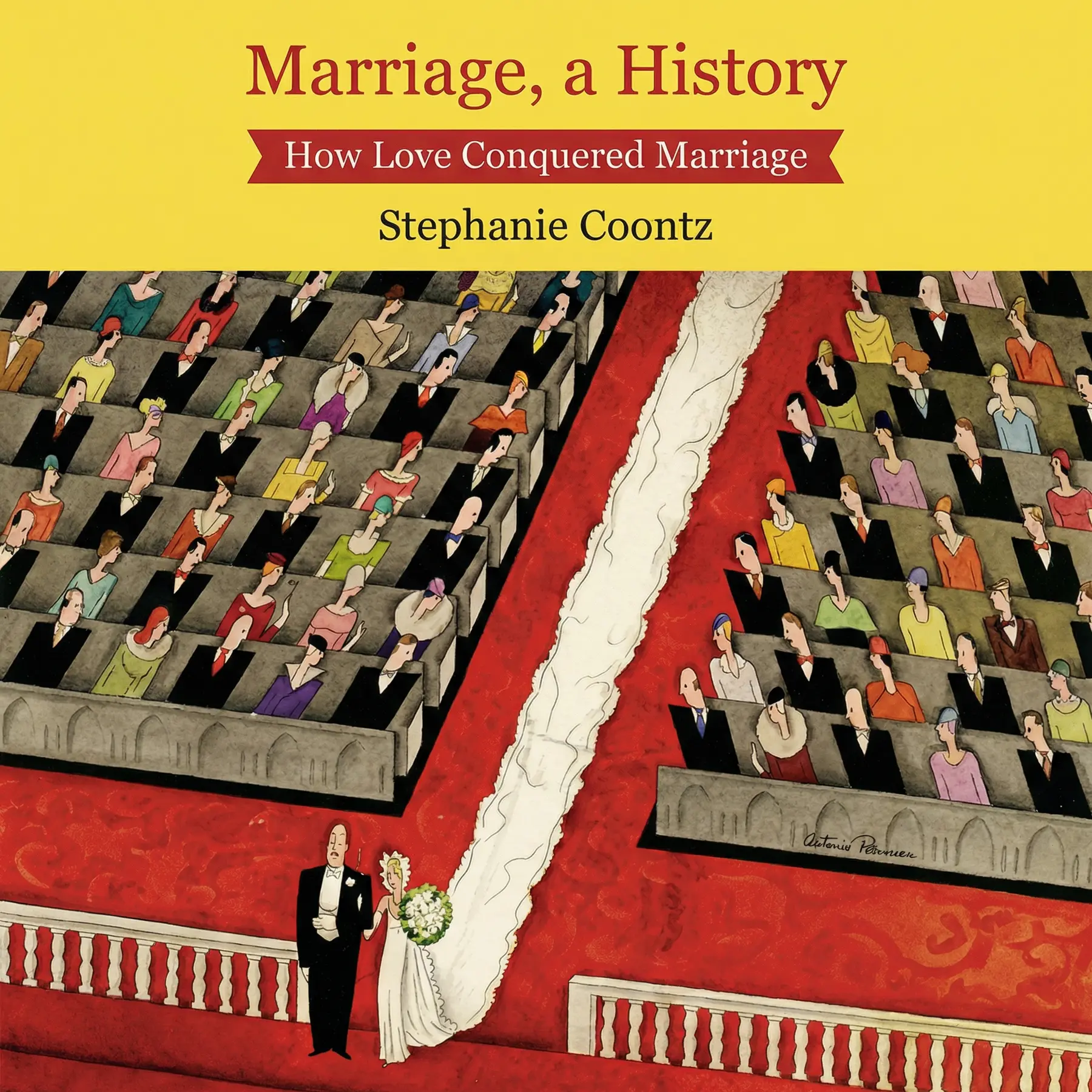
Marriage, a History: How Love Conquered Marriage
Marriage, a History investigates the surprising evolution of matrimony. Historian Stephanie Coontz explores how marriage transformed from a strategic political and economic tool into a relationship centered on romantic love and personal fulfillment.
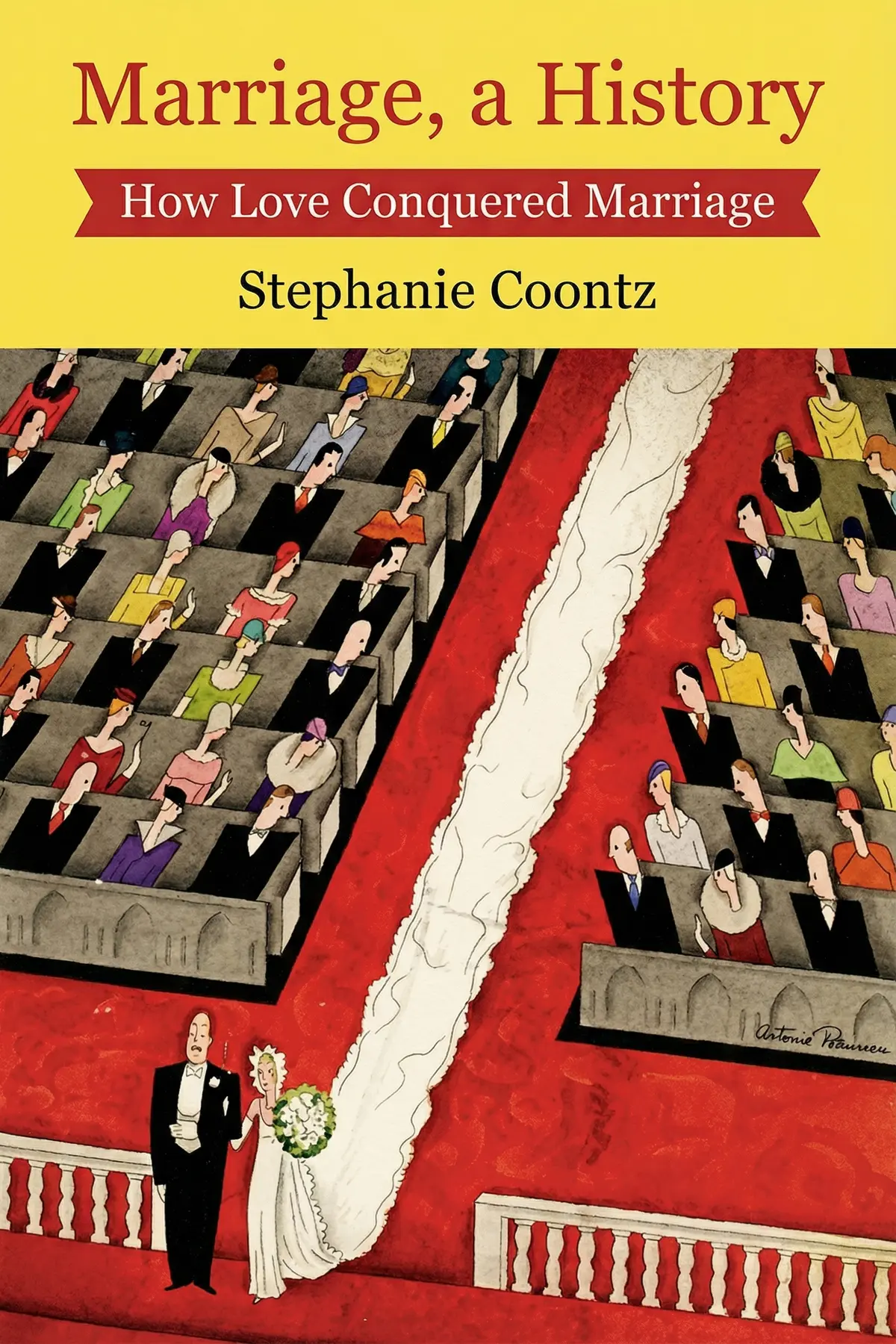
Table of Content
1. Introduction
1 min 32 sec
When we think of marriage today, we usually picture two people standing before their friends and family, declaring that they have found their soulmate. We view it as the ultimate expression of personal choice and romantic devotion. But if you were to travel back in time even a few hundred years, that concept would seem not only strange but potentially dangerous to society. For the vast majority of human history, marriage was a serious business transaction, a diplomatic treaty, or a survival strategy. It was rarely, if ever, about the feelings of the two people getting married.
In Marriage, a History, historian Stephanie Coontz peels back the layers of myth surrounding this institution. We often hear pundits and politicians lamenting the decline of ‘traditional marriage,’ but as Coontz points out, the version of marriage they are nostalgic for—the male-breadwinner model of the 1950s—was actually a historical anomaly. It was a brief moment in time that looked nothing like the thousands of years of human experience that preceded it.
In this summary, we are going to explore the fascinating and often counterintuitive journey of how we got here. We will look at how our ancestors used marriage to prevent war, how the industrial revolution broke the parental stranglehold on courtship, and why the very thing that makes modern marriage so wonderful—love—is also the thing that makes it so much more precarious than it used to be. By the end, you’ll see that the history of marriage isn’t just a story of changing laws; it’s the story of how human beings have redefined what it means to belong to one another.
2. Establishing Early Kinship
1 min 52 sec
In the ancient world, marriage was less about finding a partner and more about finding allies. Learn how our ancestors used matrimony as a tool for peace.
3. Expanding Power and Economics
2 min 05 sec
For centuries, marriage was the primary way for families to gain wealth and political influence. Discover the strange ways people secured these alliances.
4. The Impact of the Enlightenment
1 min 53 sec
The 18th century brought a radical change in thinking that prioritized individual rights. See how this intellectual revolution began to dismantle arranged marriage.
5. Victorian Paradoxes
2 min 00 sec
The Victorian era elevated the emotional bond of marriage to a religious level while simultaneously repressing physical intimacy. Explore this strange contradiction.
6. The Breadwinner Anomaly
2 min 01 sec
The 1950s are often called the golden age of marriage, but they were actually a historical exception. Find out why this era was so unique.
7. The 1970s and the Fragility of Love
2 min 13 sec
In the 1970s, the divorce rate soared as the requirements for a ‘good’ marriage changed. Learn why love is a volatile foundation for an institution.
8. The State of Modern Matrimony
1 min 56 sec
Marriage today is optional, equal, and more diverse than ever before. Explore why we still choose it despite having many other options.
9. Conclusion
1 min 50 sec
The history of marriage is a story of constant reinvention. From its origins as a way to forge peace between nomadic tribes to its current form as a voluntary bond of love, the institution has always been a reflection of our economic and social realities. As Stephanie Coontz has shown us, the ‘traditional marriage’ we often hear about is mostly a myth. There is no single, natural way for humans to organize their families. Instead, we have always been creative, adapting our most intimate relationships to help us survive and thrive in a changing world.
What does this mean for us today? It means we shouldn’t be afraid of the changes we see in modern relationships. The rise of divorce, the shift in gender roles, and the emergence of new partnership models aren’t signs of societal decay; they are signs that we are still adapting. The most important lesson from history is that marriage is most successful when it is flexible. Today, that flexibility means moving away from rigid roles and toward a model based on friendship, mutual respect, and shared goals.
As you navigate your own relationships, remember that you are part of a long lineage of people who have redefined what it means to be a family. There is no ‘right’ way to do it that is written in stone. The most ‘traditional’ thing about marriage is its ability to change. By focusing on the qualities that make any human connection strong—like empathy, communication, and commitment—we can build relationships that are not only historically unique but deeply fulfilling for the long haul. The triumph of love may have made marriage more fragile, but it has also given us the opportunity to create something truly extraordinary: a partnership of equals, chosen freely every single day.
About this book
What is this book about?
For centuries, marriage was far too important to be left to the whims of the heart. It was a mechanism for survival, a way to forge alliances between hostile groups, and a strategy for consolidating wealth and power. In this sweeping historical analysis, Stephanie Coontz takes us on a journey from the ancient world of hunter-gatherers to the radical shifts of the Enlightenment and the gendered ideals of the 1950s. By examining how and why marriage changed, the book reveals that our modern 'traditional' expectations are actually quite new. The author explains how the triumph of love as the primary reason for marriage inadvertently made the institution more fragile even as it became more rewarding. This summary provides a nuanced understanding of why modern relationships look the way they do and how we can navigate a future where marriage is no longer an economic necessity but a deeply personal choice.
Book Information
About the Author
Stephanie Coontz
Stephanie Coontz is an author, social historian, and professor at Evergreen State College. She also serves as the Director of Research and Public Education for the Council on Contemporary Families and has published several other books on family issues and gender, including The Way We Never Were.
Ratings & Reviews
Ratings at a glance
What people think
Listeners find the work both thoroughly researched and captivating, as it delivers information in a compelling manner that feels much like reading a novel. It offers an extensive look at marital customs and perspectives across the globe, and one listener points out how it follows the institution's development across many generations. They enjoy the prose and find the content instructive, with one review emphasizing its appeal for American cultural history nerds. Listeners consider the material to be stimulating, with one review calling out the concluding chapters as especially perceptive. The total length receives varying feedback from listeners.
Top reviews
Moo
Ever wonder why we think the 1950s was the "golden age" of marriage? Coontz absolutely deconstructs that notion in this brilliantly researched volume. It’s rare to find a history book that flows with the pace of a novel, but she manages to turn dry census data and legal codes into a compelling narrative of human connection. I was especially struck by how the shift from economic alliances to "love matches" actually made the institution more fragile. If you’re looking for an educational deep dive into how we got to where we are today, this is it. It’s thought-provoking and stays with you long after you close the cover. Truly, it's a must-read for anyone interested in American cultural shifts.
Show moreLuke
As a self-proclaimed history nerd, I was totally hooked by the "un-common" facts sprinkled throughout this book. Did you know women in the Middle Ages were considered the "lusty" sex? The reversal of those stereotypes in the 19th century was eye-opening. Coontz traces the evolution of marriage from a political tool to a quest for soulmates with such precision that it’s hard to argue with her conclusions. The writing style is accessible enough for a casual reader but deep enough for a classroom setting. My only real gripe is that it was published in 2005, so the section on same-sex marriage feels like a time capsule from a different era.
Show moreSureerat
Wow, just wow. I didn't think a book about the history of marriage could be this much of a page-turner! Coontz manages to debunk so many myths about the "way things used to be" that my head was spinning. The truth is, there was never a single "traditional" marriage model; it's always been a moving target shaped by money and power. The sections on the 1950s Gallup polls were particularly fascinating—women were "satisfied" but didn't want their daughters to live the same way. That contradiction says it all. If you want to understand the messy, complicated reality behind the white dress and the cake, read this book.
Show moreFelix
The myth of the "traditional" marriage is officially dead for me after reading this. Coontz provides a comprehensive overview that is both fascinating and deeply grounded in facts. It’s an educational journey that takes you from the tactical alliances of the ancient world to the self-fulfillment models of the 21st century. The writing style is punchy and direct, avoiding the jargon that usually kills academic books. Personally, I think the most important takeaway is that marriage has always adapted to survive. It’s a resilient, shifting thing, and this book captures that fluidity perfectly. A great read for anyone who loves deep dives into social history.
Show moreSarocha
Coontz has a way of making complex sociological shifts feel incredibly personal. I went into this expecting a dry academic text, but instead found an engaging exploration of how gender roles have mutated over centuries. The chapter on the Victorian era was a highlight for me, specifically how the "cult of purity" was used to control women's agency. To be fair, the book is quite long and some of the middle chapters felt like they were retreading the same ground. However, the analysis of the "marriage crisis" and how technology influenced birth control and dating is top-tier stuff. It’s an essential piece of scholarship for understanding the modern family structure.
Show moreSavannah
Finally finished this beast of a book, and the last three chapters alone make it worth the price of admission. While the early history of Roman and Greek unions was interesting, Coontz really hits her stride when she moves into the 20th century. The transition from history into sociology and psychology felt like a natural evolution of the topic. Look, the data on how economic inequality affects marital stability in low-income communities was heartbreakingly relevant. It really challenged my assumptions about why people choose not to marry today. It’s an educational read that forces you to question what we consider "traditional."
Show morePlernpiriya
I picked this up after a friend recommended it, and I'm glad I took the plunge. The way Coontz links the feminist movement and the invention of the pill to the "de-institutionalization" of marriage is masterfully done. It’s not just a list of dates; it’s an emotional and economic history of how we relate to one another. Not gonna lie, some of the legal history in the middle ages was a bit dense, but the payoff in the later chapters is huge. It really helped me understand why my own views on commitment are so different from my grandmother’s. A truly comprehensive and insightful look at a complex topic.
Show moreIvan
While I appreciate the sheer amount of effort that went into these 100 pages of references, the book is frustratingly Western-centric. The author mentions other cultures briefly in the intro, but then spends the rest of the time focused almost exclusively on Europe and North America. It felt like a bait-and-switch for someone looking for a truly global history of the institution. Frankly, calling it a "history of marriage" without more than a passing glance at Asian or African traditions feels a bit narrow. That said, the breakdown of how the Enlightenment changed marital expectations was insightful. It's a solid 3-star read for what it covers, even if it leaves out a huge chunk of the world.
Show moreNongnuch
The scholarship here is undeniable, but the book is starting to show its age. Reading a 2005 perspective on "contemporary" marriage in 2024 feels a bit like looking through a foggy window. There is so much that has changed regarding legal rights and societal acceptance that Coontz couldn't have predicted. Also, the lack of attention given to non-heterosexual unions is a glaring omission by today's standards. In my experience, the first few chapters are the strongest, but the narrative loses steam once it hits the industrial revolution. It’s still a valuable resource for American cultural history, but I’d love to see a modernized, more inclusive update.
Show moreKomsan
This felt like a slog, to be perfectly honest. I know people rave about how well-researched it is, but for me, it was just too much undigested information. I found myself skimming the middle sections because the "and then this happened" structure became very repetitive. If you aren't already obsessed with the history of the family, you might find the 400+ pages a bit daunting. I was hoping for more cross-cultural analysis, but it stayed very white and Western. It’s definitely a one-stop-shop for researchers, but as a general read, it didn't spark much joy or interest for me. I respect the work, but I didn't enjoy the experience.
Show moreReaders also enjoyed
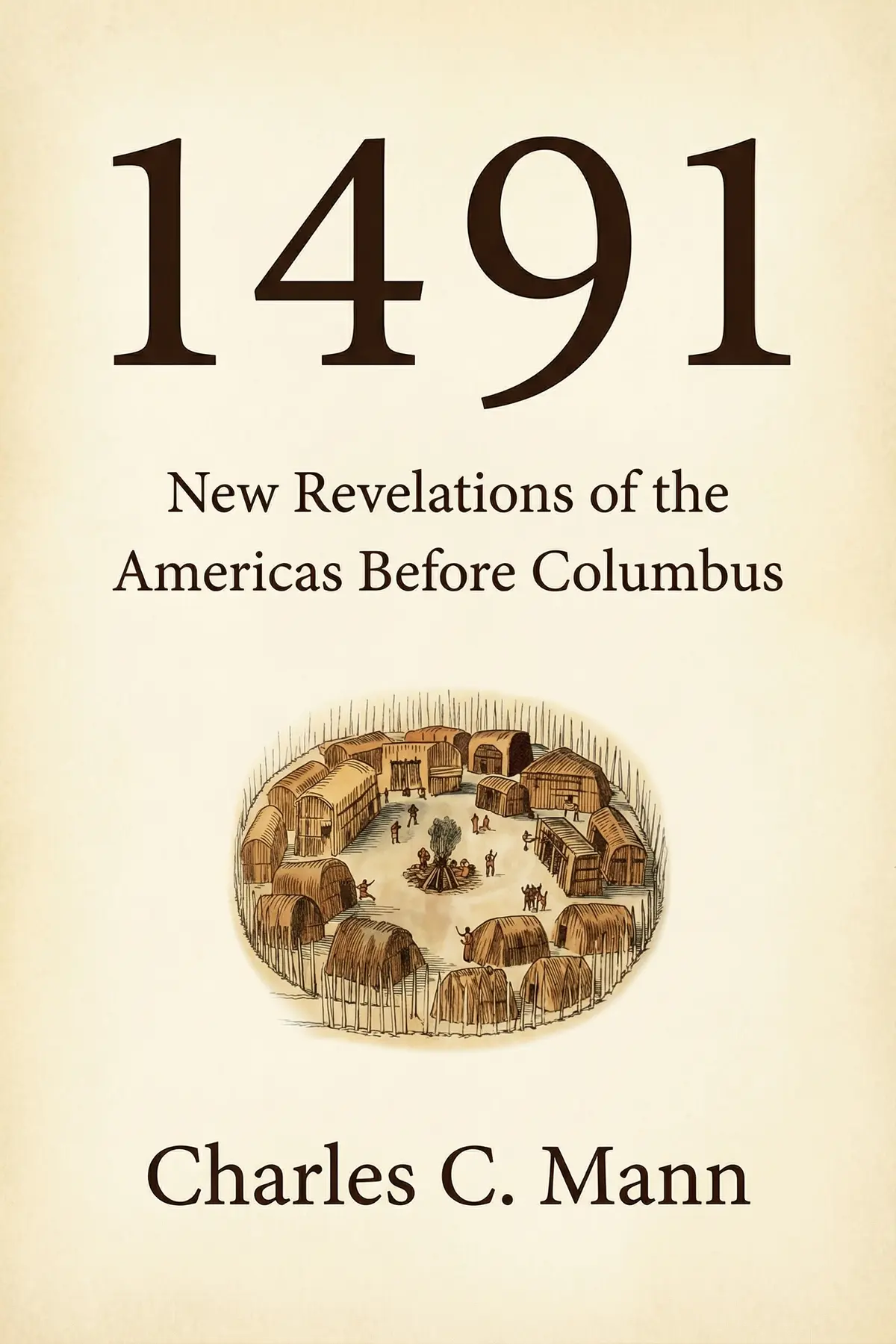
1491: New Revelations of the Americas Before Columbus
Charles C. Mann
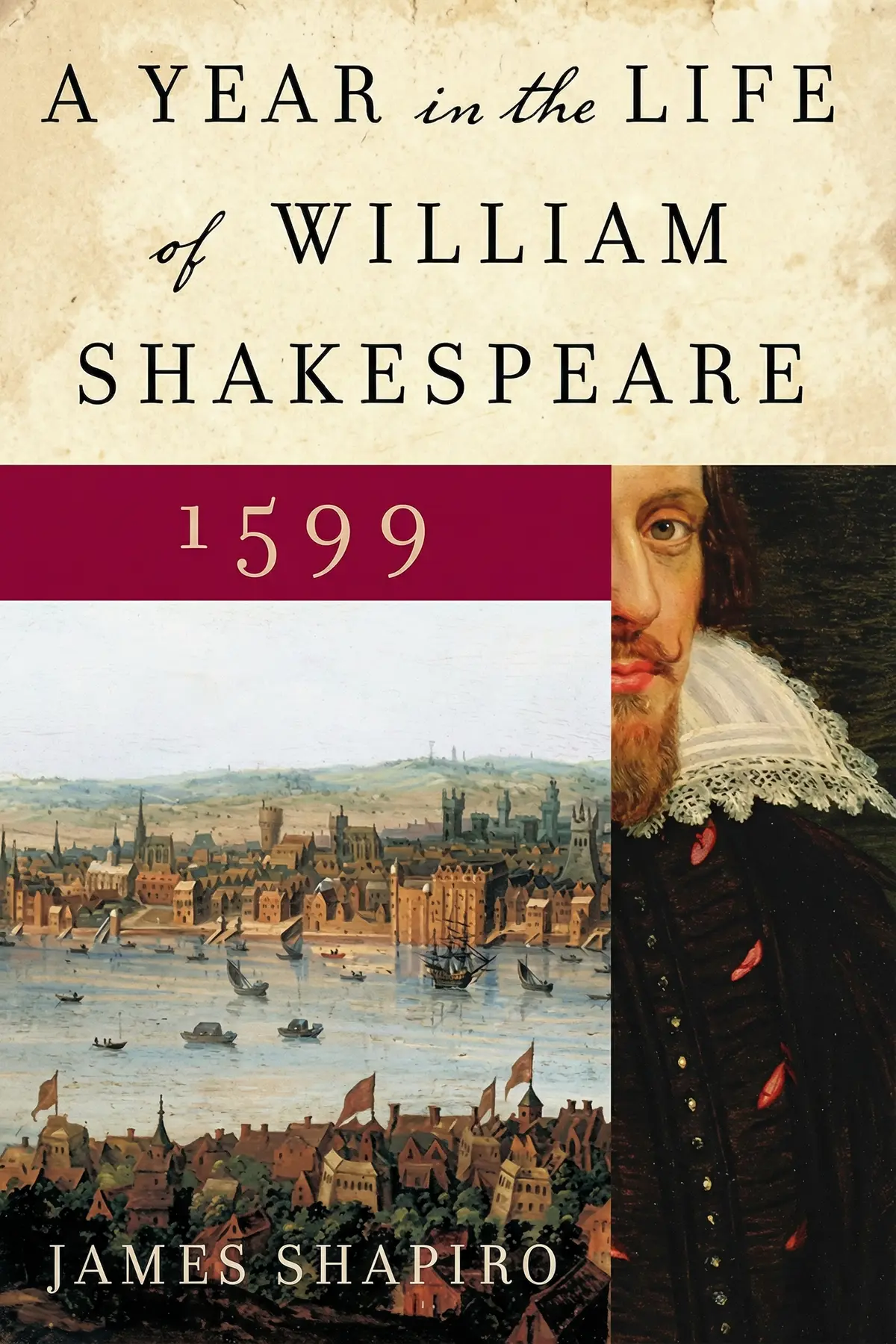
A Year in the Life of William Shakespeare: 1599
James Shapiro
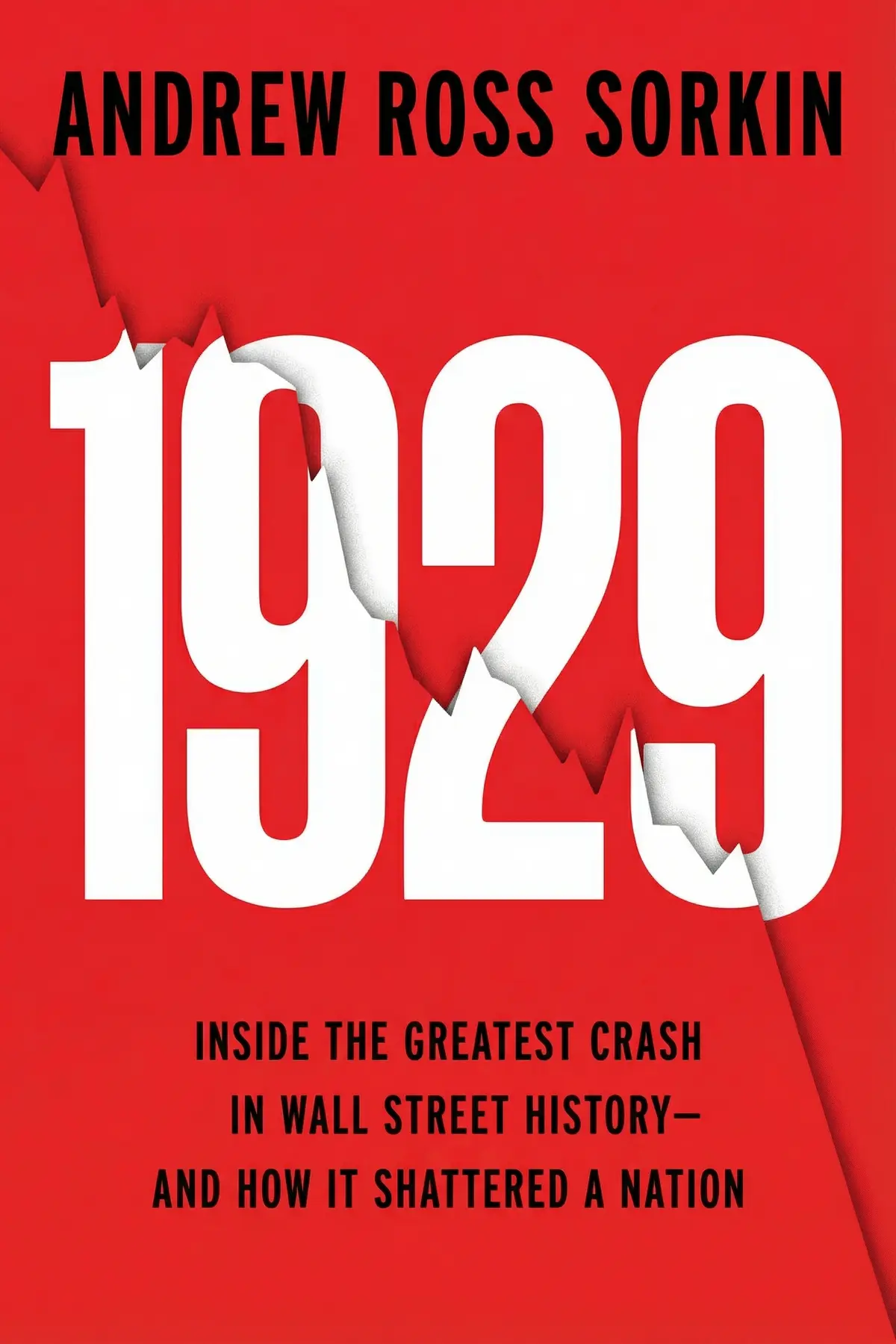
1929: Inside the Greatest Crash in Wall Street History--and How It
Andrew Ross Sorkin
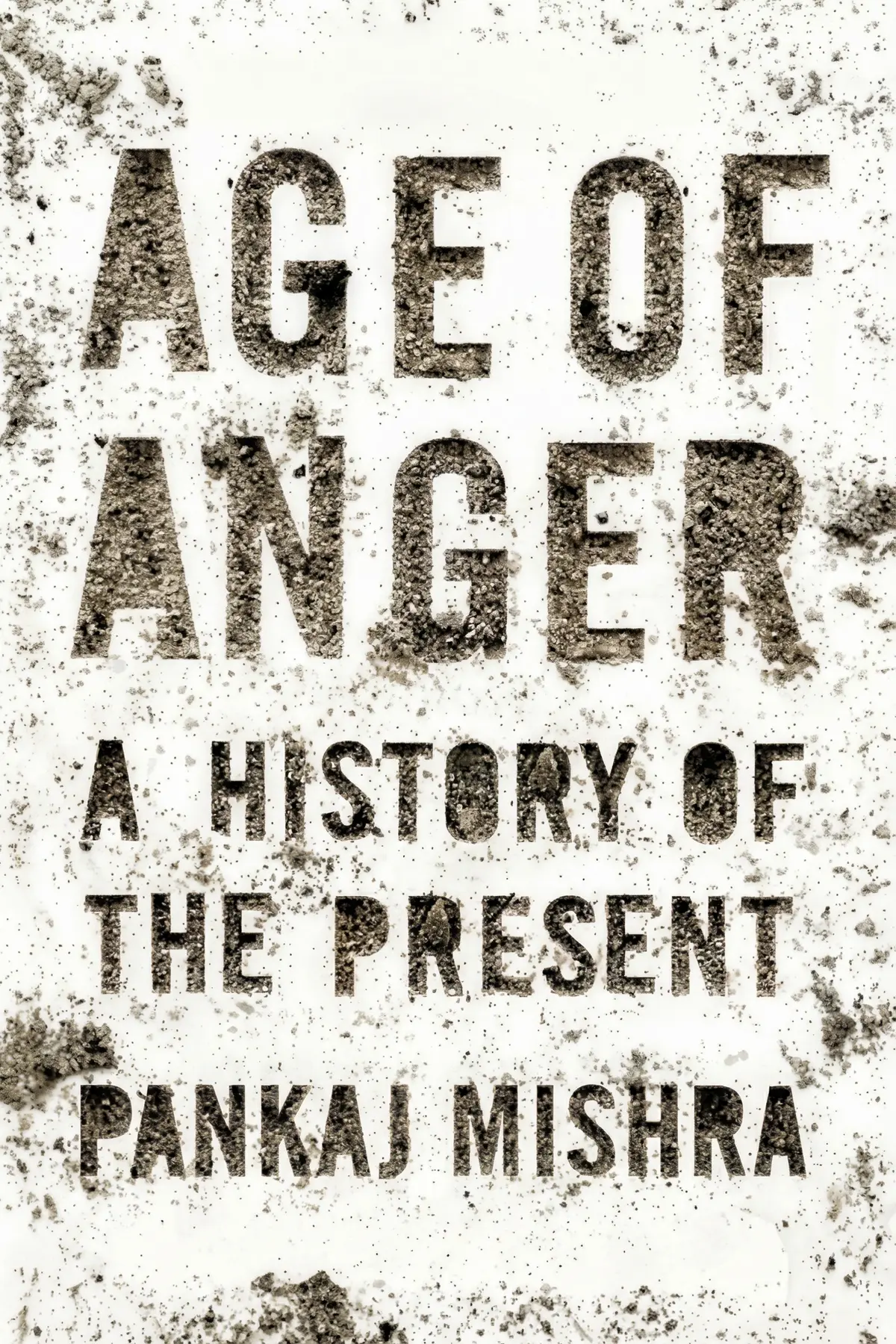
Age of Anger: A History of the Present
Pankaj Mishra

A Biography of Loneliness: The History of an Emotion
Fay Bound Alberti
Agent Sonya: The Spy Next Door
Ben Macintyre
Alexander Hamilton
Ron Chernow
AUDIO SUMMARY AVAILABLE
Listen to Marriage, a History in 15 minutes
Get the key ideas from Marriage, a History by Stephanie Coontz, plus 5,000+ more titles in English and Thai.
- 5,000+ titles
- Listen as much as you want
- 7-day free trial
- Cancel anytime







