

21 min 01 sec
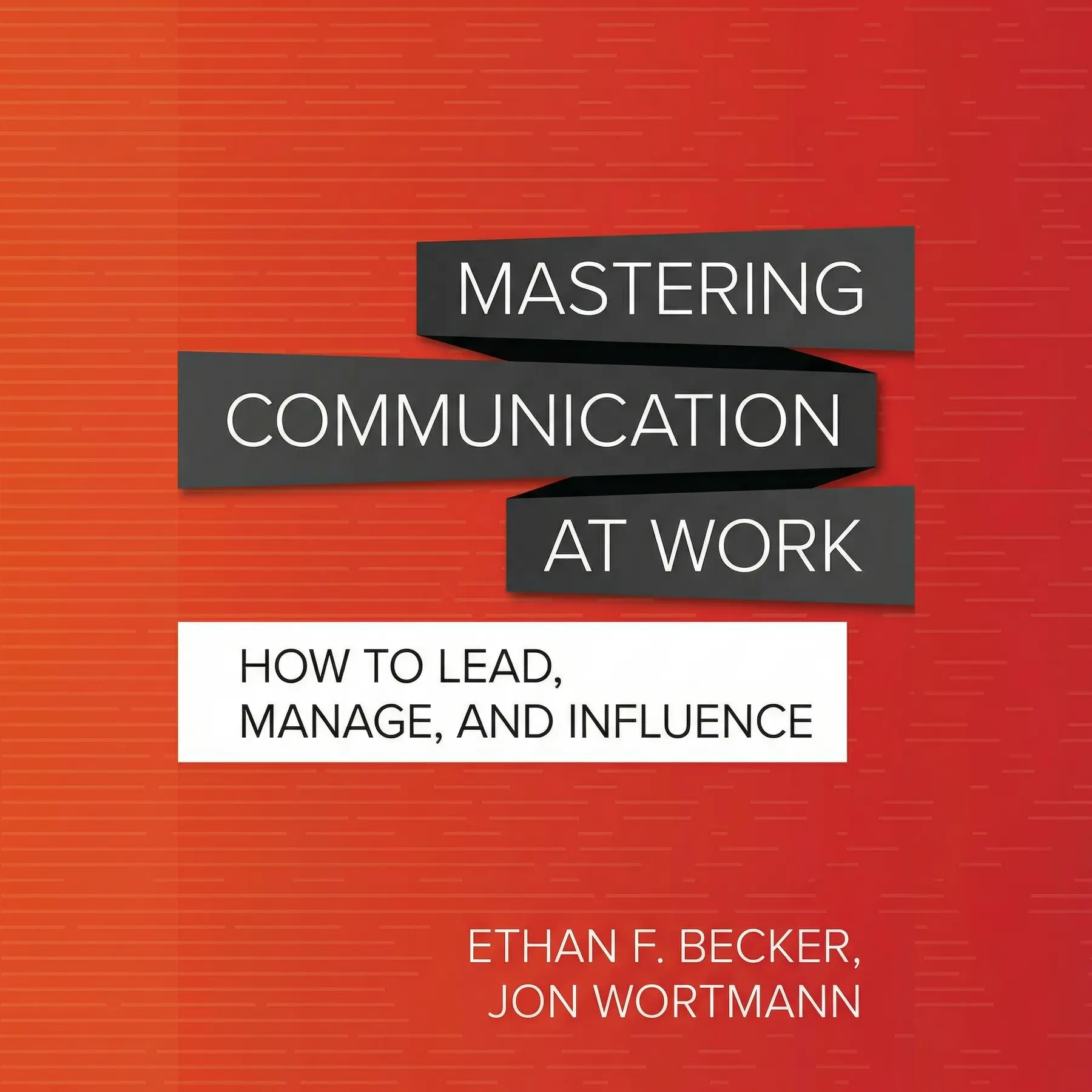
Mastering Communication at Work: How to Lead, Manage, and Influence
A comprehensive guide to enhancing professional influence and leadership through strategic communication. This work provides actionable techniques for tailoring messages to different personality types and fostering a collaborative organizational culture.
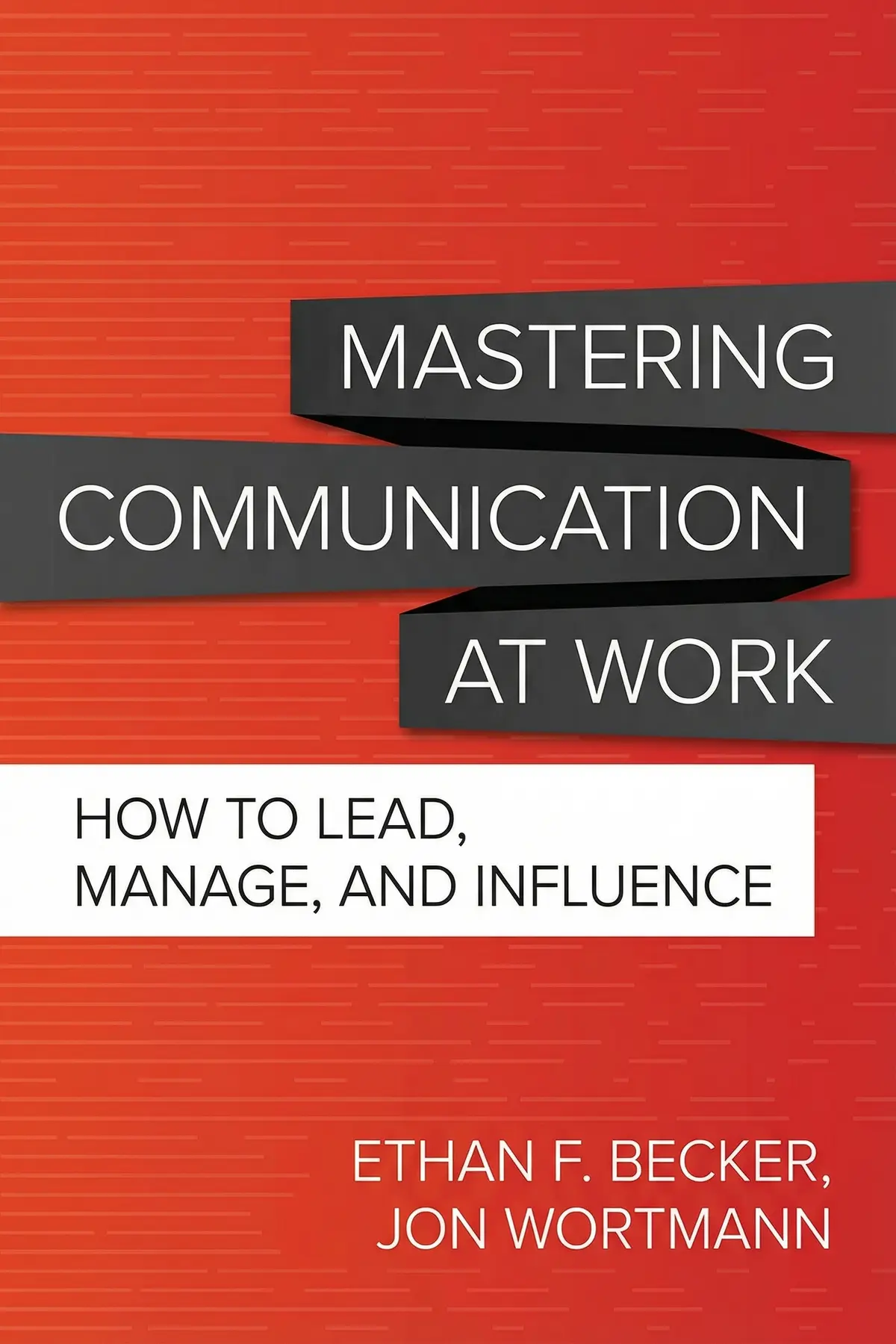
Table of Content
1. Introduction
1 min 37 sec
Communication is the invisible thread that holds every organization together. Think about the variety of people you encounter in a single day at the office. You have the high-level executives who are constantly under pressure to deliver bottom-line results, the middle managers trying to balance corporate goals with team morale, and the new hires who are just beginning to find their feet. Despite their different backgrounds and objectives, every single one of these individuals relies on the same core tool to get things done: the ability to share information and influence others.
Many of us assume that if we are speaking clearly and our grammar is correct, we are communicating well. However, true mastery of workplace communication goes much deeper than that. It is not just about what you say; it is about how the other person perceives it. If your message does not land correctly, or if it causes friction instead of clarity, then the communication has failed, regardless of your intentions. This is why learning to navigate the complexities of human interaction is arguably the most important skill you can develop in your career.
In the following discussion, we will explore the essential strategies for becoming a high-level communicator. We will look at why some people need the ‘big picture’ first while others need context. We will delve into the concept of professional credibility and how it dictates your influence. We will also examine the psychological triggers that motivate different team members and how to use your voice—literally—to command attention. By the end, you will have a roadmap for tailoring your approach to any audience, ensuring that your ideas are not just heard, but acted upon.
2. Tailoring Your Approach to Thinking Styles
2 min 28 sec
Discover why some colleagues get frustrated by details while others feel lost without them, and learn how to adjust your delivery to match their mental preferences.
3. The Fluid Nature of Professional Ethos
2 min 46 sec
Credibility isn’t a permanent trait; it’s a dynamic perception that shifts based on your performance, appearance, and the specific situation at hand.
4. Unlocking Motivation Through the 3x3 Matrix
2 min 39 sec
Learn to identify the unique combination of factors that drive each team member, moving beyond a one-size-fits-all approach to inspiration.
5. The Art of Strategic Framing
2 min 47 sec
Master the ability to package your message so that it aligns with your audience’s values and expectations, ensuring your ideas receive a fair hearing.
6. Validation as a Leadership Tool
2 min 24 sec
Explore why validating a colleague’s perspective is the most effective way to lower defenses and build trust, even when you don’t agree with their stance.
7. Mastering the Color and Delivery of Your Voice
2 min 31 sec
Your physical delivery—speed, volume, and inflection—can change the meaning of your words entirely. Learn to use these elements to project confidence and authority.
8. Fostering a Culture of Professional Communication
2 min 33 sec
Examine how top organizations treat communication as a core business strategy and discover ways to maintain high-level interactions in a hybrid world.
9. Conclusion
1 min 16 sec
Mastering communication at work is an ongoing journey that requires both self-awareness and a deep curiosity about the people around you. We have seen that the most effective professionals are those who can shift their style to meet the needs of their audience, whether they are dealing with a deductive thinker who wants the facts fast or an inductive thinker who needs the full story. By maintaining your professional ethos and understanding the complex matrix of human motivation, you can inspire your team and influence your peers with greater ease.
Remember that framing your message and providing validation are not just ‘tricks’ for getting what you want; they are the building blocks of a respectful and productive workplace. When you use your voice with intention and treat communication as a vital hard skill, you set yourself apart as a true leader. The final, most actionable step you can take today is to start paying attention to the ‘language of the room.’ Watch for the words and phrases that your most successful colleagues use. More importantly, listen to how people respond to you. If you start to hear your own framing and vocabulary being reflected back to you by your team, you will know that your message is truly hitting the mark. Communication is the bridge to your career goals; build it with care, and there is no limit to where it can take you.
About this book
What is this book about?
Mastering Communication at Work addresses the common hurdles professionals face when trying to convey ideas, lead teams, or influence decision-makers. The book posits that effective communication is not an innate talent but a disciplined skill set that can be mastered through practice and awareness. It moves beyond simple public speaking tips to explore the psychological underpinnings of how people process information and what drives their workplace behavior. The core promise of the book is to transform the reader into a versatile communicator capable of navigating any corporate situation. It introduces concepts like the distinction between deductive and inductive thinkers, the importance of maintaining professional credibility, or ethos, and the strategic use of validation to resolve conflict. By understanding these frameworks, leaders and employees alike can bridge the gap between their intentions and how their messages are actually received, ultimately driving better results and building more resilient professional relationships.
Book Information
About the Author
Ethan F. Becker
Ethan F. Becker serves as the president and senior coach at the Speech Improvement Company. Throughout his career, he has provided high-level training and consulting for global organizations including Apple, IBM, and the FBI. Jon Wortmann is an experienced executive coach, speaker, and trainer. His consulting expertise spans a wide range of organizations, from Fortune 500 companies to various nonprofit entities.
Ratings & Reviews
Ratings at a glance
What people think
Listeners find the communication strategies in this guide helpful for improving their grasp of everyday interaction styles. The writing is also succinct and easy to understand, with one listener pointing out the authors’ effective breakdown of the root causes of communication conflicts.
Top reviews
Ava
Finally got around to reading this after a colleague recommended it, and I am genuinely impressed by the clarity of the writing. This book isn't just about talking; it's about the psychology of influence and how to ethically motivate people to take action. The chapter on active listening was a standout for me because it went beyond the usual 'nod and smile' advice and looked at how to structure messages for maximum impact. In my experience, most workplace friction comes from people not knowing how to match their listener’s motivation. Whether you are dealing with a boss who cares only about money or a peer driven by emotion, this book gives you the tools to bridge that gap. The real-world examples from successful business leaders add a layer of credibility that many other self-help books lack. It is concise, clear, and focused on professional success. I expect to go back to this handbook often whenever I am preparing for a high-stakes presentation.
Show moreAnthony
As a recent graduate entering the corporate world, this was exactly the kind of roadmap I needed. It is easy to feel like you are drowning in unwritten rules during your first few months. However, the authors break down complex interactions into manageable steps. I particularly enjoyed the section on 'managing your ethos,' which is basically building credibility when you have not been in the room long. Some advice regarding how to speak to colleagues felt a bit scripted—almost like a manual for robots—but the underlying theories are sound. Truth is, if you follow these tips to the letter, you might look like a total noob who just finished a seminar. But the breakdown of inductive versus deductive communication styles really helped me understand why my boss gets so frustrated when I don't get to the point quickly enough. It is a solid primer for anyone who feels clueless about workplace politics.
Show moreAnong
Ever wonder why your best ideas get ignored in meetings while others seem to coast on charisma? Becker and Wortmann argue that it is all about the 'frame' you put around your message, and I have to say, their logic is hard to argue with. I have started implementing the 'validation' technique during difficult conversations with my team, and the change in atmosphere is palpable. Instead of people talking at each other, we are actually communicating with a purpose. The authors do a great job of explaining the root causes of communication conflict, which helped me realize how my own nonverbal cues were undermining my authority. My only real complaint is that some of the sections on 'adding color' felt a bit like acting lessons. Not everyone is going to be comfortable varying their volume and stress in the middle of a budget report. Still, for a business book, it is remarkably readable and filled with actionable steps that actually work.
Show moreChloe
Learning how to 'frame' a message was a lightbulb moment for me. We all think we are being clear, but this book shows how easily our intent can get lost if we don't set the stage correctly for our audience. The authors focus on six key techniques, and while I don't think they are all equally important, the cumulative effect is a much more polished professional presence. The sections on nonverbal communication and tone of voice were particularly eye-opening. I never realized how much my speed and inflection were affecting how people perceived my confidence levels. Not gonna lie, some of the role-play scenarios in the book are a bit cringeworthy and would probably make you look silly if you tried them verbatim in the breakroom. But if you take the core principles and adapt them to your own personality, they are incredibly effective. It is a practical guide that emphasizes purposeful interactions over just talking for the sake of it.
Show moreYulia
Becker and Wortmann have put together a concise handbook that focuses on the psychology behind why people react the way they do in professional settings. As someone who has always struggled with 'people skills,' I appreciated the structured approach they took to explaining empathy and validation. The book doesn't just tell you to be a better communicator; it gives you the specific tools to build stronger relationships with your colleagues. I found the discussion on how to handle difficult conversations particularly helpful, especially the framework for staying calm and constructive when things get heated. Look, some of the writing is a bit dry, and the authors can be a bit repetitive with their 'match your listener' mantra. But the core message—that effective communication is the cornerstone of leadership—is something every professional needs to hear. It is a worthwhile addition to your library if you want to understand the 'why' behind successful workplace interactions.
Show moreLandon
This book functions more like a toolkit than a narrative, which is perfect for someone like me who prefers to dip in and out of chapters as needed. I have read a few books on communication at this point, but this one stands out for its focus on the 'ethos' of the speaker. It is not just what you say, but the credibility you bring to the table. The authors provide a wealth of real-world examples from various industries, which helps to ground the theories in reality. I did find the constant shifting between pronouns a bit distracting, and at times the advice felt like it was trying too hard to be 'business-casual.' Despite that, the chapter on speaking to motivate was fantastic and changed how I approach my weekly team meetings. If you can get past the occasional unsuitable metaphor, the strategies for enhancing influence are top-notch. It is a practical guide designed for anyone looking to step up their game.
Show moreSaengdao
To be fair, I did not agree with every single conclusion the authors made regarding 'adding color' to my speech, but the overall framework is incredibly helpful. The idea that you should adapt your style based on whether your listener is inductive or deductive has completely changed my approach to email. No more long-winded explanations for my boss who just wants the bottom line! The book is very readable and provides a lot of simple perspectives for those of us who were not born with natural charisma. While some might find the advice a bit basic, there is a lot of value in the way they explain how to prevent misunderstandings before they start. It is about building a culture of communication, not just winning an argument. Some parts are definitely better suited for a classroom setting than a real office, but I have already seen a positive reaction from my peers after trying out a few of the framing techniques.
Show moreWaree
The core concept of matching your listener’s style—either inductive or deductive—is definitely the book's strongest selling point. It makes so much sense when you see it on paper. Unfortunately, applying it in real-time during a high-stress meeting is a completely different animal. My main gripe with the text is the writing style; the authors constantly switch between 'he' and 'she' in their examples, sometimes even within the same paragraph. It is incredibly jarring and made several sections much more confusing than they needed to be. Additionally, a lot of the metaphors used to explain effective communication felt forced or just plain trite. While there are some really good tips here, the piece-meal approach to communication feels a bit disjointed. If you can ignore the clunky prose, there is value to be found in the chapters on framing and validation. It is a decent book for your arsenal, but certainly not the definitive guide.
Show moreOrathai
There is some solid gold buried in these chapters, though you have to wade through a fair amount of corporate fluff to find it. The book provides simple perspectives for the clueless, making it a decent choice for someone transitioning into their first management role. However, it is hard to ignore the tritely worded suggestions that pop up every few pages. Some of the advice is just not practical in a modern, fast-paced work environment where you don't always have time to 'add color' or 'manage your ethos' before every single interaction. I also found the 'Most Important Chapter' at the end to be the least impactful part of the entire book, which was a bit of a letdown. To be fair, the techniques for identifying whether someone is an inductive or deductive thinker are very useful. Use what works for you and discard the rest. It is a good book to have in the rotation, but it isn't quite the masterpiece the title suggests.
Show moreDream
Maybe I am just too far along in my career, but this felt incredibly vapid and elementary. I picked this up hoping for some advanced strategies on executive presence, but instead, I got advice that felt like it was plucked from a basic HR brochure. The tone of the book is also quite bizarre; there is a recurring pattern where negative examples seem to disproportionately use female pronouns while positive examples use male ones. It might be unintentional, but it certainly left a bad taste in my mouth. Frankly, the advice is so common-sense that I feel a bit ripped off even though I found a used copy. Most of these 'mastering' techniques are just basic social skills repackaged as revolutionary business secrets. If you have never had a job before, you might learn something. For anyone else, it is mostly just a collection of unsuitable metaphors and impractical suggestions that will not survive a real-world office environment.
Show moreReaders also enjoyed
A Year with Peter Drucker: 52 Weeks of Coaching for Leadership Effectiveness
Joseph A. Maciariello


Acting with Power: Why We Are More Powerful Than We Believe
Deborah Gruenfeld

AUDIO SUMMARY AVAILABLE
Listen to Mastering Communication at Work in 15 minutes
Get the key ideas from Mastering Communication at Work by Ethan F. Becker, plus 5,000+ more titles in English and Thai.
- 5,000+ titles
- Listen as much as you want
- 7-day free trial
- Cancel anytime







