
11 min 15 sec
May Contain Lies: How Stories, Stats, and Studies Exploit Our Biases
By Alex Edmans
Discover how cognitive biases like confirmation bias and black-and-white thinking distort our reality. This summary provides practical tools to evaluate data, challenge your preconceptions, and make better decisions in an information-heavy world.
Table of Content
1. Introduction
1 min 20 sec
In our modern world, we are essentially swimming in a sea of data. Every time we open our phones or turn on the news, we are hit with a relentless stream of evidence, facts, and expert opinions. It feels like we have all the tools necessary to make perfect decisions, yet many of us feel more confused and polarized than ever. The throughline of this exploration is a simple but uncomfortable reality: our brains are not naturally designed to find the objective truth; they are designed to find information that makes us feel safe and correct.
To navigate this landscape, we have to look inward. We need to understand that the information we encounter is often filtered through our own psychological tendencies before we even have a chance to analyze it. This isn’t just about spotting a fake news story or identifying a liar. It’s about recognizing the subtle ways that even legitimate studies and real statistics can be presented—and interpreted—in ways that lead us away from the truth. Over the course of this summary, we will break down the mental traps we all fall into, the flaws in how data is often presented as ‘proof,’ and most importantly, the practical steps you can take to rebuild your critical thinking skills. By the end, you’ll have a roadmap for thriving in a world where the truth is often hidden behind layers of bias and simplification.
2. The Filters of the Mind
2 min 18 sec
Uncover the psychological mechanisms that lead us to embrace convenient truths while dismissing any evidence that challenges our worldview.
3. The Deception of Definitive Proof
2 min 16 sec
Learn to look past the headlines and understand why data is often misrepresented or stripped of its vital context.
4. Rigorous Thinking in a Post-Truth Era
1 min 59 sec
Discover practical strategies to vet information, leverage the power of peer review, and engage with opposing viewpoints.
5. The Ethics of Information Sharing
1 min 55 sec
Reflect on our collective responsibility to halt the spread of misinformation and improve the quality of public discourse.
6. Conclusion
1 min 27 sec
As we wrap up this exploration of how lies and biases shape our world, the most important takeaway is that truth is a process, not a destination. It requires constant effort, a willingness to be wrong, and the courage to look past simple answers. We’ve seen how our own psychological makeup—specifically our tendency toward confirmation and binary thinking—makes us easy targets for misinformation. We’ve also seen how the ‘proof’ we are often presented with is frequently stripped of its context and nuance.
But we are not helpless. By adopting the habits of critical thinking—seeking out opposing views, prioritizing systematic reviews over single studies, and taking personal responsibility for what we share—we can insulate ourselves from the worst effects of deception. This shift in mindset is powerful. It allows us to move through the world with a sense of calm and clarity, even when the information landscape is chaotic.
Ultimately, the fight against misinformation starts with a single question: ‘Could I be wrong about this?’ If you can ask that question honestly, you are already ahead of the curve. Carry this skepticism and curiosity with you into your professional life, your personal relationships, and your civic engagements. By doing so, you don’t just protect yourself; you help create a more informed, rational, and trustworthy world for everyone.
About this book
What is this book about?
We live in an era where information is more accessible than ever, yet the truth feels increasingly elusive. Every day, we are confronted with headlines, statistics, and scientific studies that claim to offer definitive proof for one side of a debate or another. But how much of what we consume is actually true, and how much is carefully curated to exploit our psychological vulnerabilities? This exploration into the mechanics of deception and self-delusion reveals that the problem isn't just with the people providing the information; it’s with how our own minds are wired to receive it. By examining the 'twin biases' that cloud our judgment—confirmation bias and black-and-white thinking—we can begin to see the world with greater clarity. You will learn why we are so prone to accepting convenient lies, why data often fails to tell the full story, and how to develop a rigorous, critical mindset. The promise of this journey is not just a sharper intellect, but a more responsible and informed way of existing in a complex, post-truth society. It is about moving beyond the surface level of 'facts' to understand the context and nuance that define real knowledge.
Book Information
About the Author
Alex Edmans
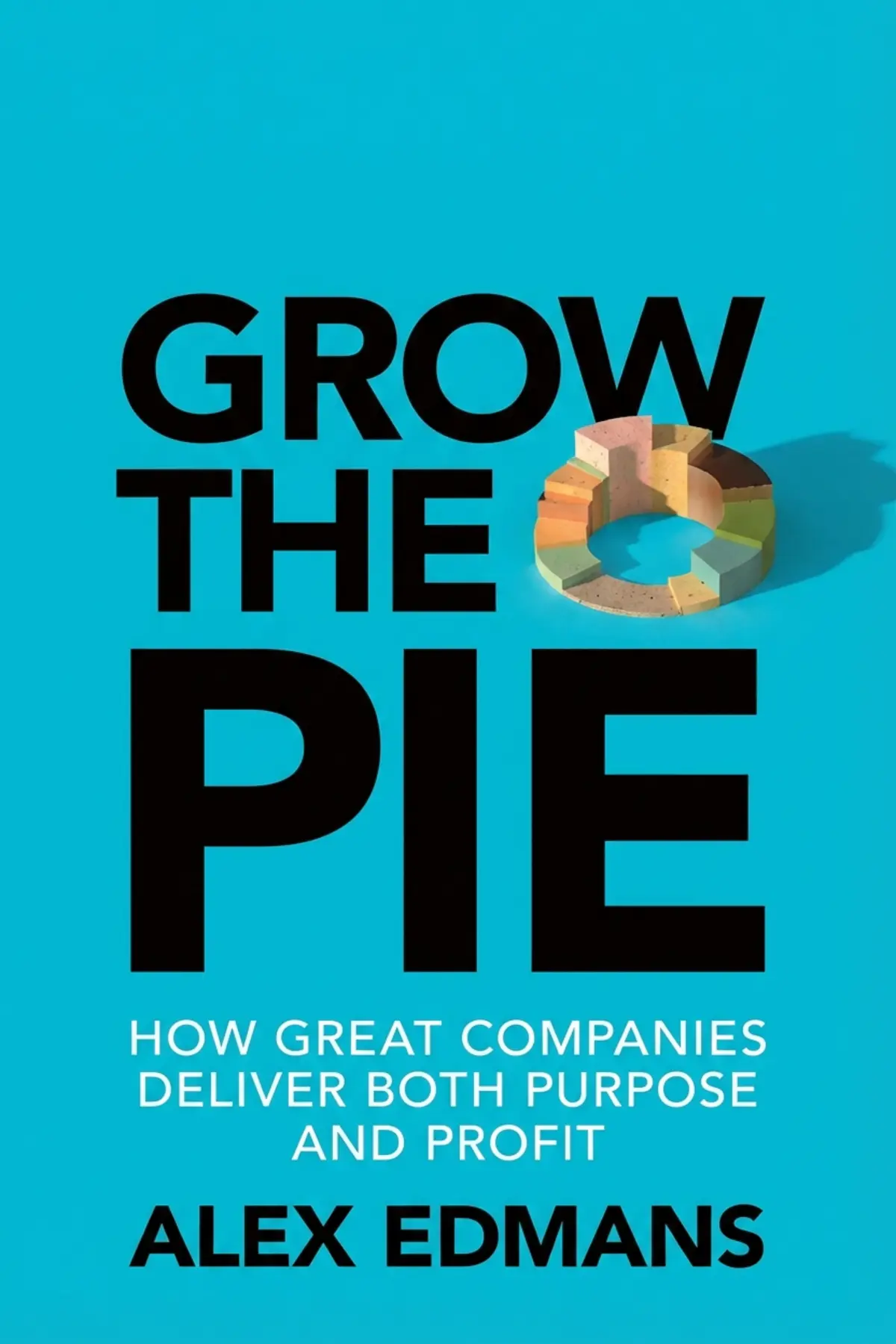
Alex Edmans is a highly respected academic and intellectual, serving as a professor at London Business School and a Fellow of the Academy of Social Sciences. His excellence in teaching was recognized in 2021 when he was named Poets and Quants’ MBA Professor of the Year. Beyond the classroom, Edmans is an influential voice in global finance and management, contributing regularly to major publications such as the Wall Street Journal, Harvard Business Review, and the Financial Times. His previous work, Grow the Pie, was featured on the Financial Times’ Book of the Year list in 2020.
Ratings & Reviews
Ratings at a glance
What people think
Listeners find the book does an excellent job of clarifying difficult topics and sharing practical methods for identifying misinformation. They also value its accessible style and how it encourages deep thinking to sharpen analytical abilities. Nevertheless, feedback regarding the writing quality is varied.
Top reviews
Bam
The concept of the 'Ladder of Misinference' is worth the price of admission alone. Edmans does an incredible job of showing how even 100% accurate facts can be weaponized to lead us to the wrong conclusions. I loved the breakdown of how we move from data to actual evidence, then finally to proof. It’s written in a way that feels very accessible, even if you don't have a background in finance or statistics. The summaries at the end of each chapter really helped me consolidate what I was learning. To be fair, some of the examples about the 'shades of grey' (moderate vs granular vs marbled) got a little bit dense, but the overall message is powerful. It’s rare to find a book that actually provides a 'Checklist for Thinking Smarter' that you can use in your daily life. This is essential reading for anyone trying to navigate the noise of modern social media.
Show moreSofia
Picked this up after seeing it mentioned in a WEF report and it lived up to the hype. Having just finished my MBA, I really wish this had been on the curriculum earlier. Edmans manages to simplify incredibly complex statistical pitfalls into something digestible. The way he identifies the move from 'statement' to 'fact' and eventually to 'proof' is masterfully explained. I specifically liked how he didn't just list a hundred different psychological biases, but focused on the big ones like confirmation bias and black-and-white thinking. The tone is smart and authoritative without being overly dry. It’s one of those books that sticks in the back of your mind and makes you pause before you hit 'share' on a sensationalist article. It’s a vital tool for anyone who wants to sharpen their critical thinking skills in an age where misinformation is the top global risk.
Show moreSomchai
Truth is, I’ve been feeling a lot of unease since finishing this last month. It’s one of those books that lingers. Every time I see a stat on the news now, I hear Edmans' voice in my head asking if it’s actually 'evidence' or just a 'statement.' The way he deconstructs popular science books and media reports is both brilliant and a little bit depressing. You realize how much of what we 'know' is built on shaky foundations. I loved the section on how to encourage diversity of thought without falling into the trap of polarization. It’s a masterclass in critical thinking. Even though I don't have a background in statistics, I never felt lost, which is a testament to the writing quality. It’s definitely changed the way I perceive the world and the information I allow to influence my decisions. Truly a 5-star experience.
Show moreRafael
Edmans manages to translate dense economic and statistical concepts into something the average person can actually use. This isn't just a book about 'fake news'; it’s a deep dive into how we deceive ourselves. The structure is very logical, moving from the biases we hold to the framework of the 'Ladder of Misinference.' I especially appreciated the 'Checklist for Smarter Thinking' in the appendix. While some reviewers think it’s too much work, I think it’s a necessary discipline in today's world. The book is full of easily digestible concepts and handy tips that genuinely improve your ability to spot misinformation. Whether you're a student, a business leader, or just someone tired of being misled by headlines, this book is an essential addition to your shelf. It’s masterfully written and incredibly timely.
Show moreMoo
Ever wonder if the 'facts' you see on LinkedIn are actually just manipulated data? This book tackles that head-on. Edmans is an economist, and that perspective definitely shines through, especially when he discusses corporate performance and share prices. I found the section on confirmation bias to be the most impactful part of the whole read. He uses great real-world examples, like the takedown of the Matthew Walker sleep study, which I actually found quite shocking since I’d previously taken that book as gospel. My only gripe is that the 'Checklist for Smart Thinking' feels a bit overwhelming for a casual reader. There are 17 questions to ask yourself, which isn't always feasible when you're just scrolling through the news on your morning commute. Still, it’s a very illuminating read that I’d recommend to anyone who wants to be more critical of the information they consume.
Show morePrayoon
Look, any book that takes a swing at Malcolm Gladwell’s storytelling-over-substance approach has my attention immediately. Edmans does a great job of dismantling how 'science' is often packaged into neat, viral narratives that don't actually hold up under scrutiny. I found the technical sections on 'instruments' and 'randomness' a bit clunky, but the overall message about challenging our innate biases is so necessary right now. The writing is generally very clear, and he uses a variety of examples from medicine to prison reform to keep things interesting. I did feel that he occasionally oversimplified the ease of checking scholarly publications—most people don't have access to those journals! However, the four shortcuts he provides at the end are much more manageable than the full checklist. It’s a solid 4-star read that really makes you question your own assumptions.
Show moreSawit
Wow, this was a real eye-opener, particularly regarding the way information is presented to us. I listened to the audiobook version, which the author narrates himself. He has this very posh, intelligent British accent that makes the material feel very engaging and easy to follow. The core of the book is about confirmation bias, and Edmans gives multiple examples of how this impacts everything from politics to business. It’s a very timely subject. I will say that while the author claims bias is a universal human trait, his perspective feels very rooted in Western corporate culture. He doesn't spend much time on the historical or systemic reasons why certain narratives are pushed. But if you’re looking for a personal guide on how to be less of a 'sheep' when it comes to data and headlines, this is a fantastic resource. Highly recommended for the checklist alone.
Show moreTum
This book is a much-needed antidote to the current age of digital polarization. Edmans focuses on two main errors: confirmation bias and black-and-white thinking. I found his breakdown of 'shades of grey' to be quite thought-provoking, even if the terminology got a bit confusing at times. He successfully proves that even when facts are right, the conclusions we draw are often wrong because we want them to support our existing beliefs. Personally, I found the chapter on how politicians misuse studies to be absolutely terrifying. It’s a relatively quick read that provides plenty of 'aha!' moments. My only criticism is that it favors a very centrist worldview that might not sit right with everyone. But in terms of enhancing your critical thinking skills and learning how to spot bad data, it’s a very useful and readable primer.
Show moreRung
As someone who deals with data daily, I found this to be a bit of a mixed bag. On one hand, Edmans is fantastic at explaining why we fall for misinformation and how our own biases get in the way. On the other hand, it felt like he was advocating for a very specific brand of 'moderated centrism' that he didn't really analyze with the same critical lens he applied to others. He talks about investing in oil companies or executive pay in a way that seems to favor the status quo. Frankly, it felt a bit like the author believes he is immune to the very biases he's warning us about. The writing quality is generally good, but I wish there had been more systemic analysis of why misinformation happens—like the profit motives of big pharma or climate skeptics—rather than just blaming it on human flaws. It’s a decent primer, but it lacks the depth I was hoping for.
Show moreTawee
Finally got around to reading this, but it left me more exhausted than empowered. While I appreciate the effort to debunk misinformation, the 'solutions' offered are just not realistic for the average person. The author suggests we should vet every source, check every reference, and run through a 17-point checklist before believing anything. Truth is, I don't have the bandwidth to spend hours down rabbit holes for every news story I see. It’s the definition of 'ignorance is bliss' because now I just feel anxious about everything I read without having any practical way to fix it. Plus, some of the anecdotes he used to prove his points felt a bit cherry-picked themselves, which is ironic given the subject matter. It’s an interesting academic exercise, but as a practical guide for the general public, it misses the mark. It felt very much like an economist talking down to people from an ivory tower.
Show moreFeatured in
Readers also enjoyed
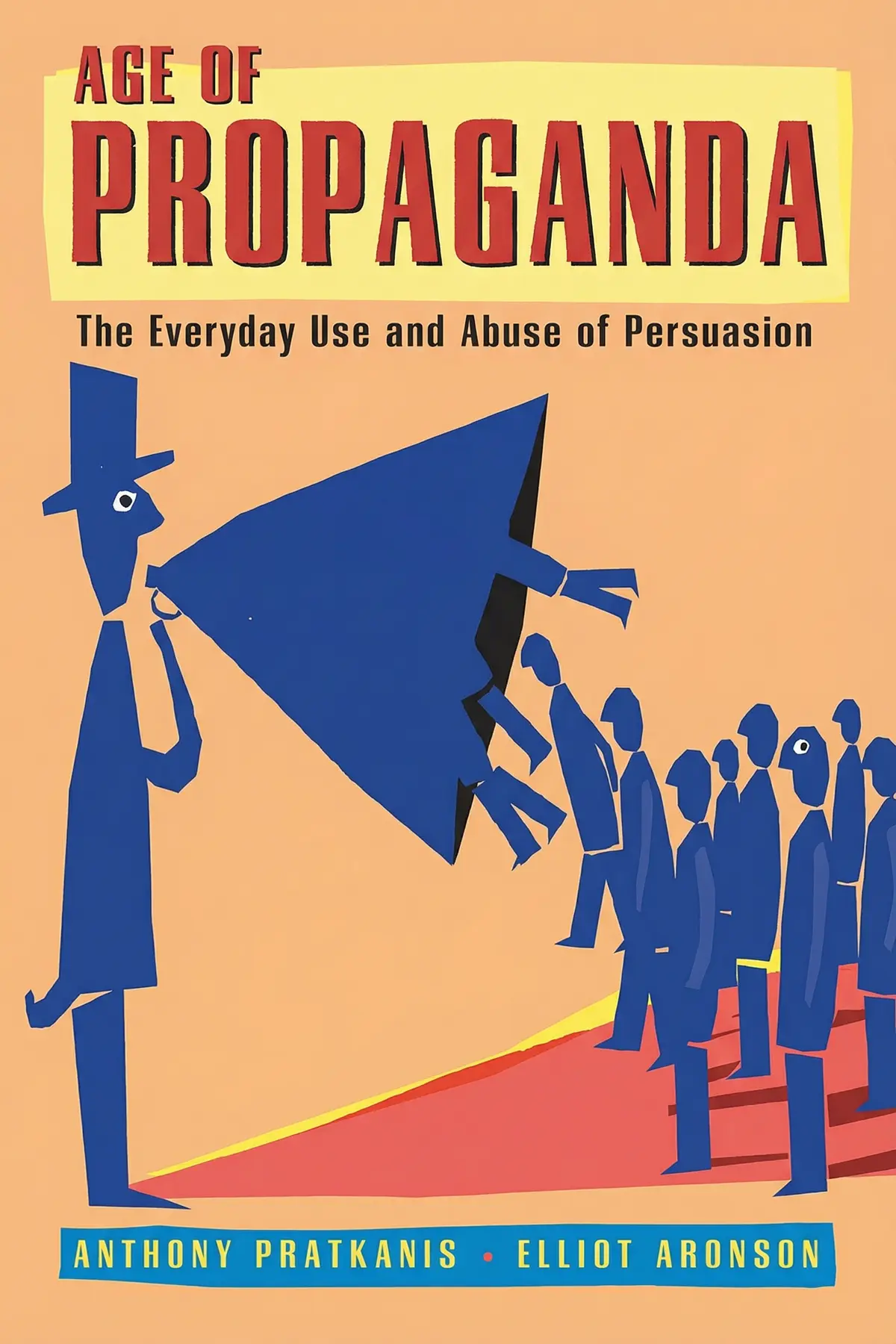
Age of Propaganda: The Everyday Use and Abuse of Persuasion
Anthony Pratkanis

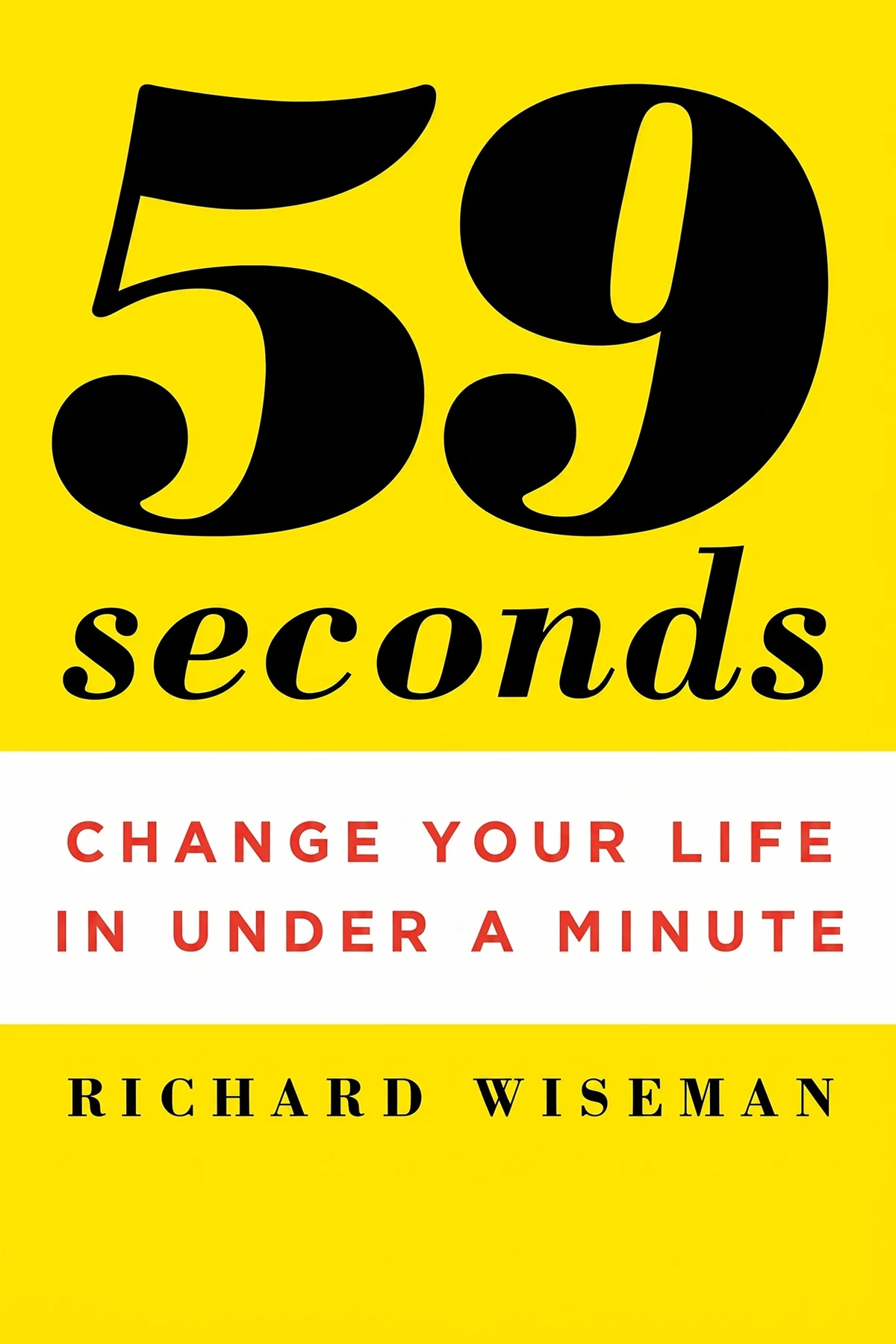
59 Seconds: Change Your Life in Under a Minute
Richard Wiseman

A Liberated Mind: How to Pivot Toward What Matters
Steven C. Hayes
AUDIO SUMMARY AVAILABLE
Listen to May Contain Lies in 15 minutes
Get the key ideas from May Contain Lies by Alex Edmans, plus 5,000+ more titles in English and Thai.
- 5,000+ titles
- Listen as much as you want
- 7-day free trial
- Cancel anytime







