
13 min 55 sec
Men Explain Things To Me
A sharp analysis of gender inequality, investigating how silencing women through condescension and violence sustains a patriarchal status quo. Rebecca Solnit explores the systemic roots of misogyny and the fight for feminine agency.
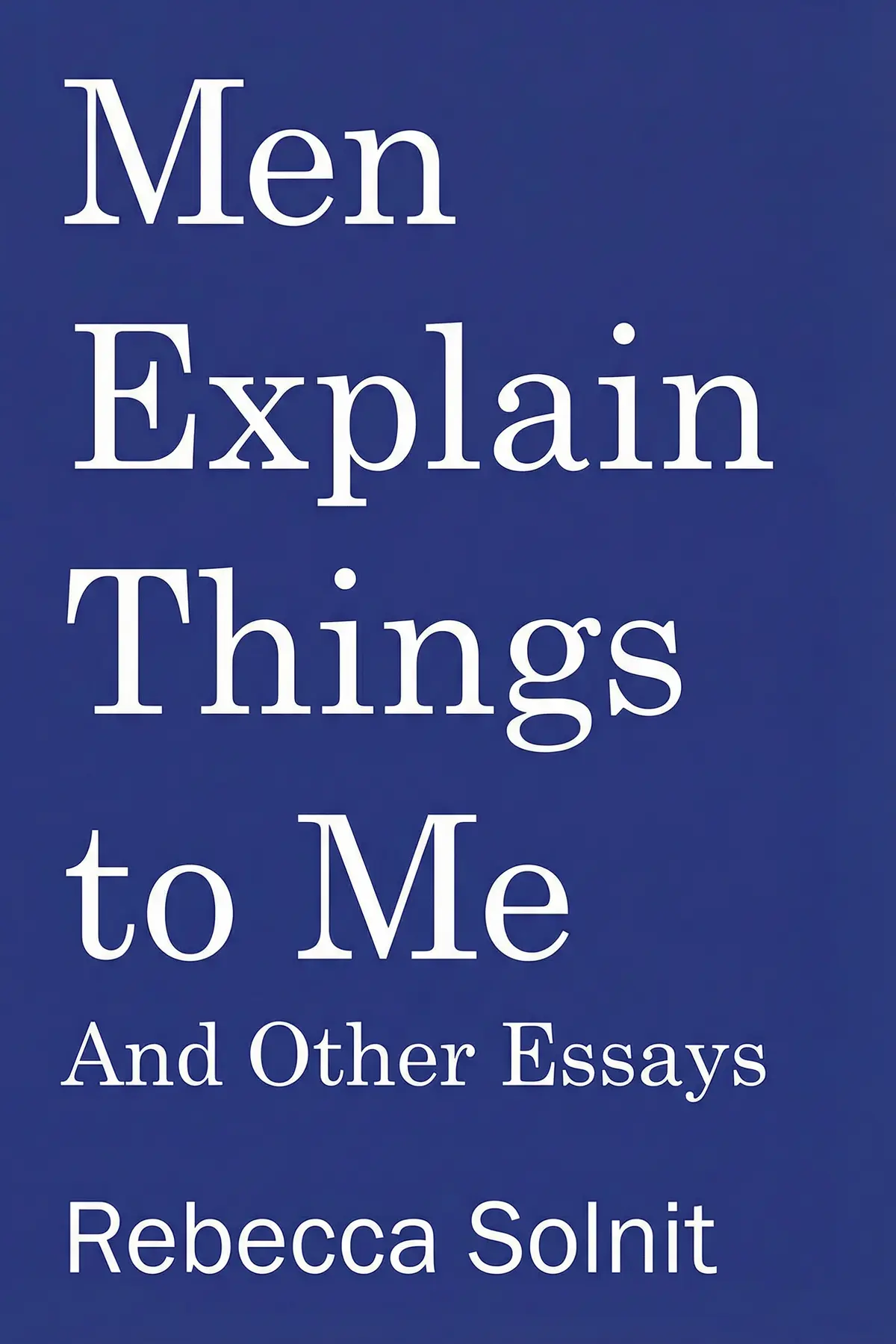
Table of Content
1. Introduction
1 min 35 sec
Have you ever been in a conversation where someone starts explaining a topic to you that you already know intimately—perhaps a topic you’ve actually studied or written about? If you’ve felt that specific sting of being talked down to, you’ve experienced a glimpse of a much larger, more systemic issue. In this exploration of Rebecca Solnit’s landmark work, we are diving into the heart of modern gender dynamics to understand why women’s voices are so often pushed to the margins.
At first glance, it might seem like we live in an era of total equality. We see women in high-ranking corporate positions, in government, and leading scientific breakthroughs. But beneath this surface of progress lies a persistent, often invisible architecture of discrimination. It’s an environment where women are frequently patronized in small ways and threatened in much larger ones. This isn’t just about bad manners or individual misunderstandings; it’s about a world where the female perspective is systematically undervalued and, at times, forcibly silenced.
Throughout this summary, we will trace the throughline from the annoying phenomenon of ‘mansplaining’ to the terrifying reality of gender-based violence. We’ll look at the statistics that show how unsafe the world remains for women and examine how our legal and social systems often fail to provide the protection or the respect they deserve. Most importantly, we’ll see how changing our language and refusing to stay silent can begin to dismantle these old, harmful structures. This is a journey through the realities of the female experience, aiming to show why the fight for equality is far from over and what it really looks like on the ground.
2. The Mechanism of Intellectual Dismissal
1 min 59 sec
Explore the roots of condescension in modern dialogue and how the simple act of a man explaining a woman’s own expertise to her reveals deeper power imbalances.
3. The High Cost of Gendered Violence
2 min 06 sec
Discover the shocking statistics behind physical abuse and why society’s tendency to view these crimes as isolated incidents masks a systemic crisis.
4. From Personal Guilt to Collective Vulnerability
2 min 12 sec
Learn why the phrase ‘Not All Men’ misses the point of systemic danger and how a viral movement helped women find safety in shared stories.
5. Institutional Silencing and the Myth of Hysteria
2 min 20 sec
Analyze how legal frameworks and political rhetoric have historically worked to control women’s bodies and undermine their credibility.
6. Language as a Tool for Reform
2 min 07 sec
See how new vocabulary and international solidarity are beginning to break the cycle of victim-blaming and create a path toward true equality.
7. Conclusion
1 min 36 sec
As we look back at the landscape Rebecca Solnit has mapped out, the throughline becomes clear: the fight for gender equality is fundamentally a fight for the right to be heard and the right to exist safely. From the dinner party where a woman’s own work is explained back to her, to the courtrooms where her testimony is doubted, the common thread is the systemic denial of female agency. We have seen that misogyny is not a collection of random, unfortunate events, but a structural reality supported by outdated laws, cultural myths, and a language that often favors the powerful.
However, we also see the incredible power of breaking the silence. By naming things like mansplaining and rape culture, we take away their invisibility. By standing in solidarity through movements like #YesAllWomen, we transform individual fear into collective strength. The progress we’ve made—from the property acts of the 1800s to the global protests of today—proves that change is possible, though it requires constant vigilance.
To move forward, we must all become more critical observers of the world around us. Question the narratives you see in the media. Pay attention to who is being silenced in a room and who is doing the silencing. Challenge the casual comments that normalize inequality. Most importantly, start by believing women when they share their experiences. True equality begins with the simple, radical act of listening. By refusing to let the voices of half the population be drowned out, we can work toward a future where expertise is recognized regardless of gender, and where safety is a right, not a privilege.
About this book
What is this book about?
This collection of essays serves as a powerful examination of the various ways society attempts to suppress the voices and bodies of women. It begins with the seemingly trivial—the now-ubiquitous concept of mansplaining—where men presume intellectual superiority over women regardless of actual expertise. However, Solnit quickly bridges the gap between these social annoyances and more severe forms of systemic oppression, including physical violence, sexual assault, and legal disenfranchisement. The promise of the book is to pull back the curtain on how these disparate experiences are actually connected. By looking at statistics on domestic abuse, the rhetoric used in political debates over reproductive health, and high-profile legal cases, the narrative reveals a world where female credibility is constantly under siege. It offers a framework for understanding why women feel unsafe and how language—like the terms rape culture or the hashtag YesAllWomen—functions as a tool for reclaiming power. Ultimately, it is a call to recognize misogyny not as a series of random events, but as a structural reality that requires collective action and a fundamental shift in how we listen to women’s stories.
Book Information
About the Author
Rebecca Solnit
Rebecca Solnit is a multifaceted writer, historian, and activist who contributes to the Guardian and serves as a contributing editor at Harper’s. Her extensive body of work includes sixteen books that explore a wide array of topics, from politics and art to memory, the environment, and the cultural history of walking.
Ratings & Reviews
Ratings at a glance
What people think
Listeners find this an essential read featuring exceptional writing and thorough research, specifically valuing the included statistics. The work provides articulate viewpoints on feminism and the social landscape, with one listener remarking that it offers a critical grasp of male privilege. Listeners also describe it as wryly humorous, while one review highlights its entertaining personal anecdotes.
Top reviews
Bun
Finally got around to reading the source text of the term 'mansplaining,' and it’s every bit as sharp as I’d hoped. Solnit perfectly captures that 'archipelago of arrogance' where men feel entitled to educate women on their own lives and careers. The anecdote about the man at the party explaining her own book to her is iconic and frankly hilarious in a depressing way. Beyond the humor, the research into violence and systemic silencing provides a necessary, if heavy, foundation for the lighter essays. I found her writing style to be quite evocative and layered, moving seamlessly between personal stories and global statistics. It’s a slim volume, but it packs a significant punch for anyone trying to understand modern power dynamics. Essential reading for both men and women alike.
Show moreSoontorn
Wow, I didn't expect a book about social power dynamics to be this readable and urgent at the same time. The 'Cassandra' essay alone is worth the price of admission for how it dissects why women aren't believed. Solnit manages to take horrifying statistics about domestic abuse and rape culture and turn them into a call for action. Not gonna lie, some chapters are incredibly depressing, but she always brings it back to a sense of hope and progress. The way she describes the 'genie of feminism' being out of the bottle is a beautiful image. It’s a vital understanding of how male privilege isn't just an annoyance; it's a systemic erasure. Every person should have a copy of this to lend out.
Show moreAey
The way Solnit articulates the subtle ways women are silenced is nothing short of masterful and wryly funny. I’ve never seen the experience of being talked over explained with such adroitness and grace. The anecdote about 'Mr. Very Important' at the party had me laughing out loud because it is just so painfully relatable. Beyond the humor, the book serves as a vital tool for recognizing the 'archipelago of arrogance' in our own lives. It’s an empowering read that reminds us we aren't walking alone on this long road toward equality. Even the more academic sections felt accessible and deeply relevant to our current political climate. This is the kind of book you want to carry around in public just to see who starts a conversation about it.
Show moreValentina
This collection is a punchy, relatively quick read that puts a name to those frustrating interactions we’ve all had. Truth is, I wasn’t expecting it to be so well-researched, but the statistics regarding violence against women were genuinely eye-opening. Solnit blends a dry, wry humor with a very serious analysis of how male privilege functions in polite society. I especially enjoyed the 'Grandmother Spider' essay and the way she uses art as a metaphor for female presence. It’s not a perfect book—some sections felt a little dry and hard to get through—but the overall message is vital. She frames the struggle for equality as a thousand-mile journey where we are finally moving forward. I’d recommend this to anyone looking for a solid introduction to gender politics.
Show moreUraiwan
To be fair, I’m probably the exact demographic this book is critiquing, yet I found Solnit’s insights incredibly illuminating. After years of my wife telling me I 'hold forth' too much, reading the titular essay was a humbling moment of self-reflection. Solnit is a powerhouse who writes with a style that is both imaginative and incisive. I particularly liked 'Worlds Collide in a Luxury Suite' because it connected individual incidents of violence to broader themes of colonialism and global power. While some of the metaphors felt a little heavy-handed at times, the core message about the 'entitlement to inflict suffering' hit home. It’s a slim volume that demands you slow down and actually think about the space you occupy in a room.
Show moreKru
Solnit’s writing is elegant and precise, even when she’s delving into the most depressing statistics imaginable regarding the 'longest war.' I appreciated how she didn't shy away from the darker aspects of misogyny, specifically the threats faced by women online. The book is remarkably timely, providing a framework for understanding why men feel the need to dominate every conversation. I found the personal examples, like the encounter at the party in Aspen, to be both entertaining and deeply revealing. My only real gripe is that the book is quite short, and I felt some of the later essays could have used more depth. Still, it’s a brilliant collection that offers a well-formed perspective on how society continues to fail women in subtle and overt ways.
Show moreThawee
The title essay is undoubtedly a classic of modern social commentary, but the rest of the collection feels a bit uneven in quality. I loved the opening narrative, yet the middle section focusing on Virginia Woolf and Susan Sontag felt quite unfocused and lost my interest entirely. In my experience, essay collections work best when they maintain a consistent momentum, and this one tends to stall in the third quarter. Look, the points she makes about 'credibility' and the silencing of women are incredibly important, especially the pieces on the Kavanaugh hearings. However, the writing sometimes felt more like a series of blog posts than a cohesive book. It’s a decent read for the 'mansplaining' origin story, but I was hoping for something a bit sharper and more consistent throughout.
Show moreChatchai
It’s hard to ignore the importance of the 'mansplaining' essay, but I struggled with how Solnit handles global issues and race. Frankly, some of her comparisons felt quite clumsy, like the part where she represents a specific man as France and a woman as the entire continent of Africa. Then there was that comment about mistaking a veiled woman for a piece of furniture—it just felt incredibly ignorant and white-centric. While she’s great at articulating the frustrations of middle-class Western women, the intersectionality feels like an afterthought. The writing is good, and the statistics are well-researched, but the 'strategic essentialization' she uses can be quite alienating. It’s a mixed bag that works best when she stays focused on her own personal experiences.
Show moreAurora
Is this book essential reading? Maybe for those just starting to explore gender dynamics, but seasoned readers might find it a bit thin on new insights. Personally, I found the title essay to be the only part that really lived up to the massive reputation Solnit has cultivated. The rest of the pieces felt like Feminism 101, re-treading ground that many other writers have covered with more nuance and intersectionality. The 'Woolf’s Darkness' essay was a bit of a slog and didn't seem to fit the tone of the rest of the collection. To be fair, it’s a quick read and the writing quality is generally high, but it lacks the analytical depth I was expecting. It’s an okay choice for your TBR pile, but don't expect it to change your life.
Show morePrayoon
As someone who devours feminist literature, I found Solnit’s essays to be a bit of a letdown compared to the immense hype. To be fair, the title essay is a great conversation starter, but the rest of the collection feels like a very basic Feminism 101 course. When you compare her prose to the depth of Roxane Gay or the urgency of Adichie, Solnit’s work feels somewhat lackluster and uninspired. I was particularly bothered by the lack of intersectionality in her observations. Claiming that 'violence doesn't have a race' is a bizarrely ignorant statement that ignores decades of sociological data. While the book has its moments, it often meanders into metaphors that feel detached from the actual lived experiences of marginalized women.
Show moreReaders also enjoyed
All About Love: New Visions
bell hooks

A Biography of Loneliness: The History of an Emotion
Fay Bound Alberti

A Force for Good: The Dalai Lama's Vision for Our World
Daniel Goleman


A Room of One’s Own
Virginia Woolf

Abolish Rent: How Tenants Can End the Housing Crisis
Tracy Rosenthal
Abortion: Our Bodies, Their Lies, and the Truths We Use to
Jessica Valenti
AUDIO SUMMARY AVAILABLE
Listen to Men Explain Things To Me in 15 minutes
Get the key ideas from Men Explain Things To Me by Rebecca Solnit, plus 5,000+ more titles in English and Thai.
- 5,000+ titles
- Listen as much as you want
- 7-day free trial
- Cancel anytime







