
18 min 10 sec
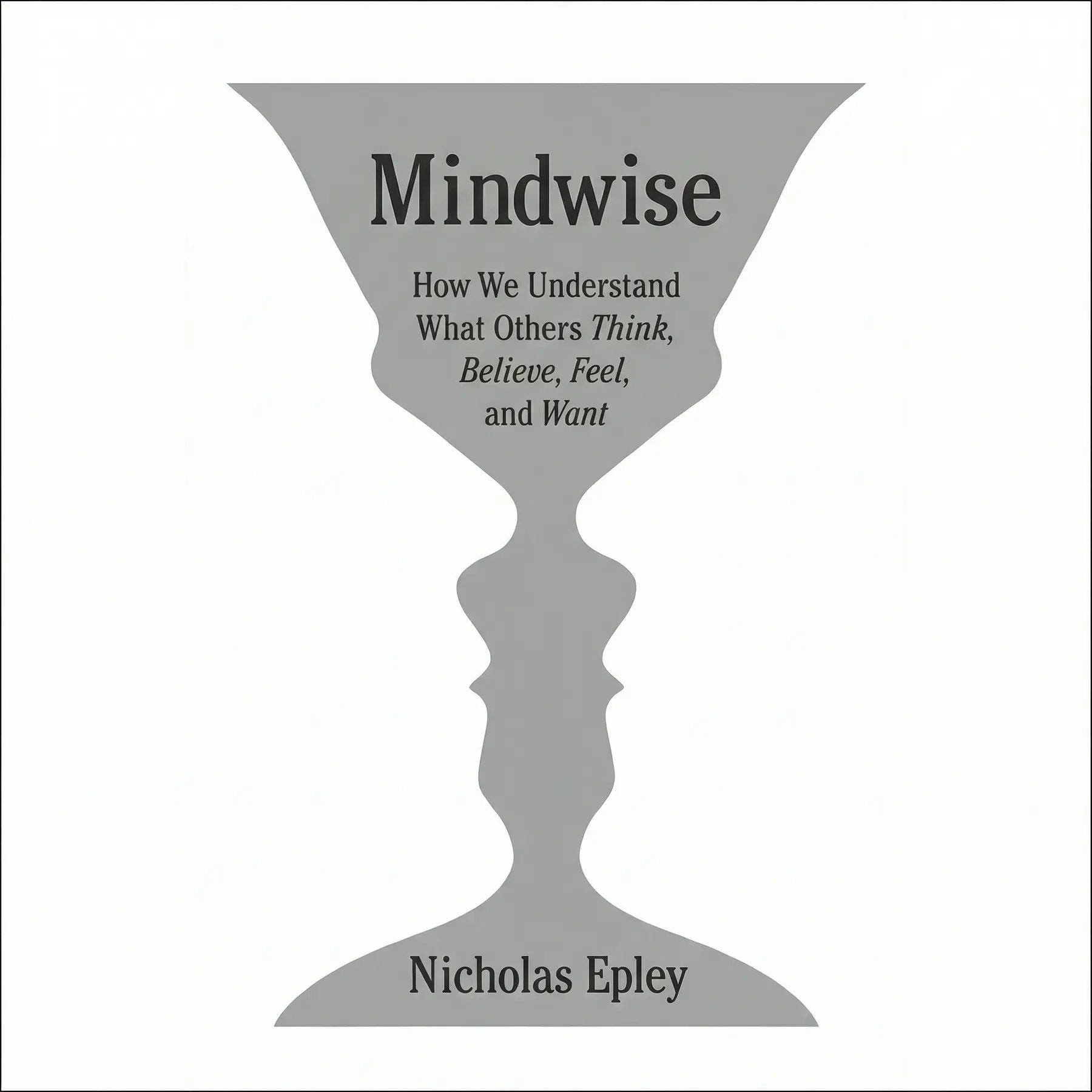
Mindwise: How We Understand What Others Think, Believe, Feel and Want
Mindwise explores the gap between how we perceive others and the reality of their inner lives, offering evidence-based strategies to bridge the divide and improve our social intuition and communication.
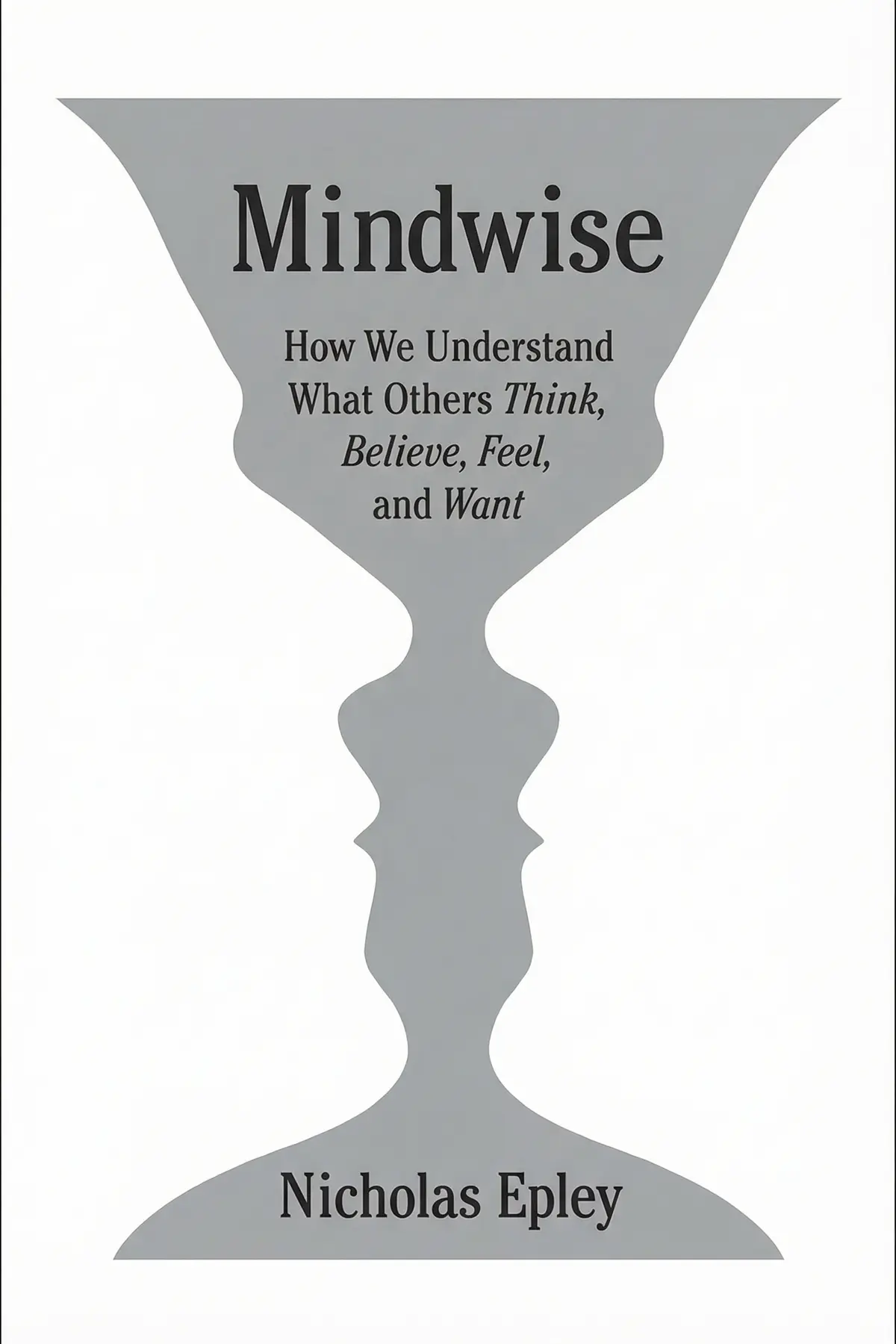
Table of Content
1. Introduction
1 min 40 sec
We live our lives under a grand illusion: the belief that we are expert mind readers. From the moment we wake up and interpret a partner’s sigh to the minute we walk into a boardroom and gauge a client’s interest, we are constantly scanning the invisible internal states of those around us. We assume that because we are social creatures, we have a natural, high-definition window into the thoughts, feelings, and intentions of others. But what if that window is actually a blurry, distorted mirror?
In this exploration of Mindwise, we delve into the work of Nicholas Epley to uncover the startling gap between what we think we know about other people and what is actually happening inside their heads. The throughline of this journey is a humbling but empowering realization: the greatest barrier to understanding others is our own confidence in our intuition. We often fail to realize that our brains are not recording reality; they are constructing it. By examining the biological and psychological architecture of our social brains, we can begin to see where we go wrong.
Throughout this summary, we will investigate why we are so often strangers to our own motivations, why closeness with a spouse doesn’t necessarily lead to better mind-reading, and how our brains can simultaneously humanize a machine while dehumanizing a fellow person. More importantly, we’ll move beyond the problems to find a solution. You will learn that the secret to better communication isn’t trying to ‘think’ like someone else, but rather finding the humility to ask and the patience to listen. Prepare to have your assumptions challenged as we learn to navigate the complex social landscape with a new level of wisdom and accuracy.
2. The Hidden Nature of the Self
2 min 17 sec
Think you know why you make the choices you do? Explore why our conscious minds are often the last to know the truth about our own internal motivations.
3. The Illusion of Insight into Others
1 min 57 sec
Discover why knowing someone for years doesn’t actually make you better at reading their thoughts, even though you’ll feel more certain that it does.
4. The Sliding Scale of Humanization
2 min 18 sec
Our brains don’t treat everyone as equally human. Learn how the neural pathways for empathy can be switched on or off depending on who we are looking at.
5. The Trap of the Egocentric Perspective
2 min 00 sec
Explore why we are the stars of our own movies and how this self-centered view leads us to overestimate how much others are actually paying attention to us.
6. The Deceptive Power of Stereotypes
2 min 08 sec
Stereotypes are more than just social biases; they are cognitive shortcuts that can actually shape our physical reality and longevity.
7. The Voice as a Window to the Soul
1 min 58 sec
Contrary to popular belief, body language isn’t the best way to read someone’s feelings. Learn why the ears are more accurate than the eyes for emotional intelligence.
8. The Art of Perspective-Getting
2 min 04 sec
The most effective way to understand someone isn’t to imagine being them, but to engage in the simple, profound act of asking.
9. Conclusion
1 min 48 sec
As we conclude our journey through the insights of Mindwise, we are left with a fundamental shift in how we view the social world. We have seen that our intuitive ‘mind-reading’ abilities are less like a superpower and more like a series of sophisticated, yet often inaccurate, guesses. We have learned that we are frequently blind to our own motivations, that closeness can breed a false sense of certainty, and that our brains naturally use shortcuts like stereotypes and dehumanization to simplify a complex reality.
However, this isn’t a message of despair. Rather, it is an invitation to a more honest and effective way of relating to others. The real ‘wisdom’ in being mindwise is realizing when to stop trusting your intuition and start trusting direct communication. The ‘spotlight’ we feel we are under is mostly an illusion, and the ‘transparency’ we think we have is a myth. Understanding this allows us to be more patient with ourselves and more curious about those around us.
The most actionable takeaway is to replace ‘perspective-taking’ with ‘perspective-getting.’ Next time you find yourself certain of someone else’s motives, or frustrated that someone hasn’t anticipated your needs, pause. Remind yourself that you cannot see into their head, and they cannot see into yours. The bridge across that gap is built with questions, not assumptions. By embracing the limits of our social intuition, we actually become more socially intelligent. We become better partners, better leaders, and more compassionate neighbors. The mind is a vast, largely uncharted territory, but through the simple act of asking and truly listening, we can find our way home to each other.
About this book
What is this book about?
Have you ever felt certain you knew exactly what your partner, colleague, or friend was thinking, only to discover you were completely off base? Mindwise dives deep into the science of social cognition to explain why our natural 'mind-reading' abilities are far more flawed than we realize. The book reveals that the primary obstacle to understanding others isn't a lack of effort, but rather the fundamental way our brains process information and project our own biases onto the world. Through a series of fascinating psychological studies, the narrative explores how we over-rely on stereotypes, misinterpret body language, and fall victim to the spotlight effect. It promises a roadmap for moving beyond mere 'perspective-taking'—which often just involves projecting our own thoughts onto others—and toward 'perspective-getting.' By learning to truly listen and ask the right questions, we can dismantle the illusions that create conflict and isolation, leading to deeper connections and a more accurate understanding of the complex humans around us.
Book Information
About the Author
Nicholas Epley
Nicholas Epley is a distinguished professor of behavioral science at the University of Chicago Booth School of Business. He is a leading expert in the field of social cognition and human judgment. Epley earned his doctorate in psychology from Cornell University in 2001. Before joining the faculty at the University of Chicago, he served as an assistant professor at Harvard University. His extensive research focuses on how humans navigate their social environments and the intuitive processes that guide our understanding of one another.
Ratings & Reviews
Ratings at a glance
What people think
Listeners find the book offers deep perspective on the human mind and consider it a must-read for those in management positions. Grounded in scientific evidence and studies, the text is described by one listener as an engaging primer on contemporary social psychology research. Opinions on the writing quality are split, as some listeners find it well-crafted while others are less convinced.
Top reviews
Book
Wow, this was an absolute page-turner that totally changed how I view my interactions with friends and strangers alike. The bit about Botox making people less empathetic because they can't mimic facial expressions was a total "lightbulb" moment for me! Epley has a gift for taking complex social psychology research and making it feel immediate and personal. I loved how he challenged the idea that we can accurately "mind-read" our spouses just because we've been with them for years. It turns out that familiarity often breeds a false sense of certainty rather than actual understanding. This book is a compelling primer on why we should lead with curiosity instead of assumptions. Honestly, if everyone read this, our political discourse might actually become civil again.
Show moreChanon
Nicholas Epley manages to bridge the gap between high-level behavioral economics and everyday social life with incredible grace. This book provides a scientific basis for why communication breaks down so frequently in our homes and workplaces. I was particularly struck by the "curse of knowledge" concept—the idea that once we know something, we find it impossible to imagine what it's like not to know it. This explains so much about why experts are often terrible teachers! The book is packed with fascinating data points, like how seeing a person’s face makes it significantly harder to act cruelly toward them. It’s an essential read for anyone who wants to improve their social IQ without resorting to "life hack" gimmicks.
Show moreKoi
Finally, a book that explains why we are so bad at understanding each other without being condescending about it. Epley shows us that our brains are powerful data-computing machines, but we often feed them the wrong information when judging others. I found the section on the "as-if" principle and how our physical actions can influence our internal states to be incredibly enlightening. It’s not just a book about social errors; it’s a guide to being a more compassionate and effective human being. By acknowledging that our "mind-reading" ability is flawed, we can finally start doing the hard work of actually talking to one another. I can’t recommend this enough for anyone navigating office politics or family drama.
Show moreRania
As a project manager who deals with difficult team dynamics daily, I found Epley’s insights into the "curse of knowledge" incredibly relevant. The book argues that our confidence in reading others' intentions far exceeds our actual accuracy, which is a humbling realization for anyone in leadership. While some of the writing felt a bit repetitive towards the middle, the core message about creating environments where people feel safe to speak up is vital. I particularly appreciated the discussion on how we often misinterpret silence as agreement or lack of competence. It’s not a magic wand for interpersonal problems, but it provides a necessary scientific lens for understanding why we clash. Truth is, most of us are just guessing and getting it wrong. I'll be recommending this to my colleagues who think they are "people persons."
Show morePooja
Ever wonder why you're so certain your neighbor is a jerk, only to find out you've completely misread the situation? Mindwise dives deep into the "sixth sense" we use to navigate the world, and the results are often embarrassing for us. The chapter on stereotypes was the highlight for me, specifically how we exaggerate differences between groups while ignoring the massive overlaps in our shared humanity. Epley’s prose is accessible and friendly, never veering into the dry "textbook" territory that plagues this genre. I did feel that some of the personal anecdotes were a bit self-indulgent, but they helped ground the data in reality. It’s a solid 4-star read that encourages a much-needed dose of intellectual humility in our daily lives.
Show moreOn
Picked this up on a whim after seeing it mentioned in a management seminar, and it's definitely worth the time. The author focuses on three main mistakes we make when trying to discern what others are thinking: egocentrism, stereotyping, and over-attributing actions to character. While I didn't agree with every single conclusion—especially the parts regarding animal minds—the overall framework is very useful. It’s a short read, under 200 pages, so it doesn't overstay its welcome or get bogged down in unnecessary jargon. The main takeaway for me was the importance of active listening over passive observation. If you want to know what your partner wants for their birthday, stop being "clever" and just look at their wish list.
Show moreErn
The problem with pop psychology books is that they often feel like a collection of Greatest Hits from better, more academic journals. Mindwise falls into this trap by recycling famous studies like the gorilla on the basketball court or standard Black Friday scenarios. Epley writes clearly enough, but I was constantly waiting for a deep revelation that never quite materialized. His advice boils down to "just ask people what they think," which feels a bit underwhelming after 200 pages of buildup. However, the chapter on how we dehumanize others by failing to engage our medial prefrontal cortex (MPFC) was legitimately fascinating. It’s an easy, light read if you’re new to the field, but seasoned psych buffs won't find much new ground here.
Show moreWorawit
To be fair, the main takeaway of this book could have been a long-form essay rather than a full-length publication. The advice is solid—humility and listening are better than guessing—but it feels like Epley repeats this point in every single chapter. I liked the discussion on how we attribute "minds" to inanimate objects like cars or the weather, but it felt a bit disconnected from the rest of the book's focus on human interaction. The writing is clear, but I found myself skimming the later sections because the "shocker" revelations weren't actually that shocking. It’s a decent introductory text for a college freshman, but if you’ve read any Gladwell or Kahneman, you’ll recognize most of the scenery.
Show moreNongnuch
I really wanted to like this, especially since it came recommended by a mentor, but it felt incredibly shallow. As someone who works in social services, the central premise—that we shouldn't try to put ourselves in others' shoes—strikes me as dismissive and potentially harmful. Epley argues that "perspective taking" often increases overconfidence without increasing accuracy, but empathy is a muscle that requires practice, not a tool to be discarded. Furthermore, the advice to just "ask" ignores the reality that power dynamics and fear often make honesty impossible. His example regarding the BP oil spill was well-intentioned but felt out of touch for those of us who aren't executives. It’s a well-written book, but the conclusions felt like they were missing a layer of human complexity.
Show moreThawee
Total disappointment for anyone looking for actual scientific depth or methodological rigor. I was looking for a book that would help me understand others, but this mostly just lists cognitive fallacies we already know about. Epley’s dismissal of animal consciousness in the anthropomorphism chapter was a huge red flag for me; he treats pets like they are just "tricking" us into a relationship. The writing style is breezy to the point of being fluff, and the citations are tucked away in the back rather than being integrated into the arguments. Also, the claim that men only read emotions as well as women when paid to do so is a weak point that ignores real-world social pressures. If you want to understand people, skip this and read a good biography instead.
Show moreReaders also enjoyed

59 Seconds: Change Your Life in Under a Minute
Richard Wiseman
A Liberated Mind: How to Pivot Toward What Matters
Steven C. Hayes
AUDIO SUMMARY AVAILABLE
Listen to Mindwise in 15 minutes
Get the key ideas from Mindwise by Nicholas Epley, plus 5,000+ more titles in English and Thai.
- 5,000+ titles
- Listen as much as you want
- 7-day free trial
- Cancel anytime







