
A Liberated Mind: How to Pivot Toward What Matters
Steven C. Hayes
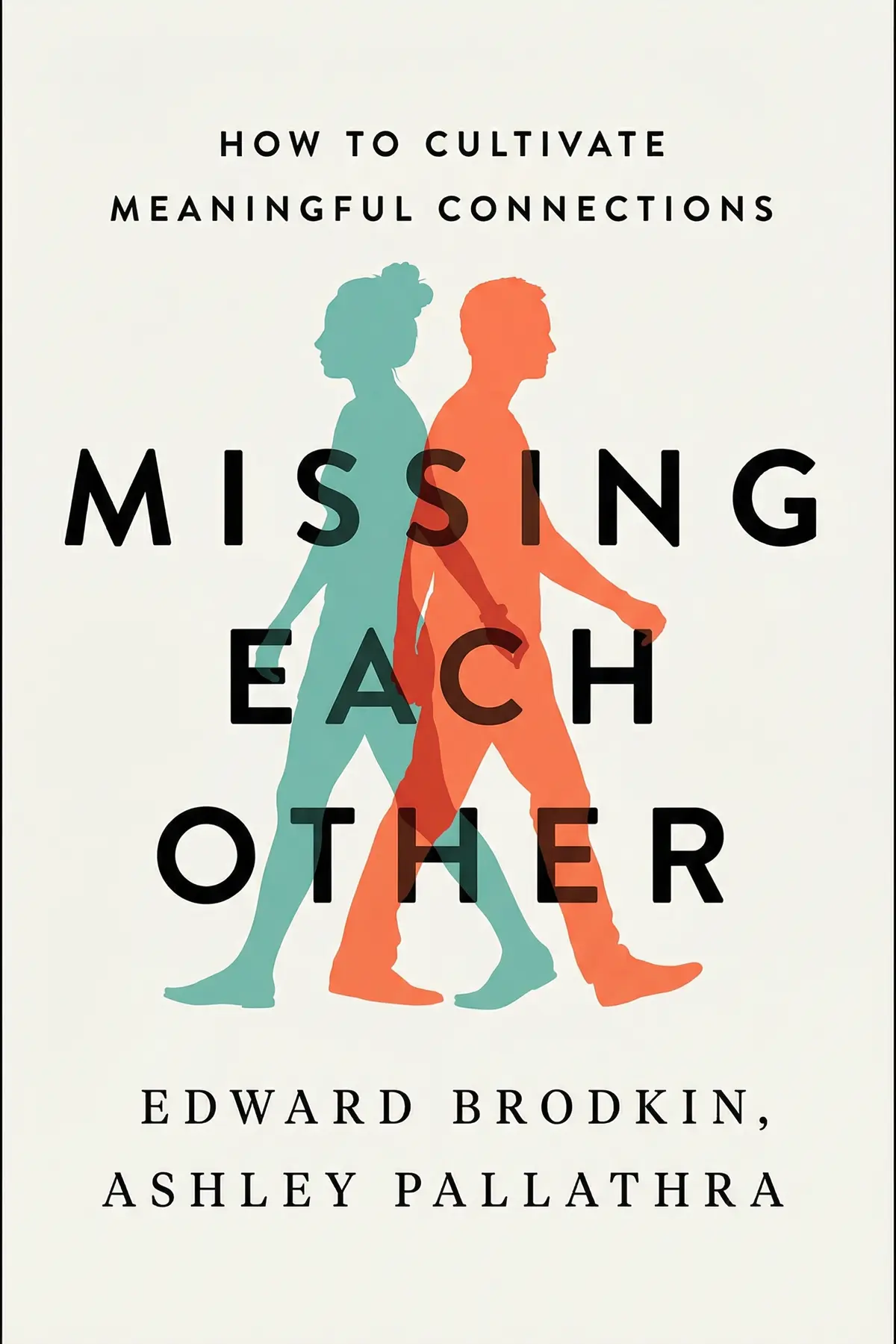
Missing Each Other investigates why we feel disconnected in a digital age and offers a four-part framework for restoring deep, authentic human bonds through the science of emotional attunement.
1 min 37 sec
In our modern landscape, we are surrounded by more people than ever before. We live in densely populated cities, navigate crowded digital spaces, and maintain thousands of virtual connections. Yet, beneath this surface of constant activity, a quiet crisis of loneliness is unfolding. Many of us find ourselves in the middle of a crowd, feeling completely invisible. We spend our days transmitting information—emails, texts, and social media updates—but we rarely feel truly heard or deeply understood. This raises a fundamental question: Why is it that in an age of total connectivity, we are so frequently missing each other?
The answer doesn’t lie in the quantity of our interactions, but in the quality of our presence. We have become experts at transactional communication, but we have lost the art of attunement. This is the profound ability to sense another person’s internal world and align our own state with theirs. It is the secret ingredient that turns a simple conversation into a life-giving connection. Without it, we are just two people inhabiting the same space, remaining essentially strangers.
Over the course of this journey, we will explore the science and psychology behind human bonding. We will break down the mechanics of connection into four essential pillars: the cultivation of relaxed awareness, the practice of deep listening, the development of cognitive understanding, and the dance of mutual responsiveness. By the end, you will see how these tools can not only heal personal conflicts but also serve as a foundation for a more compassionate society. It is time to stop simply hearing one another and start truly connecting.
2 min 08 sec
Discover why the subtle ability to sense and match another person’s emotional state is the vital heartbeat of every successful human relationship.
2 min 05 sec
Learn how to achieve the perfect balance of calm and focus required to truly engage with the world around you.
2 min 07 sec
Explore why true listening requires more than just hearing sounds, involving a synchronized dance of attention and empathy.
2 min 05 sec
Understand how to bridge the gap of misunderstanding by stepping into the mental world of another person through cognitive empathy.
1 min 58 sec
See how connection comes alive through the fluid back-and-forth exchange that keeps interactions dynamic and supportive.
2 min 04 sec
Examine the vital differences between human empathy and artificial intelligence to see why technology can’t replace true attunement.
1 min 58 sec
Discover how the principles of personal attunement can be applied to solve the most pressing and polarized issues in our society.
1 min 42 sec
As we look back at the four pillars—relaxed awareness, listening, understanding, and mutual responsiveness—it becomes clear that connection is not something that just happens to us. It is something we create through intentional practice. In a world that often feels fractured and fast-paced, these skills offer a roadmap back to one another. They remind us that the heart of human happiness is found in the quality of our relationships and the depth of our presence.
To begin this journey in your own life, you don’t need a grand plan; you just need a small shift in focus. Start by paying attention to the tension in your own body before you enter a room. Take a breath, find that center of relaxed awareness, and commit to listening to the next person you meet as if they have something vital to tell you. These small victories of attunement build upon each other, gradually transforming the texture of your daily life.
One practical way to cultivate the physical basis of this state is through an practice like Tai Chi. This ancient art teaches the body to move with grace and deliberation, harmonizing the mind and the physical self. Whether it’s through Tai Chi, meditation, or simply a more conscious way of walking down the street, find a way to ground yourself in the present. When you are truly present, you are finally ready to meet the world. Remember, we don’t have to keep missing each other. The bridge to connection is already there; we just have to be willing to walk across it.
In an era defined by high-speed communication and digital interfaces, many of us feel more isolated than ever before. Missing Each Other addresses this paradox by exploring the neurological and psychological foundations of human connection. The book argues that true intimacy isn't just about what we say, but about how we align our internal states with those around us. The authors present a clear, actionable guide centered on the concept of attunement. By mastering four specific pillars—relaxed awareness, active listening, cognitive understanding, and mutual responsiveness—readers can transform their personal and professional relationships. This summary provides the tools to move past superficial interactions and build the kind of profound social bonds that are essential for long-term emotional well-being.
Edward Brodkin is an associate professor of psychiatry at the Perelman School of Medicine at the University of Pennsylvania and the Director of the Adult Autism Spectrum Program at Penn Medicine. Ashley Pallathra is a clinical researcher and therapist, currently pursuing a PhD in Clinical Psychology at The Catholic University of America.
Listeners find this book enlightening, with one mentioning it is supported by modern scientific studies, and they value its novel outlook on human connections. This work offers meaningful activities for building skills in every area, and listeners feel it is simple to comprehend and absorb. They view it as an essential read, with one listener pointing out its benefit for those in leadership and subordinate roles alike.
Wow, this was exactly the antidote I needed for my post-pandemic social anxiety. Brodkin and Pallathra provide a sophisticated blueprint for rebuilding our capacity for fellowship in an era where we're all glued to our screens. I especially appreciated the section on 'artificial attunement' and how technology is fundamentally altering our brain chemistry and social interactions. It’s a must-read for anyone in a leadership position or anyone who just wants to feel more 'in sync' with their loved ones. While some might find the tone a bit clinical, I found the scientific backing to be reassuring rather than boring. It’s rare to find a self-help book that feels this well-researched and grounded in modern reality. Truly a refreshing read.
Show moreThe truth is, we are losing the art of being human in a digital world, and this book serves as a vital wake-up call. I was particularly fascinated by the terrifying look at brain-chip technology and artificial intelligence in the final chapters. It makes you realize how precious real, unmediated human connection actually is. The authors provide thoughtful exercises that genuinely help you slow down and tune back into the people around you. It’s an easy read that manages to be both relaxing and deeply informative at the same time. Not gonna lie, some of the AI stuff is frightening, but it’s a necessary look at where we’re headed. Highly recommended for the modern age.
Show moreEver wonder why you can be in a room full of people and still feel completely alone? This book digs into the 'why' by exploring the mechanics of human connection, specifically through the four pillars of relaxed awareness and mutual responsiveness. I found the inclusion of Tai Chi and breathing exercises surprisingly grounding, though I'll admit I haven't mastered them all yet. It’s a refreshing perspective that moves away from superficial networking tips and focuses on the internal work needed to truly 'see' another person. The pacing is a bit slow in the middle, but the insights into our digital silos are timely and necessary. It’s a great resource for anyone looking to deepen their existing relationships through actual presence.
Show moreAs someone who works in high-stakes environments, I found the discussion on mutual responsiveness to be incredibly relevant to team dynamics. We often 'miss each other' because we aren't truly attuned to the non-verbal cues and energy of our colleagues. This book offers a scientific framework to fix that. I’ll be recommending this to my coaching clients who need to boost their EQ. My only gripe is that the writing is a bit passionless; it’s very informative, but it doesn't exactly set your soul on fire. Still, the exercises are practical and the research is top-notch. It's a solid 4-star read for anyone interested in the intersection of psychology and communication.
Show morePicked this up on a whim and was pleasantly surprised by the depth of the research involved. It’s not your typical 'rah-rah' self-help book; it’s a measured, scientific approach to how we relate to one another. I found the focus on the four levels of attunement to be an enlightening way to categorize my own social failings. While the prose can be a bit slow and academic, the actual skills being taught are essential for anyone living in our current disconnected society. If you can get past the somewhat robotic anecdotes, there is a wealth of knowledge here about becoming a more present and responsive human being. It’s a thoughtful, grounded read that actually gives you tools to work with.
Show moreAfter hearing so much about Brodkin’s work with autism, I picked this up hoping for a deep dive into neurodivergent social strategies. Unfortunately, that specific topic is barely touched upon after the introduction, which was a major letdown for me. Instead, we get a very broad manual on 'attunement' that feels a bit too academic and dry at times. It isn't a bad book by any means—the advice on active listening and staying present is actually quite sound—but it wasn't the specific resource I was looking for. If you want a general self-help book on mindfulness in relationships, this might work, but it lacks a certain spark to keep it from feeling repetitive. It’s interesting, but I’m likely passing my copy on.
Show moreThe chapter on listening was probably the most useful part of the entire book, though much of the rest felt like redundant padding. Frankly, the authors spend a lot of time explaining simple concepts in very complex ways, which can make for a sluggish reading experience. I liked the idea of 'relaxed awareness' as a foundation for communication, but the practical application felt a bit vague in places. It’s the kind of book that has about 50 pages of great information expanded into over 200 pages. I don’t regret reading it, but I’ll probably just keep the summary and pass the physical copy along. It’s useful if you’re new to mindfulness, but might feel like a retread for others.
Show moreLook, this isn't going to be a life-changing read for everyone, but it’s a solid 3-star effort with some interesting takeaways. The authors define 'attunement' in a way that makes sense, breaking it down into manageable components like understanding and listening. However, the book suffers from a lack of personality. The anecdotes are so vague that they evaporate from your memory the second you turn the page. It’s like bottled oxygen—useful if you’re struggling to breathe in a siloed society, but the packaging is as bland as it gets. Good info, mediocre storytelling. I think it would work much better as a long-form magazine article than a full-length book.
Show moreThe core concepts of 'attunement' are undoubtedly valuable, but the execution left me cold. While the authors are clearly experts in their field, the writing style is stiff and oddly detached, making it difficult to stay engaged for long stretches. The anecdotes involving characters like 'Alice' and 'Jake' felt sanitized and robotic, as if real human messiness was filtered through a clinical lens. It’s hard to learn about deep connection from a book that feels so disconnected from its own narrative. To be fair, the research is solid, yet it reads more like an expanded journal article than a compelling guide for the layperson. I wanted to feel inspired, but I mostly felt like I was reading a manual for a piece of software.
Show moreFinally got around to finishing this, and I have to say I’m disappointed it didn't offer more practical advice on making *new* friends. I’m struggling with loneliness in a new city, but this book is geared much more toward improving existing, committed relationships. The tone is incredibly dry—imagine a business textbook trying to teach you how to hug—and the 'success stories' are so formulaic they feel like satire. There is some decent information here regarding emotional intelligence, but it’s buried under layers of clinical jargon and repetitive exercises. It simply wasn't the accessible guide I was hoping for. If you want to save time, just read a summary of the four components of attunement and skip the rest.
Show moreSteven C. Hayes

Deborah Gruenfeld
Anthony Pratkanis
AUDIO SUMMARY AVAILABLE
Get the key ideas from Missing Each Other by Edward Brodkin, plus 5,000+ more titles in English and Thai.







