
17 min 32 sec
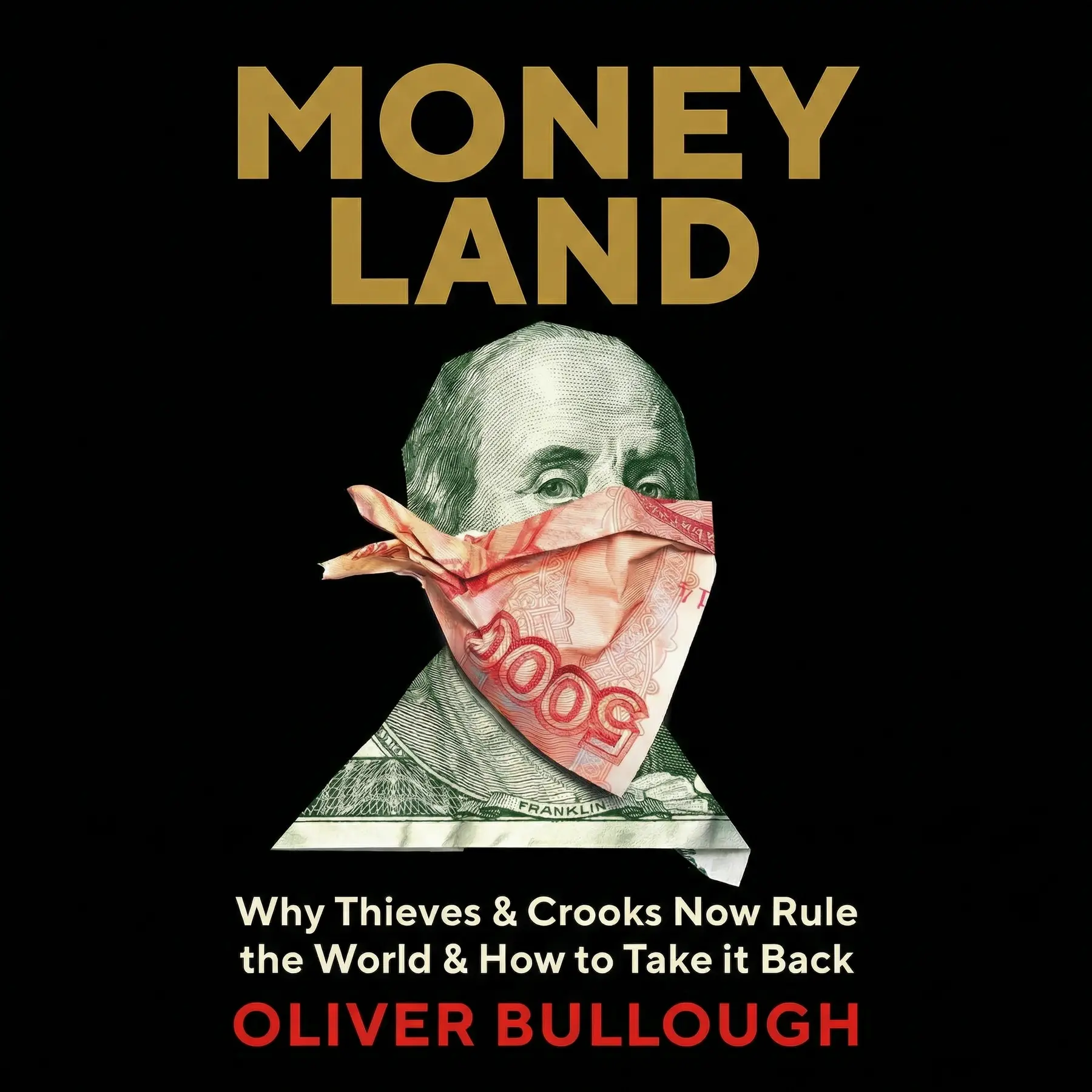
Moneyland: Why Thieves and Crooks Now Rule the World and How to Take It Back
Moneyland reveals the hidden world of the global elite, exposing the offshore financial havens, legal loopholes, and shell companies used to hide trillions of dollars from tax authorities and the law.
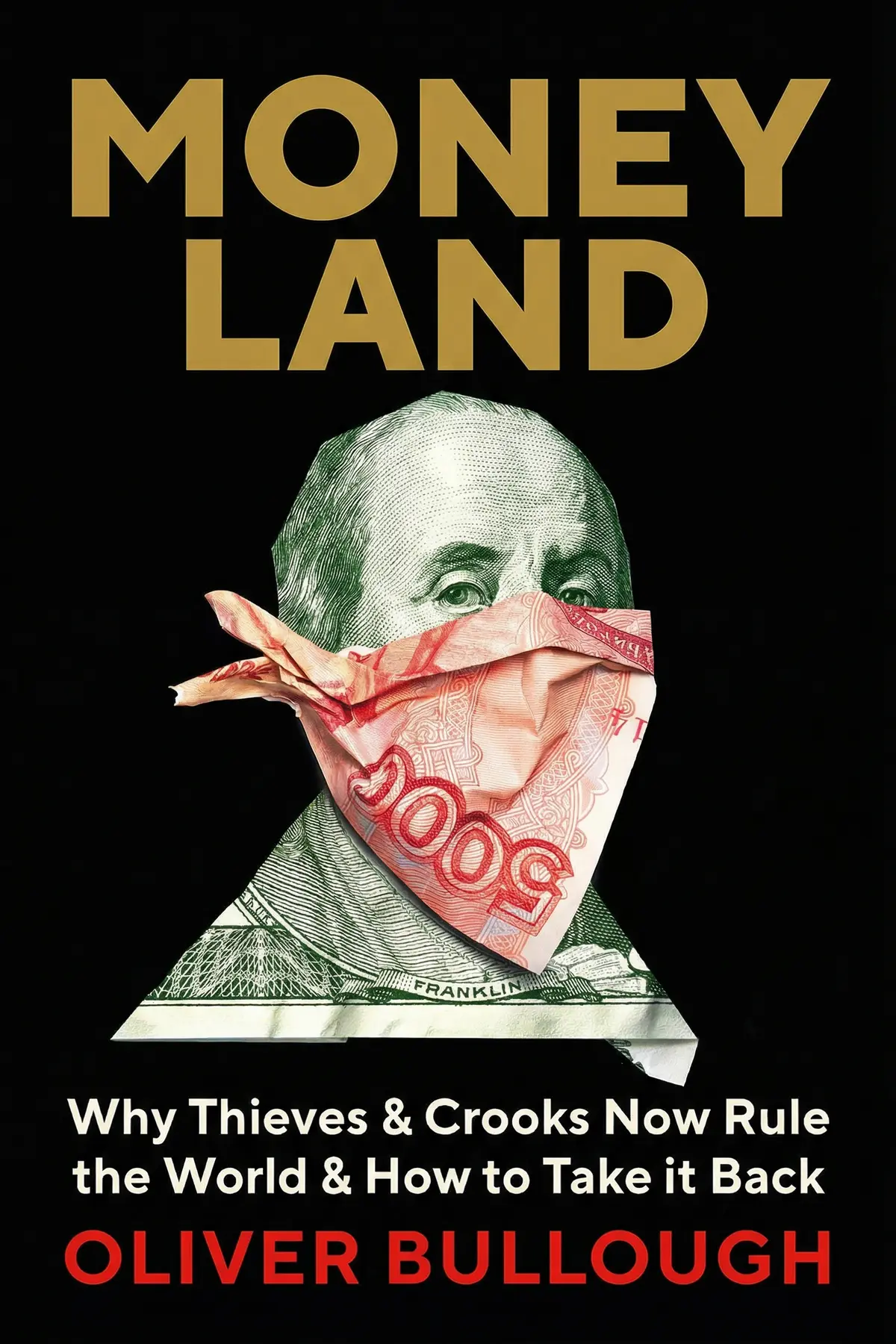
Table of Content
1. Introduction
1 min 40 sec
Imagine a country that exists everywhere and nowhere at the same time. It has no physical borders, no capital city, and no seat in the United Nations. Yet, it is arguably the wealthiest nation on Earth, and its citizens are the most protected people in history. This place is what investigative journalist Oliver Bullough calls Moneyland. It is a virtual jurisdiction where the laws of regular nations don’t apply, a sanctuary where the world’s elite can store their riches far beyond the reach of tax collectors, investigators, or even the law itself.
In the pages ahead, we are going to explore how this hidden realm was built and why it continues to grow. We will look at the history of global finance and see how well-intentioned efforts to stabilize the world after the Second World War inadvertently created the loopholes that the super-rich now exploit. We will travel from the boardrooms of London and the beaches of the Caribbean to the streets of Luanda and the quiet office parks of South Dakota.
This isn’t just a story about numbers on a balance sheet or dry financial regulations. It is a story of incredible greed, systemic corruption, and even murder. It is about how the separation of money from geography has allowed a small group of people to live in a reality entirely different from the one the rest of us inhabit. By the time we finish, you’ll see the world through a new lens—one where the skyscrapers of London and New York are often just hollow vaults for hidden cash, and where the struggle for global justice is being fought against an invisible, borderless enemy. Let’s begin the journey into the heart of Moneyland.
2. The Collapse of Post-War Financial Stability
2 min 26 sec
Explore how the international rules designed to keep the world’s economy safe after World War II were dismantled by bankers seeking new ways to move money.
3. The Rise of Offshore Sovereignty
2 min 22 sec
Discover how small island nations transformed their legal systems into impenetrable fortresses designed to protect the assets of the global elite from any outside interference.
4. The Human Cost of Kleptocracy
2 min 22 sec
Witness the devastating contrast between the extreme luxury of corrupt officials and the crushing poverty of the citizens whose resources they have plundered.
5. A World Without Borders for Criminals
2 min 23 sec
Learn how the international reach of Moneyland allows corruption and violence to cross borders, leaving whistleblowers and investigators with no place to hide.
6. The Illusion of Global Transparency
2 min 27 sec
Examine the modern efforts to track hidden wealth and discover why even the most advanced international regulations often fail to catch the biggest players.
7. The New American Frontier of Secrecy
2 min 15 sec
See how states like South Dakota and Nevada have become the world’s newest tax havens, offering levels of secrecy that rival the most notorious offshore islands.
8. Conclusion
1 min 37 sec
The world of Moneyland is a testament to human ingenuity in the service of greed. We have seen how the simple act of moving money across a border can transform it from a regulated asset into a ghost-like force that answers to no one. From the early days of the London eurodollar to the modern-day trusts of South Dakota, the story of global finance has been one of increasing disconnection between wealth and social responsibility.
This isn’t just an issue for accountants or politicians; it is an issue for everyone who believes in fairness and the rule of law. When the ultra-rich and the corrupt can opt out of the systems that the rest of us must live by, it erodes the social contract. It drains resources from public services, fuels global inequality, and provides a safe harbor for the world’s worst actors. The walls of Moneyland are built of laws, but those laws are written by people, and they can be rewritten.
As we conclude this exploration, the most important takeaway is awareness. Understanding that this parallel reality exists is the first step toward demanding change. We must push for true global transparency, close the loopholes in our own backyards, and support the investigators and whistleblowers who risk everything to shine a light into the dark corners of the financial world. Moneyland thrives in the shadows. By bringing it into the light, we can begin to reclaim a world where the law applies to everyone, regardless of the size of their bank account.
About this book
What is this book about?
Have you ever wondered how the world’s most powerful people seem to live by a different set of rules? This summary explores the concept of a borderless country called Moneyland—a place where the ultra-rich hide their assets, avoid taxes, and protect their fortunes from public scrutiny. It is not a place you can find on a map, but rather a virtual territory constructed from favorable laws, secret bank accounts, and clever accounting. Through investigative reporting, the book traces the evolution of global finance from post-war stability to the current era of rampant kleptocracy. You will see how small islands became financial fortresses, how corrupt officials drain resources from the world's poorest nations, and why even the most powerful Western democracies are now serving as tax havens. It provides a sobering look at how the decoupling of money from national borders has created a parallel reality that undermines global justice and economic equality.
Book Information
About the Author
Oliver Bullough
Oliver Bullough is an award-winning non-fiction writer from Wales whose work has focused extensively on Russia and Eastern Europe. His writing has appeared in The New York Times and The Guardian, and on the BBC. He is also the author of The Last Man in Russia and Let Our Fame Be Great.
Ratings & Reviews
Ratings at a glance
What people think
Listeners find the material to be thoroughly investigated and deeply intriguing.
Top reviews
Praepimon
This book is a gut-punch for anyone who still believes the global financial system is fundamentally fair. Bullough strips away the facade of international law to reveal a borderless "Moneyland" where the ultra-wealthy hide assets with impunity. It’s infuriating to read about how accountants in London or lawyers in Nevada facilitate the pillaging of developing nations. While the research is impeccable, the sheer scale of the corruption described makes for a rather grim afternoon. Frankly, it’s hard to look at luxury real estate in major cities the same way after finishing these chapters. I wish there were more concrete solutions offered, but as a diagnostic tool, this is essential reading for understanding modern inequality. The writing is sharp, clear, and perfectly paced for such a complex subject.
Show moreSamira
As someone who has worked in the financial sector for a decade, I found Bullough’s exposé to be shockingly accurate and deeply disturbing. He perfectly captures the "race to the bottom" where jurisdictions compete to offer the most opaque secrecy laws. The anecdote about the banker smuggling diamonds in a toothpaste tube for UBS clients really highlights the absurdity of the lengths these people will go to. It isn’t just about the criminals; it’s about the enabling infrastructure provided by supposedly reputable Western nations like the UK. My only minor gripe is that the book occasionally leans into sensationalism when the dry facts are already horrifying enough. Still, it’s a masterclass in investigative journalism that every taxpayer should read.
Show moreBun
Finally got around to reading this after seeing it on several "best of" lists, and it definitely lived up to the hype. Bullough defines "Moneyland" not as a physical place, but as a virtual jurisdiction where the laws of the home country simply don't apply. The way he describes the use of "diplomatic immunity" through tiny island nations to dodge divorce settlements was particularly clever and infuriating. It’s clear that the gap between the ultra-wealthy and the rest of us is wider than we think, largely because we can't even see where their money is. The book is well-paced, though I did find the final chapter on "taking it back" to be the weakest part of the narrative. It’s much easier to describe the problem than to fix it.
Show moreMonthon
This book is an absolute standout in the growing genre of "inequality literature," sitting comfortably alongside Piketty or Shaxson. Bullough manages to turn the dry world of offshore trusts and tax neutrality into a high-stakes thriller filled with villains and "law-abiding" accomplices. I found the chapter on the 2014 Ukrainian revolution and the subsequent discovery of the president's opulent estate to be particularly moving. It shows the real-world consequences of what happens when a country’s wealth is sucked dry by those at the top. To be honest, it’s a bit of a horror story for the modern age, but one that is told with incredible wit and clarity. If you care about why public services are failing globally, the answers are all right here.
Show moreBook
Ever wonder how a disgraced politician manages to live in a London mansion while their home country’s treasury is empty? Oliver Bullough provides a chilling roadmap of the mechanisms used to vanish trillions of dollars into thin air. From the tiny island of Nevis to the prestigious offices of Harley Street, the author traces the circular ownership structures that keep the world's elite untouchable. I was particularly fascinated by the "nominee officers" who sell their names for a pittance to front for billion-dollar shell companies. The prose is sharp and moves quickly, though the density of the financial jargon can be a bit overwhelming in the middle sections. It’s an eye-opening look at how the rich play by a completely different set of rules than the rest of us.
Show moreTen
Wow, this was a difficult but necessary journey into the dark heart of global finance. I was stunned by the story of Chinese officials using Japanese surrogacy laws to effectively "launder" their children and secure foreign citizenship. It’s one thing to hide a bank account, but seeing how people treat sovereignty as a buffet of legal options is mind-blowing. Bullough writes with a lot of passion, and you can tell he’s spent years tracking these trails through Ukraine and beyond. Personally, I think the book is at its best when it focuses on these human stories rather than the abstract billions. It’s a fascinating, if depressing, look at why the world feels so increasingly lopsided for the ordinary person.
Show morePia
After hearing so much about the "Panama Papers," this book felt like the missing piece of the puzzle for understanding how it all works. Bullough explains the "Eurodollar" and the history of offshore banking in a way that is accessible without being patronizing. I appreciated the focus on how this isn't just a "them" problem in distant dictatorships, but something actively encouraged by the US. The level of detail regarding the "Deluxe Privacy Incorporation Pack" in Nevada was both enlightening and terrifying. It makes you realize that the laws we follow are basically optional for anyone with an extra thousand dollars to spend on lawyers. This is a must-read for anyone interested in the future of democracy and the rule of law.
Show moreWorawit
Picked this up hoping for a solution to global corruption, but I mostly just walked away feeling incredibly cynical. The book is undeniably well-researched and covers a staggering amount of ground regarding tax havens and kleptocracy. However, after about two hundred pages of hearing how the super-rich exploit every possible loophole, the stories started to blend together for me. Bullough is a talented writer, but the repetitive nature of the "shell company after shell company" examples felt a bit tedious by the end. To be fair, it’s an important topic that deserves this level of scrutiny, even if it’s not exactly a "fun" beach read. It’s a solid deep dive, just be prepared for a heavy dose of reality and not a lot of hope.
Show moreKru
The chapter on the island of Nevis and its 18,000 corporate structures for just 11,000 people stayed with me long after I closed the book. It’s an absurd reality where an entire nation’s constitution is essentially drafted by foreign lawyers to facilitate global tax avoidance. Bullough does a great job of explaining how "Moneyland" residents are more loyal to each other than to their actual neighbors or countries. Look, the book isn't exactly uplifting, and the ending is a bit of a letdown in terms of actionable advice, but the education provided is invaluable. It’s a thoroughly researched indictment of a system that has clearly spiraled out of any single government's control. A decent read, but be prepared for some very dry sections in the middle.
Show moreMan
Not what I expected, and to be honest, a bit of a slog to get through despite the interesting premise. While the author is clearly an expert, the narrative often gets bogged down in endless lists of shell companies and obscure legal definitions. I was hoping for more of a narrative flow, but it often felt more like a series of long-form articles stitched together without a strong central arc. The "sparkly facts" like the surrogacy loophole are few and far between in a book that is otherwise quite dry and technical. If you’re a policy wonk, you’ll likely love the granularity, but for the average reader, it’s a lot of pages for very little payoff. It’s an important subject, but the execution didn't quite hold my interest.
Show moreReaders also enjoyed

AUDIO SUMMARY AVAILABLE
Listen to Moneyland in 15 minutes
Get the key ideas from Moneyland by Oliver Bullough, plus 5,000+ more titles in English and Thai.
- 5,000+ titles
- Listen as much as you want
- 7-day free trial
- Cancel anytime







