Humankind: A Hopeful History
Rutger Bregman
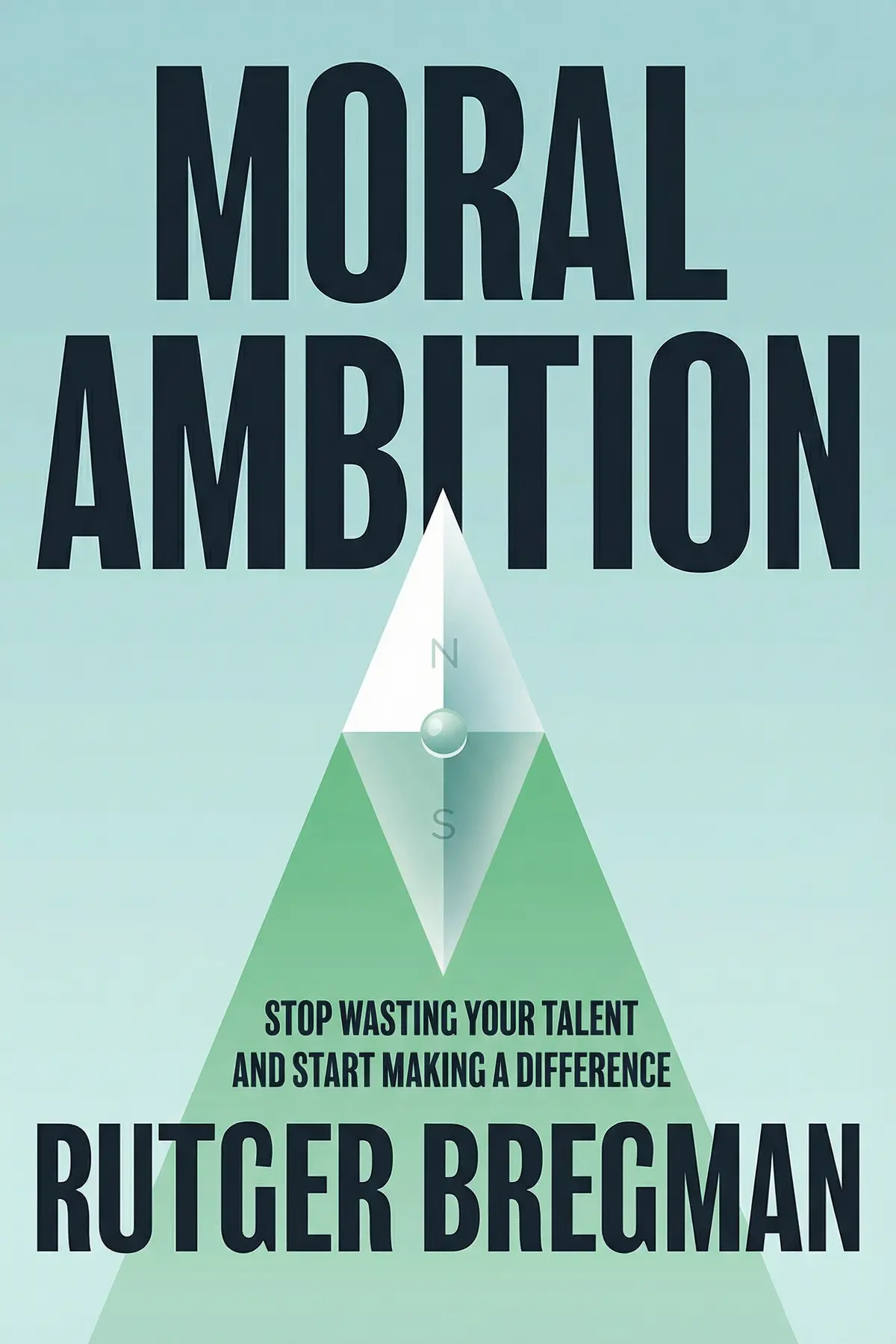
Moral Ambition redefines personal success by showing how to channel your unique talents into solving the world’s most pressing problems through a mix of strategic altruism and radical, expansive empathy.
1 min 28 sec
We often talk about ambition in terms of wealth, status, or climbing the corporate ladder. We admire the drive of the entrepreneur or the focus of the elite athlete. But what happens when we apply that same level of hunger and strategy to the realm of ethics? In Rutger Bregman’s Moral Ambition, we are invited to rethink what a successful life actually looks like. It is a challenge to stop wasting our potential on trivial pursuits and start directing our focus toward the most significant challenges of our time.
Many of us live with a nagging sense that we could be doing more. We see the headlines about global crises, and we feel a momentary pull to help, but that impulse often dissolves into a sense of powerlessness or a checklist of small, safe gestures. Moral ambition is the antidote to this inertia. It’s not about being a saint or achieving perfection; it’s about a radical commitment to use your time, your intellect, and your resources to create the maximum amount of good possible.
This summary will act as a roadmap for that journey. We will explore how to transition from passive awareness to active engagement, how to pick the right battles by looking for neglected yet solvable problems, and how to broaden your perspective to care for those who fall outside your immediate social circle. Through this lens, you’ll see that changing the world isn’t a hobby for the few—it’s the most exciting and meaningful career path available to anyone willing to step up. Let’s look at how we can move from a life of quiet concern to one of bold, transformative impact.
2 min 01 sec
Simply knowing about the world’s problems isn’t enough to solve them. Discover why moving from passive empathy to decisive action is the first step toward a meaningful life.
2 min 00 sec
Not all problems are created equal. Learn how to identify the specific areas where your contribution can have the most significant and lasting impact on the world.
1 min 57 sec
Why treat your moral life with less intensity than your career? Explore how strategy, metrics, and persistence can turn your ideals into reality.
1 min 57 sec
Our natural instincts focus on our immediate surroundings. Discover why true progress requires us to care for those outside our tribe, species, and era.
2 min 01 sec
Doing good shouldn’t be a lonely endeavor. Learn the importance of finding mentors and groups that challenge you to reach your full potential.
1 min 52 sec
How do you stay committed to global problems without losing your own happiness? Discover why joy is a requirement—not a distraction—for long-term change.
2 min 00 sec
The decisions we make today will shape the lives of billions yet unborn. Explore how thinking in centuries can radically change your current priorities.
1 min 33 sec
As we reach the end of this exploration of Moral Ambition, the central question remains: what will you do with the talent and time you have? We’ve seen that the world doesn’t lack for good intentions; it lacks for the bold, strategic application of those intentions. Moral ambition isn’t a destination, but a way of moving through the world. It’s a commitment to stop settling for the easy path and to start looking for where your life can do the most work.
To recap the journey, we’ve learned that the first step is simply to move—to close the gap between being aware of suffering and taking action to alleviate it. We’ve seen the importance of being strategic, choosing neglected and solvable problems rather than just following our impulses. We’ve discussed the need for professional rigor, intellectual humility, and the expansion of our moral circle to include the future and the forgotten. And perhaps most importantly, we’ve learned that this pursuit should be one of joy and community, not solitary sacrifice.
You don’t need to have a perfect plan or a flawless character to begin. You just need the courage to decide that you are going to take your values seriously. The world’s biggest problems are not inevitable; they are challenges waiting for people with the ambition to solve them. Start where you are, use what you have, and join the ranks of those who refuse to let their potential go to waste. In the end, a life of moral ambition is the most rewarding life possible, because it connects your individual story to the greatest story of all: the story of human progress and compassion. Now, it’s time to get to work.
Have you ever wondered if your daily work actually matters in the grand scheme of things? Many people feel a deep-seated desire to contribute to the world, yet they often find themselves stuck in careers that feel ethically stagnant. This summary explores the concept of moral ambition—a framework for moving beyond mere good intentions and toward making a measurable, transformative impact. The promise of this exploration is a complete shift in perspective. You will learn how to identify the global issues where you can make the biggest difference, how to expand your circle of compassion to include those often forgotten by society, and how to maintain your momentum without succumbing to burnout. By treating morality with the same intensity that others treat professional status or wealth, you can align your talent with the greatest needs of humanity.
Rutger Bregman is a Dutch historian and author known for his provocative ideas on social progress and human nature. Bregman is also the cofounder of The School for Moral Ambition, a nonprofit organization aiming to help individuals pursue careers with positive societal impact. His previous titles, Humankind and Utopia for Realists, were both New York Times and Sunday Times bestsellers.
Rutger Bregman
Rutger Bregman
Listeners find the work educational and captivating, noting the powerful prose and motivational anecdotes featured throughout. They value the stimulating subject matter, and one listener characterized the title as an "engaging guide to leading a good life." The material earns praise for its hands-on style, with one review drawing attention to the book’s helpful framework.
Wow. This book is an absolute firecracker that forced me to re-examine how I spend my working hours. Bregman turns abstract moral philosophy into a visceral call to action, especially with his focus on the '20-minute rule' and the incredible story of Rob Mather. While some might find his utilitarian approach cold, I found it refreshing because it prioritizes actual results over just 'feeling good' about a cause. He masterfully dismantles the idea of being a 'Noble Loser' who has great intentions but zero impact. It’s an engaging guide to leading a good life that moves beyond the typical self-help fluff. If you are tired of feeling like your career is just a series of 'bullshit jobs,' this is the manifesto you need.
Show moreEver wonder why the smartest people we know are busy solving 'first world problems' instead of tackling biological warfare or climate change? This book is a loud wake-up call for anyone sitting on the sidelines of history. Bregman isn't here to hold your hand; he’s here to push you off the fence and into the arena. I was particularly moved by the distinction between being idealistic and being ambitious. Many of us want to save the world but lack the grit or the strategy to actually make a dent. By highlighting figures like Rosa Parks within the context of organized movement-building, he shows that change isn't just about 'good vibes'—it’s about strategy, persistence, and focus. This is essential reading for the next generation.
Show moreBregman has a rare gift for making complex ethical dilemmas feel both urgent and solvable. He doesn't just ask us to be 'good'—he asks us to be effective, which is a much higher bar to clear. The historical deep-dives into people like Thomas Clarkson are masterfully done and serve as a brilliant template for modern social movements. I particularly appreciated the discussion on 'moral start-ups' and the need for new structures outside of failing existing systems. Even if you don't share his utilitarian leanings, the sheer energy of the book is infectious. It’s a powerful, blunt, and necessary argument for anyone who feels that their current path is generating zero social value. Truly an inspiring piece of work.
Show moreAs a professional working in the tech sector, I found the concept of 'Value Over Replacement Player' (VORP) absolutely fascinating. Bregman argues that too many of our brightest minds are wasting their talent on optimizing ad clicks or trading stocks, and he's totally right. The writing is punchy and the historical examples, like the 'Radical Nerds' under Ralph Nader, provide a practical framework for how to actually organize for change. To be fair, the book is clearly aimed at a very specific, high-earning Western audience, which makes some of the advice feel like an unaffordable luxury for most. However, for those of us in the 'golden cage,' this is a necessary and persuasive push to do better.
Show morePicking this up after reading David Graeber’s 'Bullshit Jobs' was an eye-opening experience. Where Graeber identifies the malaise of modern employment, Bregman attempts to provide the cure through his definition of moral ambition. I don't necessarily agree with his hard-line consequentialist stance—I still believe that intentions and character matter—but his arguments are passionately made. The chapter on 'wicked challenges' like AI and nuclear war was particularly sobering and well-researched. My only real gripe is the lack of female perspectives in his historical examples, which gives the narrative a somewhat lopsided feel. Still, the core message to stop wasting your talent is one that I’ll be recommending to all my friends in corporate roles.
Show moreNot what I expected, but exactly what I needed to hear as I navigate a career pivot. I loved the breakdown of the four categories of people; realizing I’ve been 'idealistic but not ambitious' for years was a tough pill to swallow. Bregman’s prose is blunt and effective, stripping away the excuses we use to stay comfortable in our careers. The success story of the Against Malaria Foundation is a perfect example of how high-impact entrepreneurship can change the world. While I found his dismissal of more traditional activism a bit harsh, I can't deny that his 'Value Over Replacement' logic is hard to argue with. It's a provocative, useful framework for anyone wanting to maximize their positive footprint.
Show moreAfter hearing Bregman on several podcasts, I finally decided to dive into his latest work. The book certainly reads like a train, but I struggled with the tone. He presents what are essentially personal opinions and utilitarian rhetoric as if they are settled scientific facts. His critique of Effective Altruism felt a bit thin, especially considering how much his own 'School for Moral Ambition' seems to borrow from those very same circles. I appreciated the stories about Benjamin Lay’s radical obsession, yet the conclusion that we should all effectively 'join cults' to get things done is a bit much. It’s a thought-provoking read that will spark great debates, but don’t expect a deep philosophical dive into virtue ethics.
Show moreThe truth is, I’m torn between admiring the ambition of this project and fearing its methodology. Bregman’s writing is undeniably engaging and his ability to weave historical narratives into modern challenges is impressive. However, the book feels incredibly selective in what it includes to paint a specific picture. He praises the 'obsession' of abolitionists but only briefly touches upon the personal cost, such as the burnout and social isolation that often follow such a singular life focus. It’s a very masculine, action-oriented approach to morality that leaves little room for nuance or systemic critique. It is an inspiring read for a weekend, but I’m not sure it provides the robust ethical compass it claims to offer.
Show moreThis book left me cold, despite its high-minded intentions. Bregman writes with a certain arrogance that assumes he has the definitive answers to the world's most complex ethical questions. His dismissal of contemplative lives—like the meditating monk he calls a 'time-waster'—is incredibly narrow-minded and ignores centuries of spiritual wisdom. The text is packed with anecdotes about heroes like Thomas Clarkson, but it suffers from massive survivorship bias. He highlights the one-in-a-million successes while completely ignoring the thousands of morally ambitious people who crashed and burned or made things worse. It feels more like a provocative sermon than a balanced analysis of how to actually navigate the messy reality of activism.
Show moreHonestly, the level of condescension in these pages is staggering. Bregman preaches from a high horse, making intentionally provocative claims that seem designed to make the reader feel small. He claims that inventors have saved more lives than Mandela or Mother Theresa, which is such a reductionist, 'spreadsheet-style' way of looking at human progress. The book is a jumbled collection of anecdotes with very little coherence, eventually devolving into vague self-help advice for would-be activists. There is absolutely no reflection on how taking 'bold action' can sometimes lead to disastrous unintended consequences. It’s a cringe-worthy 'change the world' manifesto written for Silicon Valley types who want to feel like heroes without questioning their own privilege.
Show more

William B. Irvine
Andrew D. Thompson
Deepak Chopra
Robin Ryan
AUDIO SUMMARY AVAILABLE
Get the key ideas from Moral Ambition by Rutger Bregman, plus 5,000+ more titles in English and Thai.