
24 min 03 sec
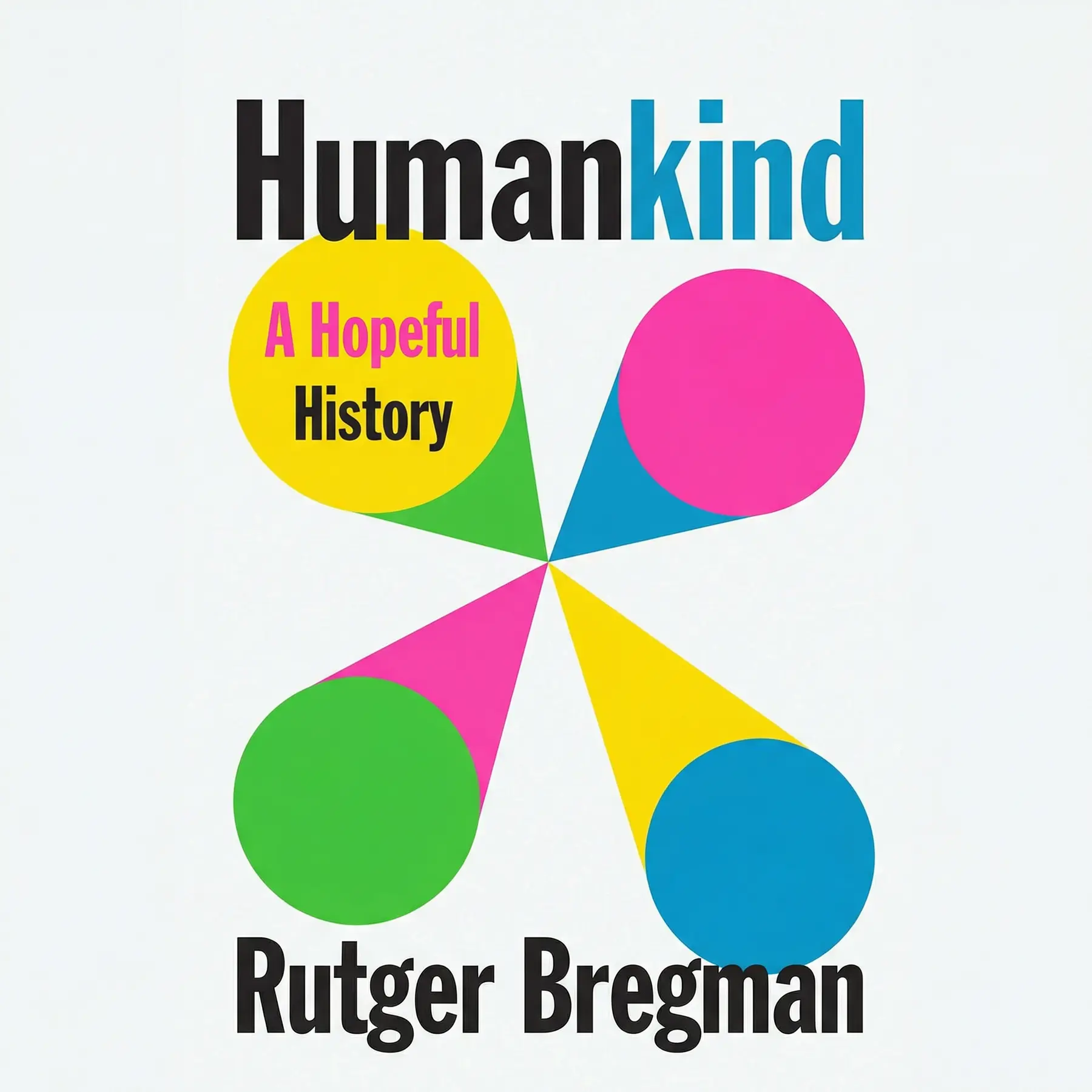
Humankind: A Hopeful History
Humankind challenges the deep-seated myth of human selfishness, revealing that our history is defined not by brutality, but by a remarkable, evolutionary drive toward cooperation, kindness, and communal resilience.
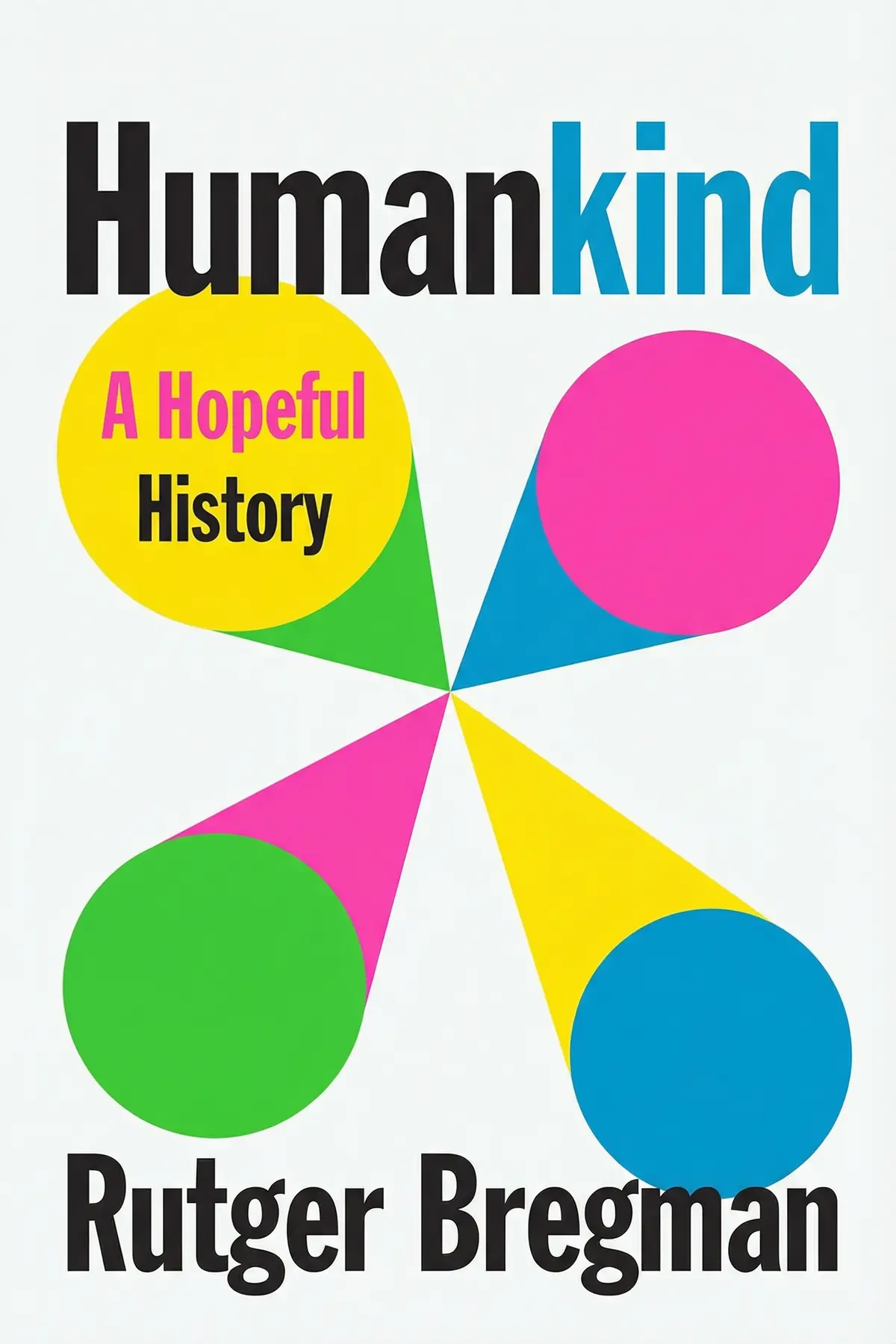
Table of Content
1. Introduction
1 min 46 sec
Consider for a moment the stories we tell ourselves about who we are. If you look at the headlines on any given day, the picture is quite grim. We see reports of conflict, exploitation, and betrayal. For centuries, philosophers and leaders have operated on a foundational assumption: that deep down, humans are inherently dangerous. We are told that we are selfish creatures, and that the only thing keeping us from descending into total anarchy is the thin ‘veneer’ of civilization. This idea suggests that if you remove the laws, the police, and the social expectations, we would all turn on one another in a desperate struggle for survival.
But what if that entire premise is a lie? What if the very core of our being isn’t a predator, but a partner? This exploration takes us through a radical re-evaluation of the human story. We’re going to look at the evidence that suggests our greatest evolutionary advantage wasn’t our strength or our aggression, but our ability to get along. We’ll examine why we have been conditioned to believe the worst about our neighbors and how that belief creates a self-fulfilling prophecy of distrust.
By the end of this journey, you may find that the ‘brutal truth’ about human nature is neither brutal nor particularly hidden—it’s just been buried under layers of cynical storytelling. From the battlefields of World War II to the silent testimony of prehistoric cave paintings, we are going to uncover a throughline of hope. This isn’t just a feel-good sentiment; it’s a more accurate, scientifically grounded way of looking at our species. We are about to discover that in the face of disaster, we don’t become monsters—we become neighbors. This is the story of our capacity for kindness, the evolution of ‘Homo puppy,’ and why believing in the goodness of others might be the most revolutionary act we can perform.
2. The Resilience of the Human Spirit in Crisis
2 min 40 sec
When the bombs started falling on London, experts expected a descent into madness. What actually happened shattered every cynical prediction about human behavior under pressure.
3. The Poisonous Effect of a Negative Worldview
2 min 40 sec
Our perceptions of humanity are often distorted by the information we consume. Learn why the news acts as a negative placebo, shaping a reality that doesn’t exist.
4. Challenging the Historical Assumption of Human Evil
2 min 27 sec
Is civilization the only thing keeping us from a ‘war of all against all’? We dive into the centuries-old debate between Hobbes and Rousseau.
5. The Evolution of 'Homo Puppy'
2 min 41 sec
What if our greatest survival skill was being nice? Discover how humans domesticated themselves to become the friendliest species on the planet.
6. The Corrupting Influence of Property and Power
2 min 39 sec
If we’re so naturally kind, why is the world full of inequality and war? The answer lies in the shift from wandering to settling down.
7. The Double-Edged Sword of Empathy
2 min 25 sec
Empathy is often seen as a universal good, but it can also be a catalyst for conflict. Discover why our best impulses can lead to our worst actions.
8. The Biological Barrier to Violence
2 min 27 sec
Despite what we see in movies, killing doesn’t come naturally to humans. Explore the startling evidence of our deep-seated aversion to harm.
9. A Future Built on Trust
2 min 26 sec
What happens when we stop assuming the worst of people? From Norwegian prisons to self-managing companies, see how trust can transform society.
10. Conclusion
1 min 52 sec
As we conclude this journey through a more hopeful history, let’s return to the central question: who are we, really? For too long, we have allowed the loudest, most violent parts of our history to define our entire identity. We have mistaken the ‘veneer’ of our institutions for the core of our humanity. But as we’ve seen, the evidence from our biology, our evolution, and our moments of greatest crisis tells a different story. We are a species defined by our capacity for friendship, our reluctance to do harm, and our incredible ability to cooperate.
The implications of this shift in perspective are profound. If we stop believing that everyone is out for themselves, we can stop building walls and start building bridges. We can move from a ‘nocebo’ culture of fear to a ‘placebo’ culture of trust. This doesn’t mean being naive or ignoring the reality of suffering and injustice. It means recognizing that those things are often the result of the systems we’ve built, not the people within them.
The throughline of our history is not a descent into darkness, but a persistent, resilient drive toward connection. Whether it’s the boys on a Tongan island, the Londoners in the Blitz, or the soldiers in the Christmas Truce, the ‘real’ human nature is the one that reaches out in the dark.
So, here is your challenge: take this new lens out into the world. Start by assuming the best of the people you meet. Watch how it changes your interactions. Notice how trust breeds trust. We have the power to create a world that reflects our best impulses, but it starts with a simple, revolutionary choice: to believe in humankind. It is time to retire the old, cynical stories and start writing a new one—one that is not only more hopeful but more true to who we have always been.
About this book
What is this book about?
For centuries, the prevailing narrative has been that humans are fundamentally selfish, aggressive, and prone to chaos without strict societal control. This perspective, often called 'veneer theory,' suggests that civilization is merely a thin layer masking our true, savage nature. Humankind dismantles this cynical worldview by synthesizing insights from history, archaeology, and social science to present a compelling alternative: humans are actually wired for friendliness and collaboration. From the surprising behavior of civilians during wartime blitzes to the reality of how children behave when stranded on desert islands, this exploration reveals that crises often bring out our best qualities rather than our worst. The book promises to shift your perspective on everything from the news we consume to the way we structure our schools and prisons, offering a hopeful framework for building a society rooted in trust rather than suspicion.
Book Information
About the Author
Rutger Bregman
Rutger Bregman is a prominent Dutch historian and author born in 1988. He gained international acclaim for his work Utopias for Realists, which advocates for radical shifts like universal basic income and a 15-hour workweek. Bregman is also recognized for his 2019 appearance at the World Economic Forum in Davos, where he famously challenged billionaires regarding tax avoidance.
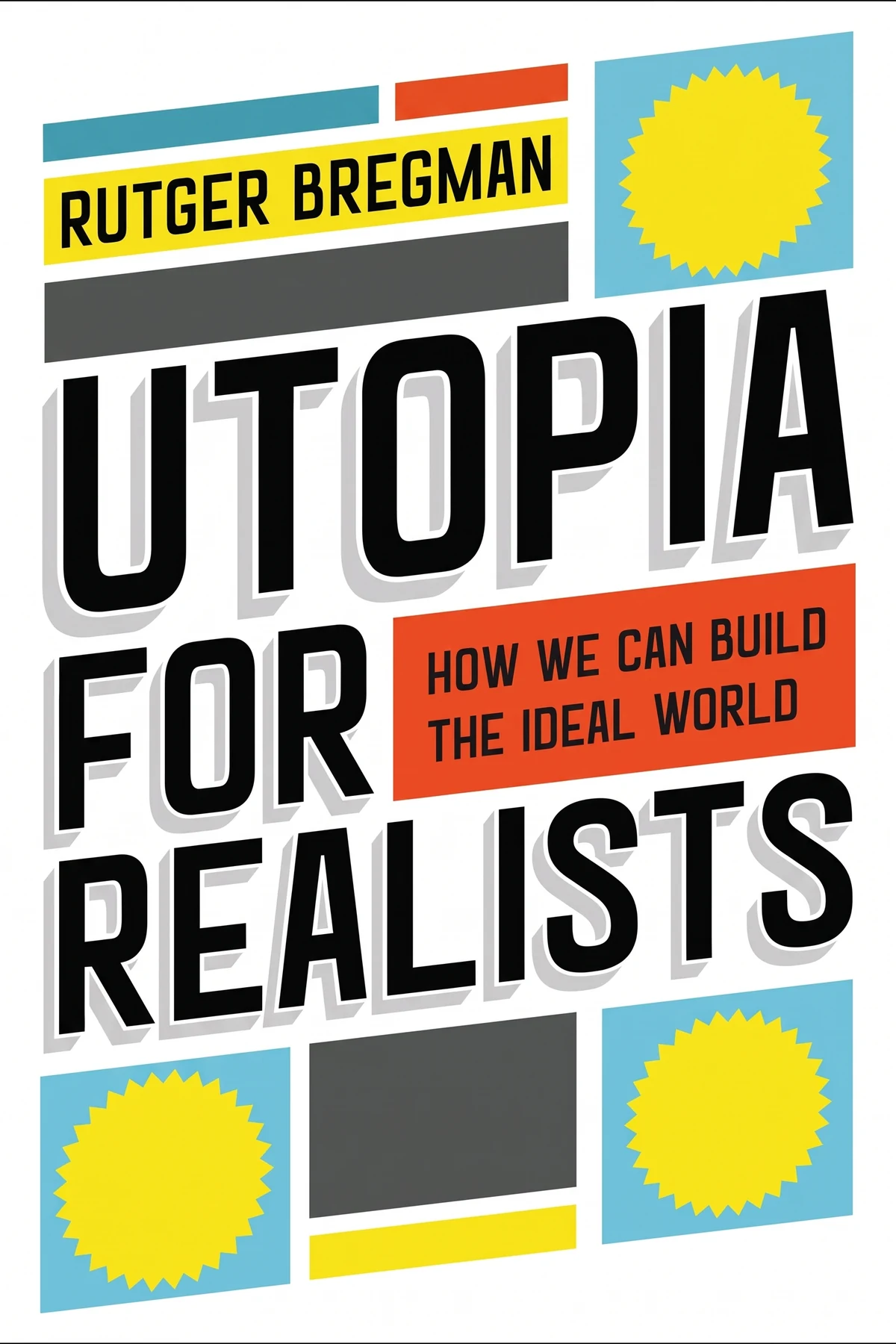
Utopia for Realists: How We Can Build the Ideal World
Rutger Bregman
Ratings & Reviews
Ratings at a glance
What people think
Listeners find this work remarkably accessible and persuasive, featuring thoroughly documented material that offers an optimistic outlook on humanity's essence. The prose is captivating, and listeners value the deep reflections it triggers, with one listener noting that it prompted a reassessment of their life. Listeners have differing views on the book’s reliability.
Top reviews
Tanawan
Wow, this was exactly the breath of fresh air I needed in such a cynical world. We are constantly bombarded with news about how selfish and cruel humans are, so reading about the real-life Lord of the Flies was a revelation. Bregman shows that when actual schoolboys were stranded on an island, they collaborated and survived rather than turning into savages. It’s a compelling argument that our systems—not our souls—are what often bring out the worst in us. The writing style is incredibly engaging and fast-paced, making complex sociological concepts feel like a gripping story. I finished this feeling significantly more hopeful about our collective future and more inclined to trust the strangers I meet on the street. It’s one of those rare books that genuinely changes your outlook on life. Seriously, everyone should read this to counteract the negativity of the 24-hour news cycle.
Show moreFah
After years of feeling burnt out by the state of the world, this book felt like a healing experience. It’s not just a collection of nice stories; it’s a systematic dismantling of the idea that we are born evil. Finding out that the infamous Kitty Genovese story or the Stanford Prison Experiment were largely misrepresented was mind-blowing to me. It makes you realize how much our media and education systems rely on fear to maintain control. Bregman’s writing is lively and accessible, stripping away the jargon to reveal a very simple, radical truth: trust breeds trust. Since finishing it, I’ve been trying to approach my daily interactions with less suspicion and more openness. It’s rare to find a book that offers both a scholarly critique and a practical blueprint for a better society. If you've ever felt like humanity is a lost cause, please give this a chance to change your mind.
Show morePannipa
What a fascinating journey through the hidden history of human kindness. I’ve read Harari and Pinker, but Bregman offers a much more optimistic and, frankly, more relatable perspective on where we come from. The way he weaves together archaeology, psychology, and history is masterful without ever feeling dry. I loved the chapters on the "No Man's Land" Christmas truce and the actual behavior of people during the Blitz. It turns out that when things go wrong, we don't turn on each other; we actually step up to help. The book is incredibly well-researched, yet it reads like a thriller. It’s thought-provoking and challenges almost everything you think you know about human nature. Some might call it naive, but I think it’s a necessary correction to the doom-and-gloom narratives that dominate our culture. A truly compelling read that I couldn't put down until the very last page.
Show morePrim
Finally got around to reading this, and it lived up to all the hype. The world needs this book right now more than ever. Bregman doesn't just say "be nice"; he provides a historical framework for why cooperation is actually our greatest evolutionary strength. It completely flipped my understanding of the "survival of the fittest" concept. It turns out the "fittest" were often the most friendly and cooperative, not the most aggressive. The book is filled with such well-researched content that it’s hard to ignore the hopeful conclusions. I particularly liked the examples of modern systems, like the Norwegian prison model, that actually work by treating people with dignity. It makes you realize that so much of our society is built on a false, cynical premise. This isn't just a book to read; it's a book to act upon. Highly recommended for anyone looking for a reason to believe in a better tomorrow.
Show moreMats
As someone who usually finds history books a bit of a slog, I was surprised by how much I enjoyed this. Rutger Bregman is a gifted storyteller who knows how to keep the reader hooked from the first page. He takes these legendary social experiments that we all learned about in school and turns them on their heads with fresh evidence. The writing is clear, witty, and deeply engaging. It’s one of those books where you find yourself constantly highlighting passages to share with friends. While some might find his optimism a bit much, I found it incredibly refreshing to see a writer defend humanity for once. It’s a very readable and compelling look at our species that provides a much-needed dose of positivity. It’s the kind of non-fiction that feels important without being self-important. I’ll definitely be looking into his other work after this.
Show moreGift
Picked this up after a friend wouldn't stop raving about it, and I can see why it’s caused such a stir. Bregman’s central thesis—that most people are decent—is backed by a fascinating re-evaluation of history and social science. I particularly enjoyed the sections on how hunter-gatherer societies were far more egalitarian than we usually assume. To be fair, the prose can be a bit over-the-top at times, using those ultra-short sentences and dramatic cliffhangers typical of modern non-fiction bestsellers. It sometimes feels more like a long-form magazine article than a dense historical tome, which helps the readability but might annoy serious scholars. Still, the core message about trust and cooperation is powerful and timely. It challenges the "veneer theory" that civilization is just a thin mask over our animalistic urges. Even if you don't agree with every single point, it provides plenty of food for thought regarding how we structure our schools and workplaces.
Show moreMo
Ever wonder why we’re so convinced that everyone else is out to get us? Bregman argues that the news is essentially a drug that distorts our perception of reality, focusing only on the exceptions rather than the rule of human decency. The insights into how we’ve been "sold" a negative view of ourselves are brilliant. However, I have to agree with some critics that the writing style is very informal—lots of rhetorical questions and punchy, one-sentence paragraphs that can get a bit repetitive. It's definitely designed for a wide audience, which is great for spreading the message, but it occasionally sacrifices nuance for the sake of a good story. That being said, the evidence regarding the innate friendliness of our species is quite convincing. It’s a solid 4-star read that will definitely spark some intense dinner-table debates.
Show moreSupaporn
Not what I expected, but in the best way possible. I thought this might be another dry history book like Sapiens, but it’s much more focused on the psychological and moral core of our species. Bregman argues that our natural inclination toward empathy and connection is what allowed us to survive where others didn't. The research into "natural" human behavior versus "civilized" violence is absolutely fascinating. Personally, I found the chapter on how we've been conditioned to be soldiers particularly moving. It’s a bold, thought-provoking book that makes you rethink almost every interaction you have. Even if you only agree with half of what he says, the questions he raises about how we organize society are crucial. It’s an accessible, beautifully written piece of non-fiction that manages to be both intellectually stimulating and emotionally resonant.
Show moreTen
While I desperately wanted to be convinced by Bregman’s optimism, I found the execution somewhat lacking in academic rigor. The book does a fantastic job of deconstructing famous psychological experiments like the Stanford Prison Experiment and the Milgram shocks, showing they weren't as "scientific" as we've been led to believe. However, the author often slides into cherry-picking his own evidence to fit a pre-determined narrative of inherent goodness. Truth is, human nature is likely far more messy and situational than this binary choice between Hobbes and Rousseau. It’s a very readable, journalistic piece of work that certainly makes you rethink the 'veneer theory' of civilization. Yet, I couldn't shake the feeling that he was hand-waving away the darkest chapters of our history to keep the tone light. If you enjoy pop-science that challenges the status quo, it’s worth a look, but take the sweeping conclusions with a healthy grain of salt.
Show moreAnchalee
Maybe I'm just a cynic, but this felt more like wishful thinking than a rigorous historical analysis. Bregman spends a lot of time debunking old studies, but his own replacements are often just as anecdotal and selective. He tries to explain away the Holocaust and other atrocities by blaming "the system" or "the leaders," but that feels like a massive cop-out. Are we really supposed to believe that individuals bear no responsibility for their actions as long as they were "trying to do good" in their own warped minds? The tone is incredibly informal and at times even patronizing, as if the author is explaining things to a child. Look, I want to believe people are mostly good, but this book didn't provide enough hard evidence to overcome the weight of human history. It's a nice sentiment for a coffee table book, but it lacks the depth required for such a monumental topic.
Show moreFeatured in
Readers also enjoyed
Alexander the Great
Philip Freeman
A Liberated Mind: How to Pivot Toward What Matters
Steven C. Hayes

A History of Iran: Empire of the Mind
Michael Axworthy

Acting with Power: Why We Are More Powerful Than We Believe
Deborah Gruenfeld
A History of the World in 6 Glasses
Tom Standage
AUDIO SUMMARY AVAILABLE
Listen to Humankind in 15 minutes
Get the key ideas from Humankind by Rutger Bregman, plus 5,000+ more titles in English and Thai.
- 5,000+ titles
- Listen as much as you want
- 7-day free trial
- Cancel anytime







