

26 min 06 sec
Move Fast and Break Things: How Facebook, Google and Amazon Cornered Culture and Undermined Democracy
A critical examination of how dominant technology companies have consolidated power, harmed creative industries, and threatened democratic institutions, while proposing ways to build a more equitable and decentralized digital future.
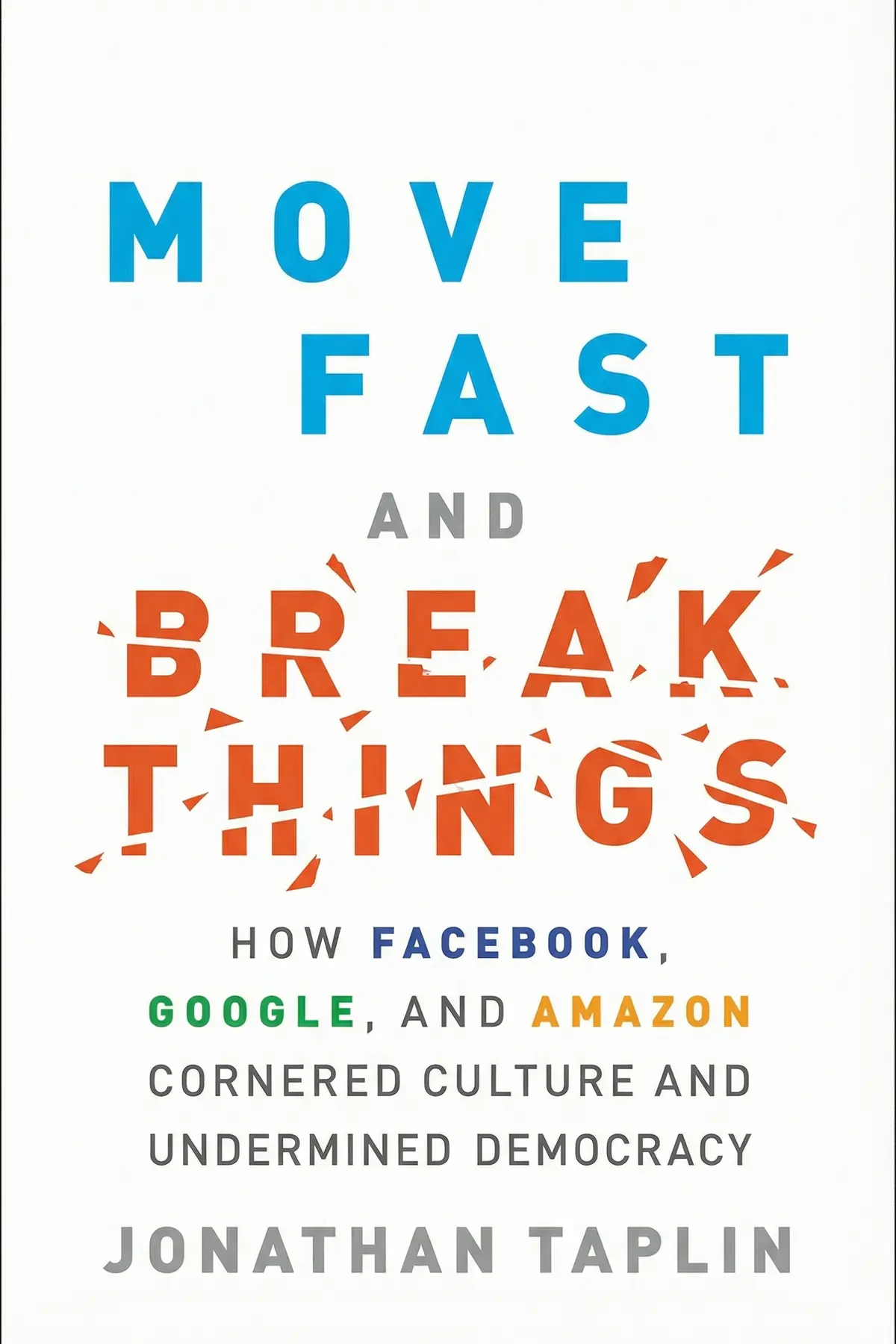
Table of Content
1. Introduction
1 min 58 sec
When we think of Silicon Valley, the imagery that often comes to mind is one of relentless progress—a sun-drenched landscape where brilliant minds in casual attire work in garages to build the future. We are told a story of disruption that benefits everyone, where the old, dusty gatekeepers of the past are swept away by the democratizing power of the internet. But what if that story is incomplete? What if the very platforms that promised to set us free have instead built new, more impenetrable walls?
In this exploration of Jonathan Taplin’s work, we are invited to look past the shiny veneer of modern tech and examine the underlying machinery that powers our digital lives. The central throughline here is a sobering realization: the digital revolution has undergone a radical transformation. What started as a decentralized project funded by public resources has been captured by a few massive entities that prioritize growth and data collection over the health of our culture and democracy.
Over the course of this summary, we will navigate the shift from the public-spirited origins of the web to the rise of a libertarian-inflected monopoly culture. We will see how the ‘move fast and break things’ ethos—a phrase once used to celebrate agility—has actually resulted in the breaking of business models for musicians, writers, and filmmakers. We will explore the historical precedents for today’s monopolies and see why the current state of the internet isn’t an accident, but the result of specific ideological and legal shifts. More importantly, we’ll look at the human cost of these changes, from the loss of privacy to the struggle of legendary artists to make a living in an age of digital abundance. This isn’t just a critique of big tech; it’s a call to understand the forces shaping our world so that we might begin to build something more equitable for everyone.
2. The Public Roots of Modern Innovation
2 min 42 sec
Explore how the foundational technologies of the digital age were not born in private garages, but through significant government investment and public research initiatives.
3. The Rise of Silicon Valley Libertarianism
2 min 58 sec
Discover how a specific ideological shift toward libertarianism helped shape the business strategies of today’s tech leaders and their approach to regulation.
4. The Erosion of Antitrust Protections
2 min 52 sec
Uncover the historical battle over monopolies and how a shift in legal philosophy paved the way for the massive consolidation of the tech industry.
5. The Hidden Economy of Digital Rent
2 min 44 sec
Learn how the largest tech firms use their market dominance to act as gatekeepers, extracting ‘rent’ and influencing the political process.
6. The Creative Crisis and the Cost of Piracy
2 min 45 sec
Examine the devastating impact that digital piracy and centralized distribution have had on the lives and livelihoods of musicians and artists.
7. Surveillance Capitalism and the Loss of Privacy
2 min 41 sec
Analyze the business model of data harvesting and how major platforms prioritize information gathering over the privacy of their users.
8. The Power of Community and Foresight
2 min 37 sec
Explore how local communities and prophetic works of literature provide models for resisting corporate dominance and reclaiming our digital future.
9. A New Model for the Creative Economy
2 min 33 sec
Discover how artists can use cooperatives and strategic distribution to take back control from the major streaming platforms and tech giants.
10. Conclusion
2 min 16 sec
As we look back at the ground we’ve covered, the picture that emerges is one of a digital landscape at a crossroads. We started by uncovering the surprising truth that the foundational technologies of our world were born from public investment and the common good, not just private profit. We then traced how that public resource was captured by a libertarian-inspired ideology that prioritizes growth, tax avoidance, and the dismantling of traditional safeguards.
The ‘move fast and break things’ era has indeed broken much—it has undermined the economic stability of the creative class, eroded our personal privacy through relentless data harvesting, and allowed for the rise of massive monopolies that stifle competition and exert undue influence over our politics. From the tragic financial struggle of a legend like Levon Helm to the aggressive market tactics of Amazon and Google, the costs of this unchecked consolidation are clear.
But the story doesn’t end with corporate dominance. We have seen that there is another path. The success of community-led projects like the fiber network in Chattanooga and the enduring power of artist-run cooperatives like Magnum Photos show us that we are not powerless. We have the tools to build a different kind of internet—one that is decentralized, equitable, and respectful of the people who provide the content and the data that make it valuable.
The central message is a call to action: we must stop being passive consumers and start being active participants in our digital future. This means supporting artists directly, advocating for the return of robust antitrust enforcement, and protecting our privacy from the prying eyes of surveillance capitalism. It requires a shift from the ‘me’ focus of libertarianism back to the ‘we’ focus of community and cooperation. By understanding the forces that have cornered our culture, we gain the power to break those corners and open up a space where innovation and democracy can once again thrive together. The future of the internet, and the health of our society, depends on our willingness to move toward a model that values people as much as it values progress.
About this book
What is this book about?
The narrative surrounding Silicon Valley is often one of pure innovation and democratic empowerment, but this book pulls back the curtain to reveal a much more complex and troubling reality. Jonathan Taplin explores how a handful of massive tech corporations—specifically Google, Facebook, and Amazon—have moved from being scrappy startups to becoming global gatekeepers that exert unprecedented control over our culture, economy, and information. Through a blend of historical analysis and economic commentary, the text traces the shift from a government-funded, open internet to a privatized landscape dominated by libertarian ideologies. It examines the devastating impact of this consolidation on artists, musicians, and journalists who find their livelihoods undercut by piracy and unfair distribution models. Ultimately, the book serves as both a warning and a roadmap, offering strategies for how communities and creators can organize to reclaim the digital commons and ensure a more balanced future for society and the arts.
Book Information
About the Author
Jonathan Taplin
Jonathan Taplin is an American writer, film producer, and scholar who has served as a professor at the USC Annenberg School for Communication and Journalism since 2004. His diverse career began in the music industry as a concert producer for iconic artists like Bob Dylan and The Band. He later transitioned into film, producing notable works such as Martin Scorsese’s Mean Streets. In addition to his work in media production, he is the author of Outlaw Blues: Adventures in the Counter-Culture Wars.
Ratings & Reviews
Ratings at a glance
What people think
Listeners find the material highly accessible and extensively researched, with one listener noting it as a must-read for artists and creators. Furthermore, the book's tempo is well-received, and one review designates it the most important book yet about technology and politics. On the other hand, the author's credibility results in mixed responses among listeners.
Top reviews
Pita
Wow, this was a total wake-up call regarding the platforms we use every single day. Taplin makes a compelling case that we are essentially living in a new age of Gilded Age monopolies, where a few billionaires decide what news we see and what art survives. Personally, I found the section on "coliseum culture" and the addictive nature of social media to be the strongest part of the book. It’s a fast-paced, urgent call to action that every creator should read if they want to understand why the "starving artist" trope is becoming a permanent reality. We really need to start treating these platforms like public utilities before it's too late for democracy.
Show moreSelin
Picked this up after seeing a few interviews with the author and I’m glad I did. It’s a scathing indictment of the "don't be evil" facade that these tech giants have cultivated for decades. Taplin does a fantastic job of connecting the dots between obscure economic theories and the current state of our broken political discourse. The truth is, we've traded our privacy and our cultural diversity for the convenience of a search bar and a "Like" button. This should be required reading for anyone interested in politics, technology, or the future of creative work. It’s provocative, well-researched, and deeply moving.
Show moreBee
If you want to understand the current state of digital capitalism, start here. Taplin manages to make complex topics like the DMCA and anti-trust regulation feel like a fast-paced thriller. I found his analysis of how data is used to commoditize everything, from our moods to our music tastes, to be incredibly sharp and well-articulated. While he is definitely writing from the perspective of a disgruntled artist, that doesn't make his data any less valid. The book moves quickly and left me thinking about my own digital habits for weeks afterward. It's an essential critique for the modern age.
Show moreNora
Finally got around to reading this, and I have to say, it’s one of the more eye-opening takes on how big tech has essentially hijacked our culture. Taplin dives deep into the history of the internet, showing how a libertarian "Wild West" ideology allowed companies like Google and Facebook to become massive monopolies. Truth is, I didn't realize how much influence the Koch brothers and figures like Peter Thiel had on the early digital landscape. The pacing is excellent, keeping me engaged even when the legal talk got a bit dense. While he does seem a bit bitter about the decline of the traditional media model, his research on data collection and the loss of privacy is genuinely terrifying.
Show moreJiraporn
Ever wonder how we ended up with three companies controlling everything we see on our screens? This book provides a deeply researched, though definitely one-sided, history of how the "techno-libertarians" won the battle for the internet. I particularly enjoyed the segments on the early days of YouTube and the struggle for digital rights. While I think Taplin overlooks how much Netflix has actually helped the film industry, his points about the "value gap" in music are hard to argue with. It's a dense read at times, but the prose is sharp and the author's experience in the industry adds a layer of authenticity.
Show moreIvan
Taplin clearly knows his stuff when it comes to the music world, and that expertise shines through in his critique of the streaming economy. The story of Levon Helm’s battle with medical bills while his music was being streamed millions of times for free is heartbreaking. It really makes you rethink your relationship with these "free" platforms. To be fair, the book can be a bit alarmist at times, and he paints everyone in tech with the same "evil libertarian" brush. Still, it’s a necessary counter-narrative to the idea that Silicon Valley is purely a force for good in the world.
Show moreVipawan
As someone who loves both tech and music, this was a difficult read to get through. On one hand, the author's passion for the arts is undeniable, especially when he discusses the tragic financial struggles of legends like Levon Helm. However, the book often feels like it's ignoring the benefits of the digital shift, focusing only on what was lost rather than what was gained. Look, we can't go back to the days of big record labels controlling everything, even if the current system is flawed. The writing style is punchy and professional, but the bias is so thick you could cut it with a knife. I’d recommend it for the historical context, but take his solutions with a grain of salt.
Show moreWichai
This book is a bit of a rollercoaster. There are chapters, especially near the end, where Taplin is incredibly insightful about the way algorithms are designed to keep us hooked. But then you have sections that feel like he's just venting about his personal friends losing money in the digital transition. Not gonna lie, I almost stopped reading during the first few chapters because of the blatant bias against anything Silicon Valley does. If you can push through the "get off my lawn" energy, there is some really valuable information here about anti-trust laws and the disappearance of the middle class in the creative arts.
Show moreSomrutai
Not what I expected after reading that punchy title. Taplin’s background in the music industry is impressive, yet it colors every single argument he makes until the whole book feels like a long-form complaint. To be fair, he raises valid points about the erosion of copyright and how musicians are struggling, but he ignores how the internet has democratized discovery for indie artists. The chapter on Peter Thiel felt particularly aggressive and lacked the nuance I was hoping for in a serious critique of Silicon Valley. It’s well-written in terms of prose, but the logic is often circular and relies too heavily on his own nostalgia for the 1970s.
Show moreTen
The title is incredibly catchy, but the content inside felt like a series of grievances from a bygone era. It's frankly hard to take an author seriously when they spend half the book blaming Google for the fact that people don't buy physical albums anymore. Evolution is part of capitalism, and while the "Move Fast and Break Things" mantra has caused issues, Taplin's solution seems to be just going back to 1975. The writing is incredibly repetitive and filled with false correlations that any tech-literate person will spot immediately. It’s a shame because there is a good book to be written about tech monopolies, but this isn't it.
Show moreReaders also enjoyed




AUDIO SUMMARY AVAILABLE
Listen to Move Fast and Break Things in 15 minutes
Get the key ideas from Move Fast and Break Things by Jonathan Taplin, plus 5,000+ more titles in English and Thai.
- 5,000+ titles
- Listen as much as you want
- 7-day free trial
- Cancel anytime







