

A Guide to the Good Life: The Ancient Art of Stoic Joy
William B. Irvine
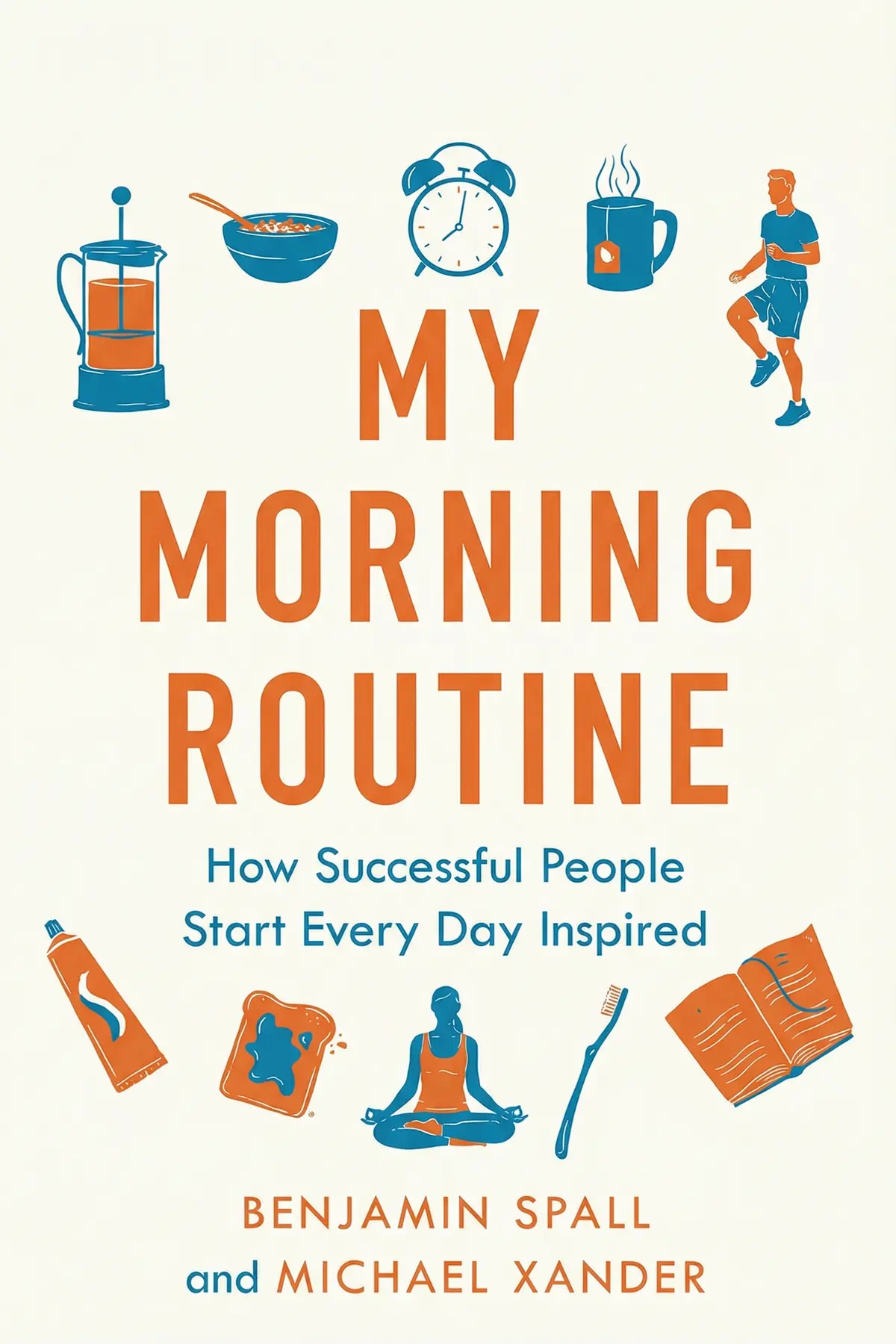
My Morning Routine explores the daily habits of over sixty successful individuals, offering diverse strategies to reclaim your early hours, boost productivity, and design a lifestyle that begins with intention and clarity.
2 min 30 sec
Every morning presents a choice: we can either react to the world or we can prepare for it. For many of us, the first few minutes of the day are a blur of half-conscious decisions, hurried coffee, and the digital noise of social media. We feel behind before we’ve even stepped out the door. But what if there was a different way? What if the first hour of your day was an oasis of calm, a period of intense focus, or a burst of creative energy? This is the core question explored in the research conducted by Benjamin Spall and Michael Xander. They didn’t just look for general advice; they interviewed dozens of the world’s most successful individuals to find out exactly how they navigate those critical early hours.
The philosophy behind these findings is that life is an ongoing experiment. There is no single ‘correct’ way to wake up that applies to everyone on the planet. Instead, the most effective people are those who have tested different habits, kept what works, and discarded what doesn’t. By looking at the routines of sixty-four different innovators—including writers, entrepreneurs, and athletes—we can see patterns emerge. These patterns aren’t rigid rules, but rather a menu of possibilities that you can use to craft your own ideal start.
Throughout this discussion, we will explore the common threads that link these high achievers. We’ll look at why some people find it easy to jump out of bed while others struggle, and how the quality of your morning is often determined the night before. We will delve into the roles of exercise, meditation, and deep work, while also acknowledging the messy reality of life, such as raising children or traveling across time zones. The goal here is to move away from the idea of a ‘perfect’ routine and toward a ‘personalized’ one.
As we move through these ideas, think of yourself as a scientist in your own life. The throughline of this journey is the belief that by mastering the start of your day, you gain mastery over the rest of your life. It’s about moving from a state of being overwhelmed to a state of being intentional. So, let’s begin by looking at what actually motivates someone to leave the warmth of their covers and face the day with genuine enthusiasm.
3 min 29 sec
Discover how the most successful people use a ‘hook’—whether a vital professional task or a personal passion—to overcome the gravitational pull of a warm bed.
3 min 13 sec
Learn why the early hours are the prime time for your most significant tasks and how avoiding the ’email trap’ can keep you in the driver’s seat of your day.
3 min 08 sec
Explore why physical exercise is about much more than fitness, serving as a powerful tool for mental clarity and emotional resilience throughout the day.
3 min 12 sec
Uncover how a regular practice of silence can help you respond more calmly to life’s inevitable chaos, making it an essential tool for high-pressure environments.
3 min 01 sec
Understand why a successful morning actually begins the night before, and how simple habits of disconnection and reflection can set you up for a seamless start.
3 min 12 sec
Learn how the quality of your sleep impacts your intelligence and why some of the world’s most productive people have learned to abandon the alarm clock entirely.
3 min 22 sec
Discover how to maintain your routine in the face of major disruptions, from the unpredictable needs of children to the challenges of constant travel.
2 min 48 sec
As we reach the end of our exploration into the mornings of the world’s most effective people, the most important takeaway is that there is no ‘perfect’ routine waiting for you to discover it. Instead, there is only the routine that works for you, right now, in your current stage of life. The 64 individuals Benjamin Spall and Michael Xander studied didn’t find their rhythm overnight. Their daily rituals are the result of years of trial and error, of listening to their bodies, and of prioritizing their own goals over the demands of the world.
The throughline of all these diverse habits—from the CEO’s meditation to the athlete’s workout—is intentionality. Each of these people has decided that the first few hours of the day are too valuable to be left to chance. They have created ‘hooks’ to pull them out of bed, they have protected their focus by avoiding early-morning digital distractions, and they have recognized that a great day starts with a great night’s sleep. They have also shown us that being ‘disciplined’ doesn’t mean being ‘rigid.’ It means being flexible enough to keep going even when life gets messy.
So, what is the first step for you? The authors suggest starting small. Don’t try to overhaul your entire life tomorrow morning. Instead, pick one experiment. Maybe it’s delaying your first look at your phone by thirty minutes. Maybe it’s laying out your clothes tonight to make tomorrow’s start a little smoother. Or perhaps it’s finding five minutes to sit in silence before the house wakes up. Whatever it is, pay attention to how it makes you feel. Does it give you more energy? Does it make you more patient? Does it help you focus?
Remember the words of Ralph Waldo Emerson: ‘All of life is an experiment.’ Your morning routine is your laboratory. By taking control of how you start, you are making a powerful statement about how you intend to live. You are moving from a reactive existence to a proactive one. The morning is your time to ground yourself, to fuel your body, and to clarify your mind. By treating these early hours with the respect they deserve, you set a standard of excellence and intention that will ripple through every other hour of your day. Start your experiment tomorrow, and see where it takes you.
Have you ever wondered how the world’s most effective leaders and creatives start their day? This book pulls back the curtain on the private rituals of sixty-four innovators, ranging from CEOs to Olympic athletes. Instead of offering a one-size-fits-all prescription, the authors present a collection of personal experiments that reveal how intentional mornings can transform your life. The book promises to move you past the groggy, reactive state of hitting snooze and checking emails. It covers the essential pillars of a successful morning: finding a compelling reason to wake up, the role of physical movement, the power of silence, and the necessity of evening preparation. Whether you are a parent, a frequent traveler, or a night owl, these insights provide the tools to build a customized routine that fosters long-term health and focus.
Benjamin Spall is a writer based in the United States whose work has appeared in major outlets like the Huffington Post. Michael Xander is a professional engineer and product designer currently living in Berlin. Together, they founded an independent online publication that curates and shares the morning rituals of inspiring people from across the globe.
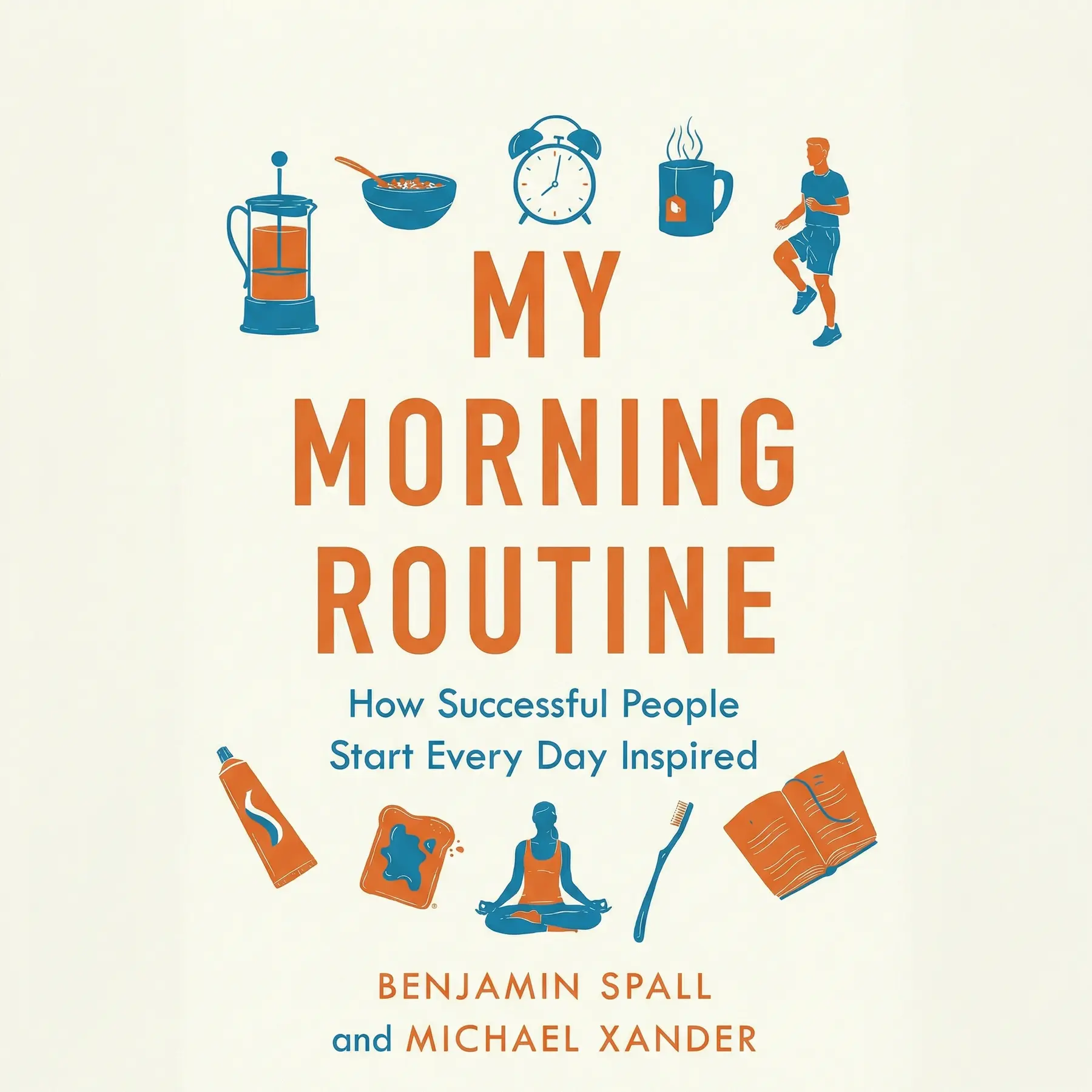
Listeners find the work both intriguing and motivational, enjoying the way it offers a fresh outlook on early-day habits. The conversations are seamlessly woven together; one listener mentions the wide range of subjects interviewed, while another points out the useful illustrations included. This title earns praise for its inventive nature, as one listener characterizes it as a wealth of concepts to explore.
Finally got around to reading this, and I have to say, it completely transformed how I view my first hour of the day. Instead of checking emails in bed, I’ve started implementing the no-tech rule mentioned by several interviewees, and the mental clarity is night and day. The authors did a great job including diverse perspectives, from parents of young kids to frequent travelers, showing that routine isn't one-size-fits-all. Some people might find the format repetitive, but I think the overlap actually highlights the core principles that work for most high-performers. It’s a total treasure trove of ideas if you’re looking to inject some discipline into your morning without feeling like a robot. Highly recommended for anyone feeling stuck in a rut.
Show moreA wealth of perspective is packed into these pages! I loved how the authors didn't just focus on the "perfect" morning but also included a section on failures and compromises, which made the whole thing feel much more authentic. Seeing the diversity of the interviewees—from high-powered CEOs to creative artists—showed me that there isn't one "correct" way to start the day. The book serves as a creative treasure trove of ideas, and I've already started tweaking my own rituals based on the sleep hygiene tips provided. The statistical averages at the end were a great touch to wrap everything up. If you're looking for an inspiring way to rethink your time and energy, this is definitely worth the read.
Show moreEver wonder how the most effective people actually start their day without losing their minds? This collection of interviews offers a fascinating peek into the specific rhythms of CEOs and artists alike. I loved the data-driven statistics provided at the end, like the average wake-up time being 6:24 AM, which feels surprisingly human compared to the usual "3 AM grind" myths. Some routines are definitely unrealistic for someone without a personal chef or a home gym, but there are plenty of small, actionable tweaks to find. Looking at how people handle their phones—or don't—made me rethink my own bedside habits. It’s a creative treasure trove if you’re willing to sift through some of the more eccentric habits to find what fits your life. It puts things in perspective.
Show moreAs someone who already has a solid routine, I found this to be an interesting, if slightly voyeuristic, look at how the other half lives. The categorization of interviews into themes like productivity and self-care is very helpful for navigation. However, the book sometimes suffers from a lack of deep analysis; you get the "what" but rarely the psychological "why" behind these specific choices. This can make some of the more extreme routines feel a bit performative or out of reach. Look, it’s a quick, inspiring read and I did enjoy the Benjamin Franklin references and the data-driven summary at the conclusion. It’s a great coffee table book to flip through when you need a spark of creativity or a reason to get out of bed.
Show morePicked this up because I’ve been a fan of the online newsletter for a while and wanted something tangible to refer back to. The book version is quite well-integrated, providing a wide variety of examples that put the idea of success into a much broader perspective. I particularly appreciated the chapters on parenthood and travel, as most productivity books assume you live in a vacuum with no external disruptions. In my experience, the value lies in the tiny details—like the guy who ignores all emails for weeks to train people not to bother him—rather than the grand gestures of 10-mile runs. It’s a light, inspiring read that doesn’t demand too much of you but leaves you with plenty of food for thought regarding your own habits.
Show moreThe chapter on self-care was the highlight for me in a book that otherwise could have felt a bit too "hustle-culture" focused. It was refreshing to see that not everyone follows the standard advice of crushing a workout before dawn; some people just want to read a book or enjoy a quiet cup of tea. The authors include a lot of artists and writers, which adds a layer of creativity that you don't always get in business-centric titles. While some of the routines are undeniably repetitive, the cumulative effect of reading them is quite motivating. It’s a useful tool for anyone trying to build better habits, even if you only end up adopting one or two small changes from the hundreds of examples provided.
Show moreThis book was an interesting read, though I found it became quite repetitive after the first few chapters. While I initially enjoyed the peek into successful lives, the sheer volume of "I wake up, meditate, and drink green juice" stories became a bit mind-numbing. There’s a distinct vibe of privilege that permeates most of these entries, making it hard for an average person with a long commute or a tight budget to fully relate. To be fair, the section on morning failures was a brief breath of fresh air, showing that even the high-performers mess up. It feels like a high-quality blog series that was stretched a little thin to fit a book format. Good for dipping in and out of, but maybe not for a straight cover-to-cover read.
Show moreTruth is, I have a love-hate relationship with books like this. On one hand, I love learning about the minutiae of people's lives—what they eat, when they sleep, and how they handle their phones in the morning. On the other hand, the sheer volume of people who claim to wake up at 5 AM to meditate for an hour feels a bit unrealistic and, to be honest, exhausting to read about. I did pick up a few useful tips about evening preparation, like laying out clothes the night before, which has actually helped me feel less rushed. It’s a decent companion to something like Mason Currey’s "Daily Rituals," though perhaps not as deeply researched or historically interesting. It's fine for a quick hit of inspiration.
Show moreNot what I expected at all, and frankly, it felt like a chore to finish. I was hoping for practical advice, but instead, I got a parade of pretentious individuals droning on about their ultra-specific, expensive habits. It’s hard to take advice seriously when it comes from people who seemingly have zero real-world responsibilities like daycare drop-offs or a boss waiting for them at 8 AM sharp. The constant product placement and focus on "optimized" living felt more like a capitalism brochure than a genuine self-help book. If I hear one more person talk about their glacier water and flaxseed smoothie, I might lose it. Some of the non-American perspectives were slightly more down-to-earth, but they were few and far between. It just wasn't for me.
Show moreTo be fair, the layout of the book is beautiful, but the content feels incredibly "meh" once you get past the first few chapters. There is a huge cultural gap here; it feels way too American and focused on a very specific type of corporate success that doesn't necessarily equate to happiness. I found myself rolling my eyes at the constant mention of specific apps and tech optimization techniques that felt more like advertisements than genuine advice. I agree with other reviewers that it's a bit of a voyeuristic look at the wealthy, which is fine, but not particularly helpful for my daily life. Most of these people don't seem happy, just busy. Just take a lunch break and chill out instead.
Show moreWilliam B. Irvine
Andrew D. Thompson
Deepak Chopra
Laura Vanderkam
AUDIO SUMMARY AVAILABLE
Get the key ideas from My Morning Routine by Benjamin Spall, plus 5,000+ more titles in English and Thai.







