
30 min 15 sec
Narconomics: How to Run a Drug Cartel
Explore the shadow economy of global drug cartels through a business lens. This summary reveals how cartels use franchising, human resources, and market strategies to survive and thrive despite international prohibition.
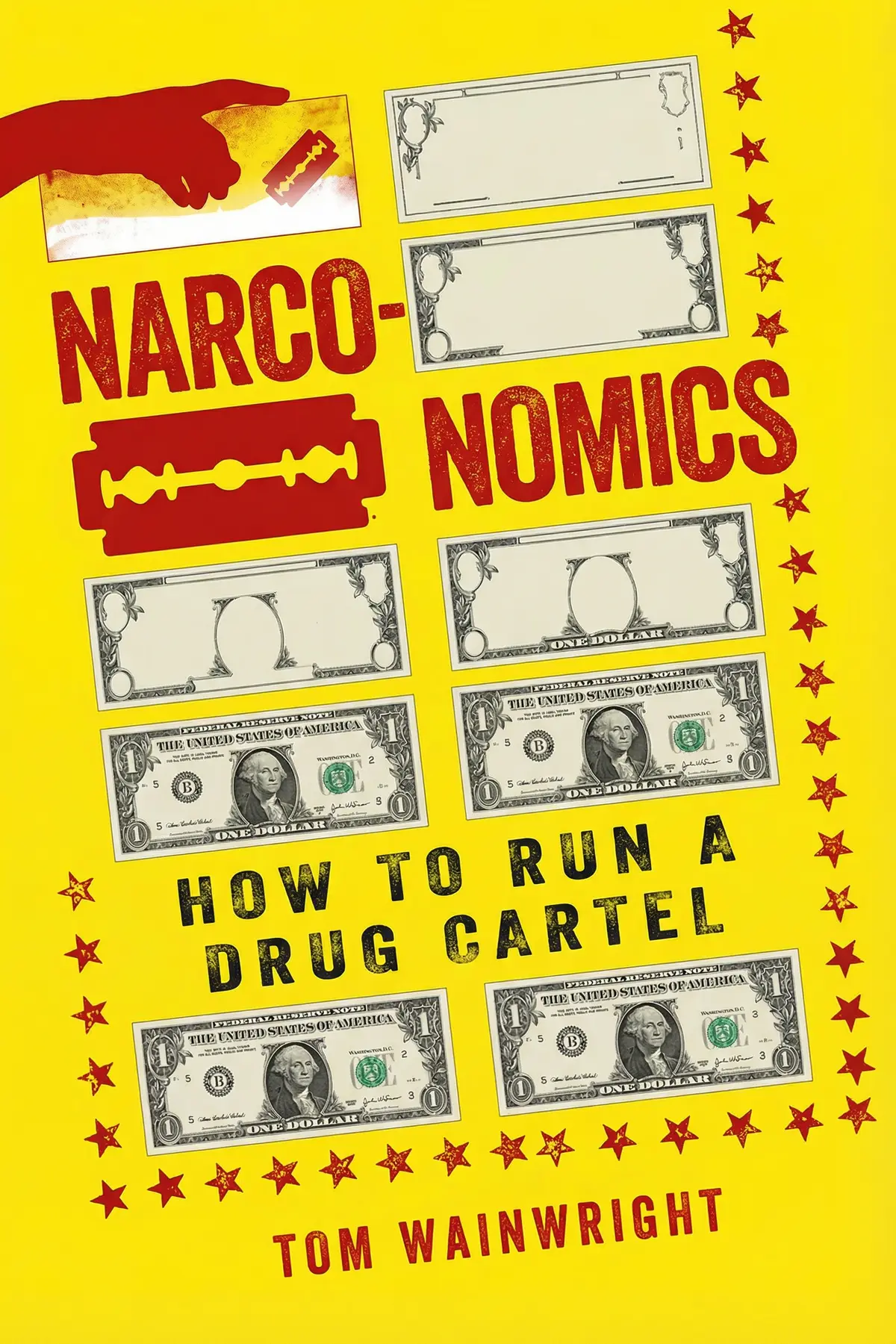
Table of Content
1. Introduction
1 min 58 sec
When we think about drug cartels, our minds usually go straight to the scenes we see in action movies: high-speed chases, clandestine labs, and violent turf wars. We see these groups as lawless entities operating in total chaos. But what if that perspective is exactly why the global war on drugs has struggled for decades? What if, instead of viewing cartels as mere gangs, we started viewing them as sophisticated, albeit illicit, multinational corporations?
This is the central premise of our exploration today. We are diving into a world where the bottom line matters just as much as the firepower. Between 2007 and 2014, the human cost of the conflict in Mexico alone was staggering, with over 164,000 lives lost. Yet, despite trillions of dollars spent on enforcement and military-grade crackdowns, the industry is more profitable than ever. The drugs keep flowing, the cartels keep growing, and their reach is expanding into new territories and even new industries like human trafficking.
To understand how this is possible, we have to put away the handcuffs for a moment and pick up an economics textbook. We need to look at how these organizations manage their supply chains, how they recruit and retain staff in a high-risk environment, and how they handle competition. We’ll see how concepts like the ‘balloon effect’ render traditional policing ineffective and how the government might actually be able to ‘out-business’ the cartels through legalization and regulation. By the end of this journey, you’ll see the drug trade through a completely different lens—not as a series of random crimes, but as a rational, if brutal, response to market forces. Let’s pull back the curtain on the business of organized crime and see how the world’s most dangerous CEOs really run their empires.
2. The Failure of Supply-Side Interdiction
3 min 13 sec
Government efforts to stop drugs at the source often fail due to a phenomenon known as the balloon effect, where pressure in one area simply shifts the problem elsewhere.
3. The Competitive Edge of Legalization
2 min 47 sec
Legalizing and regulating certain drugs can cripple cartels more effectively than police raids by introducing a superior, tax-generating competitor to the market.
4. The Strategic Choice Between War and Peace
2 min 47 sec
Cartels fluctuate between violent competition and peaceful collusion, with the latter often being more profitable but equally dangerous to the rule of law.
5. Corporate-Style Human Resources
2 min 47 sec
Finding and keeping reliable employees is a challenge for any firm, but cartels use prisons as a recruitment ground and unique hierarchies to ensure loyalty.
6. The Strategic Use of Social Responsibility
2 min 33 sec
In a bid to win hearts and minds, drug cartels often mimic corporate social responsibility programs by funding public services and infrastructure.
7. Offshoring to Minimize Regulatory Costs
2 min 34 sec
Like any multinational firm, cartels move their operations to countries with weak institutions and low oversight to maximize their profits and safety.
8. The Pitfalls of the Franchise Model
2 min 18 sec
Cartels use franchising to expand their reach rapidly, but this decentralization can lead to internal chaos and damaging mistakes by local affiliates.
9. Innovation in the Face of Regulation
2 min 23 sec
The rise of synthetic drugs has created a game of cat-and-mouse where manufacturers constantly tweak chemical formulas to stay one step ahead of the law.
10. Diversification into Human Trafficking
2 min 33 sec
Cartels are no longer just drug dealers; they are diversifying into human smuggling, a high-growth sector that offers better margins and lower risks.
11. The Evolution of Digital Markets
2 min 19 sec
The internet has transformed the retail side of the drug trade, replacing violent street corners with encrypted, customer-centric online marketplaces.
12. Conclusion
2 min 03 sec
As we wrap up our look into the intricate world of narconomics, one truth stands out above all others: the traditional methods of fighting the drug trade are no longer enough. For decades, we have focused on the supply side, the violence, and the individual ‘bad guys.’ But by ignoring the underlying economic principles that drive these organizations, we have effectively been trying to stop a flood with a handheld sieve.
We have seen how cartels are essentially sophisticated multinational corporations. They use the balloon effect to bypass crackdowns, they use offshoring to find the cheapest ‘regulatory’ environments, and they use franchising to scale their operations with minimal risk. They even have human resources departments and public relations strategies that would be familiar to any Fortune 500 executive. Most importantly, we’ve seen that their greatest weakness isn’t necessarily a police raid—it’s economic competition.
The lesson of narconomics is that if we want to dismantle these empires, we have to stop seeing them as outliers and start seeing them as market participants. Whether it’s through the legalization and taxation of marijuana to price out the cartels, or changing the burden of proof for synthetic chemicals to slow down laboratory innovation, the most effective tools might be found in the hands of economists and regulators rather than just soldiers.
The world’s most dangerous business is constantly evolving, diversifying into human smuggling and moving onto the dark web to stay ahead of the law. If governments hope to keep up, they must be willing to think as creatively and strategically as the cartels themselves. The throughline is clear: as long as there is a massive demand and a profitable market, someone will step in to fill it. The challenge for the future is not just to arrest the people running the business, but to change the economic reality that makes the business so profitable in the first place.
About this book
What is this book about?
Narconomics takes a provocative and analytical look at the world’s most notorious criminal organizations, treating them not as simple gangs, but as sophisticated multinational corporations. The book argues that if we want to understand the drug trade, we have to stop looking at it through the lens of pure criminality and start seeing it as a series of market responses. From the coca fields of South America to the retail markets of the United States and Europe, the book traces the economic logic that governs every move a cartel makes. You will learn why traditional government crackdowns often backfire, actually increasing cartel profits by creating supply shortages. The book also promises to reveal the surprising corporate parallels within the trade, such as how cartels manage public relations, how they offshore production to lower-cost environments, and why they are increasingly diversifying into other industries like human trafficking. Ultimately, it offers a blueprint for how governments might use economic competition, rather than just police force, to finally dismantle these billion-dollar enterprises.
Book Information
About the Author
Tom Wainwright
Tom Wainwright is the UK editor for the Economist magazine. Throughout his career as a journalist and correspondent, he has spent significant time on the ground covering Mexico and Central America for the Economist. His deep reporting and expertise on international affairs have also been featured in several prominent publications, including the Times, the Guardian, and the Literary Review.
Ratings & Reviews
Ratings at a glance
What people think
Listeners find this work to be extensively researched and expertly composed, offering an elegant clarification of the economics behind drug trafficking. The storytelling is highly engaging; one listener remarks on how it is vividly depicted through in-depth anecdotes, while another portrays it as an intriguing look at the cost drivers of illicit narcotics. Listeners appreciate the book’s entertainment factor and find it maintains their interest from start to finish.
Top reviews
Tanyaporn
Tom Wainwright describes himself as a "not very brave" journalist, but he certainly did his homework in some incredibly dangerous places to bring this story to life. This book is an eye-opening journey that stretches from the coca fields of the Andes to the retail markets on American street corners. The way he breaks down the "cockroach effect" of drug enforcement explains exactly why current policies are failing so miserably across the globe. It turns out that burning crops only shifts the problem elsewhere without actually hurting the cartel’s bottom line or reducing the total supply. Personally, I found the chapter on PR and the use of social media by cartels to be the most chilling part of the entire work. The writing is snappy and engaging, even when he's diving into complex business theories that would usually be dry. It is a must-read for anyone who wants to understand the real mechanics of the global drug trade.
Show moreAey
Wow. This book absolutely shattered my preconceptions about how the illegal drug trade actually functions in the modern world. I’ve always viewed the cartels as chaotic groups of thugs, but Wainwright shows they are actually masters of corporate strategy and risk management. Seeing the parallels between a cartel’s supply chain and a legitimate multinational corporation is both fascinating and deeply disturbing, especially when you realize how effectively they manage their branding through social media and violence. The author’s moderate bravery takes us into the heart of the operation without being overly sensationalist or leaning on tired tropes. I particularly liked the section on "legal highs" and how the industry adapts to new legislation faster than governments can react. It’s a beautiful explanation of why the war on drugs is so ineffective when it ignores basic market forces. Every policy maker should be required to read this immediately.
Show moreThongchai
Having lived in a border-state for years, I’ve seen the news reports of violence in places like Juarez, but I never understood the financial "why" behind it. This book provides a coherent picture of the dynamics at play, showing how cartels use violence as a calculated PR tool rather than just engaging in random acts of cruelty. It’s not just random cruelty; it’s a way of managing their brand, protecting their territory, and deterring competition from encroaching on their margins. Wainwright’s analytical tone is a refreshing change from the usual hysteria surrounding the drug war that we see on the news every night. He makes a compelling case for regulatory reform, specifically targeting the demand side of the business to actually hurt the bottom line. While some of the business theory is a bit abstract, the real-world examples are vivid, memorable, and frankly terrifying.
Show moreTang
As someone who usually finds non-fiction a bit dry, I was impressed by how Wainwright kept me interested throughout the entire journey. The chapter on the "cockroach effect" was a revelation, explaining why the billions spent on crop eradication have basically zero impact on the street price of cocaine in London or New York. He uses economic jargon sparingly and always backs it up with a practical, often shocking, real-world example from his interviews. The way he explores the diversification of cartels into human trafficking and kidnapping shows just how adaptable these organizations are when their primary revenue streams are threatened. It’s a thoroughly researched piece of work that manages to be both educational and genuinely entertaining in a dark sort of way. Not many authors can make you think about a drug kingpin as a CEO, but Wainwright pulls it off brilliantly and with a great deal of wit.
Show moreCherry
Ever wonder why the drug war is such a dumpster fire? Wainwright treats the cartels like Fortune 500 companies, and frankly, it makes way more sense than the moralizing we usually get from politicians. He looks at supply chains, brand building, and even human resources within the Zetas and other brutal groups. It’s fascinating to see how they mirror companies like Walmart or McDonald's in their pursuit of efficiency and market dominance. While the economic jargon can get a bit thick sometimes, the anecdotes from his travels in Latin America keep the narrative grounded in reality. I appreciated the shift in focus from seeing these people as mere villains to analyzing them as rational actors trying to maximize profit. It’s a cold, hard look at a brutal reality that feels more authentic than most crime thrillers. This perspective adds a much-needed layer of logic to a conversation usually dominated by emotion.
Show moreAmara
Finally got around to reading this, and it’s easily one of the most logical books on the narcotics industry I’ve encountered in years. Wainwright treats the cartels as sophisticated franchises, analyzing everything from their offshoring tactics to their employee retention strategies while demonstrating how they adapt to market pressures much like any legitimate global corporation would. Who would have thought that full-body tattoos could be viewed as a clever way to keep staff from jumping ship to a rival? The book is vividly illustrated through detailed stories that move beyond the typical headlines of violence to show the boardrooms behind the blood. My only minor gripe is that it feels a little too academic in the middle chapters where the formulas outweigh the storytelling. Still, the breakdown of how legalization affects the business model of Mexican cartels is worth the price of admission alone. It’s a smart, thoroughly researched piece of journalism that challenges your world view.
Show moreAubrey
After hearing so much about this title, I was glad to find it’s just as insightful as everyone says it is. Wainwright’s writing style is clear and engaging, making complex topics like "monopsony" easy to understand for a layperson without an economics degree. He doesn't just stay in his office; he actually visits the coca farms and speaks with the people on the front lines of production. This grounded approach makes the economic arguments feel much more urgent and real than a simple research paper. The comparison between cartels and tech startups in terms of "disruptive" online marketplaces was a standout for me. Truth is, we can’t fix the drug problem until we stop treating it solely as a criminal issue and start treating it as a market issue. It’s a fascinating, well-written book that kept me hooked from start to finish despite the grim subject matter.
Show moreBun
Picked this up on a whim and was pleasantly surprised by how much I learned about the hidden side of the trade. It’s not just another true crime book; it’s a serious look at the cost drivers of illegal drugs and why they remain so profitable despite billions in enforcement. Wainwright is a fantastic storyteller who manages to weave economic principles into a narrative that feels like a dangerous travelogue through the Americas. I especially appreciated the discussion on how the prison system acts as a networking event for criminals, essentially providing free training for the next generation of cartel members. It’s a cynical but incredibly accurate way to view the current situation we find ourselves in. My only minor criticism is that the author’s perspective can feel a bit one-sided regarding policy. Regardless, the research is top-notch and the insights are valuable for anyone interested in global economics.
Show moreNong
This book definitely provides a unique perspective, but I’ve got to say it occasionally drags when the economic theory takes over the narrative. I picked this up expecting something a bit more visceral, yet it often reads more like an extended feature from The Economist than a deep dive into the underworld. The statistics are well-researched, and the insights into how prisons serve as job fairs for recruits are genuinely brilliant. However, if you aren't into supply-side economics or market diversification, large sections might feel like a chore to get through. To be fair, Wainwright’s argument about focusing on the demand side rather than the supply side is incredibly persuasive and backed by solid data. It’s an informative read that offers plenty of "aha!" moments, though it lacks the fast-paced energy I usually want from true crime. Good for enlightenment, less so for pure entertainment.
Show moreIsabelle
Not what I expected at all, and unfortunately, it didn't quite hit the mark for me despite the interesting premise. While the idea of applying business principles to drug cartels is clever, the execution feels repetitive and a bit forced after the first few chapters. It seems like the author is trying too hard to fit every brutal act into a tidy economic box that doesn't always fit. Look, I get that they have "HR problems," but comparing mass murderers to corporate middle managers feels a bit reductive and insensitive at times. The writing is technically fine, yet it lacks the emotional weight you'd expect when discussing such a devastating global issue. I was hoping for more investigative depth and fewer analogies to big-box retailers like Walmart. If you love spreadsheets and market theory, you might enjoy it, but I found it somewhat dry and detached from the human cost.
Show moreReaders also enjoyed
Abolish Rent: How Tenants Can End the Housing Crisis
Tracy Rosenthal
Abortion: Our Bodies, Their Lies, and the Truths We Use to
Jessica Valenti

21 Lessons for the 21st Century
Yuval Noah Harari

Age of Anger: A History of the Present
Pankaj Mishra

A Different Kind of Power: A Memoir
Jacinda Ardern
Age of Propaganda: The Everyday Use and Abuse of Persuasion
Anthony Pratkanis
1929: Inside the Greatest Crash in Wall Street History--and How It
Andrew Ross Sorkin
AUDIO SUMMARY AVAILABLE
Listen to Narconomics in 15 minutes
Get the key ideas from Narconomics by Tom Wainwright, plus 5,000+ more titles in English and Thai.
- 5,000+ titles
- Listen as much as you want
- 7-day free trial
- Cancel anytime







