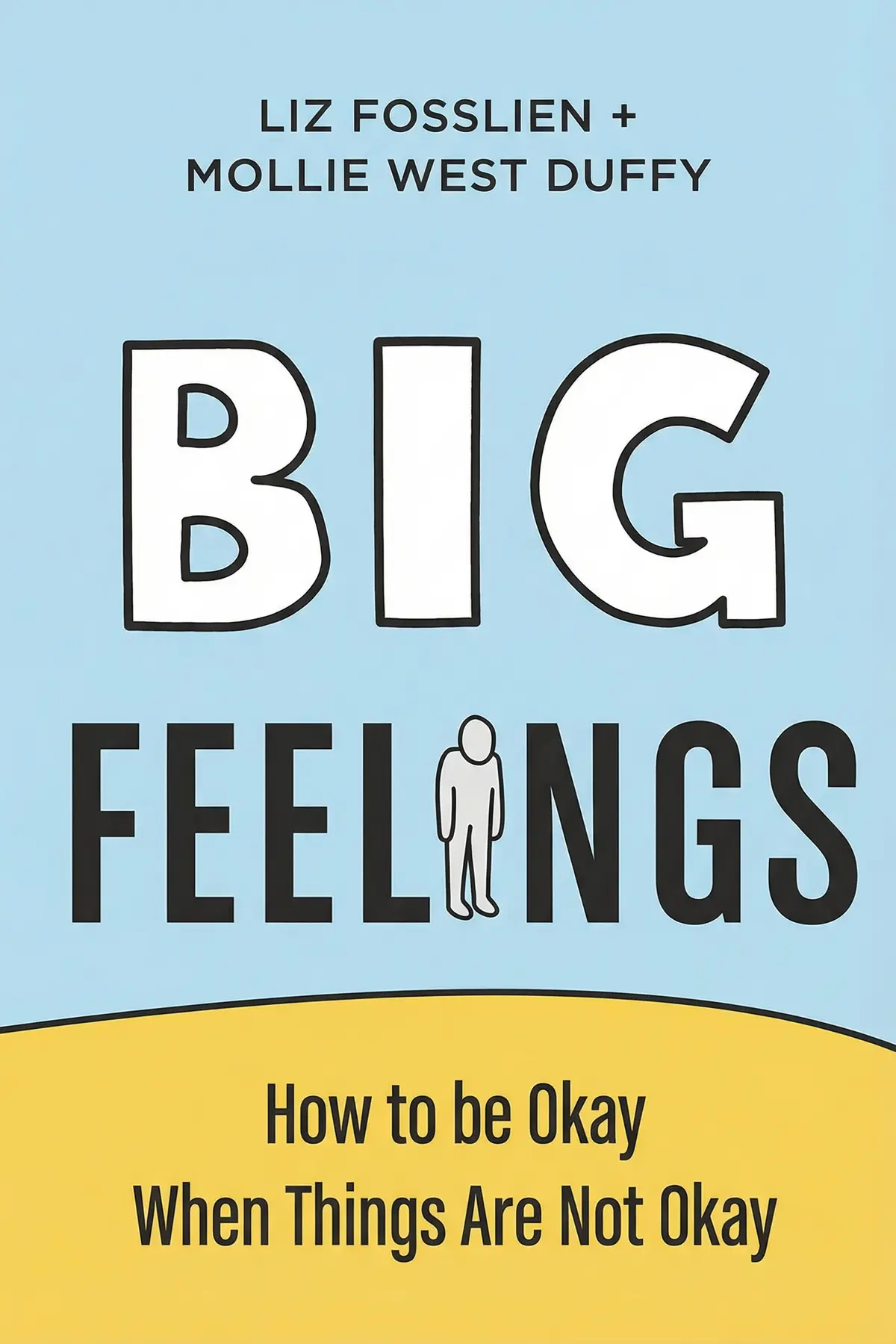
Big Feelings: How to be Okay When Things Are Not Okay
Mollie West Duffy
Discover why suppressing your emotions at the office is holding you back. This guide explores how embracing vulnerability, fostering psychological safety, and understanding your gut feelings can lead to a more productive, creative, and fulfilling career.
2 min 05 sec
Imagine walking into your office on a Monday morning. You’ve had a difficult weekend, or perhaps you’re feeling an underlying sense of anxiety about a presentation scheduled for later in the afternoon. Yet, the moment you cross the threshold of the building, you feel a familiar pressure to pull a metaphorical mask over your face. You suppress the stress, hide the excitement, and adopt a neutral, ‘professional’ persona. We’ve all been there—playing the part of the unshakeable employee who is purely rational and entirely devoid of human sentiment. This has been the standard operating procedure in the corporate world for a very long time. We were taught that being emotional was a sign of weakness and that the best workers were the ones who functioned most like machines.
But here is the shift we need to acknowledge: that old-school perspective is fundamentally flawed. When we try to divorce our feelings from our work, we aren’t actually becoming more efficient. Instead, we are cutting ourselves off from the very traits that make us creative, collaborative, and resilient. In this exploration of the insights from Liz Fosslien and Mollie West Duffy, we are going to dismantle the idea that emotions are a liability. We’ll see how a healthy emotional culture isn’t just about feeling good—it’s a prerequisite for high performance.
Throughout this journey, we’ll look at why small social gestures can change the entire trajectory of a team and why leaders who show their human side often command more respect than those who remain stoic. We will examine the mechanics of motivation, the hidden data within our gut feelings, and the specific ways we can communicate more effectively when things get awkward. By the end, you’ll see that the goal isn’t to become an emotional wreck at your desk, but to find a way to let your emotions work for you rather than against you. It is time to stop pretending we aren’t human and start using our humanity as a competitive advantage. Let’s dive into how we can transform the way we work by embracing the secret power of our feelings.
3 min 13 sec
Discover how minor daily interactions and a genuine sense of belonging can drastically reduce employee turnover and boost collective decision-making.
2 min 55 sec
Leaders often fear showing weakness, but the right kind of emotional honesty can forge unbreakable bonds and drive a company toward success.
2 min 54 sec
Learn why excessive passion for your work can lead to burnout and how ‘strategic unproductivity’ can actually make you a better professional.
3 min 20 sec
Stop relying on caffeine and deadlines. Discover how giving people control over their work and a clear connection to the ‘why’ creates lasting drive.
3 min 04 sec
Your gut feelings aren’t just random impulses; they are sophisticated signals. Learn how to distinguish between relevant insights and irrelevant distractions.
3 min 10 sec
Why do some teams thrive while others crumble? The answer lies in a specific group dynamic that encourages risk-taking and honest mistakes.
3 min 10 sec
Awkward office confrontations don’t have to be a nightmare. Learn the specific linguistic tools to express your feelings without losing your professionalism.
1 min 52 sec
As we wrap up this exploration of the emotional landscape of the modern workplace, the central throughline should be clear: our feelings are not an obstacle to our work; they are an integral part of it. The old paradigm of the ’emotionless professional’ was a myth that cost us our creativity, our well-being, and our connection to one another. By learning to build a culture of belonging, by practicing selective vulnerability, and by reclaiming our time and autonomy, we aren’t just making the office a ‘nicer’ place to be—we are making it a more effective one.
We have seen that emotions are a form of data that can guide our most difficult decisions, and that the foundation of every high-performing team is the psychological safety to be human. We’ve also learned that the way we communicate our inner states determines whether a conflict becomes a catastrophe or a catalyst for growth. The journey toward an emotionally intelligent workplace doesn’t require a massive corporate overhaul. It begins with you. It starts with the next smile you give in the hallway, the next time you choose to be honest about a challenge, and the next time you pause to ’emotionally proofread’ an email.
As a final actionable takeaway, consider how you can break the ice in your next meeting. Instead of diving straight into the agenda, try a prompt that invites a bit of human history—something as simple as asking everyone to describe a favorite meal from their childhood and why it matters to them. You’ll find that when people share their stories, they bring their full selves to the table. And when people bring their full selves to work, that is when the magic really happens. Embrace the fact that you have feelings, listen to what they are telling you, and remember that there are truly ‘no hard feelings’ when we treat each other with the humanity we all deserve.
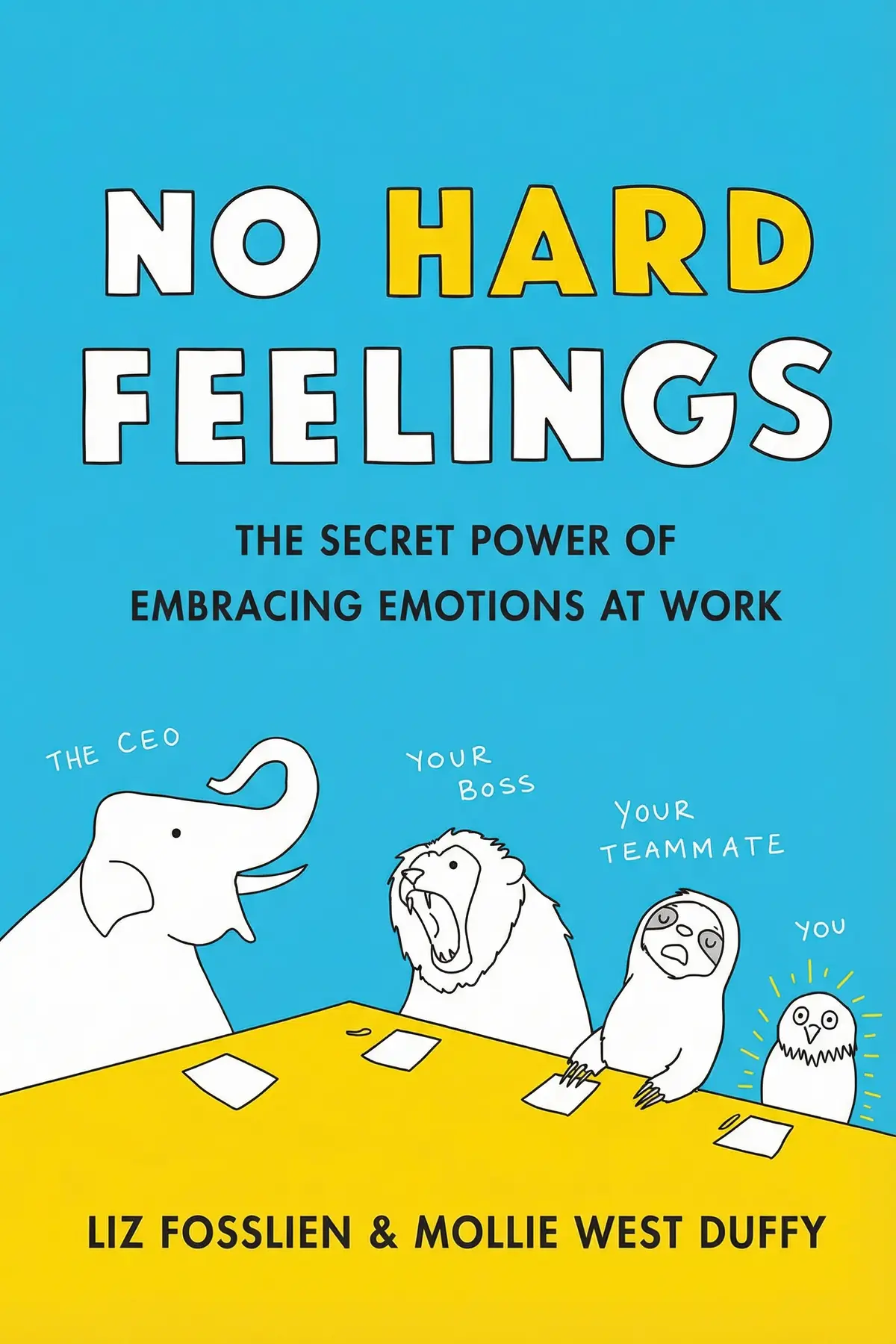
For decades, the professional world has operated under the myth that emotions have no place in the office. We are told to leave our personal lives at the door and maintain a stoic, detached demeanor. However, as Liz Fosslien and Mollie West Duffy argue, this approach is not only outdated—it is actively damaging to our well-being and our company's bottom line. No Hard Feelings provides a roadmap for navigating the complex emotional landscape of the modern workplace. By blending research with practical advice, it demonstrates that acknowledging our feelings is the secret to better decision-making, stronger team dynamics, and increased motivation. Whether you are a leader trying to inspire your team or an employee struggling with burnout, this summary offers the tools to transform your professional life into one that is emotionally healthy and high-performing.
Mollie West Duffy is a senior organizational designer at IDEO, a prominent design and consulting firm. Her work focuses on helping businesses redesign their internal structures and cultures to foster adaptability and creativity. Liz Fosslien leads content at Humu, a company that utilizes machine learning and behavioral nudges to improve the work experience. She has also facilitated workshops on building inclusive cultures for executives at global organizations such as Google, LinkedIn, and Nike.
Mollie West Duffy
Listeners find this book to be an essential resource for the modern workplace, providing actionable guidance and a novel perspective on a vital theme. They value the down-to-earth strategy for navigating professional emotions, where one listener highlights its ability to validate feelings, while the drawings and wit are highly praised. Listeners characterize it as a simple read that keeps them entertained in every chapter, and one listener notes that it helped alleviate their anxiety.
Finally got around to reading this, and the 'user manuals' concept alone makes it worth the price of admission. It is such a simple way to bridge the gap between different working styles without the usual awkwardness of trial and error. Fosslien and Duffy manage to take high-level concepts from places like Harvard Business Review and turn them into something you can actually use on a Tuesday morning meeting. The tone is gentle but firm, reminding us that we aren't robots and that ignoring our feelings just leads to massive mistakes. I found myself nodding along to the section on selective vulnerability—it’s a game changer for leaders who want to be real without oversharing. While it covers a lot of ground, the illustrations keep things moving quickly. It is the kind of book you keep on your desk to flip through when a coworker is driving you up the wall.
Show moreAs a manager who struggles with work-life balance, the advice to 'be less passionate about your job' was the wake-up call I didn't know I needed. We often hear that we should give 110%, but Fosslien and Duffy explain why that’s actually a recipe for burnout and bad decision-making. The book is packed with actionable tips, like how to give feedback using the COINS framework, which is much better than the standard corporate sandwich. I’ve started encouraging my team to take their full vacations because, as the book points out, high performers actually take more time off. The illustrations are more than just fluff; they actually help solidify the concepts in your brain. It’s rare to find a business book that makes you laugh and also makes you want to be a better person.
Show moreWow, this was such a breath of fresh air compared to the usual 'hustle culture' nonsense you find in the business section. The authors aren't telling you to work harder; they're telling you how to work smarter by acknowledging the human element. My favorite takeaway was the distinction between being happy and being content—contentment is much more stable and achievable. The 'magic line' about not wanting salary to be a distraction is something I wish I’d known ten years ago. It is empathetic to both sides and shifts the power dynamic in a really healthy way. If you’re tired of the 'command-and-control' style of management, this book is basically your bible. Plus, the comics are hilarious and hit the nail on the head every single time.
Show moreIf you've ever felt guilty for not being a 'team player' just because you wanted to go home on time, you'll find some solace in these pages. The message is great—emotions are part of the work equation—and the execution is genuinely engaging. It reads much better than a series of blog posts because the illustrations tie the narrative together so well. I found the 'selective vulnerability' concept to be quite nuanced, and it gave me a lot to think about regarding how much of myself I share with my boss. It’s not just for managers either; anyone on a team can benefit from the sections on psychological safety. It’s definitely a must-read for the modern office worker who wants to stay sane while doing a good job.
Show moreThe chapter on motivation was exactly what I needed to hear during a particularly rough month at my corporate job. For a long time, I thought being a professional meant shutting off every emotion at the door, but this book argues the opposite with such charm. The authors use these adorable, witty comics to explain why we shouldn't 'grin and bear it' when things are falling apart. Truth is, the advice on creating a priority list for your boss is a total lifesaver for people-pleasers like me. Instead of saying you're confused, you just rank your tasks and ask for confirmation—pure genius. My only gripe is that it feels a bit geared toward office-dwellers, so if you're in customer service, some strategies might feel a little out of reach. Still, it’s a refreshing take on workplace culture that actually feels human.
Show moreEver wonder why your blood pressure spikes just being around a stressed-out coworker? This book dives deep into 'emotional contagion' and why the vibes we bring to the office actually matter for productivity. I loved the section on psychological safety; it’s a buzzword we hear a lot, but the authors give actual micro-actions to build it. The writing is incredibly accessible and doesn’t feel like a dry textbook, even when they’re citing research. I particularly appreciated the 'magic line' for salary negotiations—I'm definitely stashing that away for my next performance review. Some parts felt a bit rushed, covering too many sub-topics without going into enough detail on any of them, but as a general guidebook, it's solid. It's helped me realize that my feelings are data, not faults.
Show morePicked this up after a recommendation from a podcast, and it has been a huge help for my workplace anxiety. There is so much pressure to be 'perky' at work, and learning that even the National Labor Review Board thinks that’s BS was incredibly validating. The authors have this way of making you feel seen, especially if you’re an introvert or someone who feels things deeply. I’m currently working on my own 'user manual' to share with my supervisor so they know how I best receive feedback. It’s an easy read that you can dip in and out of during lunch breaks. While it pulls a lot from Radical Candor and HBR, the way the info is synthesized with humor makes it way more digestible than the source material.
Show moreFrankly, the best part of this book is how it reframes 'professionalism' to include being a human being with a pulse. We’ve all been told to leave our problems at the door, but this book proves that’s both impossible and counterproductive. I really appreciated the specific examples of how to handle task conflict versus relationship conflict. The authors write with a firm but gentle tone that makes the advice feel achievable rather than like another chore on your to-do list. I do agree with other reviewers that it can feel like a 'best of' collection of other people's research, but there is value in having it all in one place. It is the perfect gift for a new grad or a first-time manager who is feeling overwhelmed by office politics.
Show moreTo be fair, this is a very pretty book with some decent insights, but it tries to do too much at once. It jumps from salary negotiations to deep-seated biases to digital communication etiquette in a way that feels a bit scattered. I liked the focus on 'emotional fluency,' but I wish they had spent more time on how to handle truly toxic environments instead of focusing on 'nice' offices. The language is very safe and non-confrontational, which is fine, but it lacks the 'sparks' of a truly opinionated manifesto. It’s a good introductory text for someone new to the workforce or for a company looking to soften its culture, but it didn't provide many new insights for a seasoned professional. The Sendak story about the boy eating the card was a highlight, though!
Show moreLook, I really wanted to love this because the Instagram graphics are so great, but it feels like a glorified literature review. Every other page is just a quote from another business book or a summary of a study I’ve already read about in a dozen other places. It lacks a strong, original thesis and instead functions as a 'Reader's Digest' for modern management. If you haven't read anything in the self-help or business genre, you’ll probably find this revolutionary, but for the rest of us, it’s a bit repetitive. The comics are the best part, and I’d just buy a deck of them to hang up around the office rather than slog through the text again. It’s light, it’s cute, but it lacks the depth I was hoping for in a full-length book.
Show moreAUDIO SUMMARY AVAILABLE
Get the key ideas from No Hard Feelings by Liz Fosslien, plus 5,000+ more titles in English and Thai.