
25 min 41 sec
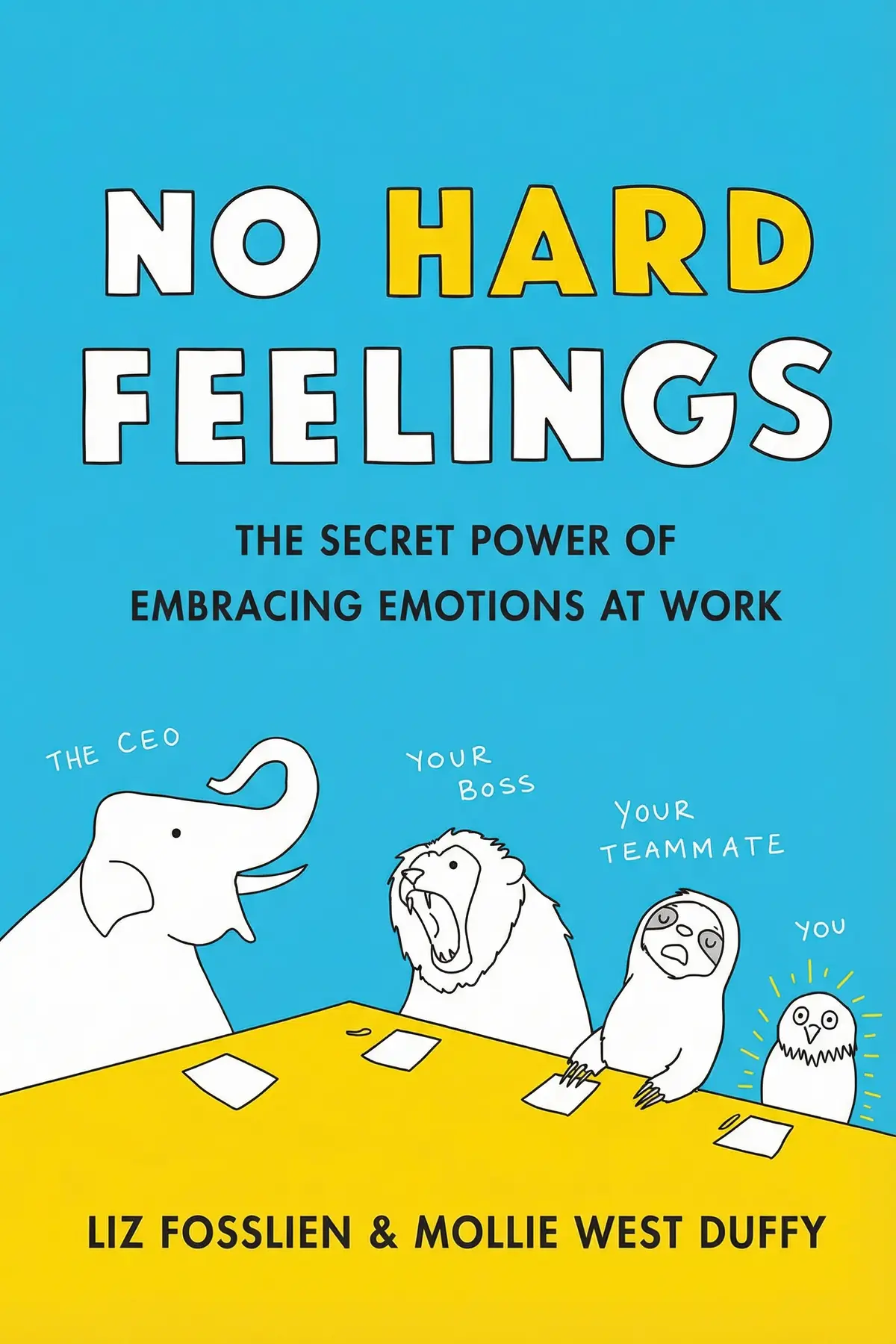
Big Feelings: How to be Okay When Things Are Not Okay
A compassionate guide to navigating overwhelming emotions. Learn how to transform uncertainty, comparison, and burnout into tools for growth while finding resilience during life’s most difficult and unpredictable seasons.
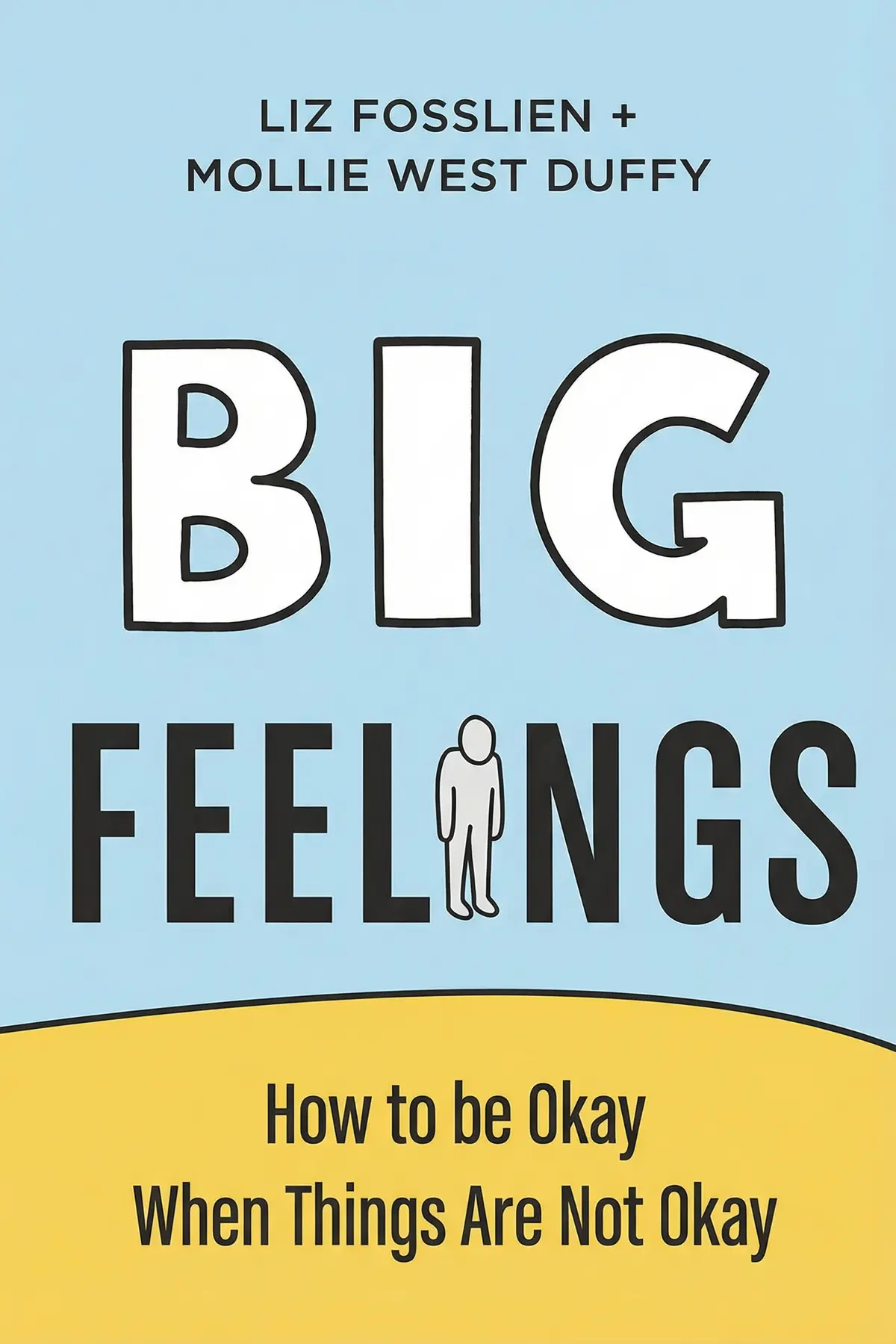
Table of Content
1. Introduction
2 min 08 sec
Picture yourself standing on a busy street corner in the heart of a bustling city. As people rush past you, what do you notice? You see different styles of dress, various expressions of hurry or relaxation, and the physical traits that make each individual unique. But there is a hidden layer to this scene that remains invisible to the naked eye. Each person you pass is carrying an invisible backpack, filled to the brim with what we call big feelings. One person might be drowning in the stress of an uncertain career path. Another might be nursing the sharp sting of envy after scrolling through social media. Someone else might be battling a quiet, heavy sense of despair that they haven’t yet found the words to describe.
In our modern world, these intense emotions have become more prevalent than ever. We are living through an era of rapid change and collective stress, yet the biggest and most difficult feelings are often the ones we are least equipped to discuss openly. We’re taught to keep a stiff upper lip, to stay productive, and to ‘look on the bright side.’ But what happens when the bright side is nowhere to be found? What do we do when our emotions feel too large to fit into the boxes society has built for them?
This is where we begin our journey into the book Big Feelings by Mollie West Duffy and Liz Fosslien. This isn’t a book about ‘fixing’ yourself or finding a magical way to never feel sad or angry again. Instead, it’s a guide for those moments when things are fundamentally not okay. It’s about learning to acknowledge these emotions, to understand their origins, and to find a way to walk through them rather than around them. Over the next few chapters, we will explore several specific ‘big feelings’—including uncertainty, comparison, anger, burnout, perfectionism, despair, and regret. We will look at how they manifest in our lives and, more importantly, how we can begin to transform them into sources of insight and growth. By the end of this summary, you’ll have a new perspective on your internal world and practical strategies for navigating the storms of life with a bit more grace and resilience.
2. The Weight of the Unknown
3 min 34 sec
Uncertainty can be more stressful than actual bad news. Discover why our brains struggle with ambiguity and how to find peace when the future is unclear.
3. Envy as a Compass
3 min 05 sec
Comparison is an inevitable part of the human experience, but it doesn’t have to be destructive. Learn how to decode your envy to find out what you truly value.
4. The Power of Transformed Anger
2 min 57 sec
Anger is often seen as a negative emotion to be suppressed, but it can actually be a force for good. Learn how to move from lashing out to productive action.
5. Deciphering the Message of Burnout
3 min 08 sec
Burnout is more than just being tired; it’s a sign that your life and values are out of alignment. Learn why the ’80 percent rule’ might save your health.
6. The Trap of Perfectionism
2 min 57 sec
High standards can be a virtue, but perfectionism is often a shield against vulnerability. Discover how to embrace failure and quiet your inner critic.
7. Surviving the Pits of Despair
2 min 59 sec
Despair is a heavy, isolating experience that requires a different approach than typical sadness. Learn how to navigate the darkest times one moment at a time.
8. Rewriting the Narrative of Regret
2 min 44 sec
We are hardwired to feel regret, but we can learn to use it as a tool for better future decisions. Explore the six types of regret and how to move past ‘should have.’
9. Conclusion
2 min 09 sec
As we come to the end of our exploration of Big Feelings, it’s important to return to the throughline that connects all these diverse emotions: the necessity of acknowledgement. Whether you are grappling with the cold fear of uncertainty, the hot burn of anger, or the heavy fog of despair, the first and most vital step is to simply say, ‘This is how I feel right now.’
By naming our emotions, we strip them of some of their power to overwhelm us. We move from being ‘in’ the feeling to being an observer of the feeling. We’ve seen through the stories of Liz and Mollie that these big emotions are not signs of weakness or failure. They are a fundamental part of the human experience, and often, they are the very things that lead us toward a deeper understanding of ourselves and what we value.
You cannot make big feelings vanish by sheer force of will. You cannot ‘hack’ your way out of grief or ‘optimize’ your way out of burnout. But you can learn to navigate them. You can learn to set boundaries, to ask for help, and to treat yourself with the same kindness you would offer a dear friend.
If you find yourself struggling with emotions that feel too big to handle alone, please remember that professional support is a powerful and valid tool. It isn’t just for ’emergencies’; it’s a way to gain the skills and perspective needed to navigate life’s inevitable storms. If cost is a barrier, there are many resources available, such as sliding-scale clinics or organizations like the Open Path Collective, which aim to make therapy accessible to everyone.
Life will continue to be messy. There will be more seasons of uncertainty and more moments of regret. But you are now better equipped to face them. By moving through your big feelings rather than running from them, you are building a foundation of true resilience. You are learning that it is possible to be okay, even when things are not okay. Carry that knowledge with you as you step back into the world, invisible backpack and all, knowing that you have the strength to carry whatever you find inside.
About this book
What is this book about?
Big Feelings offers a deep dive into the intense emotions that often feel impossible to manage. From the paralyzing grip of uncertainty and the sting of comparison to the heavy weight of burnout and despair, authors Mollie West Duffy and Liz Fosslien explore why we feel the way we do and how to cope. The book acknowledges that being human means experiencing times when things are simply not okay, providing a framework for sitting with those feelings rather than suppressing them. Through personal stories and research-backed insights, the authors demonstrate that big emotions—while painful—can serve as important messengers. By identifying the roots of our envy, anger, or perfectionism, we can gain clarity about our values and desires. The promise of this summary is not to provide a quick fix for life's problems, but to offer a roadmap for moving through them with greater self-compassion and understanding, ultimately leading to a more resilient and authentic way of living.
Book Information
About the Author
Mollie West Duffy
Liz Fosslien and Mollie West Duffy previously cowrote No Hard Feelings, which is about emotions in the workplace. Fosslien also works at Humu and her work and illustrations have been published widely. Duffy is an organizational and leadership development expert who writes on workplace culture.
Ratings & Reviews
Ratings at a glance
What people think
Listeners consider this work deeply perceptive, as one individual remarks it functions as a useful guide for investigating feelings. Furthermore, the writing is lauded for being easy to digest; one listener calls it a must-read for anyone who experiences feelings. Listeners also value the compassionate tone, with one pointing out its honest takeaways, and find the content both reassuring and open. The charming visuals add to the experience, and listeners view the book as both stunning and beneficial, with one noting it offers actionable steps toward self-improvement.
Top reviews
Teng
The illustrations in this book are absolutely delightful and manage to convey complex psychological states with incredible simplicity. Liz and Mollie have a way of making you feel seen without being overly clinical or cold. I found the section on 'uncertainty' particularly grounding during a chaotic month at work. It’s a beautiful resource for anyone who feels like they are drowning in their own head. While some might find the vignettes a bit personal, that vulnerability is exactly what makes the book feel like a warm hug from a friend. It’s less of a textbook and more of a companion for those messy, 'not okay' days. Truly, it provides a practical roadmap for exploring emotions that we usually try to hide or ignore.
Show moreKomsan
Finally got around to reading this after seeing the authors’ work on Instagram, and it lived up to the hype. The chapter on perfectionism hit me right where it hurts, explaining how our need for control often leads to total paralysis. I appreciated that they include trigger warnings for heavier topics like despair—it shows a level of care often missing in the self-help genre. It’s a candid, vulnerable look at the human experience that feels both comforting and informative. The writing style is conversational yet backed by enough citations to feel credible. If you've ever felt like your emotions were too 'big' for the room, this is your permission slip to just exist with them.
Show moreNan
This book arrived at exactly the right time in my life. We live in such a capitalist, productivity-focused world that treats burnout like a personal failing rather than a systemic issue. Liz and Mollie’s honest assessment of how hard it is to 'juggle' being human right now was so validating. The illustrations aren't just decorative; they actually help you visualize the internal tug-of-war that happens when you're overwhelmed. It’s a comforting read that reminds you that your 'big feelings' are actually just signals. I’ve already recommended it to three friends who are also feeling the weight of the world lately. It’s truly a must-read for anyone who has a heart.
Show moreSupachai
Ever wonder why you can't articulate the knot of anxiety in your stomach? This book acts as a translator for those messy internal states. I loved the way they structured each chapter: debunking myths, sharing personal experiences, and then offering concrete coping mechanisms. It felt very steady and calming to read. Unlike other books that preach toxic positivity, this one encourages you to actually sit with the discomfort of things like regret and uncertainty. The vulnerability of the authors makes the advice feel earned rather than lectured. It is a beautiful, insightful resource that I’ll definitely be returning to whenever life feels a bit too heavy to carry alone.
Show moreTippawan
I’ve struggled with burnout for years, and the way this book breaks down 'big' emotions into manageable chunks was incredibly helpful. The authors move through seven specific feelings, including often-overlooked ones like regret and perfectionism. Each chapter debunking common myths about these states felt like a weight being lifted off my shoulders. My only gripe is that the resource list is heavily US-centric, making it less practical for international readers. Still, the core lessons on navigating despair and anger are universal enough to resonate across borders. It’s a very readable, empathetic guide that doesn't demand you 'fix' yourself overnight, which is a relief in this high-pressure world.
Show moreWilliam
Not what I expected, but still a decent and insightful read. I found some of the strategies a bit hollow at first, especially the parts about 'sitting with' your feelings without much direction on what happens next. However, as I kept reading, the cumulative effect of the book was quite powerful. I did appreciate the distinction between comparison and 'malice envy.' It gave me a new vocabulary for feelings I previously couldn't name. It’s a light, visually appealing read that serves as a good introduction to emotional literacy. While it won't replace professional therapy, it’s a great supplemental tool for those moments when you just need to feel less alone in your struggle.
Show morePichaya
After hearing so much buzz about Liz and Mollie's previous work, I picked this up hoping for more of that trademark visual wit. It didn’t disappoint on that front! The way they tackle 'despair' was surprisingly profound for a book that looks this approachable. They don't try to 'positive vibe' your way out of dark moments. Instead, they offer actionable steps that feel realistic even when you're at your lowest point. Some of the vignettes about their own careers felt a little repetitive or niche, but the overall message of normalizing 'not being okay' is so necessary right now. It’s a solid, beautiful addition to any self-development shelf.
Show morePaiboon
As someone who usually avoids self-help because it feels too 'woo-woo,' I was pleasantly surprised by the practical nature of this book. The authors tackle 7 specific emotions—uncertainty, comparison, anger, burnout, perfectionism, despair, and regret—with a mix of personal stories and research-backed insights. They do a great job of dismantling the myth that negative emotions are something we need to 'cure.' My favorite part was the section on anger; it helped me realize that suppressing it actually makes the feeling grow. While some examples felt a bit shallow, the overall framework for navigating difficult seasons is very well-constructed and easy to digest for a general audience.
Show moreChatchai
To be fair, the advice here is solid, but the target audience seems a bit narrow. If you don't fall into the category of a corporate professional, many of the work-related anecdotes might fall flat or feel a bit unrelatable. I found the chapter on 'comparison' to be the strongest, while the one on 'regret' felt a little too simplistic for my taste. The illustrations are definitely the highlight—they are smart, on point, and provide a nice break from the text. It’s a good introductory book for someone just starting their self-improvement journey. It provides clear, actionable steps toward self-improvement without being overly dense or academic, even if it borders on pop-psych at times.
Show moreSiraporn
Frankly, I found it hard to get past the tone of privilege that permeates most of the personal vignettes. When a primary example of the 'big feeling' of regret is missing out on a piece of used furniture, it makes it difficult to take the advice seriously when you’re dealing with actual life crises. It felt very much geared toward a specific demographic of professional, middle-class women who have a very soft safety net. While the illustrations are cute, the actual psychological depth felt lacking. Much of the advice seemed to contradict current research in favor of 'feel-good' pop psychology platitudes. If you’ve done any therapy before, you likely won't find anything new or groundbreaking here.
Show moreFeatured in

Readers also enjoyed
ADHD an A-Z: Figuring It Out Step by Step
Leanne Maskell
Alcoholics Anonymous
Alcoholics Anonymous World Services
A Liberated Mind: How to Pivot Toward What Matters
Steven C. Hayes
AUDIO SUMMARY AVAILABLE
Listen to Big Feelings in 15 minutes
Get the key ideas from Big Feelings by Mollie West Duffy, plus 5,000+ more titles in English and Thai.
- 5,000+ titles
- Listen as much as you want
- 7-day free trial
- Cancel anytime







