
18 min 25 sec
No Rules Rules: Netflix and the Culture of Reinvention
No Rules Rules explores the unconventional management philosophy that fueled Netflix’s global dominance, emphasizing radical candor, high talent density, and the elimination of traditional corporate controls to foster innovation and agility.
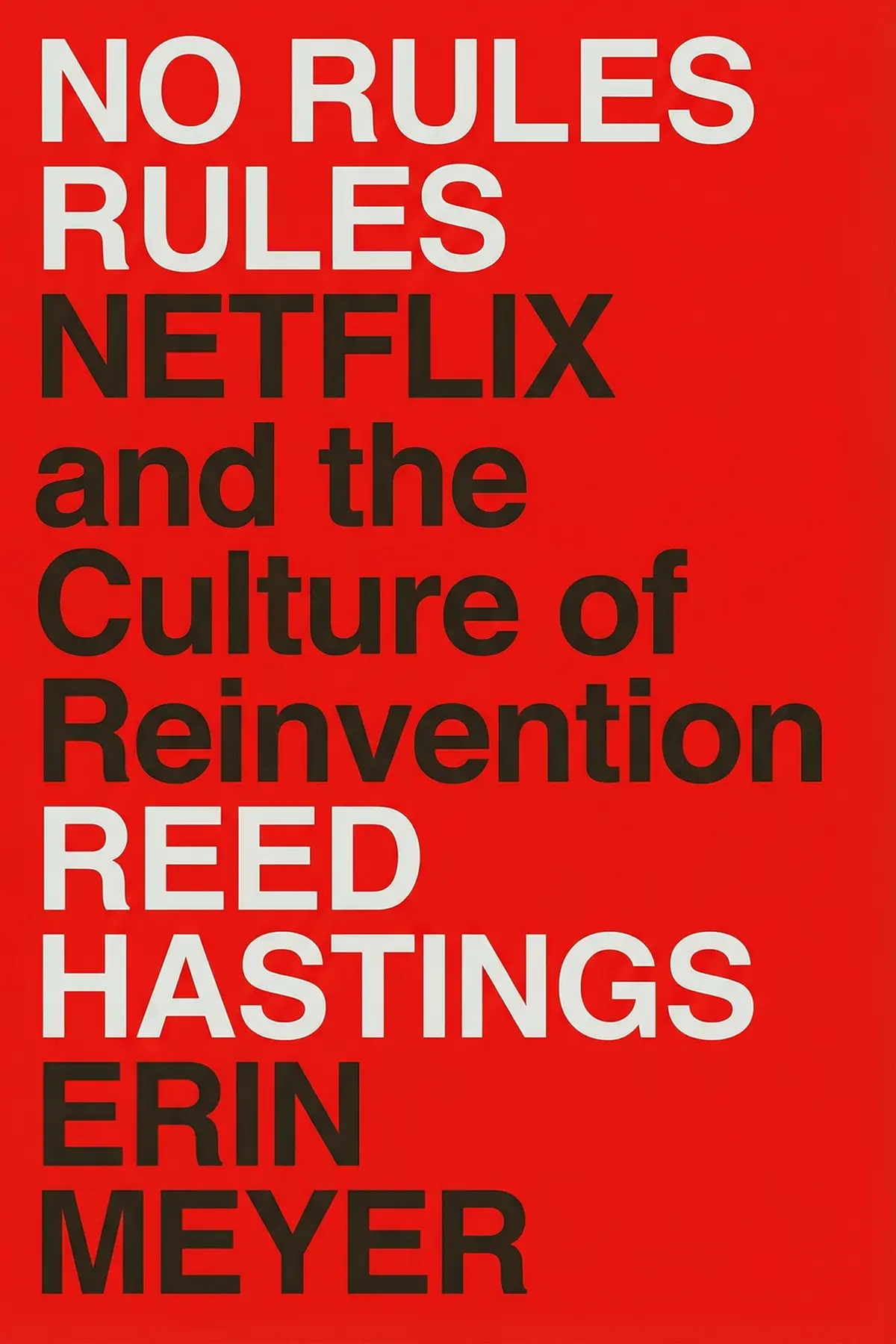
Table of Content
1. Introduction
2 min 17 sec
Picture a humid day in Dallas, Texas, back in the year 2000. Two entrepreneurs are sitting in a massive boardroom, waiting to meet the king of the video rental industry. These men are Reed Hastings and his partner, the founders of a small, struggling startup called Netflix. At the time, they were losing money and desperate. They made an offer to the CEO of Blockbuster: buy Netflix for fifty million dollars, and in exchange, the Netflix team would build and run Blockbuster’s online brand. The CEO didn’t just say no—he practically laughed them out of the room.
Fast forward just over a decade, and the roles had famously reversed. Blockbuster was filing for bankruptcy, while Netflix was on its way to becoming a global titan with hundreds of millions of subscribers. We often look at stories like this and assume it was just about technology—that Netflix simply ‘invented’ streaming while Blockbuster stayed stuck in the world of physical stores. But as Reed Hastings reveals, the real secret wasn’t the technology itself. It was the culture that allowed the technology to be built.
Netflix succeeded because it was designed to be nimble, while its competitors were built to be stable. In this summary, we are going to explore the radical management philosophy outlined in No Rules Rules. This isn’t just a book about how to run a tech company; it’s a manifesto for a new way of working. We will look at how Netflix moved away from the traditional corporate playbook of ‘command and control’ and replaced it with a system built on three pillars: high talent density, extreme transparency, and the removal of nearly all traditional employee oversight.
As we walk through these ideas, you’ll see how a company can actually perform better by having fewer rules, provided they have the right people in the room. This journey will take us through the hard lessons of mass layoffs, the awkwardness of telling your boss exactly what you think of them, and the liberation of getting rid of vacation policies and expense approvals. By the end, you’ll understand the ‘Netflix way’—a culture of reinvention that prioritizes people over process and innovation over efficiency.
2. The Power of Talent Density
2 min 20 sec
Discover why a smaller team of exceptional performers often outshines a larger group of average workers, and how a crisis revealed the secret to productivity.
3. Fostering Radical Candor
2 min 34 sec
Learn how creating a culture where everyone is required to give honest feedback—especially to their bosses—prevents costly mistakes and accelerates growth.
4. Eliminating the Shackles of Policy
2 min 20 sec
Explore the surprising benefits of abolishing vacation tracking and expense approvals, and how trust can replace bureaucracy.
5. The Market-Leading Pay Strategy
2 min 09 sec
Discover why Netflix pays at the top of the market and encourages employees to take calls from recruiters.
6. The Keeper Test and the Sports Team Logic
2 min 12 sec
Understand why Netflix views itself as a professional sports team rather than a family, and how the ‘Keeper Test’ defines employment.
7. Lead with Context, Not Control
2 min 19 sec
Learn how the highest levels of management can empower the front lines to make massive, million-dollar decisions without a single signature.
8. Conclusion
2 min 14 sec
As we look back at the radical architecture of the Netflix culture, a clear throughline emerges: freedom is not a gift you give to employees; it is a tool you use to drive excellence. By stripping away the traditional rules of corporate life, Netflix hasn’t created a chaotic free-for-all. Instead, they’ve built a highly disciplined environment where the discipline comes from the people themselves rather than from a policy manual.
We’ve seen how this starts with the hard work of building talent density—ensuring that the people around you are so capable that you don’t feel the need to watch their every move. We’ve explored how radical candor keeps everyone aligned and honest, preventing the slow rot of office politics. We’ve looked at the liberating power of removing vacation and expense approvals, and the strategic importance of paying top-of-market salaries to keep that talent from walking out the door. Finally, we’ve seen how leading with context allows a company to remain nimble even as it grows into a global giant.
The ‘No Rules’ approach isn’t for every company. It requires a high degree of maturity and a willingness to be uncomfortable. It requires managers to give up their power and employees to take on more responsibility than they might be used to. But for an organization that wants to lead in a world of constant change, the lessons of Netflix are invaluable.
If you take one thing away from this summary, let it be this: trust your people more than you trust your processes. Processes are designed to stay the same, but people are capable of invention. If you hire the best, tell them the truth, and get out of their way, they will take your company to places a rulebook could never imagine. As Reed Hastings discovered, the biggest risk isn’t that your employees will make mistakes; it’s that your rules will prevent them from achieving greatness. Now, ask yourself: which policies in your own life or business are there because of trust, and which ones are there because of fear? The answer to that question might just be the start of your own culture of reinvention.
About this book
What is this book about?
In No Rules Rules, Reed Hastings, the co-founder of Netflix, teams up with professor Erin Meyer to pull back the curtain on one of the most provocative corporate cultures in the world. The book explains how Netflix transitioned from a struggling DVD-by-mail service into a global streaming powerhouse by intentionally breaking the traditional rules of management. The core promise of the book is that by increasing talent density and fostering a culture of absolute honesty, companies can remove the bureaucratic guardrails that typically stifle creativity. It challenges the standard 'family' model of business, proposing instead that organizations should operate like high-performance sports teams. This shift allows for a 'freedom and responsibility' framework where employees are empowered to make massive decisions without seeking permission from above, provided they have the right context and the highest level of competence.
Book Information
About the Author
Reed Hastings
Reed Hastings is the co-founder and co-CEO of Netflix, beginning his career as a software developer before revolutionizing the entertainment industry. Erin Meyer is a professor at INSEAD and the author of The Culture Map, specializing in how cultural differences impact international business relations.
Ratings & Reviews
Ratings at a glance
What people think
Listeners find the book thought-provoking and engaging, offering actionable tips and straightforward breakdowns throughout. They value its emphasis on organizational culture, with one listener mentioning how the text outlines the steps and frameworks needed to establish a workplace centered on productivity and scaling. The work earns praise for its structural layout and prose, as one review points out the effectiveness of its Q&A style. Listeners also prize the perspective on giving staff more autonomy, with one noting it helps employees feel more satisfied with their roles.
Top reviews
Bo
Ever wonder why some companies move like tectonic plates while others pivot in a heartbeat? This book explains the mechanics of the 'talent density' that makes Netflix so agile. I found the sections on context over control particularly eye-opening for any manager tired of micromanaging every expense report. It’s not just a brag-fest; there’s actual scaffolding provided here to rethink how we trust our teams. Frankly, the idea that a high-performance culture requires pruning even 'adequate' employees is brutal, but the logic is hard to ignore. If you want a blueprint for radical efficiency and growth, this is the one. It avoids the fluff typical of the genre and gets straight to the meat of organizational design.
Show moreNit
Wow. This is probably the most engaging business book I have encountered in years because it refuses to play it safe. The writing style is punchy and direct, mirroring the culture it describes perfectly. I especially appreciated the focus on 'freedom and responsibility' as a dual-edged sword that empowers employees while demanding absolute excellence. It feels like getting a backstage pass to one of the most successful cultural experiments in Silicon Valley history. Not gonna lie, I was skeptical about the unlimited vacation policy at first, but the authors explain the requirements for it to work without it becoming a trap. This is essential reading for anyone who wants to understand how Netflix actually operates behind the scenes.
Show morePloy
This book is a masterclass in how to build a culture of innovation without getting bogged down by the usual corporate red tape. The authors do a great job of explaining that 'No Rules' doesn't mean chaos; it means hiring adults and treating them as such. I was particularly impressed by the transparency regarding salaries and how paying top-of-market is actually a cost-saving measure in the long run. Truth is, most HR departments are too scared to try half of what is suggested here, which is why they struggle to retain top talent. If you are looking to scale a startup and want your employees to feel empowered, this should be your new manual.
Show moreWararat
Finally got around to reading this and I’m genuinely inspired by the idea that we can do away with the 'command and control' mentality. The Q&A format is brilliant because it addresses the exact concerns I had while reading each chapter. I loved the practical advice on how to give feedback that is actually helpful rather than just critical. It’s rare to find a business book that offers a cohesive framework rather than just a collection of random anecdotes. For anyone who feels stifled by traditional management, this book offers a glimpse into a much more satisfying and efficient way to work. It makes the requirement for high performance feel like a fair trade for total freedom.
Show moreNatnicha
Reed Hastings and Erin Meyer have produced a fascinating deep-dive into a corporate world that defies almost every standard convention. By focusing on employee satisfaction through empowerment rather than through ping-pong tables and free snacks, they’ve hit on something profound. The way they delineate the requirements for this culture—starting with talent density—is logical and provides a clear roadmap for others to follow. I found the section on 'The Keeper Test' to be the most provocative part of the entire book, forcing me to rethink my own team structure. It’s an entertaining and essential read for anyone interested in organizational design, growth, and radical honesty.
Show moreKwame
Picked this up because I was curious about the 'no rules' hype, and I must say the structure is incredibly helpful. The back-and-forth between Reed’s visionary stories and Erin’s academic analysis keeps the narrative grounded and provides a much-needed outside perspective. I do think the 'Keeper Test' sounds terrifying for the average worker, but it makes sense in their high-stakes environment. To be fair, some of the advice on radical candor might backfire in a less mature organization where people can't handle public feedback. Still, it’s a refreshing departure from the usual HR manuals that fill business bookshelves these days. The Q&A sections at the end of the chapters clarify many of the more controversial points nicely.
Show moreAroha
After hearing so much about the Netflix culture memo, reading the full philosophy behind it was quite the journey. The chapters on removing approval layers for expenses and travel are revolutionary for someone used to traditional corporate bureaucracy. It’s clear that this model requires a specific level of trust and maturity that most companies simply haven't reached yet. Personally, I found the distinction between 'hard' and 'soft' industries—and why this won't work for a nuclear power plant—to be a crucial piece of the puzzle. It’s an insightful read that delineates the processes needed to foster innovation. My only gripe is that it occasionally feels a bit self-congratulatory regarding their own success.
Show moreSuthee
The chapter on leading with context, not control, changed my entire perspective on what it means to be a leader in the modern age. Instead of setting strict boundaries, Hastings argues for giving employees the information they need to make the same decisions a CEO would. In my experience, this level of empowerment is rare and requires a massive shift in mindset from the top down. While some of the examples felt a bit idealized, the underlying principles of candor and autonomy are undeniably powerful. I just wish there was more discussion on the potential for burnout within such a high-pressure system. A solid four-star read for any aspiring executive looking for practical advice.
Show morePannipa
Not what I expected, as the book often feels more like a carefully crafted PR exercise than a balanced look at corporate life. While the concept of talent density is fascinating, the push for public feedback and the dismissal of 'adequate' performers felt cold and potentially toxic to me. Look, I understand the goal is high performance, but the human cost of always being on the edge of the 'Keeper Test' seems exhausting over the long term. The authors make a compelling case for efficiency, but I walked away feeling like this culture only works for a very specific, work-obsessed personality type. It's a well-written book with clear organization, but the underlying ideology is definitely not for everyone.
Show moreLek
As someone who has worked in high-growth tech, I found the praise for the 'unlimited vacation' policy a bit disingenuous. The book tries to frame it as the ultimate freedom, but without clear boundaries, it often leads to people taking less time off for fear of appearing less committed to the team. I also struggled with the idea that giving direct negative feedback in public is healthy; it feels like a recipe for bruised egos. To be fair, the book is incredibly well-organized and easy to digest, which I appreciate. However, I think the authors gloss over the luck involved in Netflix's success and focus too much on their 'perfect' system being the only factor.
Show moreFeatured in

Readers also enjoyed

A Bigger Prize: How We Can Do Better Than the Competition
Margaret Heffernan
A Year with Peter Drucker: 52 Weeks of Coaching for Leadership Effectiveness
Joseph A. Maciariello
Acting with Power: Why We Are More Powerful Than We Believe
Deborah Gruenfeld
AUDIO SUMMARY AVAILABLE
Listen to No Rules Rules in 15 minutes
Get the key ideas from No Rules Rules by Reed Hastings, plus 5,000+ more titles in English and Thai.
- 5,000+ titles
- Listen as much as you want
- 7-day free trial
- Cancel anytime







