
23 min 07 sec
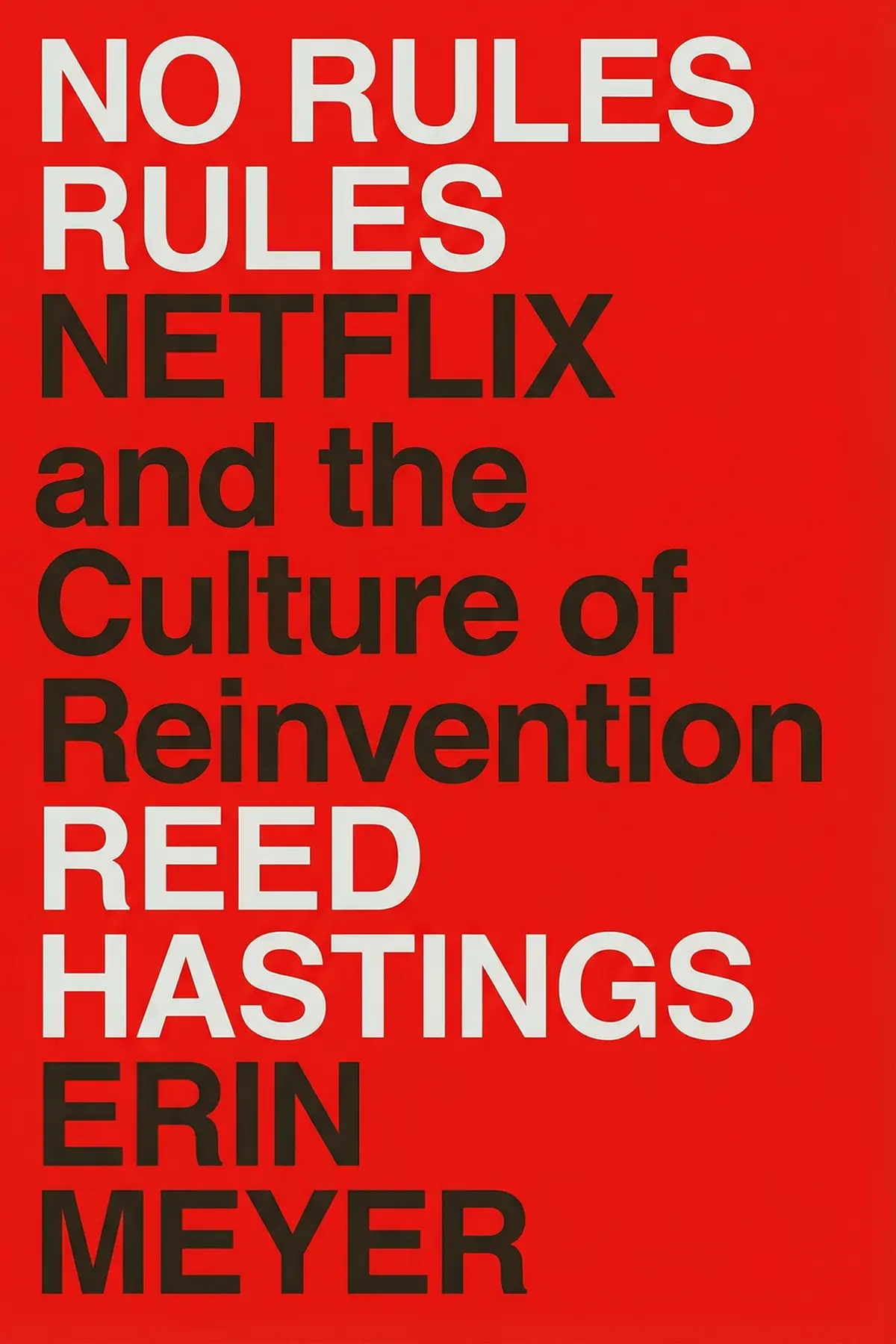
The Culture Map: Breaking Through the Invisible Boundaries of Global Business
By Erin Meyer
The Culture Map provides a groundbreaking framework for navigating the invisible boundaries of global business, helping professionals decode how cultural differences impact communication, leadership, and trust-building in an interconnected world.
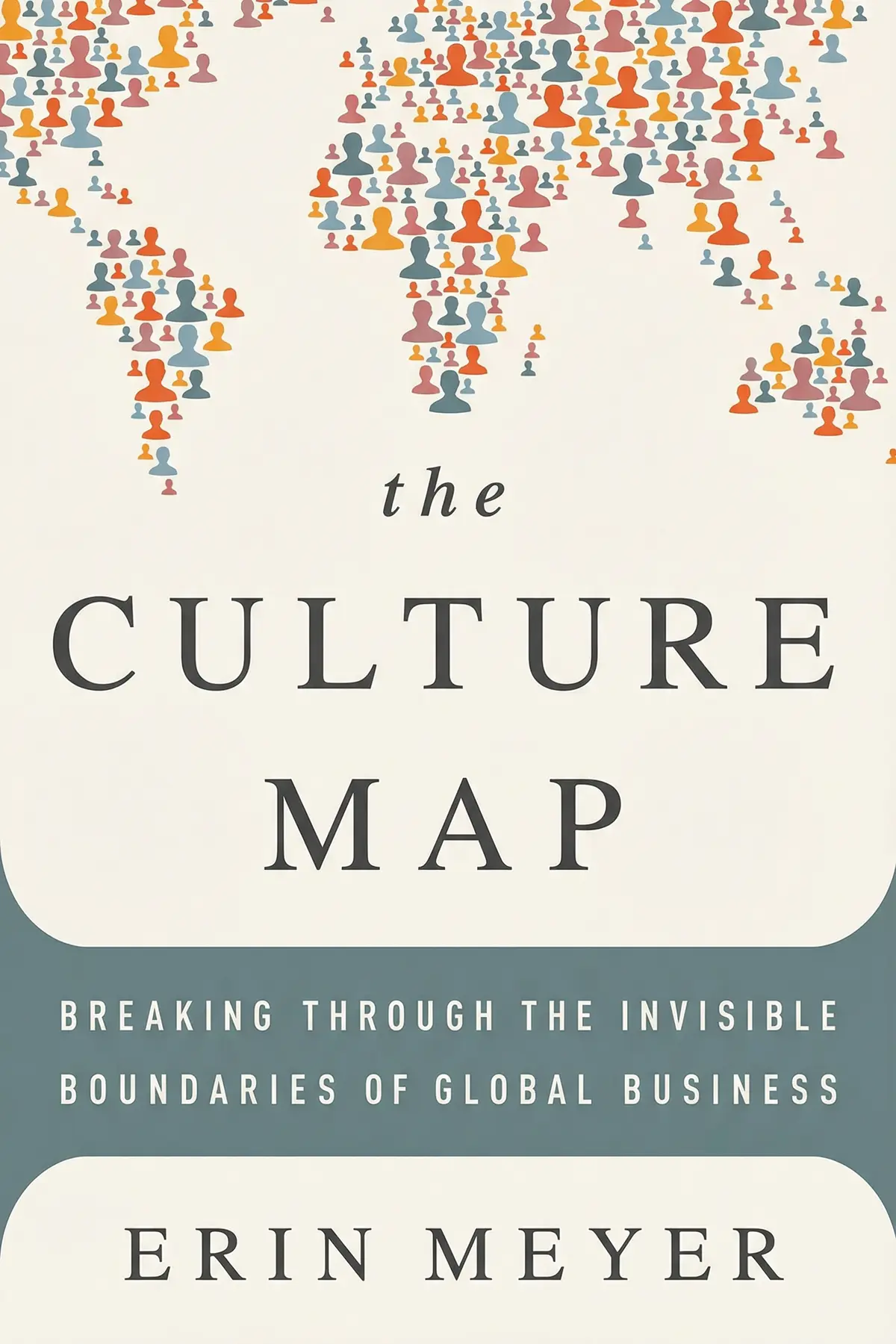
Table of Content
1. Introduction
2 min 07 sec
In our modern, hyper-connected world, the traditional boundaries of business have all but vanished. We can join a video conference with colleagues in Mumbai, London, and São Paulo without leaving our home offices. But while the physical distance has shrunk, the cultural distance remains as vast as ever. Many professionals operate under the mistaken belief that there is a single, global business culture—a way of behaving that is ‘professional’ and universally understood. We assume that if we speak the same language and use the same software, we are on the same page. However, beneath the surface of these interactions lie invisible currents of cultural conditioning that can lead to confusion, frustration, and failed deals.
This is where the concept of the culture map becomes essential. It is not enough to simply be aware that cultures are different; we must understand the specific dimensions along which those differences lie. Think of it as a navigational tool for the human element of international trade. When we step into a foreign environment, we often rely on stereotypes or surface-level observations. But those rarely tell the whole story. To truly thrive in a global marketplace, we need a framework that allows us to decode the subtle signals and unwritten rules that govern how people work together.
Through the exploration of eight key scales, we can begin to see the underlying logic behind behaviors that might otherwise seem baffling or even offensive. From the way we deliver negative feedback to how we perceive time itself, these scales offer a mirror to our own biases and a window into the perspectives of others. This journey is about more than just avoiding social gaffes; it is about building the cultural intelligence necessary to lead, persuade, and collaborate across any border. As we dive into these concepts, we will see how shifting our perspective from ‘what they are doing’ to ‘where they are on the scale relative to me’ can change everything.
2. The Principle of Cultural Relativity
2 min 04 sec
Discover why cultural differences are never absolute, but instead depend entirely on the background of the observer and the person they are interacting with.
3. Navigating High and Low Context Communication
2 min 05 sec
Uncover the secret language of context and learn why ‘saying what you mean’ is a cultural choice rather than a universal standard for clarity.
4. The Art of Giving and Receiving Feedback
2 min 16 sec
Explore the surprising disconnect between how cultures speak and how they criticize, revealing why directness in one area doesn’t guarantee it in another.
5. Principles vs. Applications in Persuasion
2 min 13 sec
Learn why your most logical argument might fall flat depending on whether your audience values the ‘why’ or the ‘how’ first.
6. Power Dynamics and the Role of the Leader
2 min 11 sec
Examine the invisible hierarchies that dictate who has the right to speak and how much authority a manager truly holds in different societies.
7. The Two Paths to Making Decisions
2 min 05 sec
See why a ‘top-down’ leadership style doesn’t always lead to ‘top-down’ decisions, and how different cultures define the moment of agreement.
8. Building Trust through Tasks or Relationships
2 min 11 sec
Uncover the two different foundations of professional trust and why a ‘business-first’ attitude can actually destroy a partnership.
9. The Cultural Threshold for Disagreement
2 min 08 sec
Discover why some cultures view a heated debate as a sign of health and intellectual passion, while others see it as a total breakdown of order.
10. Linear-Time vs. Flexible-Time Scheduling
2 min 05 sec
Understand why a ‘prompt’ start time can mean anything from five minutes early to an hour late, and how to manage the resulting chaos.
11. Conclusion
1 min 42 sec
The 8-scale framework of the culture map is not just an academic exercise; it is a vital survival guide for the global professional. By understanding these dimensions—Communicating, Evaluating, Persuading, Leading, Deciding, Trusting, Disagreeing, and Scheduling—we move from being ‘cultural tourists’ to ‘cultural navigators.’ We stop judging others through the narrow lens of our own upbringing and start seeing the logic behind their actions.
The true power of this framework lies in the concept of relativity. It reminds us that our own ‘normal’ is just one point on a much larger map. When we encounter a conflict, instead of assuming the other person is difficult or incompetent, we can look at the map and ask where the gap lies. Are we clashing because of different views on authority? Or is it a misunderstanding about how trust is built? Once the gap is identified, it becomes something we can bridge.
As you move forward in your international career, remember that cultural competence is a continuous process of learning and adaptation. It requires curiosity, humility, and a willingness to step outside your comfort zone. You don’t need to become an expert on every country, but you do need to become an expert on how to observe. By keeping these scales in mind, you can turn cultural diversity from a source of friction into a powerful competitive advantage. The global world is complex, but with the right map, you can navigate it with confidence and build lasting, meaningful connections across any border.
About this book
What is this book about?
In an era where business is conducted across borders at the click of a button, we often assume that professional standards are universal. However, underlying every interaction are deep-seated cultural norms that dictate how we speak, lead, and build relationships. The Culture Map explores the hidden patterns that govern these cross-cultural interactions, revealing why a management style that works in New York might fail in Tokyo or why a direct feedback approach in Germany might be seen as an insult in France. This guide offers a systematic eight-scale framework to decode these differences. It promises to transform the way you perceive global collaboration, moving beyond stereotypes to provide actionable insights. By understanding where different cultures fall on these scales relative to your own, you can learn to adapt your style, foster mutual respect, and lead diverse teams with greater effectiveness and empathy.
Book Information
About the Author
Erin Meyer
Erin Meyer is a professor at INSEAD, one of the world's leading business schools, where she specializes in cross-cultural communication and management. Her research and insights have been featured in prominent publications such as the Harvard Business Review, the Singapore Business Times, and Forbes.com. Meyer is recognized globally for her work in helping organizations bridge the gap between diverse cultural backgrounds in the workplace.
Ratings & Reviews
Ratings at a glance
What people think
Listeners view this title as an essential read that offers significant perspectives on cultural distinctions, acting as a vital roadmap for conducting business in diverse global settings. They praise the extensively documented content and functional illustrations, with one listener pointing out the effective balance of statistical data and personal accounts. The narrative is compelling, and listeners appreciate how the book strengthens their professional communication.
Top reviews
Charles
After hearing several colleagues rave about this, I finally dove in and found it remarkably helpful for my current project. Meyer breaks down cultural complexities into eight digestible scales, ranging from how we communicate to how we build trust. Frankly, the distinction between high-context and low-context cultures explains so many past misunderstandings I have had with my team in Japan. While some might find the anecdotes a bit repetitive, they serve to anchor the abstract data in reality. I particularly appreciated the section on linear-time versus flexible-time scheduling. It is a must-read for anyone who feels like they are constantly lost in translation during international Zoom calls. The writing is approachable without being overly simplistic, which is a rare balance for business literature.
Show moreNongnuch
Wow, I wish I had discovered this guide years ago. Living and working in the Middle East after growing up in the UK was a massive shock, and Meyer’s observations perfectly articulate the tension I felt. The chapter on relationship-based vs. task-based trust was a lightbulb moment for me. In my experience, the Anglo-Dutch Translation Guide mentioned in the text is scarily accurate regarding how the British use downgraders. It is fascinating how a pilot's announcement can serve as a masterclass in cultural understatement. My only minor gripe is that some regions, like Africa, feel underrepresented compared to the focus on Asia and Europe. Still, the core methodology provides a lens that you can apply to almost any cross-cultural interaction. This is definitely a book I will be keeping on my desk for quick reference.
Show moreSomsak
Navigating international waters in the corporate world is a minefield, but Meyer provides the necessary minesweeper. Her writing is crisp and the pace is much faster than your typical dry management tome. The truth is, we all have cultural blind spots, and this book forces you to look in the mirror before you judge your colleagues in India or Brazil. I was particularly struck by the discussion on consensual vs. top-down decision-making. It is a relief to finally have a vocabulary for the friction that occurs when an egalitarian leader tries to manage a hierarchical team. Some chapters are definitely stronger than others, and the focus is clearly on the business lounge crowd, but the utility is undeniable. It transformed the way I approach my weekly syncs with our global offices.
Show moreOwen
Truth is, many business books feel like they could have been an email, yet this one justifies its length through vivid storytelling. I appreciated how Meyer does not just list facts but shows how cultural differences play out in high-stakes negotiations. The chapter on high-context communication really hit home, especially regarding how meanings are often layered between the lines in East Asian cultures. In my experience, understanding the why behind the behavior is the only way to build lasting trust. I do think the book ignores the impact of individual personality a bit too much, which can lead to over-generalizing. You cannot just assume every person from a specific country fits perfectly on the exact dot Meyer has placed on her chart.
Show moreBella
Integrating statistical patterns with real-world corporate drama makes this an incredibly engaging read. Most people in international business rely on gut feeling, but this provides a structured way to decode human behavior across borders. Frankly, the section on the Anglo-Dutch Translation Guide was worth the price of the book alone for the laughs and the moments of clarity. It is fascinating to see how the same words can mean completely different things depending on which side of the English Channel you are on. The author manages to make complex concepts like organizational structure feel accessible and actionable. While it is clearly geared toward an American audience, the lessons are universal for any global professional. I have already recommended this to my entire HR department.
Show moreElla
The eight-scale framework Erin Meyer introduces is a game-changer for anyone navigating global management, though it isn't without its flaws. I found the analysis of direct negative feedback particularly illuminating, especially the contrast between how Americans sugarcoat things and how the French or Germans might be more blunt. To be fair, there are moments where the book feels like it leans heavily on generalizations that might not apply to every individual. Not every Italian is going to be late, and not every Brit is going to be vague. However, as a general roadmap for understanding the logic behind cultural friction, it is invaluable. The diagrams are a great visual aid for comparing where different countries sit on the spectrum. It is much more practical than the dense academic theories I studied in college.
Show morePor
Ever wonder why your Japanese clients seem so quiet during meetings while your French partners are constantly debating? Meyer explains this through her Evaluating and Disagreeing scales, showing that silence isn't necessarily a lack of interest. Personally, I found the peach vs. coconut culture analogy to be the most relatable part of the whole book. Americans are like peaches—soft and friendly on the outside, but with a hard pit of privacy inside. Germans are coconuts—hard to get to know at first, but once you are in, you are in. My only real complaint is that the writing style can feel a bit repetitive, as she follows the same structure for every single chapter. Despite the formulaic approach, the insights into principles-first vs. applications-first persuasion are genuinely useful for anyone giving presentations abroad.
Show moreChaiwat
As someone who recently transitioned from a US-based firm to a Dutch multinational, this was exactly what I needed. I had been struggling with the directness of my new colleagues, often feeling like I was being attacked during feedback sessions. Reading Meyer’s breakdown of the Evaluating scale helped me realize it was just a difference in cultural mapping, not a personal vendetta. Not gonna lie, I did find the author's habit of describing everyone's physical traits—like neat bobs or smiley eyes—a bit distracting and unnecessary. It adds a weirdly fictionalized layer to what should be professional anecdotes. However, the actual meat of the book—the 8 scales—is brilliant. It offers a practical framework that actually helps you change your behavior in real-time.
Show morePrasarn
This book is essentially a massive catalog of generalizations that occasionally border on stereotypes. While the scales concept is interesting, I found many of the claims about specific nationalities to be based more on the author's personal experience than on rigorous scientific study. For instance, the section on Italians being perpetually late feels lazy and biased. Look, if you want a series of corporate anecdotes about people being surprised by their foreign colleagues, you will find some value here. But if you are looking for deep sociological research, you will be disappointed. It often feels like a long pitch for a consultancy gig rather than a serious academic contribution. To be honest, the peach vs. coconut analogy is a clever way to visualize social barriers, but it doesn't excuse the lack of cited studies.
Show moreSakura
Finally got around to finishing this after it sat on my nightstand for six months, and I have to say it was a bit of a slog. The concept is strong, but the execution feels incredibly repetitive, with every chapter following the exact same formula of anecdote-scale-solution. Not gonna lie, I started skimming the last few chapters because the high corporate tone and dreary business lounge stories became quite tedious. While there are definitely eye-opening insights for international managers, the book could have easily been a long-form essay or a series of blog posts. In my experience, it is a bit too dry for casual reading, even if you are interested in the subject. It is useful as a reference guide, but do not expect a page-turner.
Show moreFeatured in

Readers also enjoyed

A Bigger Prize: How We Can Do Better Than the Competition
Margaret Heffernan




Can’t Even: How Millennials Became the Burnout Generation
Anne Helen Petersen
AUDIO SUMMARY AVAILABLE
Listen to The Culture Map in 15 minutes
Get the key ideas from The Culture Map by Erin Meyer, plus 5,000+ more titles in English and Thai.
- 5,000+ titles
- Listen as much as you want
- 7-day free trial
- Cancel anytime







