

22 min 41 sec
Nonviolent Communication: A Language of Life
Nonviolent Communication offers a transformative approach to human interaction. By focusing on empathetic listening and honest self-expression, it provides a roadmap for resolving conflicts and building deeper, more compassionate connections in every area of life.
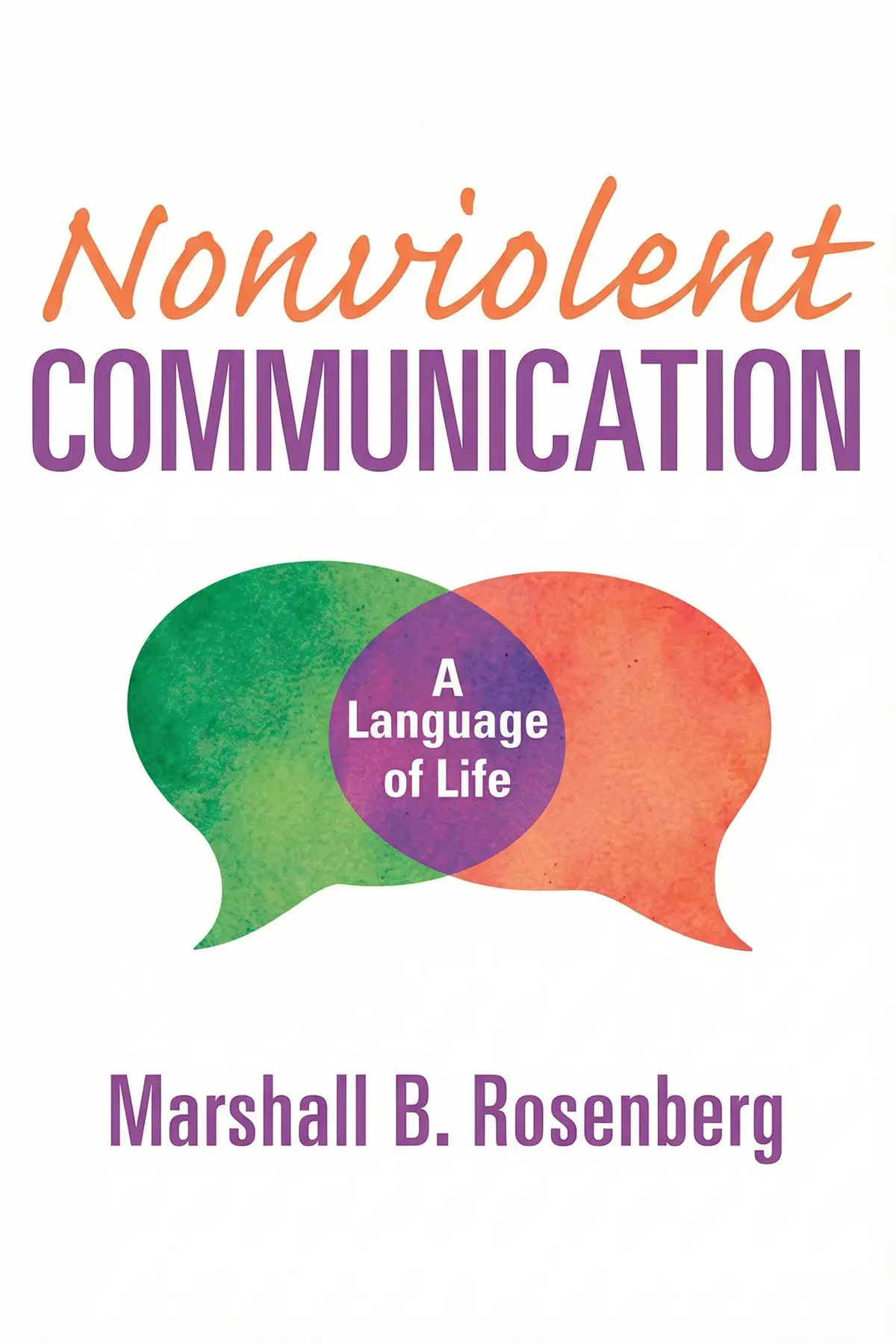
Table of Content
1. Introduction
1 min 42 sec
Every single day, we engage in a complex dance of exchange. We talk to our partners about the household chores, we negotiate deadlines with our supervisors, and we navigate social nuances with friends. Yet, despite how much practice we get, many of these interactions leave us feeling drained, misunderstood, or even hurt. We often walk away from a conversation wondering how a simple discussion spiraled into a heated argument, or why we feel so alone even after expressing ourselves.
It is easy to assume that these frictions are just an inevitable part of being human. We tell ourselves that some people are just difficult or that conflict is a natural byproduct of differing opinions. But what if the problem isn’t the people involved, but the very tools we are using to connect? What if the language we’ve been taught to speak since childhood is actually designed to separate us rather than bring us together?
This is the core realization at the heart of our exploration today. We are looking at a methodology that seeks to strip away the verbal habits that trigger defensiveness and replace them with a framework rooted in empathy. This isn’t just about being ‘nice’ or avoiding confrontation; it’s about a radical shift in how we perceive human needs and how we voice our own.
In the following segments, we will break down the mechanics of a process known as Nonviolent Communication. We’ll look at why our standard ways of speaking often feel like an attack to others, and how we can reframe our observations, feelings, and needs to foster genuine connection. You’ll discover how to stay grounded when someone directs criticism toward you, how to stop the cycle of self-blame, and how to make requests that people actually want to fulfill. By the end, you’ll have a new perspective on what it means to truly hear another person—and, perhaps more importantly, how to finally be heard yourself.
2. The Hidden Violence in Everyday Speech
2 min 27 sec
Explore how the way we judge and label others creates a barrier to empathy, turning our daily conversations into subtle battlefields of ‘right’ versus ‘wrong.’
3. The Four Pillars of Compassionate Connection
2 min 14 sec
Learn the foundational framework of Nonviolent Communication—a four-step process that transforms how we observe the world and express our inner reality.
4. Separating Reality from Interpretation
2 min 03 sec
Understand the vital importance of observing life without the cloud of evaluation, and how this one shift can prevent defensiveness in others.
5. Developing an Emotional Vocabulary
2 min 32 sec
Go beyond vague descriptions of your mood and learn to articulate your inner state with precision, fostering true vulnerability and connection.
6. Taking Ownership of Our Reactions
2 min 20 sec
Discover the crucial distinction between what others do and why we feel the way we do, giving you the power to choose your response to any situation.
7. Identifying the Universal Needs Beneath the Conflict
2 min 27 sec
Learn to look past the surface of ‘wants’ and ‘strategies’ to find the deep, universal human needs that drive all behavior, including your own.
8. The Power of Clear, Actionable Requests
2 min 26 sec
Master the final step of NVC: making requests that are specific, positive, and truly negotiable, ensuring your needs are met without coercion.
9. Turning Compassion Inward
2 min 24 sec
Apply the principles of NVC to your internal dialogue, transforming self-criticism into self-understanding and healing the relationship with yourself.
10. Conclusion
2 min 06 sec
As we reach the end of this journey through the principles of Nonviolent Communication, it’s worth reflecting on the core shift we’ve explored. We’ve moved from a world of ‘who is right and who is wrong’ to a world of ‘what are you feeling and what do you need?’ This transition isn’t just about changing a few words in our vocabulary; it’s about a fundamental reorientation of the human heart. It’s about choosing to see the humanity in every person, even those who speak to us with anger or judgment.
The throughline of this practice is the belief that compassion is our natural state. The violence we see in the world—both in our living rooms and on the global stage—is almost always a result of people not knowing how to connect with their own needs and the needs of others. By practicing the four steps of observation, feeling, needs, and requests, we begin to dismantle the systems of blame and coercion that have dominated human interaction for centuries. We learn that we don’t have to choose between being honest and being kind; in fact, true kindness requires the kind of radical honesty that only NVC provides.
The most important thing to remember as you move forward is that this is a practice, not a destination. You will likely find yourself slipping back into old habits of judgment or self-criticism. When that happens, the most powerful thing you can do is to offer yourself the same empathy you are learning to give others. Take a breath and ask yourself, ‘What need am I trying to meet right now?’
To bring these ideas into your daily life immediately, try this simple exercise: the next time you feel a surge of anger or frustration, pause. Instead of focusing on what the other person did wrong, ask yourself, ‘What need of mine is not being met in this moment?’ Once you identify that need—whether it’s a need for respect, clarity, or support—you’ll find that the anger often begins to transform into a clear sense of purpose. You are no longer fighting against someone else; you are standing up for your own life. By doing so, you contribute to a more compassionate world, one conversation at a time.
About this book
What is this book about?
At its heart, this book is about changing the way we relate to one another by altering the very language we use. Most of us have been conditioned to speak in ways that inadvertently cause pain, create distance, or spark defensiveness. Marshall B. Rosenberg introduces a four-part framework—observation, feeling, needs, and requests—designed to move us past judgment and toward mutual understanding. The promise of this work is a life where communication serves as a bridge rather than a wall. It teaches us how to hear the underlying needs behind a person's harsh words and how to express our own requirements without resorting to blame. Whether you are navigating a difficult professional environment, trying to heal a strained family relationship, or simply looking to silence your own inner critic, these principles offer a path toward clarity and peace. By stripping away the 'violence' of moralistic labels, we can return to a natural state of compassion that benefits both the speaker and the listener.
Book Information
About the Author
Marshall B. Rosenberg
Marshall B. Rosenberg, PhD (1934-2015), was a distinguished psychologist and the visionary founder of the Center for Nonviolent Communication. As the leader of this international peacemaking organization, he dedicated his life to teaching conflict resolution techniques across the globe. Over the course of his career, he authored fifteen books, with Nonviolent Communication: A Language of Life standing as his most influential work, having reached over one million readers worldwide.
Ratings & Reviews
Ratings at a glance
What people think
Listeners find this work remarkably impactful for communication, especially when navigating conflicts, and value the way it facilitates expressing personal requirements while promoting mutual empathy. They characterize it as a perceptive manual that expands perspectives and emotions, featuring actionable advice and illustrations that make the core concepts accessible. The content strengthens interpersonal ties by demonstrating how to bridge gaps with others, and listeners view it as a significant asset that is well worth its cost.
Top reviews
Mo
Finally got around to reading this classic, and it’s genuinely transformative for anyone tired of constant bickering. The four-step process of observation, feeling, need, and request sounds simple on paper, but applying it is where the real work begins. I found the distinction between 'needs' and 'desires' particularly eye-opening because it shifts the focus from winning an argument to finding a connection. You have to stop blaming others and start taking responsibility for your own emotional state. While the examples can feel a bit staged, the underlying logic is bulletproof if you actually want to resolve conflict without leaving scars. I’ve already noticed a shift in my workplace interactions since I stopped using 'wolf' language and started listening for the underlying needs of my coworkers. It’s not a magic wand, but it’s the best toolkit I’ve found for navigating difficult conversations without losing your cool or your dignity.
Show moreSven
Wow, this book actually forced me to look at the way I talk to my kids in a completely different light. Instead of just barking orders or making demands, I’m trying to express what I’m observing and how it makes me feel in a way that doesn't shame them. It is much harder than it looks when there are soiled socks under the coffee table. Rosenberg’s idea that every 'violent' expression is just a tragic way of asking for a need to be met is profound. It moves you away from the binary of 'right vs. wrong' and into a space of mutual understanding and respect. Even if you only take away the concept of 'giraffe' listening, your relationships will likely improve overnight. This should be mandatory reading for parents and teachers everywhere who want to foster emotional intelligence in the next generation.
Show moreNoah
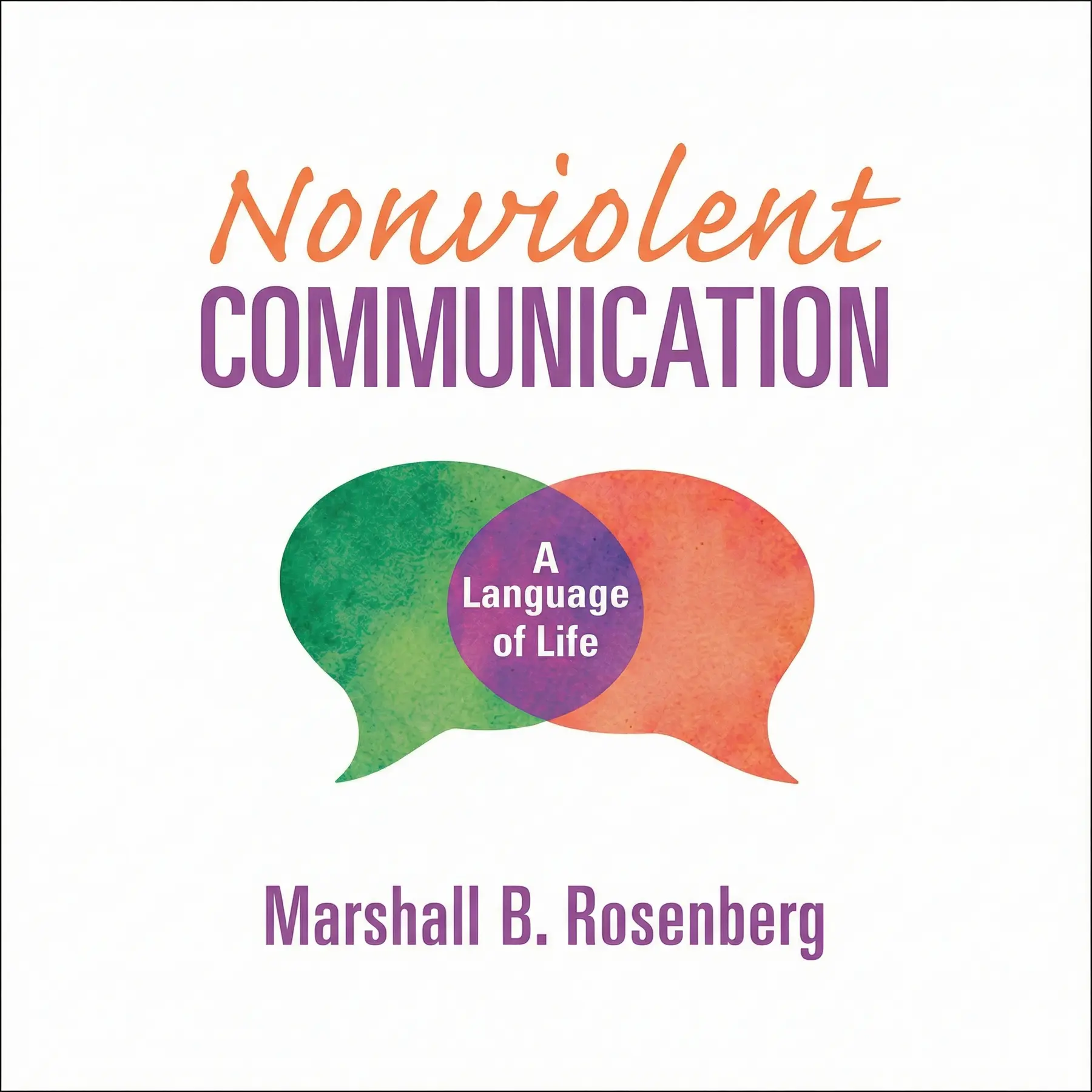
Not what I expected from a book with a flower on the cover, but it’s far more practical than the 'self-help' branding suggests. The focus isn't on being 'nice' or passive; it's about being clear and assertive without being demanding or manipulative. I’ve used these techniques in high-stress meetings, and they really do help in defusing potentially explosive situations by keeping everyone focused on observations rather than evaluations. My only hesitation is that some recipients might find the formulaic approach a bit condescending if you follow it too rigidly. You have to find your own voice within the structure so you don't sound like you're reading from a script. That said, the breakdown of how we use language to dominate others is an essential lesson in modern psychology. This is an insightful guide that opens both minds and hearts if you're willing to do the internal work.
Show moreElias
Marshall Rosenberg has created a literal roadmap for human connection that feels more relevant now than ever. In a world of digital shouting matches, the invitation to listen for the 'needs' behind someone’s 'wolf' language is a radical act of empathy. I loved the practical tips on how to restate what someone is saying so they feel truly heard and understood. It’s not just about the words you use; it’s about a fundamental shift in how you view other people and their motivations. Some of the poems and spiritual overtones are a bit cheesy, but the meat of the book is solid as a rock. I’ve started applying the four components to my self-talk as well, and it’s significantly reduced my own sense of powerlessness and self-blame. Everyone just wants to be loved and understood, and this book shows us how to ask for it the right way.
Show moreCharlotte
After hearing about NVC for years, I'm glad I finally sat down with the source material to see what the hype was about. It’s an insightful guide that manages to be both deeply philosophical and surprisingly practical at the same time. The distinction between making a request and making a demand is something I’ll be thinking about for a very long time. Although the book is a bit long-winded and repeats itself quite a bit, the core principles are easy to grasp and begin using immediately. I’ve already noticed my wife responding better when I lead with my own feelings rather than her perceived shortcomings. It’s definitely a 'fake it until you make it' kind of process, as this way of talking doesn't come naturally to most of us. Overall, it’s a valuable resource that has definitely helped me open my heart to others more effectively. If you can ignore the outdated cover art, there is real wisdom here.
Show moreLiam
As someone who struggles with confrontation, this book provided a much-needed framework for voicing my needs without feeling like an aggressor. The author’s emphasis on empathy—both for oneself and for others—is a refreshing change from the usual 'win-at-all-costs' negotiation tactics found in most business books. I’ll admit, the sugary poetry at the beginning was a bit of a hurdle, and the 70s New Age vibe is definitely present throughout the chapters. However, once you get past the stylistic quirks, the core message about connecting through vulnerability is incredibly powerful. My only real gripe is that the dialogue examples sometimes sound like two therapists talking to each other rather than real human beings in a heated moment. Still, the practical tips for de-escalating tension are worth the price of admission alone. It’s a slow-burn read that requires constant practice to master.
Show moreYuwadee
The concepts here are absolute gold, even if the writing style feels a bit dated and occasionally repetitive. Rosenberg lays out a communication theory that is astonishingly simple yet difficult to execute in the heat of a real-life disagreement. I appreciate how he breaks down the tendency to moralize and judge others, which usually just shuts down any chance of a productive dialogue. Frankly, the book could have been fifty pages shorter if he hadn't included so many long-winded anecdotes and bits of questionable verse. Despite those minor stylistic annoyances, the core methodology for identifying unmet needs is a game-changer for my marriage. We’ve stopped arguing about the 'toothpaste' and started talking about the deeper issues of respect and support that were actually bothering us. It’s a bit ‘woo-woo’ for some, but the results are hard to argue with.
Show moreSkylar
Truth is, I was skeptical about the whole 'nonviolent' branding because it sounded like a recipe for being a doormat. I couldn't have been more wrong; this book actually gives you the tools to stand your ground while maintaining a connection with the other person. By focusing on specific observations rather than general labels, you avoid triggering the defensiveness that usually kills a conversation. The chapter on expressing anger was particularly useful because it teaches you how to address the root cause rather than just reacting to the surface behavior. I gotta say, it takes a lot of mental energy to pause and identify your feelings before speaking, but the payoff is a total lack of regret after the conversation. It isn’t magic, and it won’t solve every irreconcilable difference, but it gives you a fighting chance. It’s an invaluable resource for anyone who feels stuck in a cycle of toxic communication.
Show moreNikolai
Ever wonder why every argument with your partner ends in a stalemate despite your best intentions? This book might have the answer, as it digs deep into how our habitual language creates barriers instead of bridges. Rosenberg explains how compliments can even be problematic if they aren't rooted in specific observations, which was a real 'aha' moment for me. While the formulaic nature of the sequence can be a bit clunky at first, it forces you to slow down and think before you speak. Personally, I found the examples regarding international conflict resolution a bit far-fetched, like the hypothetical Putin scenario mentioned in some other critiques. However, on a micro-level within a family or a small team, these tools are incredibly effective for fostering a sense of safety. It takes courage to be this vulnerable with your speech, but the depth of relationship it creates is worth the initial awkwardness.
Show moreWin
Look, I understand why people like this, but the dialogue examples feel incredibly robotic and unrealistic for any real-world situation. If I told my partner, 'I feel frustrated because I need more order in our shared space,' they would probably laugh or think I was having a breakdown. The book makes several bold claims about its effectiveness without much scientific backing, relying instead on anecdotes that feel conveniently tailored to the author's theories. Furthermore, the idea that we should never judge or analyze seems to remove critical thinking from the equation entirely. I also found the 'would you rather be right or happy' dilemma to be a bit of a false choice that can be used to silence legitimate grievances. While the listening tools are helpful, the overall system feels too steeped in a specific 1970s psychotherapy mindset to be universally applicable today. It just didn't work for me.
Show moreReaders also enjoyed


AUDIO SUMMARY AVAILABLE
Listen to Nonviolent Communication in 15 minutes
Get the key ideas from Nonviolent Communication by Marshall B. Rosenberg, plus 5,000+ more titles in English and Thai.
- 5,000+ titles
- Listen as much as you want
- 7-day free trial
- Cancel anytime







