
24 min 30 sec
On Paper: The Everything of its Two-Thousand-Year History
On Paper explores the 2,000-year journey of a transformative material. From ancient China to modern hygiene and currency, Nicholas A. Basbanes reveals why paper remains an irreplaceable foundation of human civilization.
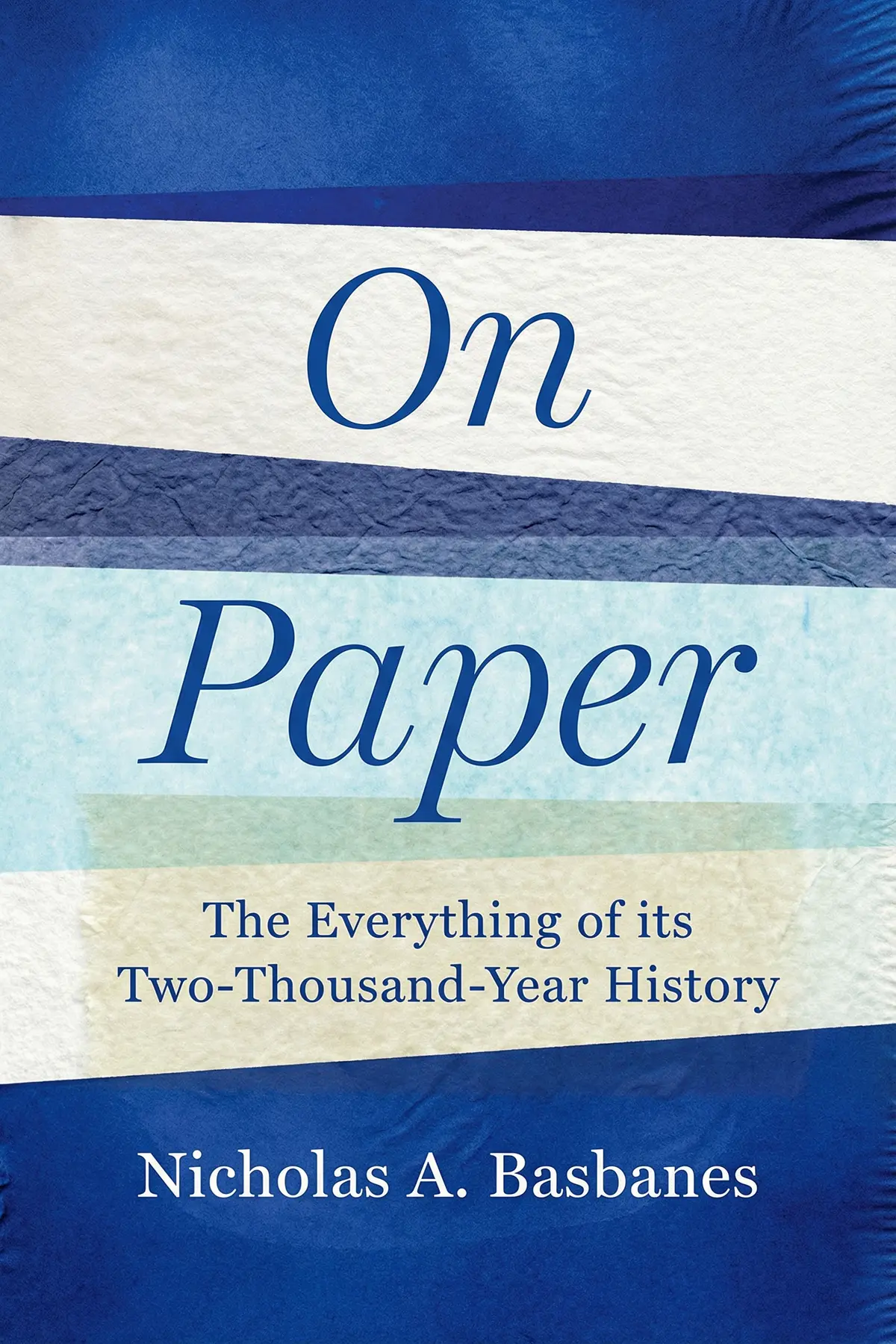
Table of Content
1. Introduction
1 min 35 sec
In our modern era of sleek tablets, instant emails, and cloud storage, there is a persistent myth that we are standing on the threshold of a paperless world. We imagine that the physical sheet is a relic of the past, destined to join the stone tablet and the wax scroll in the archives of history. But if you take a moment to look around, you will realize that paper is not just surviving; it is thriving in ways we often overlook. From the currency in your wallet to the tissue in your pocket and the passport that defines your identity, paper is woven into the very fabric of human existence.
In Nicholas A. Basbanes’ exploration, we are invited to look closer at this humble material. This is not just a history of a product, but a history of how a simple slurry of water and plant fibers revolutionized how we think, how we trade, and how we care for ourselves. We often treat paper as a mere medium—something that holds a message but has no voice of its own. However, its unique physical properties, its durability, and its versatility have shaped empires and fueled scientific breakthroughs.
Over the course of this journey, we will trace paper’s path from the royal courts of ancient China through the busy markets of the Islamic world and into the industrial powerhouses of the West. We will see how it has been used for everything from spiritual devotion to deadly warfare. By the end, you’ll understand that paper is not a dinosaur on its way to extinction; it is a fundamental human technology that is constantly being reinvented to meet the needs of a changing world. Let’s begin by looking at the surprising science and ancient origins of the sheet itself.
2. The Ancient Origins and Molecular Science of the Sheet
2 min 16 sec
Discover how a simple mixture of water and pulverized fibers became a world-changing invention in ancient China and learn the hidden science that holds it together.
3. Paper’s Artistic and Architectural Evolution in Japan
2 min 08 sec
Explore how Japan took a Chinese invention and transformed it into a versatile material for everything from translucent windows to weapons of war.
4. The Islamic World’s Bureaucratic Revolution and the Westward Spread
2 min 02 sec
Learn how the Arab world used paper to manage vast empires and why the Ottoman Sultans initially resisted the printing press for centuries.
5. The Enduring Security and Resilience of Paper Money
2 min 04 sec
Discover the fascinating details of how American banknotes are engineered to be the most durable and counterfeit-resistant currency in the world.
6. The Industrial Shift from Rags to Wood Pulp
2 min 03 sec
Follow the desperate search for paper-making materials that led entrepreneurs to Egypt’s mummies and eventually to the invention of wood-pulp paper.
7. The Paper Revolution in Modern Hygiene
2 min 06 sec
Learn how a material originally intended for filters and bandages transformed into the indispensable personal care products we use every day.
8. The Reliability of Paper in an Age of Digital Insecurity
2 min 01 sec
Explore why the most important records of our lives—from birth certificates to state secrets—still rely on the permanence of the physical page.
9. The Surprising Connection Between Paper and Cigarettes
2 min 01 sec
Uncover how the Crimean War and the availability of cheap paper led to the global spread of cigarettes, transforming a niche habit into a worldwide phenomenon.
10. Paper as the Silent Partner in Creativity and Architecture
2 min 05 sec
See how the availability of paper liberated the minds of artists like Leonardo da Vinci and became an essential tool for building the world’s great structures.
11. The Art of the Fold and the Future of Invention
2 min 03 sec
Discover the profound beauty of origami and learn how companies are still inventing new kinds of paper to meet the challenges of the modern world.
12. Conclusion
2 min 06 sec
As we have seen throughout this exploration of On Paper, this simple material is far more than just a surface for writing. It is a fundamental technology that has powered human progress for two millennia. From the molecular bonds that give a sheet its strength to the industrial processes that allow us to produce it by the ton, paper is a marvel of human ingenuity. It has revolutionized how we govern, how we trade, and how we maintain our health. It has liberated artists to sketch their wildest dreams and allowed architects to build the world’s most iconic structures.
Nicholas A. Basbanes reminds us that while we might live in a digital age, we do not live in a paperless one. The unique physical properties of paper—its tactile nature, its permanence, and its sheer reliability—ensure that it remains indispensable. When we hold a dollar bill, we are holding a piece of engineering that can survive thousands of folds. When we look at a passport, we are looking at a physical guarantee of our place in the world. And when we use a simple tissue, we are benefiting from a century of chemical innovation.
The throughline of paper’s history is one of constant adaptation. It moved from being a rare luxury in China to a tool of bureaucratic power in the Middle East and an engine of the Enlightenment in Europe. It survived the transition from rags to wood pulp and found new life in everything from cigarettes to surgery. Today, it continues to evolve in the hands of artists and engineers alike.
If there is one actionable lesson to take away, it is this: do not underestimate the power of the physical page. In an era of digital volatility, the hard copy remains our most stable and secure form of record-keeping. Whether it’s a backup of your most important legal documents or a simple notebook for your thoughts, the act of putting things on paper connects us to a long lineage of human history. The digital world may offer speed, but paper offers a legacy. So, next time you handle a sheet of paper, take a moment to appreciate the two thousand years of history that brought it to your fingertips. It isn’t going anywhere anytime soon.
About this book
What is this book about?
We often hear that we are moving toward a paperless society, but the reality is quite the opposite. In this deep dive into the history and utility of one of humanity's most important inventions, we explore how paper transitioned from a rare luxury in ancient China to a ubiquitous tool that defines our world. This summary tracks the evolution of paper through its many forms: as a medium for the sacred word, a bedrock for global bureaucracy, a resilient form of currency, and a vital component of personal hygiene. Beyond just its history, the book promises to change how you view the simple sheets you handle every day. You will learn about the ingenious engineering behind the American dollar, the surprising origins of the cigarette, and how the availability of paper liberated the minds of geniuses like Leonardo da Vinci. It is a story of resilience, showing that while digital technology might change how we store data, the physical and tactile nature of paper ensures it is here to stay.
Book Information
About the Author
Nicholas A. Basbanes
Nicholas Basbanes is a former literary editor of the Worcester Sunday Telegram. He’s written several books, including A Gentle Madness: Bibliophiles, Bibliomanes, and the Eternal Passion for Books, and his work has been featured in the New York Times and the Los Angeles Times.
Ratings & Reviews
Ratings at a glance
What people think
Listeners find this work exceptionally easy to digest, with one listener suggesting it should be enjoyed at a slow pace. Furthermore, they value the academic depth, and one review points out the intriguing specifics regarding paper production methods. The book also offers a comprehensive historical account of the medium, while one listener notes the inclusion of engaging personal anecdotes from the author's investigative research. The prose style is well-regarded, and listeners appreciate the broad range of subjects explored throughout.
Top reviews
Maya
Ever wonder how a simple sheet of wood pulp could change the entire trajectory of human history? Nicholas Basbanes answers this with a sweeping, scholarly narrative that makes you appreciate every receipt and notebook in your house. The depth of research is staggering, especially when he discusses the notebooks of Da Vinci and how paper allowed architecture to flourish through reproducible blueprints. I found the section on the NSA’s massive recycling efforts particularly eye-opened, proving that paper is far more than just a surface for writing. While the book is dense, the prose is remarkably readable and full of personal anecdotes from the author's own travels. It feels like a labor of love that honors the 'human factor' behind the industry. If you enjoy deep dives into the mundane things we take for granted, this is an essential addition to your shelf. It is a thick read, so take your time with it.
Show moreThitiwan
After hearing so much about Basbanes’ work, I finally dove into this volume and found it absolutely mesmerizing. It reminded me of a Ken Burns documentary in book form—meticulous, relaxing, and deeply informative all at once. The author’s visits to various paper mills and his interviews with executives bring a personal touch that many history books lack. I was especially captivated by the section on the National Security Agency and how they handle classified waste, which was a factoid I never knew I needed. The way he connects paper to the advancement of the arts and sciences, like Da Vinci's engineering sketches, makes you see the world differently. It’s a loving treatment of a medium we often assume is dying, yet the future looks quite bright according to his research. This is easily one of the best non-fiction books I've picked up this year. It's definitely worth a slow, careful read.
Show moreKom
Picked this up on a whim after seeing it mentioned in a bibliography, and I was pleasantly surprised by how much I learned. The author’s writing style is engaging, almost like a guided tour through a museum of everyday life. He covers everything from the invention of paper in China to the high-tech engineering of origami used in space exploration. One of my favorite chapters focused on the Crane company and the specific security features required for printing currency. Honestly, the level of detail is impressive, though it can feel a bit overwhelming if you aren't prepared for a slower, more leisurely pace. Some sections, like the ones on early American papermaking, dragged a little for me personally. However, the unique insights into how paper shaped our world more than make up for the occasional slow patch. It’s a solid 4-star read for anyone who loves non-fiction that tackles a single subject in exhaustive depth.
Show moreRose
As someone who still prefers a physical book over an e-reader, this was a fascinating look at the material I hold in my hands every day. Basbanes argues that we are far from a paperless society, and his exploration of the future of paper is surprisingly optimistic. The chapter on the 9/11 attacks was particularly moving, focusing on the sheer volume of paper found in the rubble and the missing persons posters that followed. It was an odd and melancholy way to end the book, but it highlighted the emotional weight that paper carries in our lives. The author’s research into the National Security Agency’s pulping process was another highlight, showing the secret life of paper we never see. While a bit long-winded in the middle sections, the book is packed with enough 'did you know' facts to keep any bibliophile engaged. It's a scholarly yet accessible tribute to a vital invention.
Show moreDing
Basbanes has crafted a deeply researched narrative that goes far beyond the basic history of a commodity. He treats paper as a living participant in human progress, from the blueprints of great architects to the notebooks where Edison jotted down his inventions. The book is at its best when it explores the personal stories behind the research, like the author’s interviews with paper mill workers and executives. I found the discussion on counterfeiting and currency production to be absolutely riveting, especially seeing how much science goes into a single dollar bill. Some chapters are a bit more tangential than others—the section on wallpaper felt a little out of place—but the overall quality of the writing kept me hooked. It’s a bit denser than Kurlansky’s book on the same topic, but it feels more comprehensive. This is the kind of non-fiction that makes you reconsider the mundane objects in your pockets.
Show moreNong
The sheer variety of topics covered here is staggering, ranging from the earliest Chinese bark-paper to the digital age's influence on stationery. Basbanes focuses heavily on the 'human factor,' which prevents the book from feeling like a dry textbook. I loved the chapters on the notebooks of Beethoven and the way paper allowed science to advance by making information reproducible. Frankly, I had no idea that paper-folding algorithms were used to launch telescopes into space! The book does wander quite a bit, and some of the transitions between chapters are a little jarring. However, the quality of the anecdotes kept me coming back. Whether he's discussing the paper used for currency or the history of Avery labels, Basbanes makes every subject feel vital. It’s a great example of why we are currently in a golden age of non-fiction writing.
Show moreIvan
Not what I expected, but in a good way. I thought this would be a linear history of paper-making, but it’s actually more of a collection of fascinations related to the medium. The author’s prose is elegant and he clearly has a high tolerance for deep research, which results in some truly incredible details about things like passports and postage stamps. I particularly enjoyed the comparison between mud tablets and papyrus, which provided a great historical context for why paper eventually dominated. While some might find the episodic nature frustrating, I liked being able to jump around between topics. The only real downside is that it lacks a strong concluding argument to tie everything together. Still, for anyone who loves books and the history of communication, this is a must-read. It’s a scholarly achievement that remains very accessible to the average reader.
Show moreAna
This book is a bit of a mixed bag for me. On one hand, Basbanes is a gifted storyteller who finds beauty in things like the 'paper rain' of 9/11 and the intricate folds of space telescopes. On the other hand, the book doesn’t really hang together as a cohesive unit, often feeling more like a collection of separate essays than a single, fluid argument. I loved learning about how Beethoven used paper to communicate and the history of Zig-Zag cigarette papers, but other chapters felt like they were reaching for a connection. Truth be told, it’s a bit of a rambling journey that rewards patience but occasionally tests it. It’s definitely a fun read for trivia enthusiasts, though the lack of a strong central thread makes it hard to recommend to everyone. Still, the scholarship is impressive and the endnotes are definitely worth a look if you want to dig deeper.
Show morePlernpiriya
To be fair, the first few chapters on the technical aspects of papermaking are a bit of a slog. I almost gave up during the long descriptions of wood pulp and chemical processes, but I’m glad I stuck it out for the later sections. The book really hits its stride when it shifts to the cultural impact of paper, such as its role in the American Revolution and the development of origami as an engineering tool. Basbanes has a tendency to ramble, and the book's episodic structure means that if you aren't interested in a specific topic, you're stuck for thirty pages. I found myself skimming the parts about 18th-century mills to get to the more modern anecdotes about the NSA and toilet paper. It’s a worthwhile read for the trivia alone, but it requires a lot of heavy lifting from the reader. Not quite the 'page-turner' I was hoping for, but informative nonetheless.
Show moreTang
Look, I really wanted to enjoy this because I love micro-histories, but 'On Paper' was a massive struggle for me. The level of detail is simply overwhelming, and at times, it felt like I was reading a technical manual rather than a narrative history. Basbanes is clearly passionate, yet he spends so much time on the minutiae of early American papermaking that the pace slows to a crawl. By the time I reached the chapters on origami and engineering, I had already lost interest because the structure felt too episodic and disconnected. There are some gems buried in here, like the history of currency and the Crane company, but they are submerged under mountains of trivia. For me, it was just too much information for a single sitting. If you don't have an extremely high tolerance for wandering tangents, you might want to skip this one.
Show moreReaders also enjoyed
Alexander the Great
Philip Freeman
A History of Iran: Empire of the Mind
Michael Axworthy
A History of the World in 6 Glasses
Tom Standage

A Long Way Gone: Memoirs of a Boy Soldier
Ishmael Beah
A Splendid Exchange: How Trade Shaped the World
William J. Bernstein
AUDIO SUMMARY AVAILABLE
Listen to On Paper in 15 minutes
Get the key ideas from On Paper by Nicholas A. Basbanes, plus 5,000+ more titles in English and Thai.
- 5,000+ titles
- Listen as much as you want
- 7-day free trial
- Cancel anytime







