
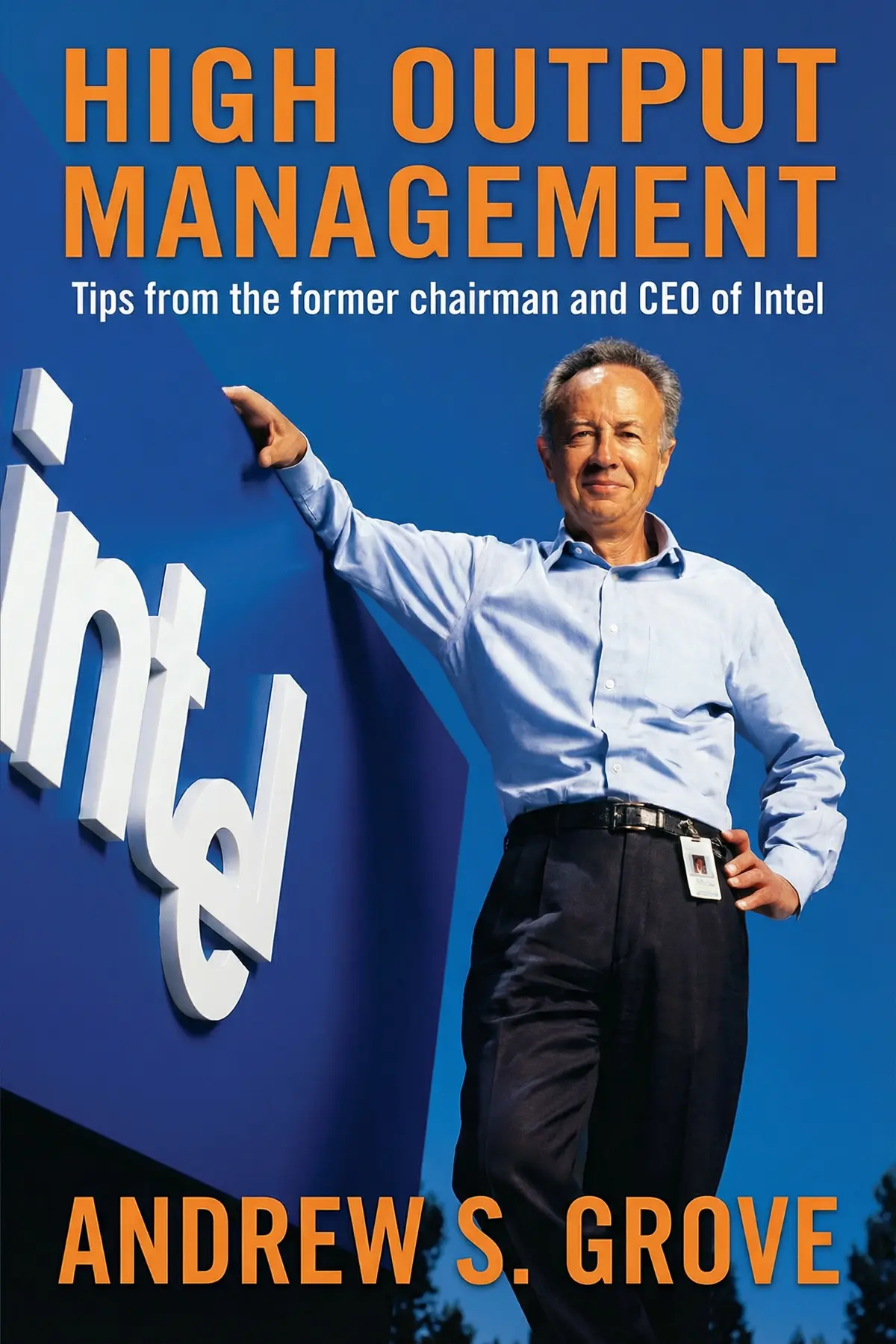
High Output Management
Andrew S. Grove
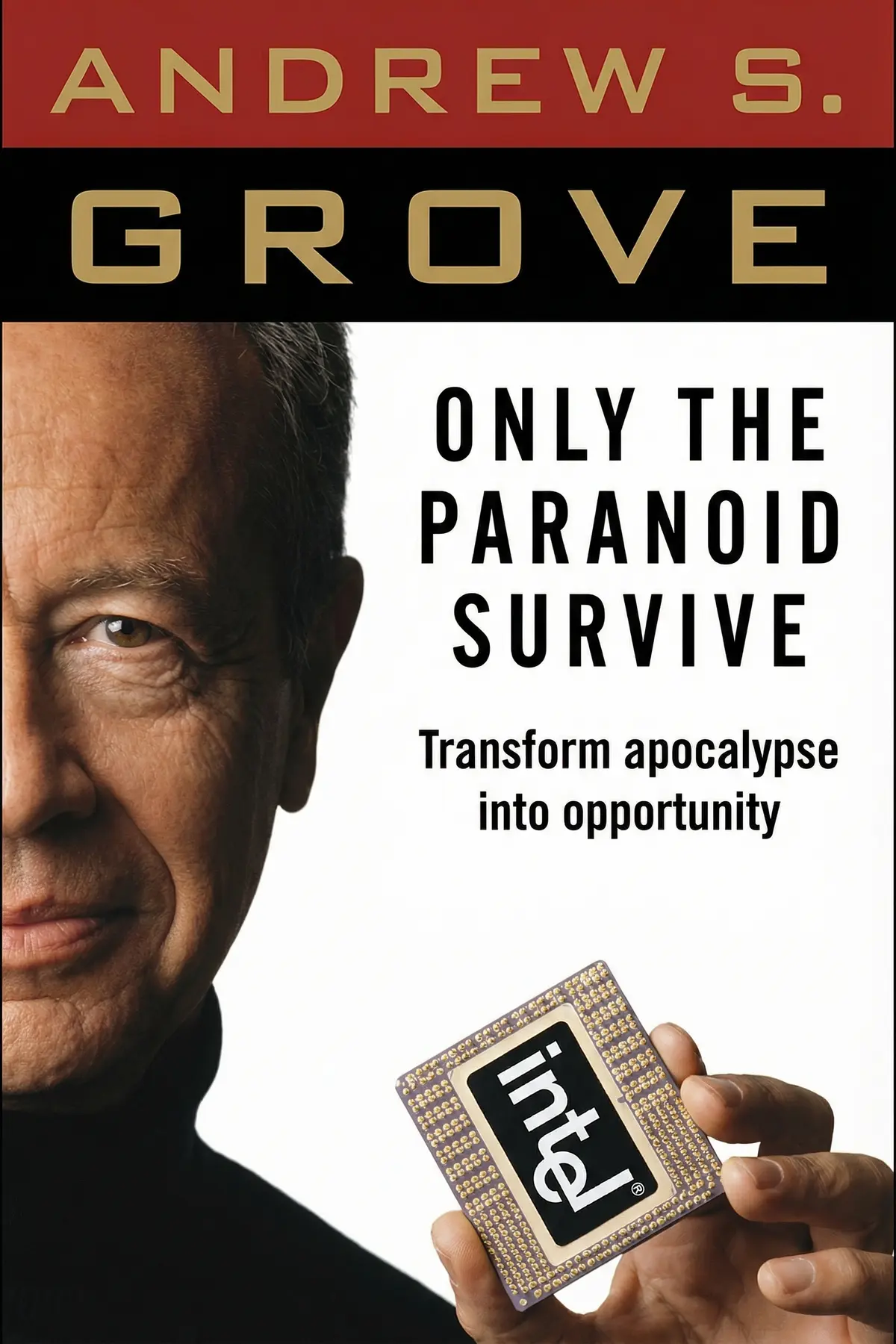
A deep dive into the concept of Strategic Inflection Points, exploring how businesses and individuals can navigate massive market shifts by embracing a mindset of constant vigilance and adaptive leadership.
1 min 43 sec
In the world of business, there is a certain comfort in stability. When things are going well, the temptation is to believe that the current trajectory will continue indefinitely. However, as Andrew Grove demonstrates through his tenure at Intel, this sense of security is often the precursor to a crisis. This exploration of his management philosophy introduces us to a world where success is never a final destination, but a temporary state maintained through constant vigilance. The central theme of our discussion today is the concept of a ‘Strategic Inflection Point.’ These are the moments in the life of a company where the old ways of doing business suddenly stop working, and the very foundation of the organization is put to the test.
Grove’s perspective is born from the front lines of the technology industry, a sector defined by rapid change and brutal competition. He argues that ‘only the paranoid survive,’ a phrase that has become a mantra for leaders across the globe. But what does it mean to be paranoid in a professional context? It isn’t about fear or anxiety; it’s about a heightened state of awareness and a refusal to become complacent. It’s about recognizing that the landscape can shift beneath your feet at any moment.
Throughout this summary, we will examine how these inflection points arise and why they are so difficult to identify until it is almost too late. We will look at the internal and external forces that drive change and the specific strategies that can help a company not just survive a catastrophe, but leverage it to reach new heights. Whether you are an executive at a massive corporation, an entrepreneur, or an individual contributor navigating a changing career landscape, the principles of strategic adaptability are more relevant today than ever before. Let’s dive into how we can transform the threat of an apocalypse into a platform for growth.
2 min 03 sec
Discover the unseen forces that can suddenly render a successful business model obsolete and why traditional tracking methods often fail.
2 min 05 sec
Market upheavals don’t just affect the boardroom; they ripple through every level of the workforce, demanding a total rethink of professional identity.
1 min 59 sec
Learn how Intel’s greatest existential threat became its greatest triumph and why emotional ties are a leader’s biggest enemy during a pivot.
1 min 55 sec
In times of total confusion, a leader’s most important job isn’t having all the answers, but providing a clear and unwavering sense of direction.
2 min 04 sec
Complexity is the enemy of execution; discover why the most effective strategic shifts are built on messages that can fit on a bumper sticker.
2 min 01 sec
Nostalgia can be a death sentence; find out why the people who love the company most are often the ones who lead it toward ruin.
2 min 04 sec
The most important information about your company’s future is likely sitting in the inbox of a middle manager you haven’t talked to in months.
1 min 51 sec
Innovation requires more than just a budget; it requires an environment where people feel safe enough to fail and challenge the status quo.
2 min 00 sec
Explore why the most successful companies are those that over-invest in development and plan for scenarios they hope will never happen.
1 min 37 sec
As we wrap up our journey through Andrew Grove’s philosophy of survival, it is clear that the ‘paranoid’ mindset is not about living in a state of panic, but about living in a state of readiness. The Strategic Inflection Point is a fundamental law of business nature. It is the moment where the old growth curve ends and a new one must begin. Whether that new curve goes up or down depends entirely on the actions taken during the period of maximum uncertainty. We have seen how Intel faced its own extinction and emerged as a global titan by having the courage to abandon its past and embrace a new identity.
The throughline of this summary is the necessity of adaptive leadership and open communication. You cannot navigate a crisis if you are blinded by nostalgia or if your employees are too afraid to tell you the truth. To apply these ideas in your own professional life, start by looking for those early warning signs. Listen to the people on the front lines, solicit objective opinions from outsiders, and be willing to challenge your own success. Remember that what made you successful yesterday might be exactly what makes you obsolete tomorrow.
The most actionable takeaway is to foster a culture of constant learning and flexibility. Don’t wait for a crisis to start training for one. By being slightly paranoid today—by questioning the status quo and preparing for multiple scenarios—you ensure that when the inevitable Strategic Inflection Point arrives, you won’t just survive it; you will use it as the fuel for your next great era of success. Stay vigilant, stay adaptable, and remember that in a world of constant change, the only thing you can’t afford to be is complacent.
This summary explores the high-stakes world of business survival as defined by one of the industry’s most legendary leaders. The core premise is that every organization eventually faces a moment of total transformation, known as a Strategic Inflection Point. These moments are caused by shifts in competition, technology, or regulations, and they represent a fork in the road: a path toward catastrophic failure or a new era of unprecedented success. You will learn the specific forces that trigger these shifts and why even the most successful companies are often the last to see them coming. The book provides a framework for recognizing early warning signs, maintaining open communication across all levels of an organization, and overcoming the emotional attachments that keep leaders tethered to failing strategies. It is a guide to building a resilient culture where paranoia is not a weakness, but a vital tool for long-term health and innovation.
Andrew S. Grove was a prominent Hungarian-born engineer and businessman who rose to global fame as the president and CEO of Intel. During his tenure, he steered the company through some of its most turbulent and defining eras. Beyond his corporate leadership, Grove shared his wealth of experience with the next generation of business leaders by teaching courses at Stanford University’s Graduate School of Business.
Andrew S. Grove
Listeners find the text intellectually stimulating and an essential resource for leadership roles, commending its straightforward prose and applicability to contemporary commerce. They value its perspectives on management and company-wide shifts, as one listener points out its focus on guiding an organization through pivotal transitions. The work draws varied opinions regarding its longevity, with some deeming it a classic and others calling it outdated, while its factual reliability also receives inconsistent reviews.
This book should be required reading for anyone managing a team in the 21st century. Grove’s concept of "Strategic Inflection Points" remains incredibly relevant even decades after he first wrote about them. I found his description of the transition from memory chips to microprocessors particularly gripping because it highlights the sheer gut-wrenching difficulty of abandoning your legacy. The idea that a 10x force can hit your business from any direction—competition, technology, or regulation—is a terrifying but necessary realization for any leader. Frankly, the advice on letting "chaos reign" before reigning it back in provides a practical framework for navigating messy transitions that most business books gloss over with vague buzzwords. While the examples like the Pentium flaw are older, the underlying logic of organizational paranoia as a survival tool hasn't aged a day. It’s a dense, thought-provoking look at how to stay alive when the world shifts under your feet.
Show moreWow, the sheer intensity of Andy Grove’s leadership style radiates off every page. This isn't just a book for CEOs; it's a manifesto for anyone who wants to survive in a volatile economy. I love how he applies the lens of disruption to individual careers, essentially telling us that we are all the CEOs of our own lives. The idea that you have to be slightly paranoid to keep your edge is such a refreshing departure from the "everything is fine" corporate culture we usually see. Look, if you’re looking for a feel-good book, this isn't it. But if you want a wake-up call about how fast the "new normal" can become obsolete, you need this on your shelf. The writing is direct, blunt, and completely devoid of the typical consultant-speak that ruins most business literature. It’s easily one of the most authentic accounts of corporate transformation ever written.
Show moreFinally got around to reading this classic, and I’m kicking myself for waiting so long. Grove offers a masterclass in what it means to lead through a crisis. The book perfectly captures the shift from a "peacetime" mindset to a "wartime" one, though he uses the term "inflection point." I was particularly struck by the advice to "put all your eggs in one basket and watch that basket." It flies in the face of traditional diversification advice but makes total sense in the context of a high-stakes pivot. The way he describes the internal resistance at Intel when they moved away from memory chips is incredibly authentic. Not gonna lie, it made me rethink how I’m handling the current shifts in my own industry. It’s thought-provoking, remarkably prescient regarding the internet's impact, and surprisingly easy to read. Every tech founder needs to internalize these lessons before they hit their own wall.
Show moreThe chapter on 'The Signal and the Noise' is worth the price of the book alone. Distinguishing between a minor market fluctuation and a total 10x paradigm shift is the hardest job a leader has, and Grove provides a real framework for it. Look, many people call this book "dated," but if you look past the specific companies mentioned, the logic is flawless. It’s fascinating to see how many of his predictions from the late 90s have actually played out in the world of mobile and cloud computing. The book is blunt and doesn't sugarcoat how painful these transitions are—he calls it a "valley of death" for a reason. I appreciated the lack of "management speak" and the focus on raw, difficult decision-making. It’s an authentic look at what it’s actually like to run a company when everything you know is changing. Truly a classic for the ages.
Show moreAfter hearing about the 'Only the Paranoid Survive' philosophy for years, I finally sat down to read the source material. It is a powerful reminder that success often breeds a dangerous kind of complacency. Grove’s storytelling about his conversation with Gordon Moore—where they decided to kill their memory business—is the highlight of the book for me. It illustrates the "wartime CEO" mentality perfectly. We often forget that Intel wasn't always the processor giant it is today; they had to bleed to get there. My only gripe is that some of the middle chapters drag a bit when he gets into the weeds of industry complementors. However, the core message about staying vigilant against "10x forces" is something I’ve already started applying to my own career planning. In my experience, most business books are 300 pages of fluff, but Grove keeps this relatively tight and punchy. It’s a classic for a reason.
Show moreEver wonder why giants like Blockbuster or Kodak failed while others survived? Grove answers that question by breaking down the 10x forces that shift the landscape of an entire industry. I found the section on "Complementors" particularly insightful—it’s something many leaders overlook when they only focus on direct competitors. The book does a great job of explaining that an inflection point isn't a single moment but a period of chaos that requires a change in leadership style. Frankly, his "dynamic dialectic" of letting chaos reign before taking firm control is a masterclass in management. The only reason I’m not giving it five stars is that the anonymous anecdotes felt a bit sanitized. I wanted more names and more specific conflict! Still, the lessons on navigating "the valley of death" are essential for anyone leading a team through a pivot. It’s a sobering but highly valuable read.
Show moreAs someone who works in a fast-paced tech startup, Grove’s warnings about the 'last to know' syndrome hit home hard. He accurately describes how middle management filters bad news before it reaches the top, creating a dangerous bubble for executives. Personally, the most actionable advice here was about creating a culture where healthy arguments are encouraged rather than suppressed. We often think of paranoia as a negative trait, but Grove reframes it as a form of extreme alertness. The transition from RAM to microprocessors serves as a perfect case study for this mindset. The book is short and to the point, which I appreciate. It doesn't waste your time with filler. While some of the examples are dated—like the focus on IBM and the early PC market—the psychological hurdles of leadership he describes are universal and timeless. A solid addition to any manager's library.
Show moreIs this book a bit dated in 2024? To be fair, some of the technical examples feel like a time capsule from the late 90s. I picked this up because Ben Horowitz speaks so highly of it, but I found myself wanting more tactical "how-to" and less high-level theory. Grove focuses heavily on the Strategic Inflection Point, but the actual implementation of these pivots feels a bit like "just work harder and brainstorm." It’s basically a long-form essay on Intel’s history. Truth is, if you aren't a senior executive at a multi-billion dollar firm, the stakes he describes might feel a bit alien to your daily grind. That said, the chapter on how management is usually the last to know the truth is golden. It’s a decent read for the historical context of the tech industry, but don't expect a step-by-step manual for your startup. It's more of a mindset shift than a toolkit.
Show morePicked this up on a recommendation, but it's a bit of a mixed bag. The title is iconic, and the core concept of the Strategic Inflection Point is definitely a "must-know" for business students. However, the actual reading experience was a bit of a slog. To be fair, Grove isn't a professional writer, and it shows in some of the repetitive phrasing and the way he structures his arguments. I loved the "Intel Inside" story and the Pentium processor debacle, but the later chapters on career planning felt a bit tacked on and less developed than the corporate stuff. It’s a short book, so it’s not a huge time investment, but I didn't find it as life-changing as some of the Amazon reviews suggested. It’s a 3-star book with 5-star ideas. If you’re a fan of Intel’s history, you’ll enjoy it, but others might find it a bit dry.
Show moreNot what I expected at all. I was hoping for a gritty, behind-the-scenes look at Andy Grove’s toughest decisions and more personal anecdotes from the Intel trenches. Instead, what I got was a somewhat dry academic framework about "Strategic Inflection Points." Gotta say, it felt like reading a textbook at times. The book spends way too much time on the "Intel Inside" marketing campaign and not enough on the actual human element of the layoffs and the internal struggle. It’s all very high-level and clinical. While I respect Grove’s achievements, the writing style just didn't click for me. It felt repetitive, hammering the same "change is coming" point over and over without offering much in the way of new insights for a modern reader. Unless you are obsessed with 90s tech history, you can probably get the gist of this book from a five-minute summary online. Not for me.
Show more
Hamilton Helmer

Margaret Heffernan
Joseph A. Maciariello


AUDIO SUMMARY AVAILABLE
Get the key ideas from Only the Paranoid Survive by Andrew S. Grove, plus 5,000+ more titles in English and Thai.







