
13 min 35 sec
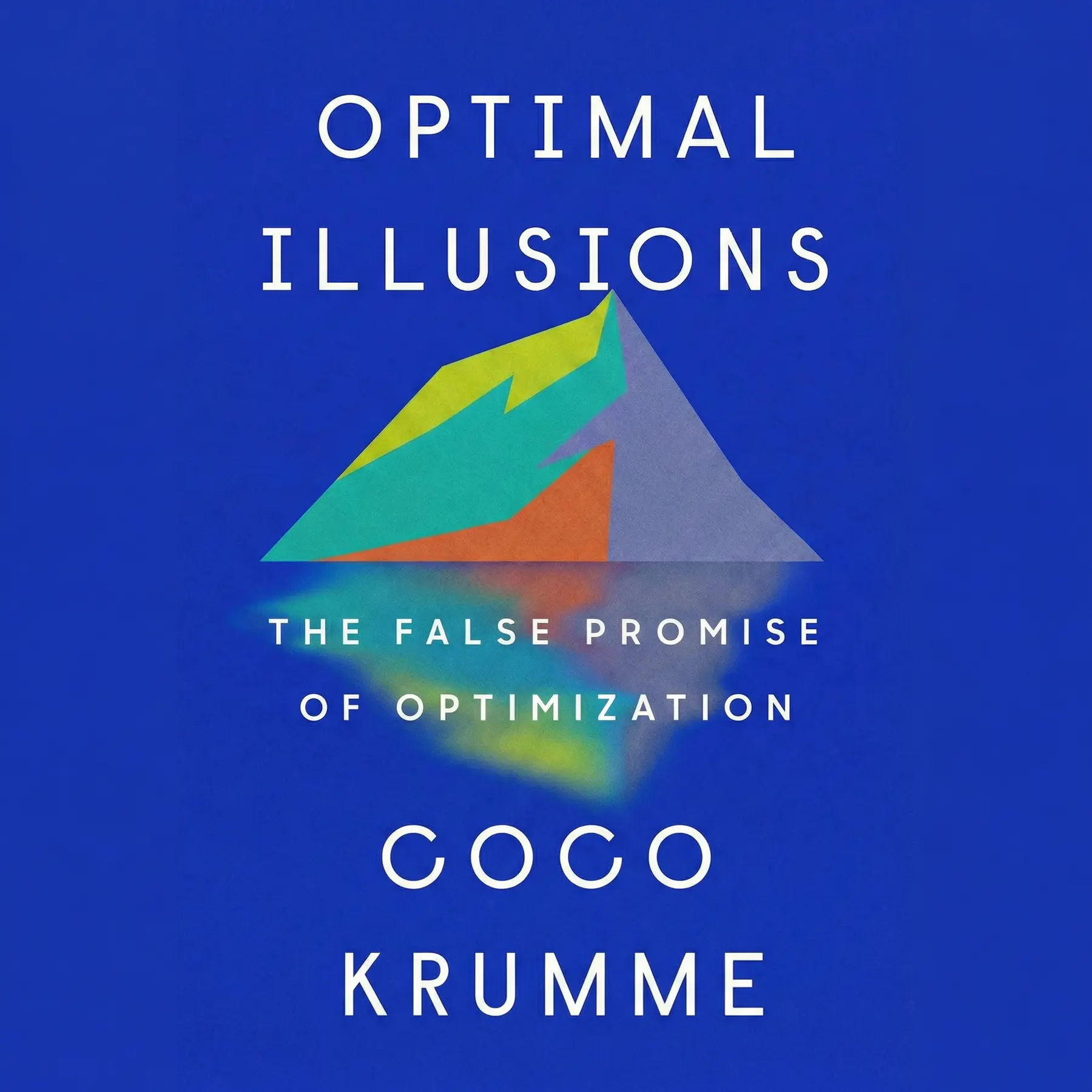
Optimal Illusions: The False Promise of Optimization
By Coco Krumme
Explore the hidden costs of our obsession with efficiency and learn how to reclaim a balanced, human-centered approach to decision-making in an increasingly algorithmic and over-optimized world.
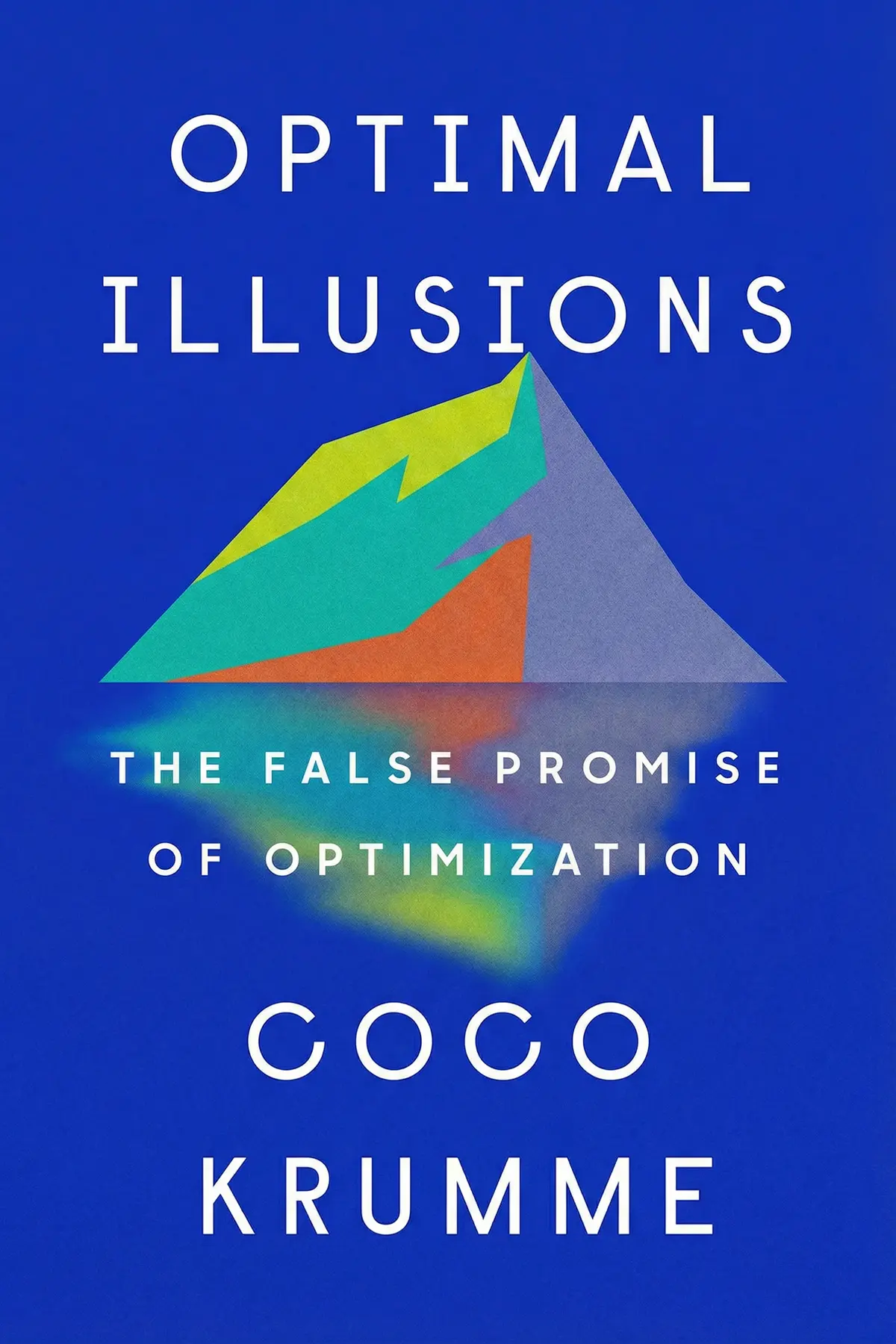
Table of Content
1. Introduction
1 min 34 sec
We live in an age defined by the search for the ‘best.’ Whether we are looking for the fastest route to work, the most efficient way to organize our kitchen, or the highest return on a financial investment, we are constantly engaged in the act of optimization. It has become more than just a mathematical tool; it is a cultural ethos, a lens through which we view our time, our health, and even our relationships. We treat our lives like puzzles that can be solved if we just find the right algorithm.
This relentless pursuit of perfection has certainly brought us incredible conveniences. We can order almost anything and have it arrive at our doorstep within hours. We can access the sum of human knowledge in seconds. But as we lean more heavily into this drive for efficiency, a quiet sense of unease has begun to grow. We find ourselves feeling more disconnected, more anxious, and strangely less in control of the systems we designed to serve us.
In the following sections, we are going to explore the ideas behind Coco Krumme’s work. We will look at where this obsession with ‘the best’ came from, how it functions in our daily lives, and why it often fails to deliver the happiness it promises. Most importantly, we will consider how we might find a more balanced path—one that respects the power of efficiency but doesn’t sacrifice our humanity or the health of our planet in the process. This isn’t about throwing away our tools; it’s about making sure we aren’t being used by them.
2. The Mechanics and Allure of Modern Optimization
2 min 32 sec
Discover how the mathematical pursuit of ‘the best’ influences everything from simple lemonade stands to the complex algorithms that quietly govern our digital experiences.
3. The Three Pillars of the Perfection Drive
2 min 54 sec
Explore the historical and cultural forces—atomization, abstraction, and automation—that transformed Western thought and fueled our relentless quest for progress.
4. The Hidden Costs of an Engineered Life
2 min 48 sec
From the 2008 financial crash to the industrialization of our food, see how over-simplification can turn a search for efficiency into a systemic risk.
5. A Strategy for Meaningful Progress
2 min 27 sec
Learn how to move beyond the binary of ‘opting in’ or ‘opting out’ by embracing a holistic view of success that prioritizes people over parameters.
6. Conclusion
1 min 20 sec
The journey through the world of optimization teaches us a vital lesson: efficiency is a tool, not a destination. While the mathematical pursuit of the ‘best’ has provided us with remarkable technological leaps and economic convenience, it has also created a world that often feels too fast, too brittle, and too cold. We have seen how the drive for perfection can lead to the abandonment of useful traditions, the creation of unstable financial systems, and the erosion of our privacy.
However, the answer isn’t to walk away from progress. Instead, we are called to embrace a more nuanced approach. By learning from figures like James Jerome Hill and re-centering our values on community health and environmental sustainability, we can build a future that is both smart and soulful. We must remember that life’s most meaningful moments often exist in the ‘inefficiencies’—in the deep conversations, the slow-cooked meals, and the unplanned detours. As you move forward, challenge yourself to look past the allure of the perfect algorithm. Seek a life that is not just optimized for output, but enriched by connection, purpose, and a genuine sense of belonging. True excellence isn’t found in a perfect data point, but in a world where everyone has the space to thrive.
About this book
What is this book about?
Optimal Illusions examines the modern drive to refine every aspect of existence, from global supply chains to our personal daily routines. It reveals how the pursuit of the 'perfect' solution often leads to unforeseen consequences like social disconnection, environmental strain, and systemic fragility. The book promises a journey through the history and mathematics of optimization, uncovering the flaws in a purely data-driven worldview. By exploring historical figures and modern case studies, it offers a blueprint for balancing technological efficiency with the messy, essential realities of human life and community well-being.
Book Information
About the Author
Coco Krumme
Coco Krumme is an applied mathematician, writer, and consultant. An MIT graduate, she is the founder of Leeward Co., a consultancy dedicated to helping organizations utilize data and analytics to solve complex problems in a responsible and sustainable manner.
Ratings & Reviews
Ratings at a glance
What people think
Listeners find the book thought-provoking, specifically valuing its blend of research and philosophy. Additionally, the narrative style is praised for its exquisitely developed case studies, leading listeners to characterize it as a fantastic selection.
Top reviews
Darawan
Ever wonder why our pursuit of the 'best' often leaves us feeling so empty? Krumme’s exploration of the 'optimal' mindset is one of the most thought-provoking things I’ve read this year. Her background as a mathematician gives her a unique vantage point to deconstruct how we’ve let efficiency metrics colonize our private lives. I found the case studies—from GMO foods to the vast landscapes of the West—to be beautifully crafted and deeply evocative. Some might find the personal anecdotes distracting, but I felt they grounded the abstract concepts in a necessary human reality. This isn't just a math book; it's a lyrical meditation on the cost of progress and the beauty of things that are simply 'good enough.' Highly recommended.
Show moreKatya
Wow. This book is a hauntingly beautiful dive into the systems that govern our lives. Krumme manages to blend rigorous research with a deeply philosophical outlook that stayed with me long after I finished. I loved the way she connected the history of the American bison to our current obsession with GMOs and supply chain efficiency. She captures that specific modern malaise of wanting to 'escape' the system, only to realize that even our escapes are often just another form of optimization. In my experience, it's rare to find a book that challenges your brain while also touching your soul. If you’re tired of the 'hustle culture' and 'peak performance' manuals, this is the perfect antidote. It’s insightful, beautifully written, and absolutely essential for understanding our current world.
Show moreSatit
After hearing so much about the pitfalls of Big Data, I found this to be a refreshing take from an insider. Krumme’s transition from a high-stakes consultant to a homesteading writer provides a poignant backdrop for her critique of the 'optimization' trap. Look, she isn't trying to write a textbook. Instead, she offers a series of case studies that challenge us to look at the 'junkyards' of our modern world with new eyes. Her writing style is elegant, almost poetic at times, which is rare for someone with a scientific background. While some of the transitions between topics like the Green Revolution and her own life are a bit jarring, the core message about the dangers of over-simplifying complex systems is vital for our current era.
Show moreTalia
Finally got around to reading this, and I’m glad I did. I’ve always been interested in how mathematical models fail to capture the nuances of real life, and Krumme hits on some excellent points here. I particularly enjoyed her take on 'satisficing' and the idea that natural selection doesn't optimize for perfection, but merely for survival. The prose is much better than your average non-fiction book; there’s a real sense of place in her descriptions of the landscape. My only gripe is that it feels a bit scatterbrained at times, jumping between historical railroads and modern tech startups without enough connective tissue. Still, it’s a careful and necessary consideration of the 'optimal everything' world we’re building. A solid four-star read for any tech-fatigued professional.
Show moreOoi
Picked this up because I’ve been feeling the burnout of trying to 'optimize' every second of my existence. There are some truly insightful nuggets here, particularly when Krumme discusses the American West and our cultural obsession with efficiency. However, the narrative whiplash is real. One minute you're reading about the bison, and the next you're on a car ferry to the San Juan Islands or hearing about her disdain for cruise ships. I appreciated the philosophical reflections on 'satisficing' versus maximizing, but the book lacked a strong editorial hand to tie these disparate threads together. It's a quick read that scratches a curious itch, but don't expect it to change your worldview entirely. Decent for a library checkout.
Show moreDiego
Wait for the paperback or check it out from the library. There are some genuinely brilliant ideas buried in here, but the book struggles with cohesion. One chapter you’re learning about the intricacies of fuel optimization in maritime vessels, and the next you’re being led through a critique of Marie Kondō’s decluttering methods. It feels like a collection of essays that were jumbled together without a clear roadmap. To be fair, Krumme is a gifted writer and her personal stories from the tech world are engaging, but I left wishing for a more structured argument. It’s a 2023 release that sometimes feels like a time capsule, missing some of the more current shifts in the discourse around AI. It’s insightful, but definitely 'muddled' as some critics have noted.
Show moreNarong
As someone who works with data, I found the premise of this book fascinating, but the execution left me frustrated. Krumme makes the classic mistake of treating optimization as an ideology rather than a mathematical methodology. She blames the tool for the human errors of those wielding it. For instance, her discussion of supply chain issues misses the mark by suggesting optimization itself failed, rather than the practitioners failing to account for resiliency as a variable. To be fair, her writing is quite flowery and descriptive, but the logic often falls apart under scrutiny. It's less a scientific exploration and more a retreat into 'retrospective Rousseauistic utopianism' from her homestead. It feels like a missed opportunity to truly critique how we use algorithms today.
Show moreOksana
The truth is, this book feels incredibly time-bound and geographically narrow. For a work that claims to address a global phenomenon of optimization, it is almost obsessively focused on the American West. Krumme seems to ignore the fact that much of what she critiques was formed by specific federal interventions rather than some universal drive for efficiency. Furthermore, her take on the Green Revolution is a bit shortsighted, failing to acknowledge how many lives were saved by the very processes she decries. It’s a very 'great-great-great-grandchild of the Enlightenment' perspective—bemoaning the ease of modern life while standing on top of the progress built by those who came before. It felt more like an emotional venting session than a rigorous analysis. Not worth the hype.
Show moreJack
This book perfectly demonstrates that you shouldn't judge a book by its cover. I went in expecting a rigorous look at how optimization fails in manufacturing or tech, perhaps touching on Six Sigma or Agile. Instead, Krumme delivers a rambling polemic that jumps from the history of the northern railroad to a strange, misplaced critique of Marie Kondō. The connection between Universal Basic Income and mathematical optima felt incredibly thin. Frankly, it reads like a collection of leftover essays from a failed film project rather than a cohesive argument. If you want to understand the math of efficiency, look elsewhere. Spending time reading the ingredients on your cereal box might actually be more informative for your daily life. It's a shame given the author's background.
Show moreSven
Not what I expected at all. The first chapter showed promise, but the rest of the book felt like it was treading water with unoriginal observations. It honestly could have been condensed into a long-form magazine article for the New Yorker without losing any of its substance. The author spends way too much time on her personal grievances—like the speed of maritime vessels or her dislike of Amazon hubs—without linking them back to a central thesis in a meaningful way. It felt muddled and disjointed, as if several different books were fighting for space in one volume. I really wanted to like this, especially given the author’s credentials, but I walked away feeling like I’d just read a collection of disjointed blog posts. Total disappointment.
Show moreReaders also enjoyed
AUDIO SUMMARY AVAILABLE
Listen to Optimal Illusions in 15 minutes
Get the key ideas from Optimal Illusions by Coco Krumme, plus 5,000+ more titles in English and Thai.
- 5,000+ titles
- Listen as much as you want
- 7-day free trial
- Cancel anytime







