
25 min 01 sec
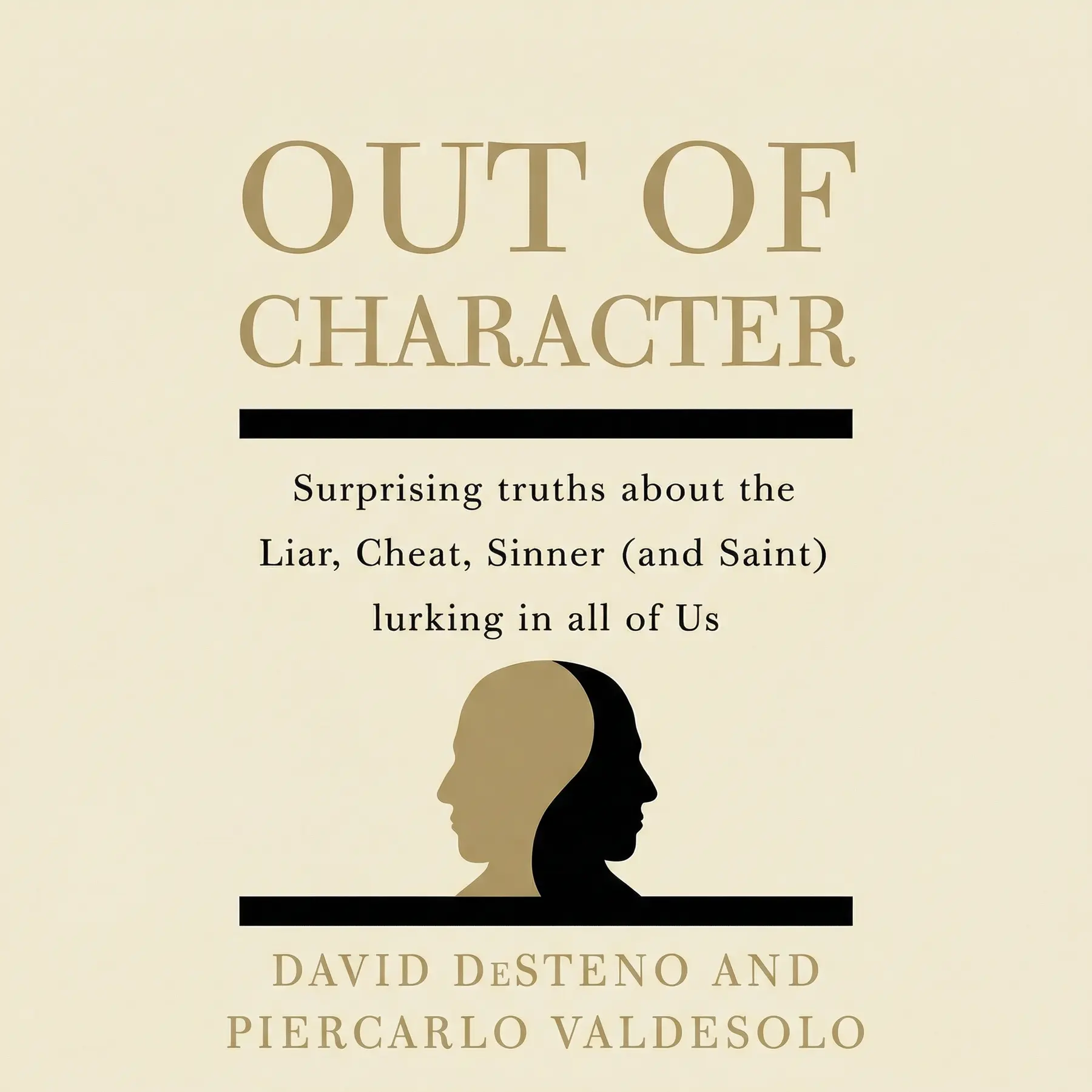
Out of Character: Surprising Truths about the Liar, Cheat, Sinner (and Saint) Lurking in All of Us
Explore the surprising science of moral flexibility. This summary reveals how our behavior is not fixed by personality, but constantly reshaped by hidden biological drives, emotional shifts, and the surrounding environment.
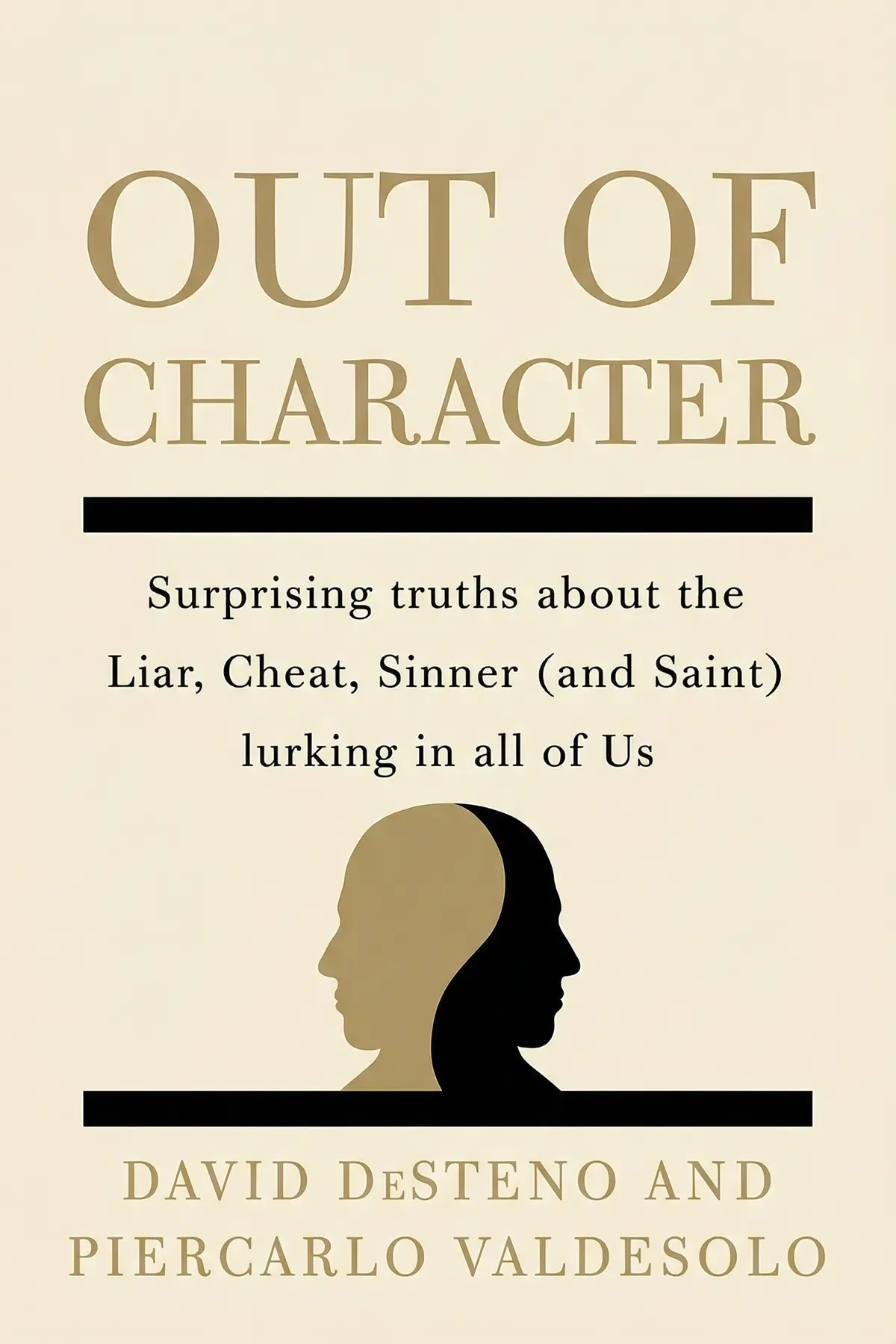
Table of Content
1. Introduction
1 min 34 sec
We have a natural tendency to categorize the people around us. We see someone commit a dishonest act and label them a liar. We see someone help a stranger and call them a saint. This desire to put human nature into neat, predictable boxes is a fundamental part of how we navigate the world. We want to believe that character is like a stamp on a coin—permanent, unchanging, and easily identifiable. However, this traditional view of character as a fixed entity is increasingly being challenged by the latest findings in psychological science.
In the following discussion, we are going to explore the idea that character is actually quite flexible. It is not a static trait that we are born with or that becomes frozen in time as we age. Instead, it is a dynamic product of various internal and external forces that collide in every moment of our lives. When someone acts in a way that seems completely unexpected, they aren’t necessarily acting against their nature; they are simply revealing a different side of a very complex system.
Our goal is to look past the superficial labels of good and evil to understand the biological and emotional mechanisms that drive our behavior. We will see how our brains are constantly weighing immediate rewards against future stability, and how our environment can nudge us toward either vice or virtue. By the end of this journey, you’ll see that the liar, the cheat, the sinner, and the saint are all lurking within each of us, waiting for the right circumstances to emerge. This isn’t just a study of psychology; it’s a guide to understanding the very fluid essence of what it means to be human.
2. The Dynamic Nature of Human Character
2 min 42 sec
Discover why the traditional view of character as a fixed trait is flawed and how the tug-of-war between our present and future selves defines who we are.
3. The Fluidity of Morality and Hypocrisy
2 min 40 sec
Uncover the psychological reasons why we are so quick to judge others for the very same moral shortcuts we justify for ourselves.
4. The Biological Battle Between Love and Lust
2 min 34 sec
Explore how evolutionary instincts and hormonal shifts can influence even the most committed relationships in unexpected ways.
5. The Dual Nature of Pride and Hubris
2 min 33 sec
Learn why pride is more than just a ‘deadly sin’ and how it can be a powerful tool for achieving success and social status.
6. The Boundary Between Compassion and Cruelty
2 min 41 sec
Discover how the simple distinction between ‘us’ and ‘them’ can turn a peaceful neighbor into a cruel adversary, and how to reverse the process.
7. The Social Glue of Gratitude and Trust
2 min 46 sec
See how small acts of kindness create a ripple effect of cooperation and how the normalization of cheating can quickly erode social bonds.
8. How Emotions and Biology Shape Our Risks
2 min 42 sec
Explore why your willingness to take a gamble has less to do with being a ‘risk-taker’ and more to do with your current mood and age.
9. The Subconscious Roots of Prejudice
2 min 47 sec
Learn how the brain’s ancient survival mechanisms create modern biases and why these hidden prejudices often emerge most strongly under stress.
10. Conclusion
2 min 02 sec
The journey through the complexities of human character leads us to a single, transformative realization: we are not as predictable as we think. The long-standing belief that our moral fiber is a fixed, unchanging essence is a comforting myth, but it doesn’t align with the reality of how our brains work. Instead, character is a living negotiation between competing internal drives—the ‘ant’ that plans for tomorrow and the ‘grasshopper’ that lives for today.
We have seen how our most noble virtues and our most troubling vices are often triggered by the same underlying mechanisms. Our sense of fairness can be warped by our needs, our love can be challenged by our biology, and our compassion can be restricted by our perceived tribal boundaries. Even our deepest prejudices often emerge not from a place of malice, but from ancient survival instincts that have yet to catch up with the modern world. This fluidity might seem daunting, but it actually offers a profound sense of hope.
If character is flexible, it means it is also within our power to influence. We are not doomed by our past mistakes or our biological impulses. By becoming aware of the subtle contextual factors—like our mood, our physical posture, or the social norms of the group we are in—we can start to nudge the needle in a better direction. We can choose to expand our circle of ‘us,’ to foster gratitude, and to slow down our snap judgments.
The final takeaway is that the ‘out of character’ moments we see in ourselves and others are actually the most revealing. They show us that we are all capable of a vast range of behaviors. The goal of a good life, then, is not to find a ‘perfect’ character and hold onto it forever, but to continuously cultivate the environment and the mindset that allow our best selves to flourish. You have the ability to be the saint, just as you have the capacity to be the sinner. The choice is made in the small, seemingly insignificant details of every passing moment.
About this book
What is this book about?
Have you ever wondered why a normally honest person might suddenly lie, or why a self-centered individual might perform an act of great heroism? We often think of character as a permanent set of traits—an internal compass that always points in the same direction. However, this book argues that the reality of human nature is far more fluid. By examining a wide range of psychological experiments, it demonstrates that our moral choices are governed by a constant internal struggle between short-term desires and long-term goals. The promise of this work is a deeper understanding of the secret forces that dictate our actions. From the way our posture affects our social standing to how simple emotions like gratitude or anger can completely alter our perception of risk and fairness, you will discover that character is a living, breathing process. Rather than being either a saint or a sinner, every person contains the potential for both, depending on the context of the moment. By learning how these mechanisms work, we can gain better control over our own behavior and view the actions of others with more nuance.
Book Information
About the Author
David DeSteno
David DeSteno is an associate professor of psychology at Northeastern University, where he also serves as the director of the school’s Social Emotions Lab. His research and insights have been featured in prominent outlets such as The New York Times and Scientific American. Piercarlo Valdesolo is an assistant professor of psychology at Claremont McKenna College. His scholarly work and commentary have reached a wide audience through publications including The New York Times and Newsweek, among other prestigious media platforms.
Ratings & Reviews
Ratings at a glance
What people think
Listeners find the material highly accessible and easy to grasp, with one review highlighting that it offers compelling evidence and serves as a superb primer on human instinct. They describe the experience as a fascinating exploration, and one listener notes that it effectively clarifies human behavior.
Top reviews
Pia
After hearing so much about how 'good' people break bad, I finally picked this up to understand the mechanics of it. DeSteno and Valdesolo provide a compelling introduction to the hidden instincts that drive our moral choices. Instead of the typical angel-on-the-shoulder trope, they use the Ant and the Grasshopper metaphor to explain our internal tug-of-war between long-term gains and immediate gratification. Frankly, the research studies described—like the one where students watched SNL versus a boring documentary—were absolutely fascinating and felt very original. It’s a journey through the human psyche that makes you realize how thin the line between saint and sinner really is. While some might find the tabloid examples a bit dated, the underlying science is solid and easy to digest. This book changed how I view 'character' entirely, seeing it now as a fluid state rather than a permanent label.
Show moreSofia
Wow. This was such an eye-opening look at the 'sinner and saint' lurking in all of us. As someone who tends to judge people harshly for their mistakes, this book offered a necessary dose of perspective. The authors demonstrate that our character isn't a fixed attribute like eye color; it’s a shifting balance between competing psychological mechanisms. I loved the section on how we rationalize our bad behavior—it’s scarily easy to convince ourselves that our vices are actually virtues in disguise. The experiments are creative and show just how much our subconscious influences our 'choices.' It’s a very interesting journey that makes you more compassionate toward others and more mindful of your own potential for hypocrisy. In my experience, it’s one of the best books I’ve read on human nature lately. It provides valuable evidence that we are all capable of almost anything given the right circumstances.
Show moreRafael
The chapter on race and how we perceive 'others' was particularly moving and backed by some very strong research. I’ve been reading a lot of social science lately, and this stands out as a very interesting journey into the hidden forces that shape our decisions. The authors do a great job of explaining complex psychological concepts without making them feel overwhelming. Truth is, we all like to think we’re the hero of our own story, but this book shows how easily we can become the villain. The Ant and Grasshopper metaphor is a helpful framework for understanding that our 'bad' impulses are often just short-term survival strategies that have gone off the rails. It’s a valuable piece of evidence for anyone trying to understand the complexity of human instinct. Highly recommended for fans of Predictably Irrational.
Show moreGai
Ever wonder why we make decisions that we later regret? Out of Character explores the surprising truths behind our moral compass, arguing that our environment plays a much larger role than we’d like to admit. Personally, I found the chapter on how scents or minor emotions can prime us to be more or less honest to be the highlight of the book. The writing style is accessible and lacks the dry, academic tone you might expect from two professors. However, to be fair, the structure does get a little repetitive after a while. Every chapter starts with a high-profile scandal involving a politician or celebrity before diving into the data. It’s a very interesting journey into human behavior, but I wish they had used some less-famous examples to keep the narrative fresh. Still, it's a great read for anyone into social psychology.
Show moreNim
Finally got around to reading this and I’m glad I did. The central argument—that we have two dueling systems (the impulsive grasshopper and the future-oriented ant)—makes a lot of sense in the context of evolutionary psychology. DeSteno and Valdesolo write with a witty tone that keeps the pages turning. I particularly enjoyed the descriptions of the experiment designs; it’s amazing how researchers find ways to simulate real-world moral dilemmas in a controlled environment. Not gonna lie, some of the results are a bit unsettling because they suggest we have less control over our actions than we think. My only gripe is that the book leans heavily on studies involving college students, which isn't always the most representative sample. Regardless, it’s an excellent introduction to why we sometimes act against our own best interests. Definitely worth a spot on your shelf.
Show moreOat
Look, this isn't a perfect book, but it's a very interesting one. DeSteno and Valdesolo explore how our environment—even something as simple as a smell or a quick video—can shift our moral compass. I found the analysis of why we rationalize our failures as 'out of character' to be spot on. We want to believe we have a solid core, but the data suggests we’re much more flexible. The book is well-written and serves as an excellent introduction for those new to the field. I did find the structure a bit predictable, as each chapter followed the same rhythm, but the quality of the insights made up for it. It’s a fascinating look at the sinner and saint in all of us. If you can get past the somewhat repetitive tabloid examples, there is a lot of gold here.
Show moreNina
Not what I expected, but still worth a look if you’re a fan of Malcolm Gladwell’s Blink. The authors do a decent job showing how our minds value flexibility over rigid character traits. Using the Ant and the Grasshopper metaphor is a clever way to reframe the internal battle we all face. That said, I found myself getting bored with the repetitive chapter outlines. It’s always tabloid story, lab experiment, take-home point, repeat. Also, some of the information feels like it’s been covered better in other pop-psychology books. Look, the research on how we judge 'outsiders' differently is important, but it didn't feel like it was breaking much new ground. It’s a solid introduction to human instinct, but if you’ve already read a lot in this genre, you might find it a bit elementary. A middle-of-the-road experience for me.
Show moreSebastian
Picked this up because I wanted to understand why public figures keep self-destructing. The authors provide some great evidence regarding how external pressures trip our moral scales. It’s fascinating to see how priming can make a student act selfishly or generously in a lab. However, I have to agree with other reviewers that the book is a bit of a disappointment when it comes to the bigger picture. Got to say, the authors ignore things like personality disorders or genetic predispositions that make some people consistently bad. Calling a serial killer's actions 'out of character' because they once worked a suicide hotline is a stretch. It’s an easy read and comprehensible for a layperson, but it lacks the nuance needed to truly explain the extremes of human behavior. Good for a casual reader, but maybe not for a deep dive.
Show morePot
This book left me feeling incredibly frustrated despite its interesting premise. While the authors give plenty of reasons why people change their behavior based on minor environmental shifts, they fail to answer the core question: why do people who have been consistent for decades suddenly snap? I’ve paid my taxes for thirty years without fail, and the book doesn't explain why someone like me would suddenly stop. The authors seem to dismiss the idea that most of us actually behave quite predictably over time. Truth is, they focus so much on how easy it is to manipulate people in a lab setting that they ignore real-world consistency. They also take a bizarre stance on hypocrites like Tiger Woods, trying to explain away long-term deception as just being 'out of character' rather than a revelation of true personality. It’s an incomplete picture that needs more work.
Show moreJoshua
As someone who has always believed that character is built through habit and remains stable, I found this book to be a hard pill to swallow. The authors argue that character is basically a myth and that we are all just at the mercy of our surroundings. Frankly, it felt like a way to excuse bad behavior rather than explain it. They spend so much time on Tiger Woods and Eliot Spitzer, but they don't tackle the fact that many people remain faithful and honest despite facing the same temptations. The writing is easy to read, but the logic felt flawed. To be fair, the experiments on priming were cool to read about, but they don't justify the sweeping conclusions about the fluidity of morality. It felt more like a collection of interesting lab notes than a cohesive theory on human nature. Disappointing.
Show moreReaders also enjoyed
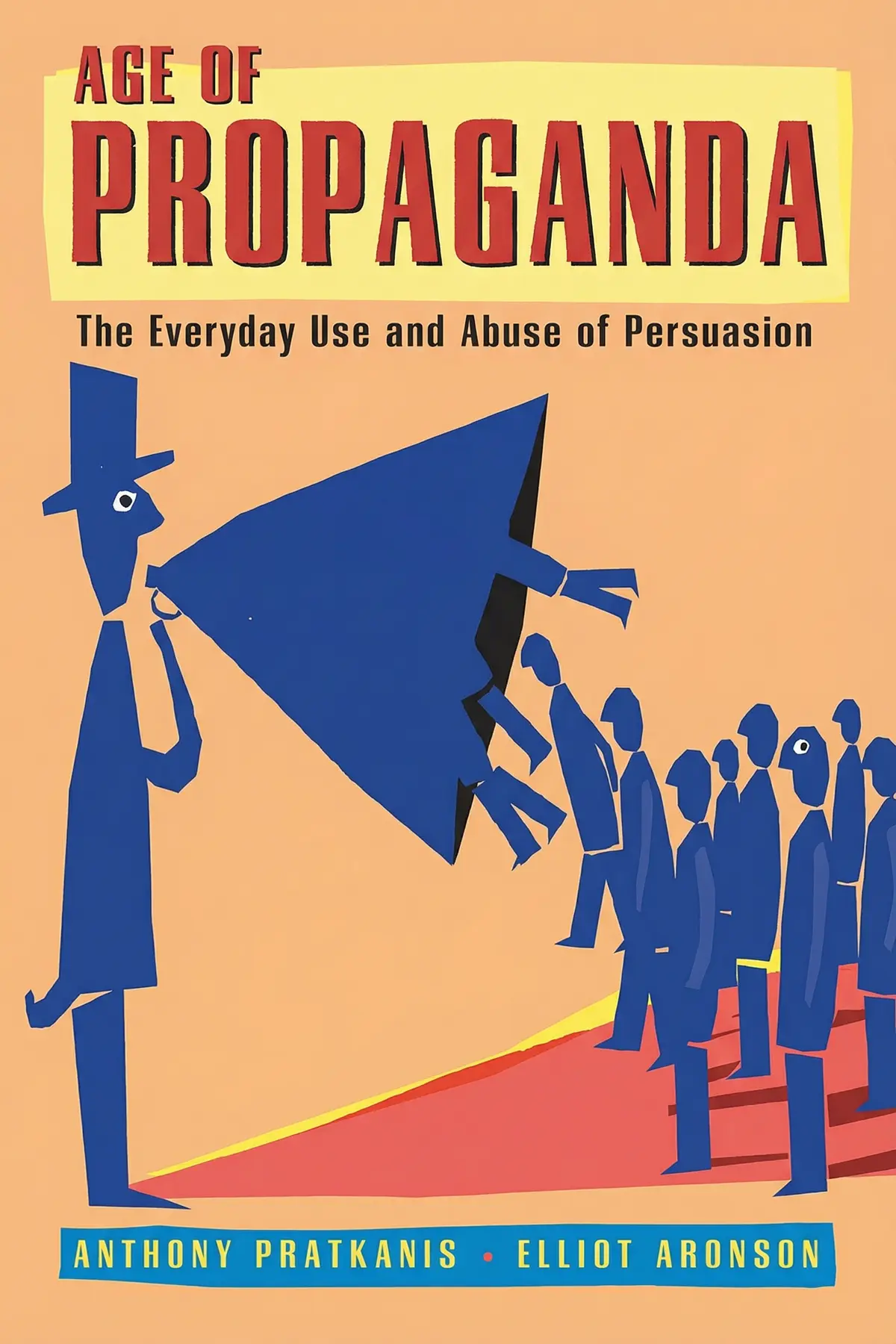
Age of Propaganda: The Everyday Use and Abuse of Persuasion
Anthony Pratkanis
59 Seconds: Change Your Life in Under a Minute
Richard Wiseman
A Liberated Mind: How to Pivot Toward What Matters
Steven C. Hayes
AUDIO SUMMARY AVAILABLE
Listen to Out of Character in 15 minutes
Get the key ideas from Out of Character by David DeSteno, plus 5,000+ more titles in English and Thai.
- 5,000+ titles
- Listen as much as you want
- 7-day free trial
- Cancel anytime







