
A Liberated Mind: How to Pivot Toward What Matters
Steven C. Hayes
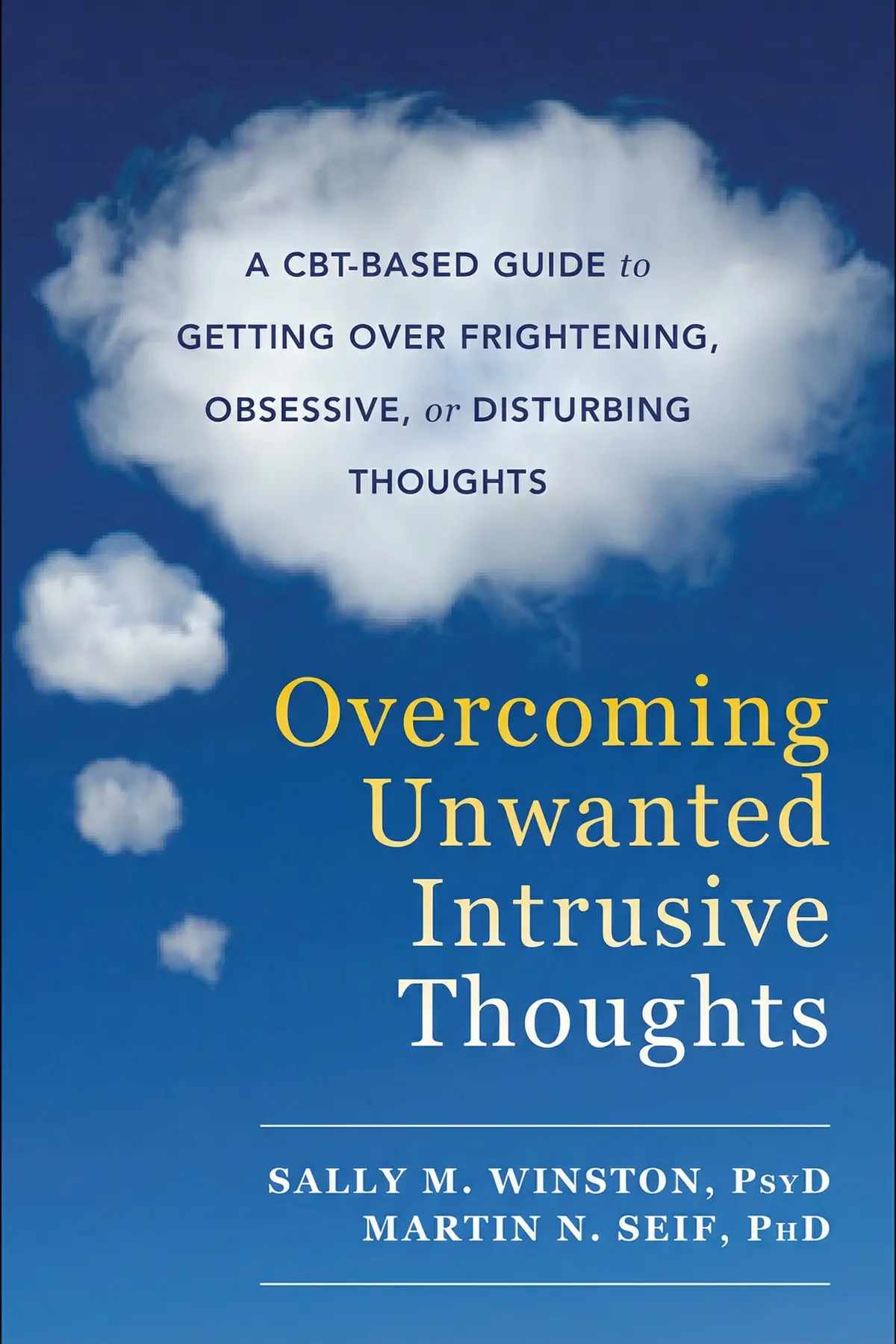
Discover a transformative CBT approach to managing distressing, repetitive mental images. This guide explains why fighting these thoughts backfires and offers a path toward peace through acceptance and clinical cognitive strategies.
1 min 22 sec
Have you ever been standing on a high balcony and suddenly wondered what would happen if you jumped? Or perhaps you’ve been holding a sharp knife while cooking and had a fleeting, terrifying thought of hurting someone you love? For most people, these thoughts are brief flashes that vanish as quickly as they arrived. But for others, these mental guests don’t just visit—they move in. They become unwanted intrusive thoughts that feel like a stain on your soul or a warning of impending disaster.
If you have ever felt trapped by these dark mental loops, it is easy to feel isolated, ashamed, or even convinced that you are losing your mind. But here is the throughline we are going to explore: these thoughts are not a reflection of your character, and they are not a preview of your future actions. In fact, the very reason they bother you so much is often because they are so diametrically opposed to who you actually are.
In this guide, we are going to dive deep into the clinical wisdom of Sally M. Winston and Martin N. Seif. We will explore why your brain produces these ‘glitches’ and, more importantly, why your attempts to fight them are actually what keeps them alive. By the end of this journey, you will have a new set of tools based on Cognitive Behavioral Therapy to change your relationship with your mind. We aren’t looking for a way to stop the thoughts from appearing—we’re looking for a way to stop them from mattering.
2 min 02 sec
Trying to suppress a thought is the fastest way to make it stick. Learn why your brain treats resistance as a signal of importance.
1 min 59 sec
Recognize the internal dialogue that keeps you stuck in anxiety and discover the calm observer that can lead you out.
1 min 44 sec
Disturbing mental images often clash with our deepest values. Discover why ‘bad’ thoughts don’t make you a bad person.
1 min 53 sec
Your brain’s safety mechanism is sometimes too good at its job. Learn how the amygdala creates false alarms.
2 min 09 sec
A practical, step-by-step method to change your response to intrusive thoughts in real-time.
1 min 46 sec
Discover how to intentionally face your triggers to prove to your brain that they are harmless.
1 min 53 sec
Recovery isn’t a straight line. Learn how to handle the return of old thoughts without losing your progress.
1 min 08 sec
We have covered a lot of ground in this exploration of the mind’s darkest corners. The most important takeaway is this: you are the observer of your thoughts, not the author of them. Your brain produces thousands of images and ideas every day, and most of them are total junk. You don’t have to sort through the trash to find hidden meanings or moral failures.
True freedom comes from the realization that you don’t have to control your mind to be at peace. You just have to stop letting your mind control you. By identifying the Worried Voice, silencing False Comfort, and leaning into the Wise Mind, you can transform these terrifying mental intrusions into nothing more than background noise.
The next time a disturbing thought pops into your head, try not to gasp. Try not to argue. Instead, try to smile—even if it’s just a small, internal smile—and say, ‘Ah, there’s that old thought again. Thanks for the input, brain, but I’m a little busy living my life right now.’ When you stop being a prisoner to your thoughts, you finally have the space to become the person you were always meant to be.
This summary explores the psychological mechanics behind the frightening and often shameful thoughts that can suddenly pop into our minds. Many people suffer in silence, believing that a dark or nonsensical thought defines their character or predicts their future actions. This guide dismantles those myths, explaining that the distress caused by these thoughts is actually a result of how we react to them, rather than the content of the thoughts themselves. You will learn the distinction between the anxious voices in your head and your true 'Wise Mind.' By shifting from a state of frantic avoidance to one of calm acceptance, you can learn to let these mental interruptions pass without giving them the power to ruin your day. The promise of this work is not the total elimination of intrusive thoughts—which is impossible—but the total elimination of the suffering they cause.
Sally M. Winston and Martin N. Seif are both licensed psychologists and co-directors of the Anxiety and Stress Disorders Institute of Maryland. Sally M. Winston specializes in cognitive-behavioral therapy and exposure-based treatments, having authored several works on managing anxiety. Martin N. Seif is a recognized leader in developing evidence-based approaches for treating intrusive thoughts and severe anxiety disorders. Together, they have spent decades helping patients regain control of their lives.
Listeners find this work to be a hands-on manual that offers a strategy for conquering unwanted intrusive thoughts, with one listener highlighting its grounded perspective on handling irrational thinking. The text also clarifies mental operations and integrates repetitive concepts with new data, which keeps the material accessible and the directions straightforward. Furthermore, listeners claim the book can be a lifesaver and works well to deconstruct anxiety, including one listener who reported feeling noticeable relief after reading the first chapter.
Wow. This was exactly what I needed to dismantle the constant noise in my head. For years, I believed my disturbing mental flashes defined my character, but this guide helped me realize that thoughts are not facts. The authors utilize a very specific CBT-informed approach that focuses on the 'stuckness' of the mind rather than the content of the thoughts themselves. It is incredibly freeing to learn that I don't have to argue with my brain or solve every irrational impulse that pops up. Instead of the usual self-help fluff, you get a scientific roadmap that actually makes sense. My only slight gripe is that it can feel a bit repetitive, but frankly, that repetition is probably necessary to drill the message into an anxious mind. It’s a must-read for anyone who feels like a 'terrible person' because of their internal dialogue.
Show morePicked this up during a particularly bad flare-up of anxiety, and the relief was almost instantaneous. Most books try to teach you how to 'fix' your thinking, but Winston and Seif argue that the real solution is to stop trying to fix it at all. The concept of 'Neither thoughts nor feelings are facts' has become my daily mantra whenever I feel a panic attack coming on. I especially appreciated how they addressed very dark, sexual, or violent intrusive thoughts without judgment. It’s affirming to know that being a conscientious person is actually why these thoughts are so bothersome in the first place. The scientific explanation of how the amygdala works was clear and easy to understand. I've already recommended this to several friends who struggle with similar 'stuck' loops.
Show moreFinally got around to reading this after hearing it mentioned in an anxiety support group, and it’s truly a game-changer. The authors explain the mechanics of 'sticky' thoughts in a way that feels both scientific and accessible to the average reader. I loved the emphasis on not rushing the process; letting the feeling be there until it dissipates on its own is a hard but necessary skill. It’s amazing how much relief I felt just by learning that I wasn't the only one experiencing these terrifying mental images. This book focuses on the 'O' of OCD, which is exactly what I needed. It’s not just about coping; it’s about dismantling the fear response entirely. If you’ve ever felt like a prisoner to your own mind, please give this a chance. It really can save lives.
Show moreThe chapter on the different 'voices' of anxiety was a massive breakthrough for me. I’ve read a lot of books on panic disorders, but this one captures the specific nuance of intrusive thoughts better than any other. It’s incredibly affirming to hear experts say that these thoughts are okay and don't make you a bad person. The authors build on repetition with new information in each chapter, which actually helped me internalize the lessons better. I stopped trying to solve my thoughts and started just letting them 'be,' and the difference in my stress levels is night and day. It’s a short, easy read but packed with enough scientific insight to satisfy a skeptical mind. This is a book every artist or conscientious person who overthinks should have on their shelf.
Show moreAfter hearing about this book on a podcast, I decided to give it a try for my nagging anxieties. It outlines wonderful tools for dealing with intrusive thoughts that are dark, shocking, or just plain annoying. The key phrase for me was: 'Neither thoughts nor feelings are facts.' Let that one sink in for a second. It is a completely freeing concept that changed how I interact with my own mind. The authors explain how we get tangled up in our own logic and how to simply step out of the trap. It’s a very easy read and feels like having a conversation with a very smart, very kind therapist. This book doesn't just offer temporary relief; it offers a whole new way of existing with your brain. Truly life-changing stuff.
Show moreEver wonder why your brain decides to present you with the absolute worst-case scenario at three in the morning? This book doesn’t just tell you to 'think positive,' which is a refreshing change from the typical self-help genre. Instead, it provides a practical guide on how to allow these thoughts to exist without giving them power. I found the 'voices' analogy very helpful for externalizing the anxiety. By treating the intrusive thought as a separate, annoying entity, it becomes much easier to let time pass and return to what I was doing. While it isn't specifically focused on the compulsive side of OCD, it does a masterful job with the obsessional part. It’s a very quick read, though some parts felt a bit like they were padding the page count with similar examples.
Show moreAs someone who tends to over-analyze every single emotion, this book was a much-needed reality check. The truth is, we give our thoughts too much credit by assuming they have some deep, hidden meaning. Winston and Seif do an excellent job of stripping away that power by using CBT techniques. I liked the clear steps provided for when a 'sticky' thought takes hold. You learn to accept it, allow it, and wait for it to pass without engaging in a mental argument. To be fair, the writing style is a bit dry at times, and it lacks the emotional warmth of some other mental health books. However, the practical roadmap it provides for overcoming irrational fears is worth the price of admission alone. It’s a solid resource for anyone doing self-work.
Show moreNot what I expected, but in a good way. I thought this would be another 'positive thinking' manual, but it’s actually a very rigorous CBT-informed discussion. It focuses purely on the obsessions—the 'O' in OCD—which is a distinction many other books fail to make clearly. The personification of thoughts works fantastically for a lay audience like myself. I did find some of the theories a bit odd at first, especially the idea of not fighting back against the thoughts. However, once you put the steps into practice, you realize how effective they are at dismantling anxiety. It’s a great companion for anyone currently in therapy or looking to do some self-work before starting. It is a bit repetitive, but the clarity and affirmation provided make it well worth the time.
Show moreLook, the core message here is undeniably strong, but the delivery felt a bit redundant after the halfway mark. I was searching for a way to deal with my catastrophizing, and while the book identifies 'sticky' thoughts well, I found myself skimming through much of the later chapters. It’s definitely an 'eat the meat and spit out the bones' situation where you take the 6-step process and move on. The personification of thoughts as different voices didn't quite click for me personally, though I can see why others might find it useful. It’s a decent introductory text for those who are new to CBT, but if you’ve already done a lot of therapy, you might find the advice a bit elementary. It provides a realistic approach to coping, but I was hoping for something slightly more profound.
Show morePersonally, I found the first three chapters to be the most impactful part of the whole experience, but then it stalled. Within the first hour of reading, I already felt a noticeable shift in how I perceived my internal anxiety, which was fantastic. However, the middle section of the book gets incredibly repetitive, and I found the writing style to be quite dry for a self-help title. I suppose the repetition is the point when you're trying to re-train a brain, but it made for a tedious read. I also would have liked a bit more discussion on the physical symptoms of anxiety rather than just the 'sticky' thoughts. It is a practical guide with clear steps, but it lacked the 'Ah HAH!' moments I was expecting based on the reviews. It’s a decent resource, but certainly not the page-turner I had hoped for.
Show moreSteven C. Hayes
Leanne Maskell
AUDIO SUMMARY AVAILABLE
Get the key ideas from Overcoming Unwanted Intrusive Thoughts by Sally M. Winston, plus 5,000+ more titles in English and Thai.







