

A Bigger Prize: How We Can Do Better Than the Competition
Margaret Heffernan
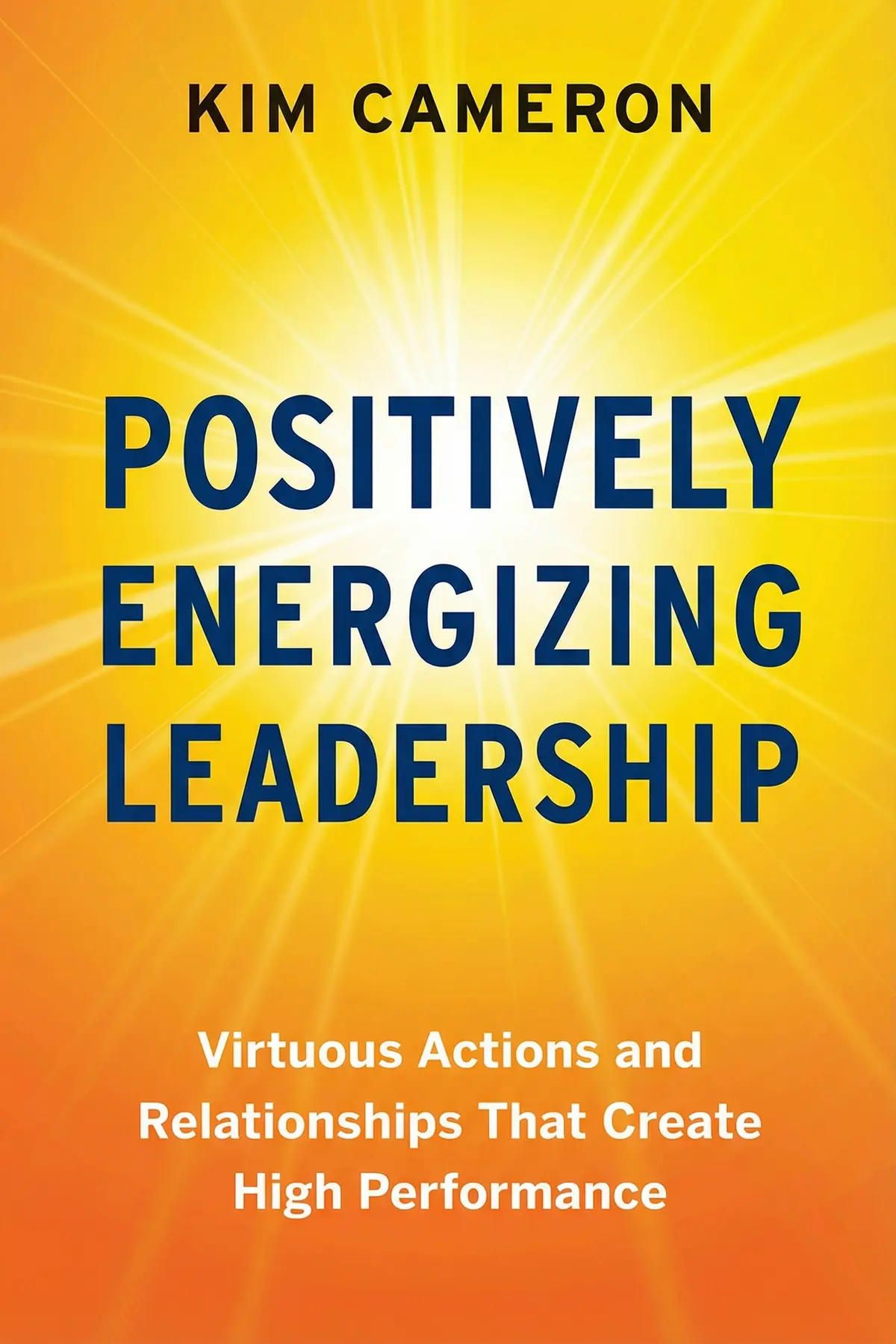
Discover how virtuous actions and positive energy drive elite organizational performance. This guide reveals science-backed strategies for leaders to foster trust, encourage generosity, and transform workplace culture through authentic, life-affirming practices.
1 min 38 sec
We find ourselves in an era marked by significant global challenges. From social unrest and environmental concerns to the lingering effects of a global pandemic, the prevailing atmosphere often feels heavy with tension and uncertainty. In response to this, a massive industry centered on positive thinking has emerged. You can find countless resources promising a quick path to happiness, often suggesting that a simple shift in mindset is all that is required to solve life’s complex problems.
However, there is a fundamental flaw in this forced approach to positivity. When we try to plaster on a happy face while feeling internal turmoil, we aren’t actually solving anything. This artificial positivity can lead to suppressed emotions and even physical stress. Life is naturally full of difficulties, and pretending they don’t exist is counterproductive for individuals and organizations alike. The goal shouldn’t be to manufacture happiness, but to tap into a much deeper and more sustainable source of power.
This is where the concept of positively energizing leadership comes into play. It isn’t about ignoring the dark side of life or work; rather, it’s about understanding the empirical evidence behind how positive energy influences human behavior and group dynamics. By looking at the connection between light, virtue, and vitality, leaders can learn to spark a genuine sense of flourishing within their teams. This journey isn’t just about feeling better; it’s about achieving better results through a more human-centric and scientifically grounded approach to management. Throughout this exploration, we will look at how specific virtuous actions can create a ripple effect that transforms a stagnant environment into a thriving one.
2 min 09 sec
Explore how natural light and virtuous behavior share a profound connection that sustains life and fundamentally alters our physical well-being and social interactions.
2 min 09 sec
Discover why focusing on the welfare of others rather than personal achievement leads to greater success and even improved physical health for leaders and employees.
2 min 20 sec
Unpack the two essential components required to build a foundation of trust, and learn how to manage the ’emotional bank account’ of your professional relationships.
2 min 08 sec
Learn a systematic approach to addressing individuals who sap the morale of a team, moving from supportive listening to necessary separation.
2 min 12 sec
See how the universal virtues of humility and gratitude are biologically ingrained and how practicing them daily can sharpen your focus and improve team cohesion.
1 min 40 sec
As we conclude this exploration of positively energizing leadership, it’s worth addressing the natural skepticism that often arises around these topics. In a high-stakes business world, focusing on things like virtue, gratitude, and ‘light’ can feel out of place. It might seem too idealistic or even a bit soft when compared to the hard metrics of profit and loss. However, the weight of evidence suggests otherwise. A massive meta-analysis of hundreds of empirical studies confirms that organizations led with these principles consistently outperform their peers across almost every metric, from creativity and motivation to employee retention and physical health.
Choosing to be a positively energizing leader is a deliberate act of will. it requires you to look past the immediate urge to focus on the negative and instead commit to the long-term work of building trust and fostering contribution. It means viewing every interaction as an opportunity to make a deposit into the emotional bank account of your team. While it may feel counterintuitive at first, the results are undeniable. When you provide the heliotropic energy that allows people to thrive, you aren’t just improving the atmosphere; you are unlocking the full potential of your organization.
Take a moment to consider how you can implement just one of these ideas today. Perhaps you can start your next meeting with a moment of gratitude, or look for an opportunity to make a small sacrifice for the benefit of a colleague. These small, virtuous actions are the seeds of a profound transformation. By leading with positive energy, you can create a workplace that is not only more productive but also more human, resilient, and ultimately, more successful.
Many modern workplaces are defined by stress, burnout, and a relentless focus on achievement at any cost. However, Positively Energizing Leadership argues that this approach is fundamentally flawed. Instead of forcing a shallow smile, leaders should look toward the biological and psychological power of heliotropic energy—the kind of positive force that sustains life. This summary explores how virtues like gratitude, humility, and altruism are not just moral choices but are actually the engines of high performance. You will learn how to build deep trust through integrity and sacrifice, and how to manage the draining influence of negative individuals who can derail a team’s momentum. By shifting the focus from individual success to meaningful contribution, leaders can lower their team's stress, improve their physical health, and boost overall creativity. This isn’t about being happy all the time; it is about creating a resilient foundation where every member of an organization can flourish. The promise is clear: by fostering a culture of positive energy, you can unlock levels of productivity and innovation that traditional management styles simply cannot reach.
Kim Cameron, PhD, is a prominent professor of Management and Organizations at the University of Michigan’s Ross School of Business. He is recognized as a pioneer in the field of positive leadership, dedicating his career to studying how virtue can fundamentally transform organizational outcomes. With a prolific academic background, his research has been featured in over 140 academic articles and he has authored or co-authored 15 books on the subject.
Listeners find this book to be a persuasive, evidence-based study on how moral virtue and "heliotropic energy" can reshape an organization's atmosphere. Although perspectives differ regarding the complexity of the guidance—as some listeners suggest the ideas sometimes border on common sense—they highlight that the scientific evidence clearly illustrates the link between true integrity and high performance. Furthermore, the included hands-on activities and extensive appendix are well-received, and one listener points out that centering on "contribution-oriented goals" creates a robust foundation for achieving results. They also value the way the writer distinguishes real leadership from "happiology" by emphasizing the biological advantages of positive energy.
Picked this up because our executive team was discussing 'heliotropic energy' in our weekly syncs, and I wanted to see if the hype was real. Cameron makes a compelling case that isn't just fluffy motivation; he actually backs his claims with physiological data about how light and virtue affect the human body. The distinction between 'happiology'—that fake, gritted-teeth positivity—and authentic virtuousness was a huge lightbulb moment for me. Truth is, many of us are exhausted by the toxic 'smile through it' culture, so seeing a research-backed path toward genuine kindness as a performance driver is refreshing. While some might find the focus on altruism a bit idealistic, the biological evidence regarding heart health and cortisol levels is hard to ignore. It’s a quick read, but the implications for organizational culture are massive.
Show moreWow, I am actually blown away by the empirical data provided here to support what most people dismiss as 'soft skills.' Cameron proves that integrity and sacrifice aren't just moral choices; they are literal fuel for organizational innovation and profit. I especially loved the section on 'contribution-oriented goals' and how shifting focus away from personal gain actually leads to higher success rates. It’s counter-intuitive, but the research on blood pressure and mortality risk in altruistic individuals makes a very strong case for this leadership style. This isn't just a book about being 'nice'—it's a rigorous look at how human biology and organizational performance intersect. If you’re tired of the 'cutthroat' school of management, this is the evidence you need to lead differently.
Show moreAfter hearing Kim Cameron speak, I knew I needed to dive deeper into his concept of virtuous leadership, and this book did not disappoint. He manages to bridge the gap between high-level academic research and boots-on-the-ground management tactics with total ease. I was particularly struck by the study involving college freshmen and how those who focused on making a difference outperformed those who only cared about their own grades. It’s a powerful reminder that our focus as leaders should be on the growth of others if we want to see our own organizations thrive. The writing is accessible, the data is robust, and the message is one that the corporate world desperately needs to hear right now. This is a must-read for anyone who believes that business can be a force for good.
Show moreThe chapter on the 'emotional bank account' really changed my perspective on how I interact with my direct reports daily. I’ve always tried to be a fair boss, but I didn’t realize how often I was making 'withdrawals' through minor criticisms without balancing them with enough 'deposits' of gratitude. To be fair, some of the examples feel a little bit like common sense that you'd learn in any basic management seminar. However, Cameron grounds everything in a meta-analysis of over 500 studies, which gives the advice a weight that most business books lack. The appendix is a goldmine of practical activities you can actually use in staff meetings next week. It’s a solid 4-star read that offers a very human way to look at corporate success.
Show moreEver wonder why certain leaders just seem to radiate a specific kind of magnetism that makes everyone around them work harder? This book dives deep into that exact phenomenon, labeling it as relational energy and explaining why it’s the most important resource in any office. I appreciated that Cameron didn’t shy away from the 'dark side' and offered specific strategies for dealing with people who drain energy from the room. His advice on marginalizing 'de-energizers' was surprisingly pragmatic for a book that otherwise focuses so heavily on forgiveness and tolerance. The writing is clear and concise, making it easy to digest in just a few sittings. It’s a great framework for anyone looking to build a contribution-oriented team rather than a purely achievement-oriented one.
Show moreTo be fair, I usually find leadership books to be repetitive, but Cameron manages to ground his theories in fascinating biological studies that I hadn't seen before. The way he links circadian rhythms and hormone regulation to workplace atmosphere was genuinely eye-opening for me. It makes you realize that a bad boss isn't just annoying; they are a literal health hazard to their employees. I’ve started opening my team meetings with the 'one minute of gratitude' exercise he suggests, and the vibe in the room has definitely shifted for the better. There are moments where the prose gets a bit dry, especially during the data-heavy sections. Regardless, the actionable advice in the resource section makes it a very worthwhile purchase for any new manager.
Show moreAs someone who has managed teams for twenty years, much of what Cameron writes felt like common sense repackaged with academic jargon. Don't get me wrong, the idea that being a virtuous person leads to better results is a lovely sentiment, and I want to believe it’s true. But I struggled with the author’s assumption that every employee is inherently good and just needs the right 'energizing' leader to flourish. Look, the real world is often messier than these case studies suggest, and some people are just there for a paycheck, not a spiritual transformation. The data on 'heliotropic energy' is fascinating from a biological standpoint, yet the implementation feels a bit prescriptive for my taste. It’s worth a skim if you’re new to leadership, but seasoned pros might find it a bit repetitive.
Show moreFinally got around to finishing this, and I’m torn between appreciating the research and feeling like the practical implementation is a bit of a stretch. The concept of heliotropic energy is beautiful, and I certainly agree that leaders should strive for more integrity and transparency. However, the book gets a bit 'preachy' toward the end, and I found myself rolling my eyes at some of the more sentimental anecdotes. In my experience, you can’t just 'gratitude' your way out of a failing business model or a toxic board of directors. It’s a nice theoretical framework, but I would have liked more examples of how this works in industries that aren't already predisposed to 'positive' cultures. It’s a decent read, just take the 'happiology' warnings to heart.
Show moreNot what I expected from a business book, as it felt far too saccharine and borderline delusional at times. I have a hard time accepting 'virtue' as a teachable skill set when the book fails to provide a concrete, universal definition of what being virtuous actually looks like in a global market. Franky, the comparison of negative coworkers to 'dementors' from Harry Potter felt a bit juvenile for a professional development text. While the author tries to ground his thesis in science, the leap from 'sunlight helps surgery patients' to 'kindness makes companies more profitable' felt like a stretch. I found the framing of 'sacrifice' to be particularly problematic in a modern era where we should be encouraging work-life balance instead. This one just wasn't for me.
Show moreThis book fluctuates between being overly generic and extremely dense with scientific theories that don't always translate to the shop floor. I was looking for a practical guide on how to improve my team's output, but I got a lot of talk about 'light' and 'virtue' that felt out of touch with my industry. Honestly, the idea that we should just 'gently nudge' toxic employees toward another job instead of holding them accountable felt a bit weak. You could read almost any book on empathetic leadership and get the same takeaways without the pseudo-philosophical framing. It’s well-intentioned, but it lacks the grit required for leading through an actual crisis. You might be better off skipping this one if you want hard-hitting strategy.
Show moreMargaret Heffernan

Joseph A. Maciariello

Deborah Gruenfeld
Mike Michalowicz
AUDIO SUMMARY AVAILABLE
Get the key ideas from Positively Energizing Leadership by Kim Cameron, plus 5,000+ more titles in English and Thai.







